7 Smart Bedroom Ideas for 3 Kids to Share
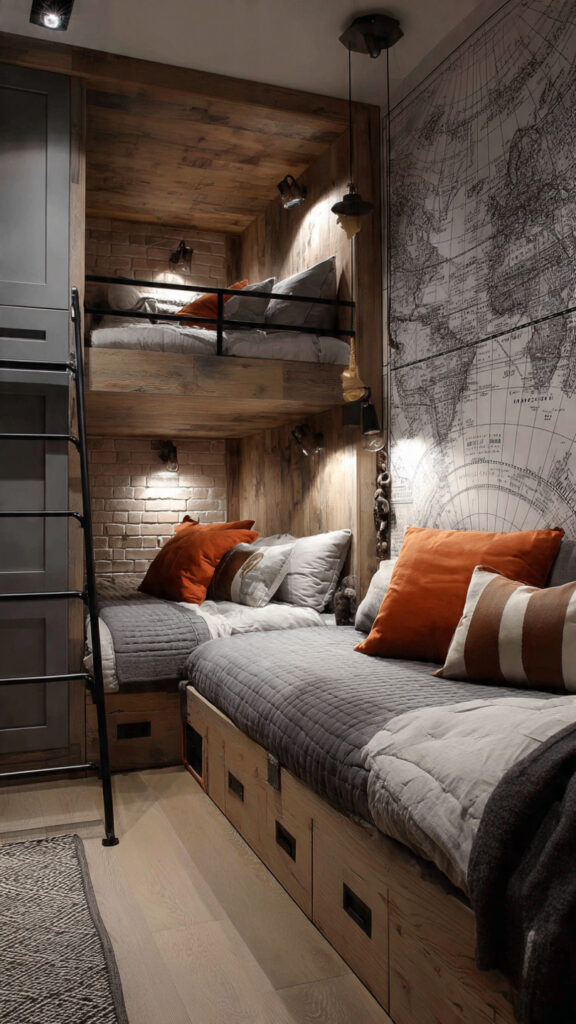
Morning light stretches across a bedroom floor that rarely stays clean for long. Socks hide under beds, crayons roll into corners, and toys seem to appear out of nowhere. When three kids share one space, each brings their own habits, preferences, and opinions. One might love neat shelves, another thrives in creative chaos, and the third just wants their favorite blanket left alone. Even though the room may feel crowded, it also holds a lot of potential.
Sharing a room does not automatically mean daily fights or endless mess. With thoughtful planning and practical Smart Bedroom Ideas, the space can feel organized without becoming strict or boring. A shared bedroom works best when it balances structure and individuality. Clear systems, defined zones, and simple compromises can make the room feel more peaceful and easier to manage for everyone.
1. Triple Bunk Beds That Actually Make Sense
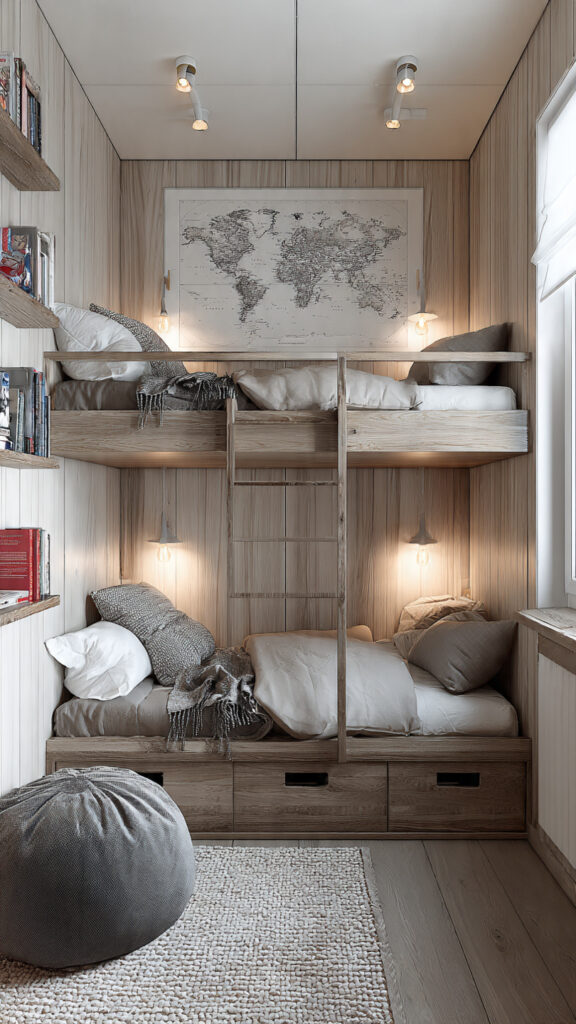
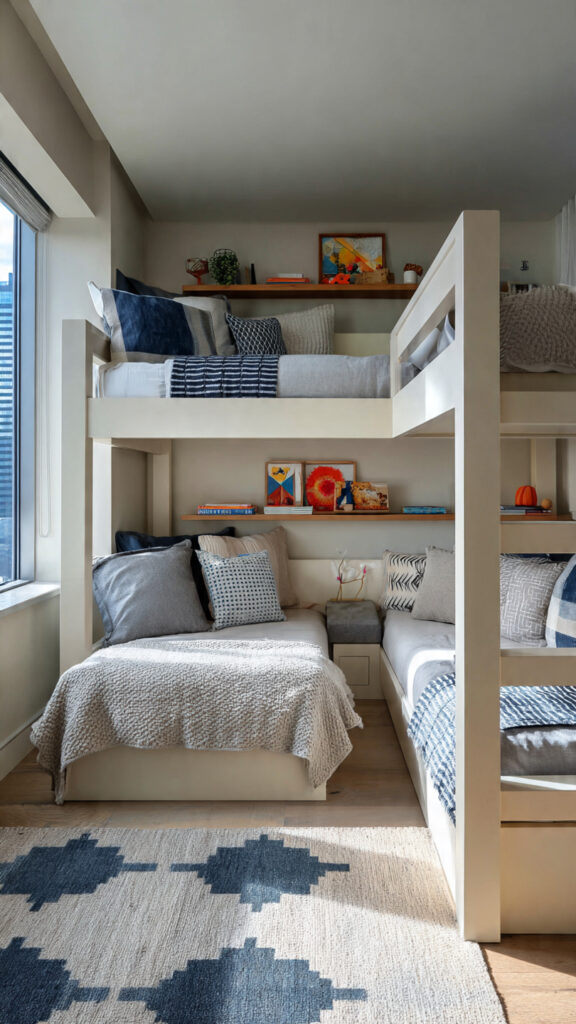
When three kids sleep in one bedroom, beds quickly take up most of the available space. Adding three separate beds often leaves little room for play, desks, or storage. A triple bunk design solves this by building upward instead of outward. Stacking beds vertically gives the room breathing space again and makes better use of limited square footage.
Modern triple bunks no longer look temporary or plain. Many designs feel clean, sturdy, and thoughtfully built. Staggered layouts or built-in styles reduce the boxed-in feeling and add character to the room. Kids often enjoy the unique setup, which can even make bedtime smoother. Among practical Smart Bedroom Ideas, this one instantly changes how the entire room functions.
Why This Works
Building upward frees valuable floor space for movement, study areas, or toy storage. Each child still gets a defined sleeping spot while staying part of the shared environment. The room feels less cramped and more organized without adding extra furniture.
How to Do It
Choose a staggered or L-shaped triple bunk to keep the layout open and balanced. Secure the frame firmly to the wall to ensure safety. Decide thoughtfully which child sleeps where, based on age and comfort. Make sure access points feel safe and easy to use.
Style & Design Tips
Light wood finishes or soft paint colors keep the structure from feeling heavy. Built-in ladders appear cleaner and take up less room than removable ones. Keeping rails simple and streamlined prevents the setup from overwhelming the space visually.
Pro Tip or Budget Hack
If a custom triple bunk feels too expensive, combine a standard bunk bed with a separate low loft bed. Matching bedding and paint colors can tie everything together so the arrangement looks intentional rather than pieced together.
2. Color-Coded Zones Without Painting the Walls Three Times
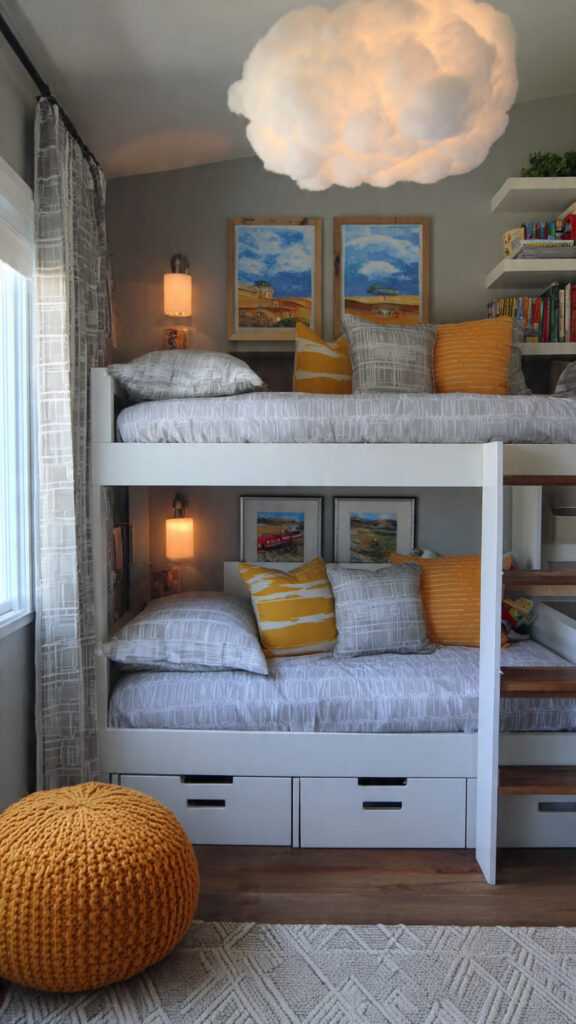
Disagreements often begin when kids feel like nothing in the room truly belongs to them. Creating color-coded zones gives each child a sense of identity without adding walls or dividers. A simple accent color for each child can define personal areas while keeping the overall design calm and cohesive.
Even children who claim they do not care about design usually respond well to having “their” color. Once their bedding, bins, or desk items match a specific shade, they naturally connect with that space. This approach is one of the easiest Smart Bedroom Ideas because it adds structure without using extra square footage.
Why This Works
Color separates space visually without physically dividing it. It quietly creates boundaries and reduces confusion. Clear visual ownership helps minimize arguments and encourages kids to care for their belongings.
How to Do It
Assign one accent color to each child. Use that shade in bedding, storage bins, or small decor items. Keep larger elements like walls and main furniture neutral to avoid overwhelming the room.
Style & Design Tips
Softer, muted tones feel more timeless than bright primary colors. Repeating each child’s color in multiple spots makes the design look intentional. Limiting patterns prevents the room from feeling too busy.
Pro Tip or Budget Hack
Removable decals, fabric labels, or colored tape can define zones without permanent changes. These options are affordable and easy to adjust as kids grow or preferences shift.
3. Under-Bed Storage That Pulls Its Weight
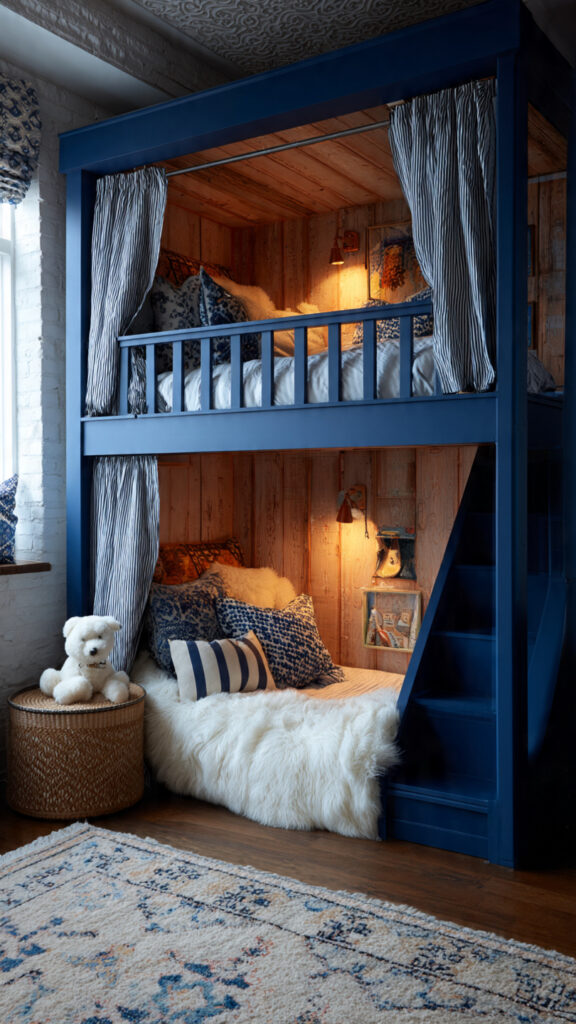
Storage problems become obvious when three sets of clothes, toys, and books compete for space. The area under beds often goes unused, even though it offers valuable hidden storage. Making that space functional helps reduce clutter without crowding the room further.
Simple, matching containers work better than random boxes. When storage looks consistent and organized, kids are more likely to use it properly. Practical Smart Bedroom Ideas like this one make a visible difference without requiring major renovations.
Why This Works
Using under-bed space increases storage without adding bulky furniture. Items stay accessible yet out of sight. The room instantly feels calmer because fewer objects remain on the floor or open shelves.
How to Do It
Choose rolling drawers or low bins that slide easily. Assign each child a specific set of containers. Add clear labels with words or simple symbols so everyone knows what belongs where.
Style & Design Tips
Stick to one color or material for all containers to keep the look clean. Low-profile designs prevent visual clutter. If visual noise is distracting, avoid clear bins that reveal everything inside.
Pro Tip or Budget Hack
Bed risers can create additional clearance if the current setup sits too low. Just ensure the bed remains stable and secure before adding extra height.
4. Shared Desk, Individual Stations
Homework time can quickly turn chaotic when kids compete for one small desk. A long shared surface with clearly defined sections offers a balanced solution. Instead of squeezing in three separate desks, one extended tabletop can provide enough room for everyone.
Each child benefits from having their own station within that shared surface. Clear boundaries reduce elbow bumps and distractions. As part of thoughtful Smart Bedroom Ideas, this layout supports focus while keeping the room efficient.
Why This Works
A single long desk saves more space than multiple separate units. Dividing it into individual stations creates ownership without isolating anyone. It also encourages cooperation while maintaining fairness.
How to Do It
Install a wall-mounted tabletop or extended desk along one wall. Use drawer units or small shelves to mark each child’s area. Add separate task lighting so everyone has proper visibility.
Style & Design Tips
Keep the main desk surface neutral to minimize distractions. Matching chairs create a unified look. Avoid oversized organizers that take up too much workspace.
Pro Tip or Budget Hack
Affordable tabletops with simple brackets can achieve a custom look. Small upgrades like new knobs or trim can elevate the design without stretching the budget.
5. Closet Zones That Prevent Morning Meltdowns
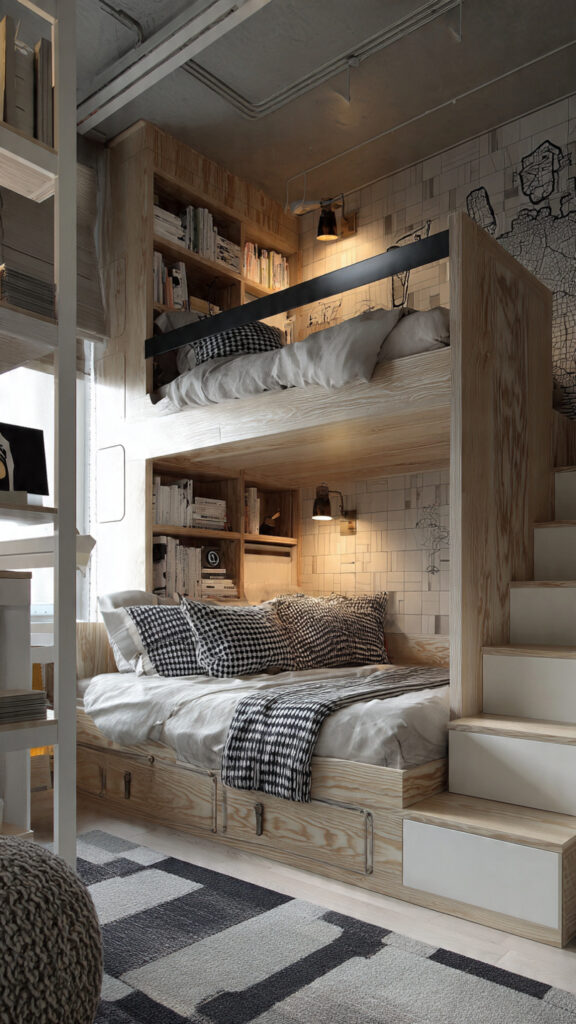
When three wardrobes mix together, mornings can feel rushed and frustrating. Dividing one closet into clear sections prevents confusion and misplaced items. Each child benefits from having a defined area for clothes and accessories.
Once kids recognize their personal section, they tend to take more responsibility for it. Clear boundaries reduce arguments and speed up daily routines. Organized closet systems are practical Smart Bedroom Ideas that make everyday life smoother.
Why This Works
Defined sections remove guesswork. Visual separation reduces the need for constant reminders. The system promotes independence and builds simple daily habits.
How to Do It
Assign specific rods, shelves, or drawers to each child. Use labeled bins for smaller accessories. Install hooks at heights that are easy for kids to reach on their own.
Style & Design Tips
Matching hangers create a tidy, unified appearance. Vertical dividers help maintain order between sections. Avoid overcrowding any one area to keep it functional.
Pro Tip or Budget Hack
Tension rods can quickly create separate zones without permanent changes. They are inexpensive and easy to adjust as storage needs evolve.
6. Flexible Play Space That Adapts Daily
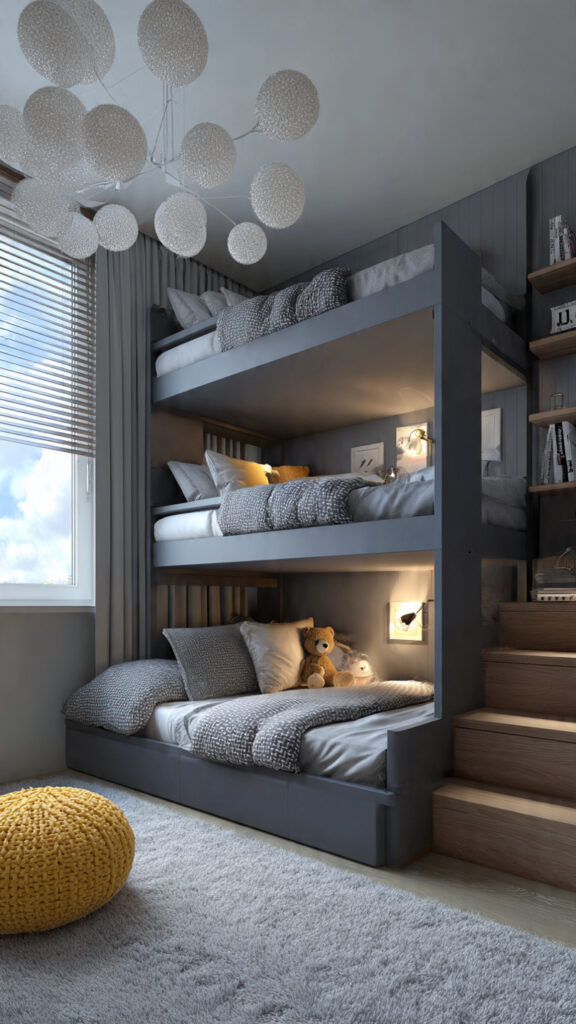
Children’s play styles change often, especially in a shared room. Leaving an open area in the center allows the space to shift depending on the day’s activities. Instead of filling every corner with furniture, intentional breathing room keeps the layout adaptable.
Rigid setups rarely survive daily life with three kids. An open zone supports creativity without constant rearranging. Among Smart Bedroom Ideas, flexibility may be the most valuable feature of all.
Why This Works
Open space reduces frustration and makes the room feel larger. It allows different types of play without adding clutter. The room remains functional rather than overwhelmed by oversized furniture.
How to Do It
Choose lightweight pieces that can move easily. Store toys vertically or in rolling bins for quick cleanup. Keep the center area mostly clear for activities.
Style & Design Tips
Soft rugs can define a play area without permanent boundaries. Neutral flooring maintains visual calm. Avoid bulky toy storage that dominates the room.
Pro Tip or Budget Hack
Floor cushions provide flexible seating and double as play props. They are easy to store and more affordable than heavy furniture pieces.
7. Nighttime Lighting That Respects Different Sleep Styles
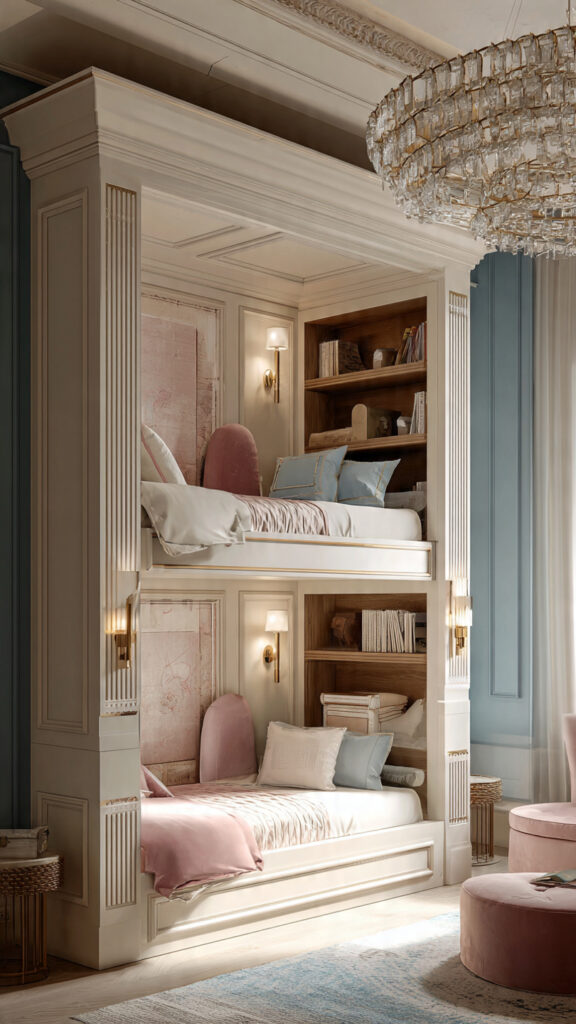
Bedtime routines vary from child to child. One may want to read quietly, another may need darkness immediately, and a third might prefer a small nightlight. Layered lighting helps meet these different needs without causing arguments over the main switch.
Small reading lights at each bed can change the entire bedtime mood. When kids feel their preferences are respected, evenings become calmer. Thoughtful lighting is one of the most overlooked Smart Bedroom Ideas, yet it has a strong impact on comfort.
Why This Works
Layered lighting supports individual routines within the same room. Personal control reduces tension and promotes better sleep habits. The atmosphere feels intentional rather than harsh.
How to Do It
Add individual reading lights near each bed. Use dimmable overhead fixtures to adjust brightness as needed. Include gentle nightlights for comfort and safety.
Style & Design Tips
Warm-toned bulbs create a relaxing environment. Wall-mounted fixtures save surface space. Avoid overly bright overhead lighting that feels harsh at night.
Pro Tip or Budget Hack
Plug-in wall sconces can achieve a built-in look without electrical work. They are practical for renters and easy to replace later.
Final Thoughts
A shared bedroom for three children does not need to feel crowded or stressful. With intentional layout choices and practical systems, even a small space can function smoothly. The goal is not perfection but usability. Smart Bedroom Ideas focus on creating order while still allowing personality to shine.
Instead of changing everything at once, start with the biggest daily challenge. A single improvement can shift the mood of the entire room. Once the space feels more balanced and manageable, maintaining it becomes much easier for everyone involved.