How to Style a Coffee Table Like an Interior Designer
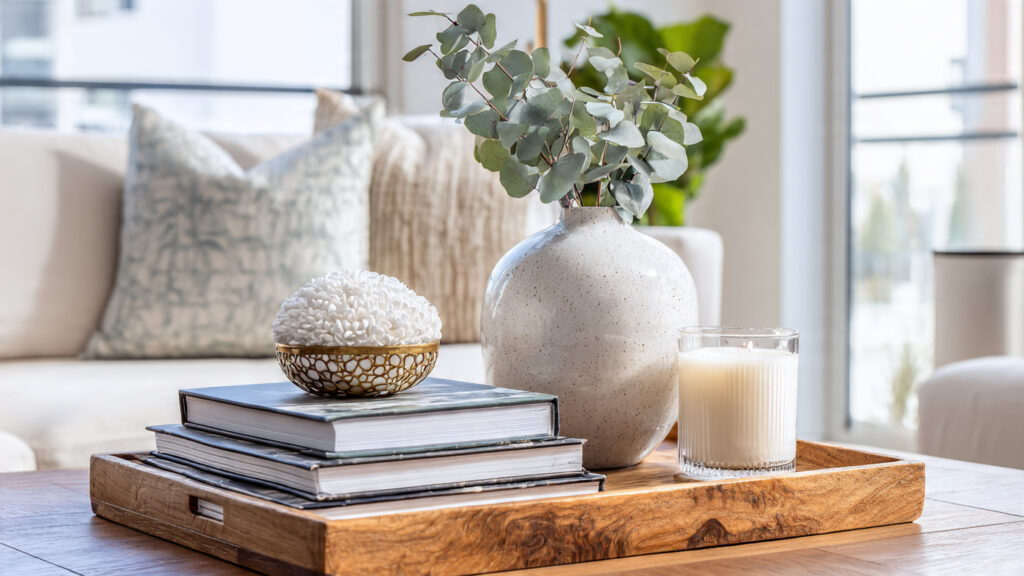
Let me be honest—learning How to Style a Coffee Table changed the way my whole living room feels. I used to treat it like a dumping zone, but once I understood a few simple styling principles, it became the focal point of my space.
In this guide, I’ll walk you through practical, real-life ways I style my coffee table so it looks intentional but still livable. You’ll learn how to balance height, texture, and function without overthinking it. I’ll also share small tricks I personally use that make a big difference.
According to interior styling studies, layered décor arrangements can improve visual appeal by up to 40%, simply because they create depth and structure. That’s exactly what we’re going to achieve here—step by step.
Key Takeaways
Start with the “Holy Trinity” of Layers
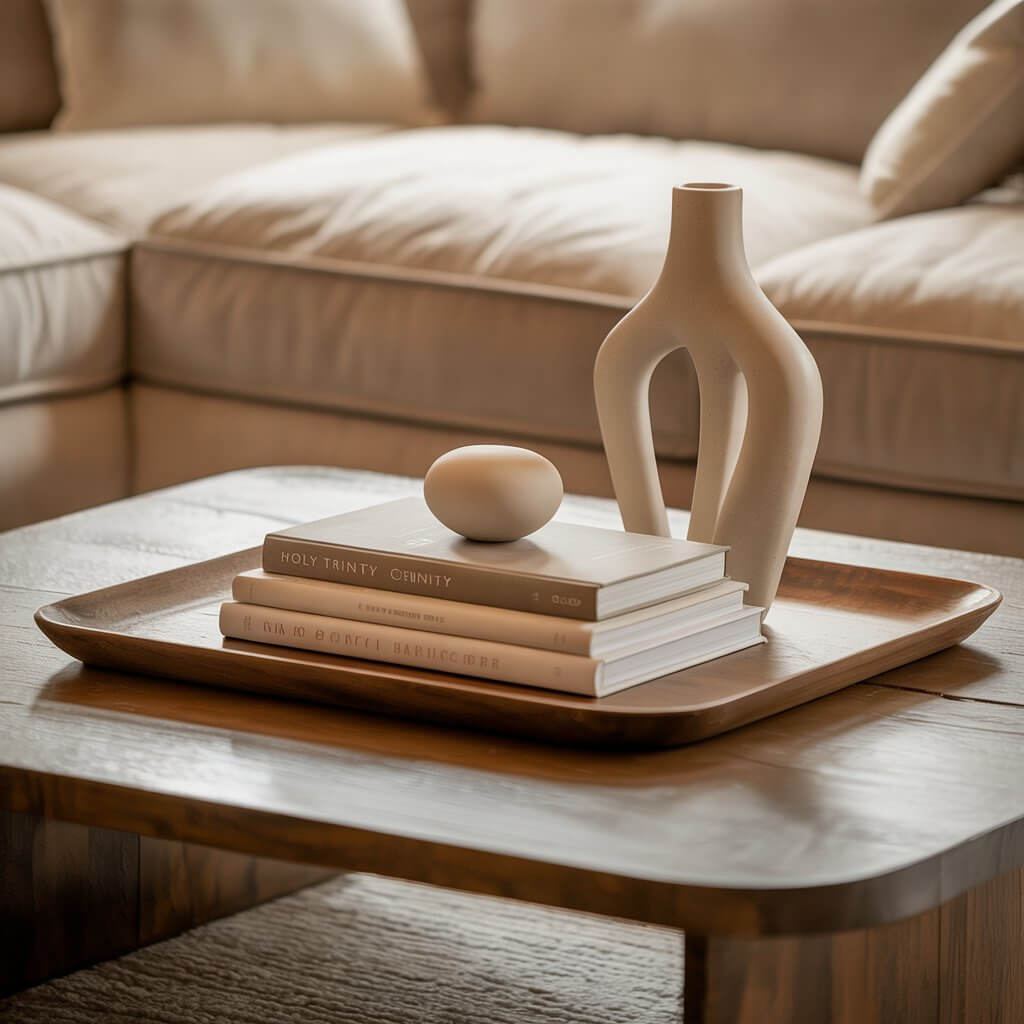
When I first learned How to Style a Coffee Table, this was the rule that made everything click. I always start with three levels: something tall, something medium, and something flat.
For example, I stack books, add a small vase, and place a tray underneath. This creates structure without effort. Designers often use this method because it naturally guides the eye across the table.
Pro Tip
If I feel stuck, I reset everything and rebuild using just these three layers. It works every time.
Embrace the Power of the Tray
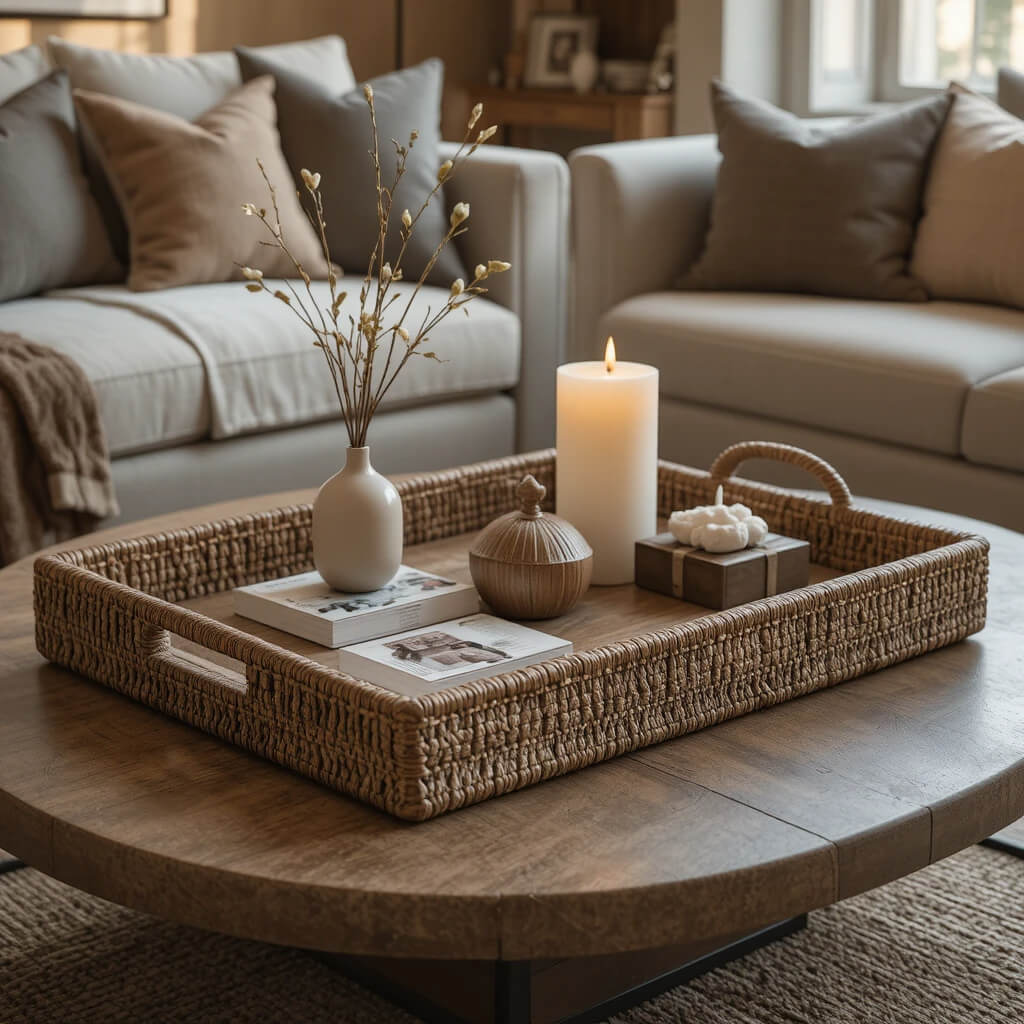
A tray instantly makes things look organized. I use it to group candles, remotes, or small décor pieces so they don’t feel scattered.
It also adds texture. Whether it’s wood, marble, or woven material, a tray creates a defined zone that makes styling easier.
Personal Fave
I like using a slightly oversized tray because it anchors everything and prevents clutter from spreading.
Books Are Your Best (and Cheapest) Prop
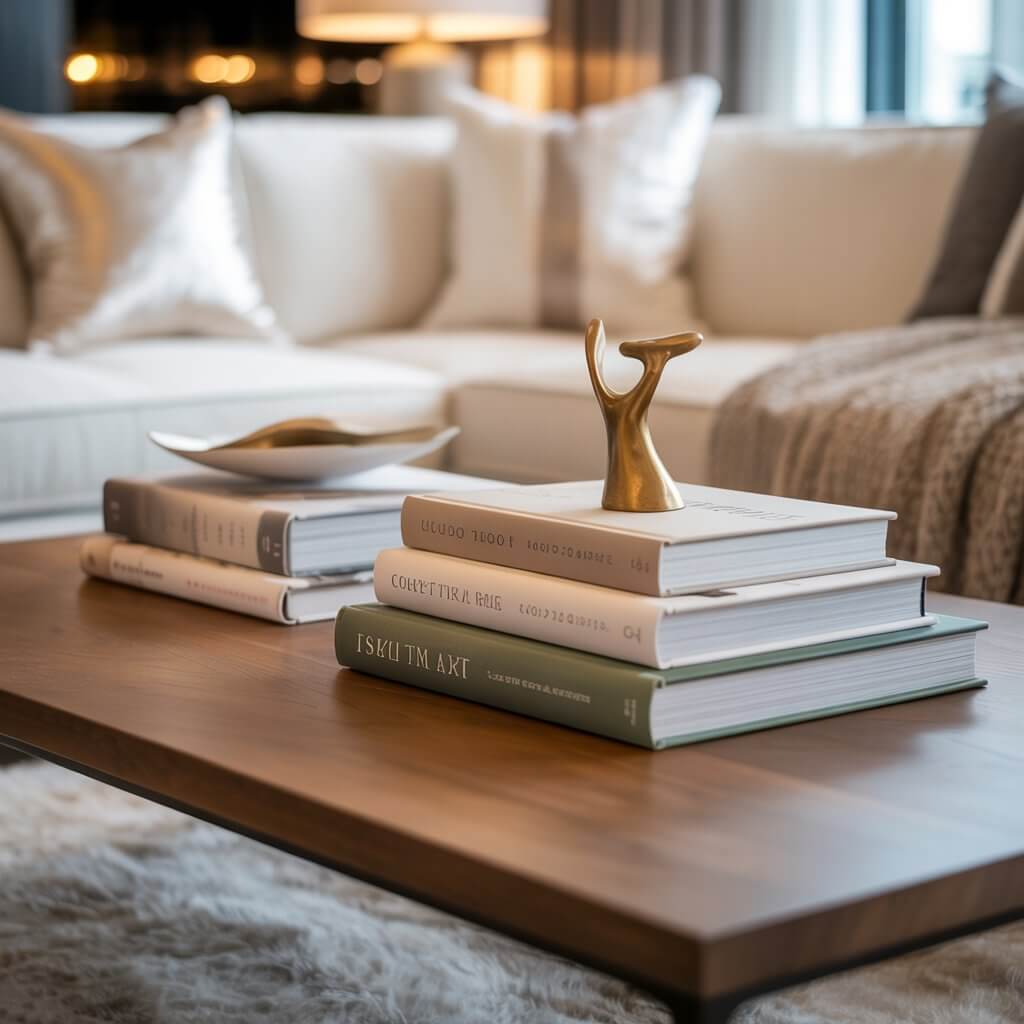
Books are my go-to styling tool. I choose them based on color and size rather than just content.
Stacking books helps me add height and gives smaller objects a base. Studies in visual merchandising show layered platforms increase perceived value, which is why this trick works so well.
Story Time
Once I swapped random books for a few clean, neutral ones, my table instantly looked more polished.
Add Something Living or Organic
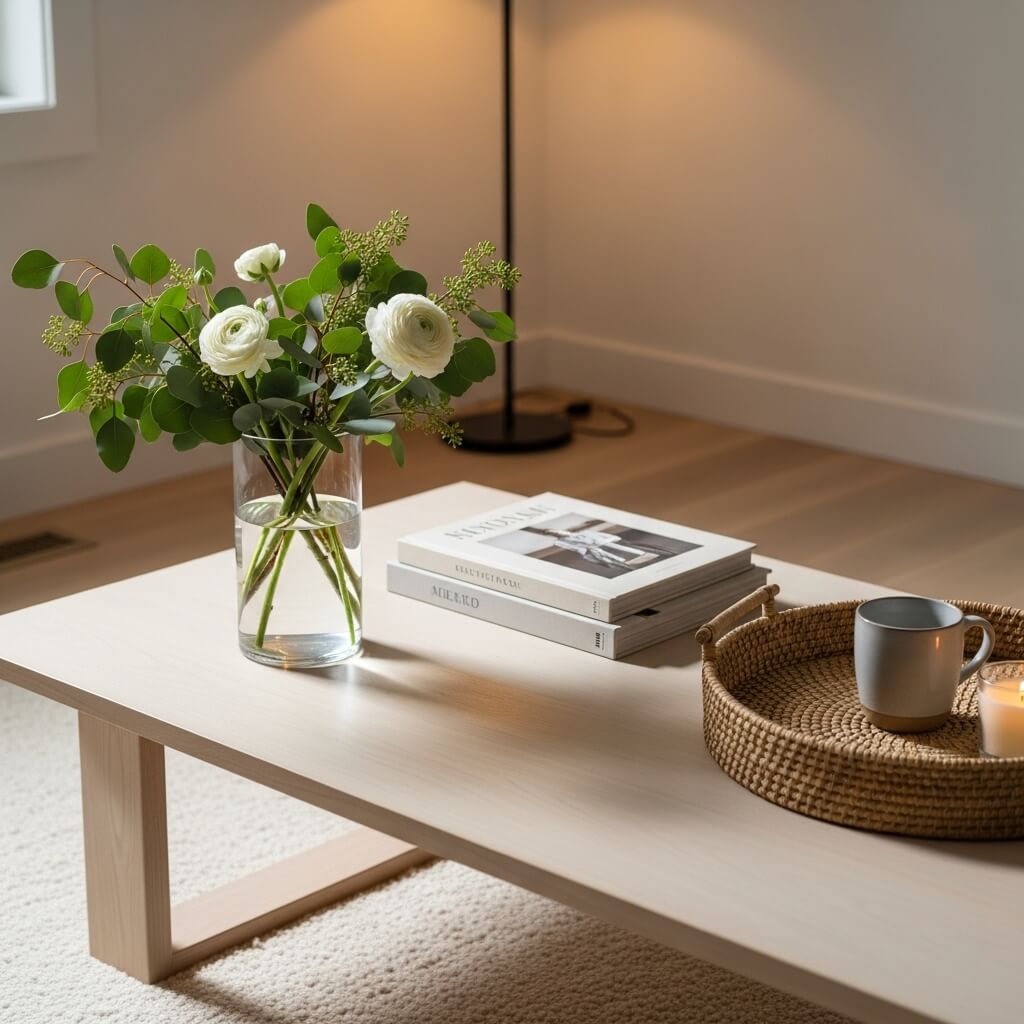
Whenever my setup feels dull, I add something natural. Flowers, greenery, or even a bowl of fruit brings life to the table.
Natural elements break the stiffness and make the space feel fresh. Even a simple plant can improve mood and reduce visual fatigue.
Play with Different Shapes
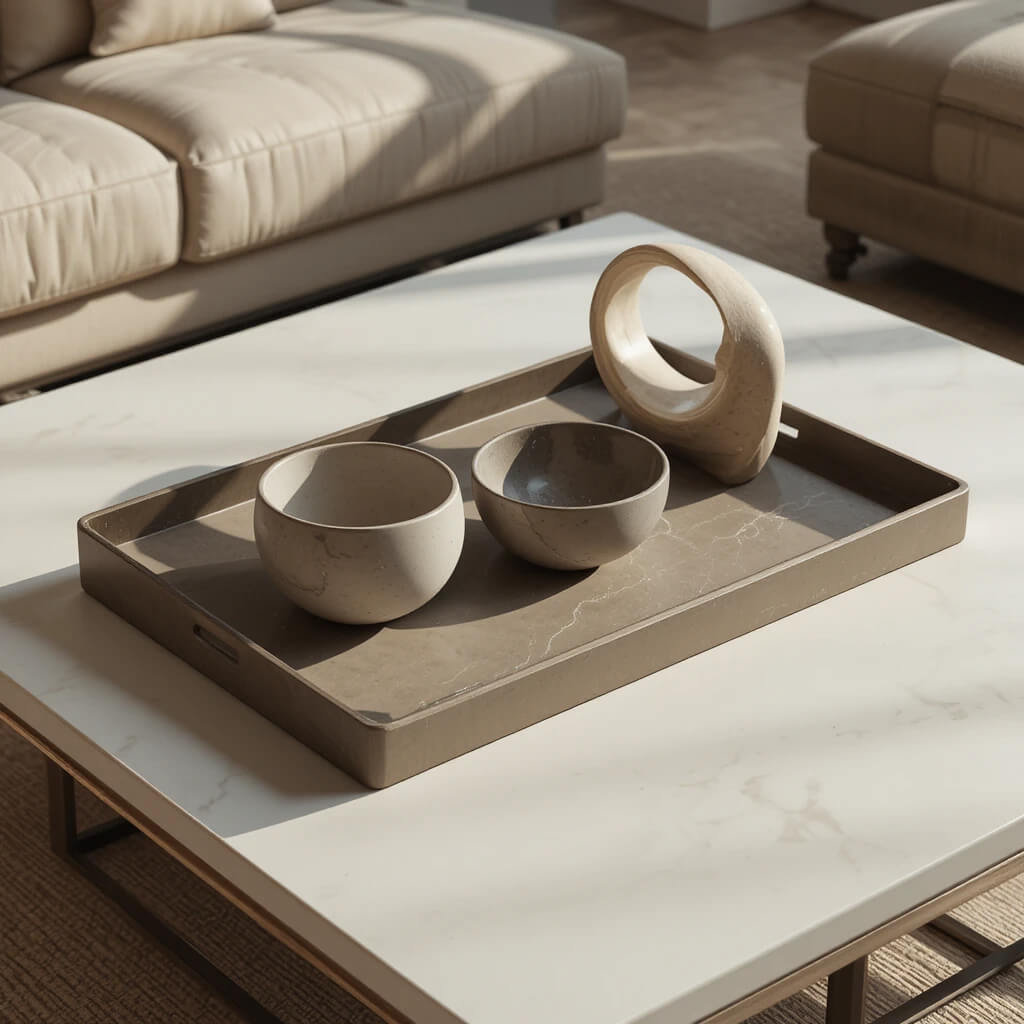
I always check my shapes. If everything looks too similar, it feels boring.
Mixing round, square, and irregular objects creates contrast. This small adjustment keeps the table visually interesting without adding more items.
Pro Tip
If my setup looks flat, I swap one item for a different shape instead of adding more clutter.
Incorporate Texture for Coziness
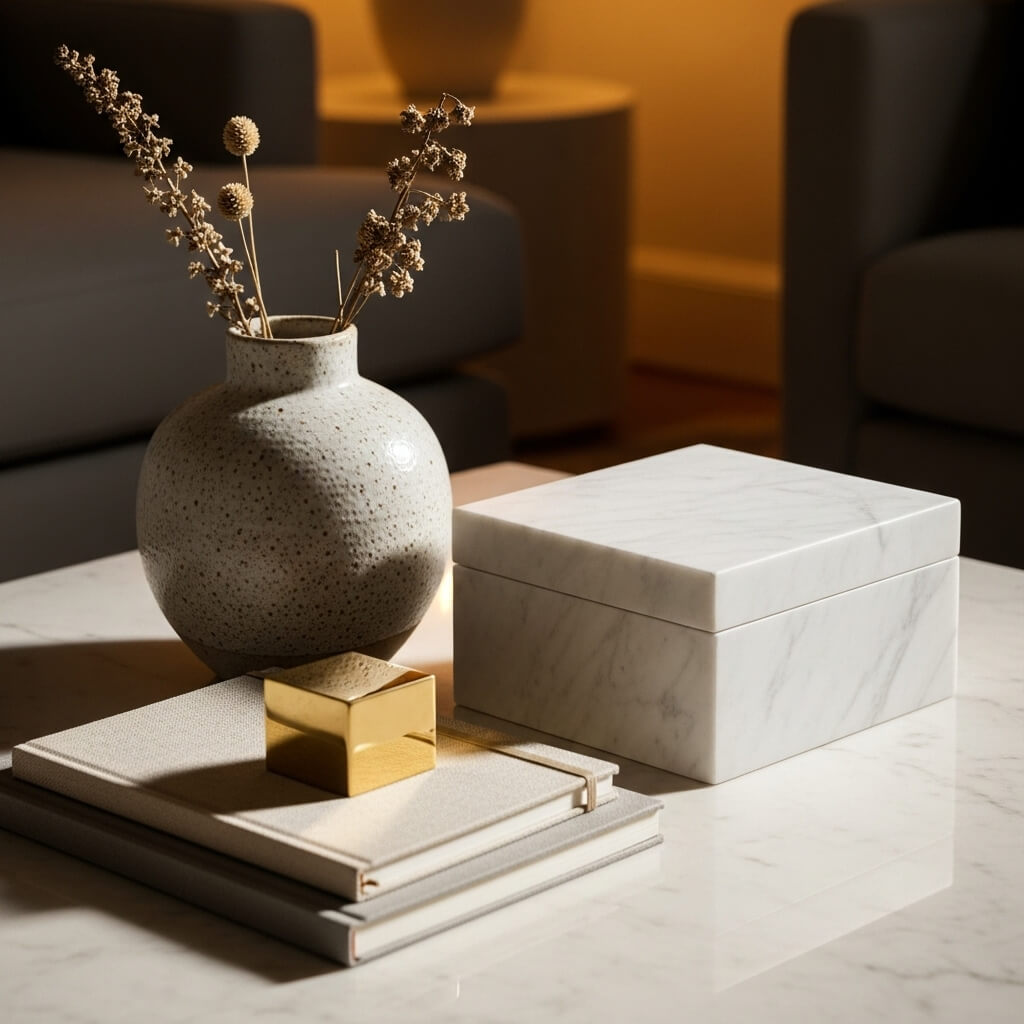
Texture is what makes a coffee table feel warm instead of staged. I mix materials like ceramic, wood, metal, and fabric.
This adds depth without needing extra décor. Even small changes, like a linen-covered book or a stone bowl, can make a difference.
Leave Negative Space (A.K.A. Breathe!)
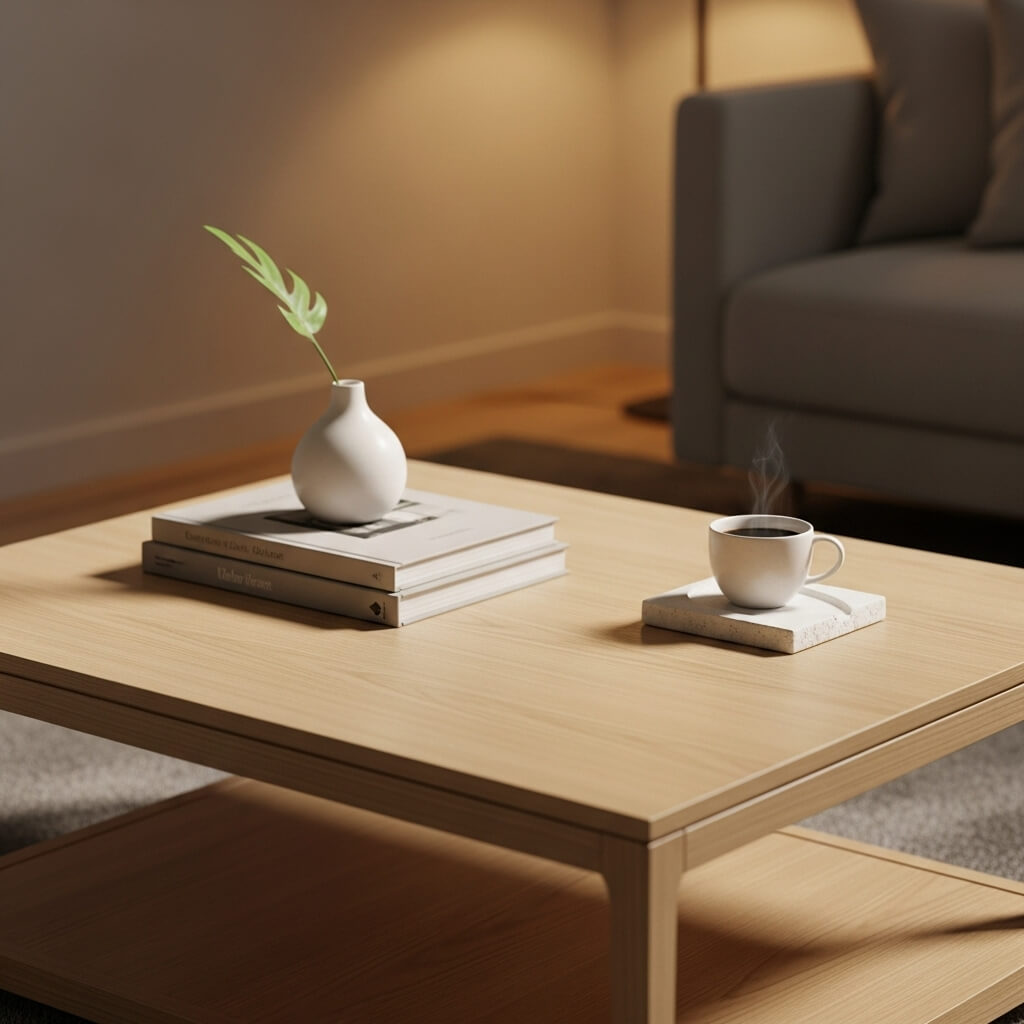
This is where I used to go wrong. I thought filling every corner looked better—but it actually made things messy.
Now I leave space between items. Designers say negative space improves clarity and focus, and I’ve seen that firsthand.
Use a Statement Object as the Anchor
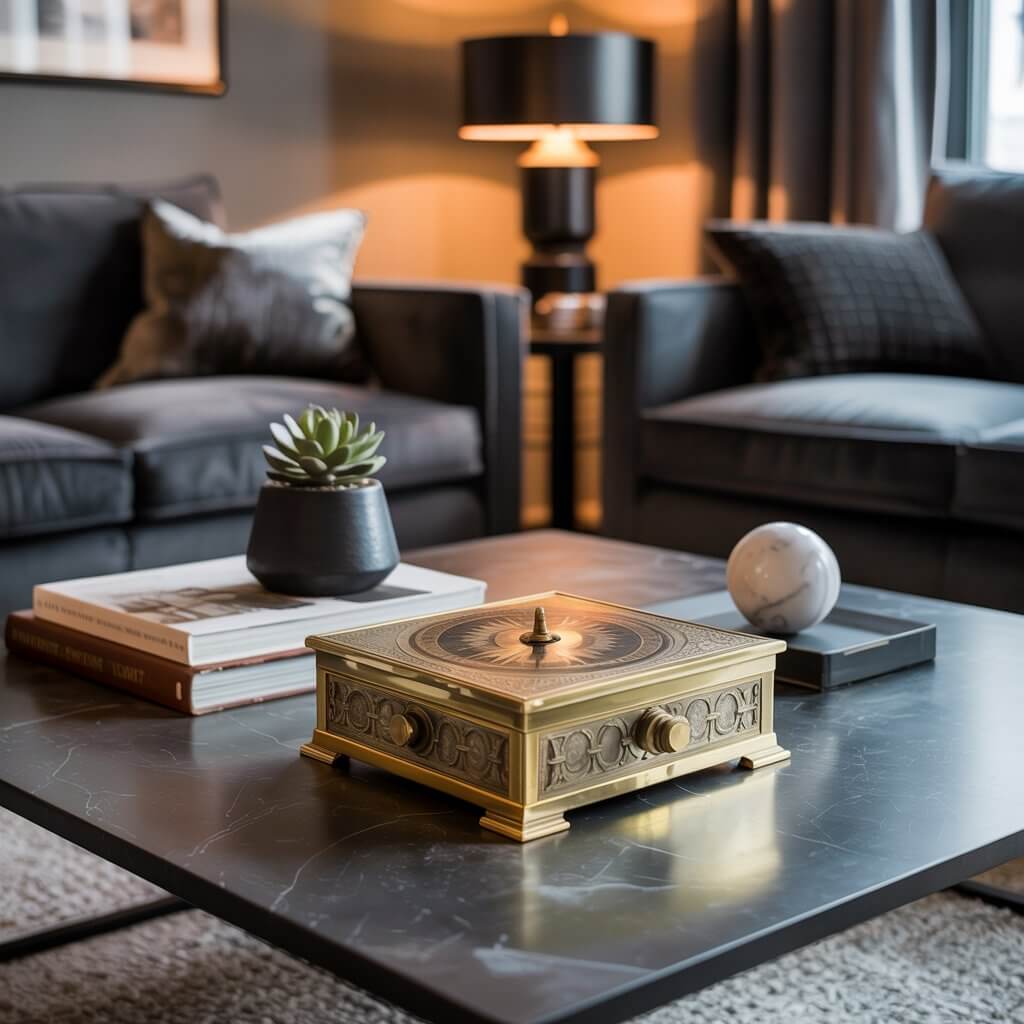
I always include one standout piece. It could be something personal or unique.
This object becomes the focal point, and everything else supports it. It keeps the arrangement from feeling random.
Height Variation is Non-Negotiable
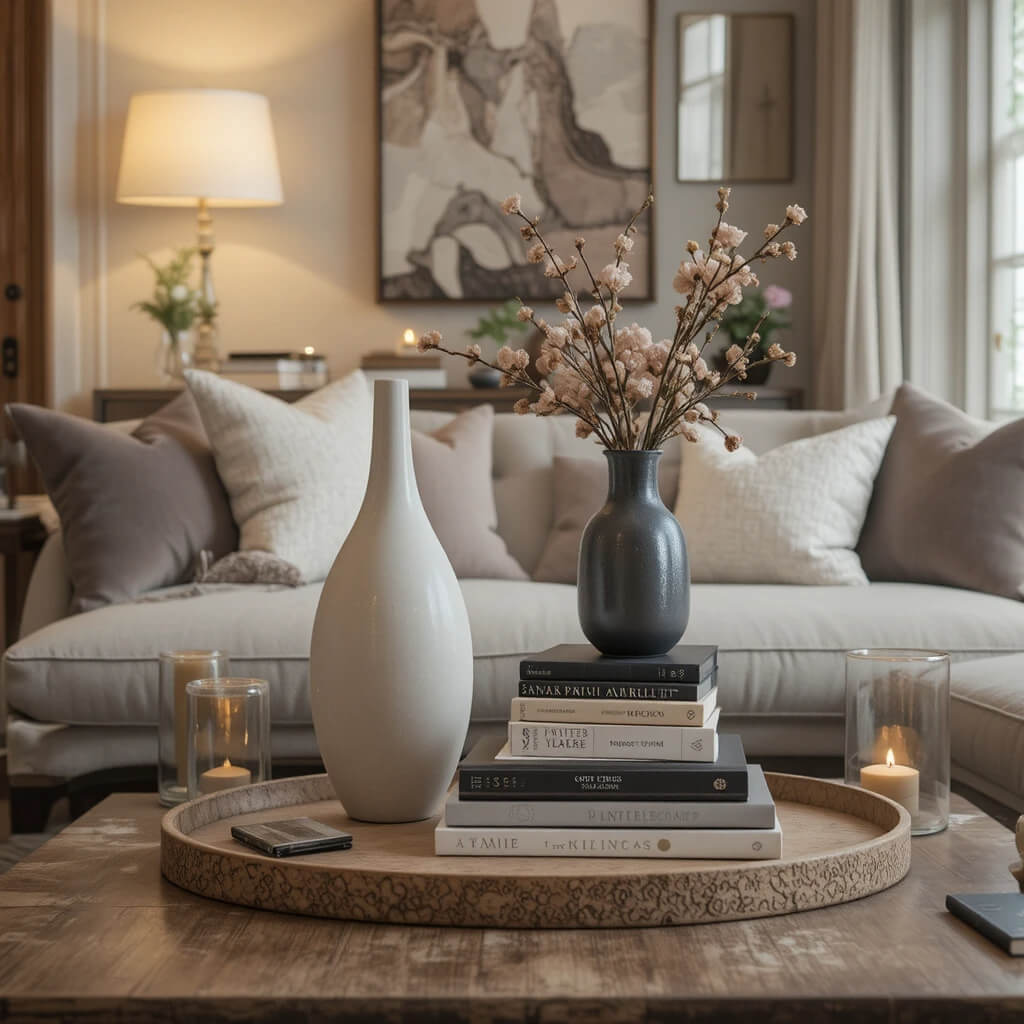
Flat layouts never look good. I always vary heights using books, vases, or stacked items.
This creates movement and makes the table feel dynamic instead of dull.
Pro Tip
If I need extra height, I improvise with hidden risers under objects.
Think in Odd Numbers
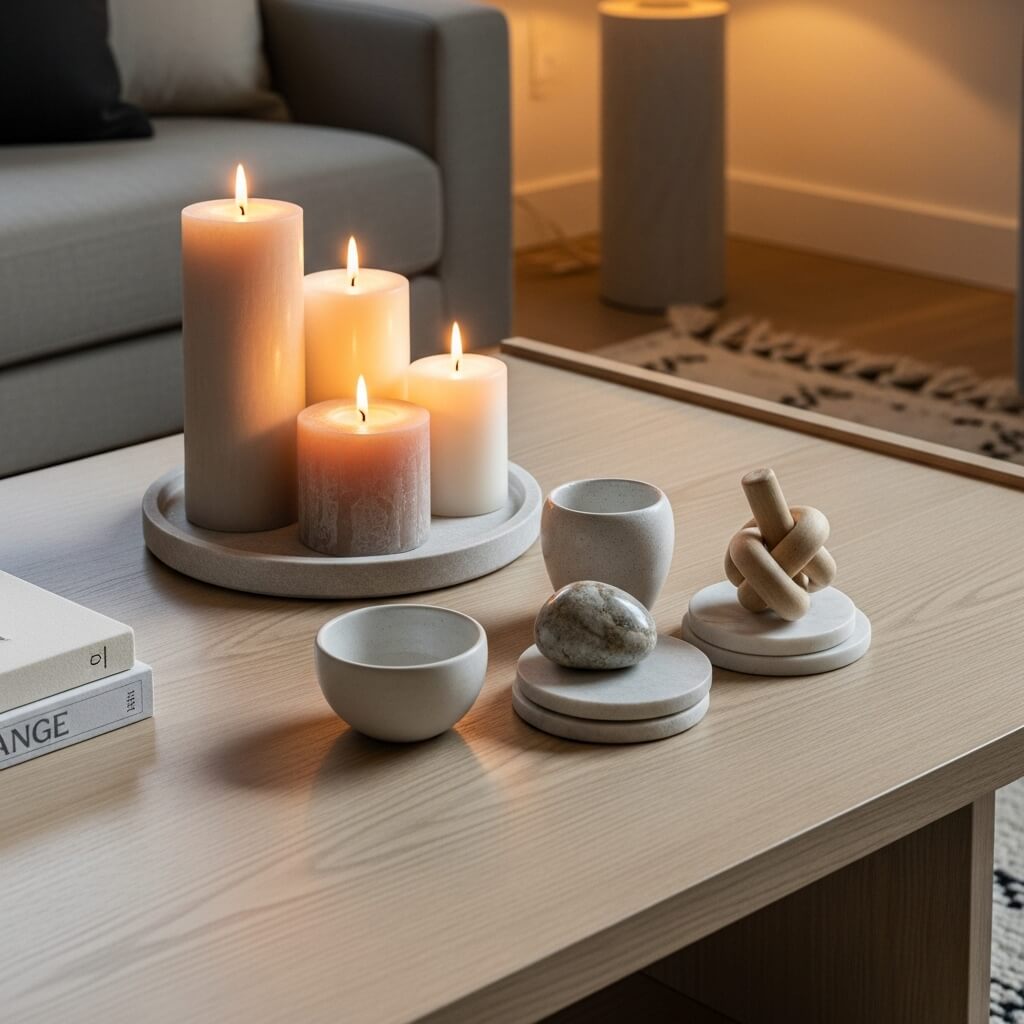
I group items in sets of three or five. It feels more natural and less staged.
Design psychology shows that odd numbers create better visual balance, which is why this trick works so consistently.
Don’t Forget Practicality (It’s Still a Table!)
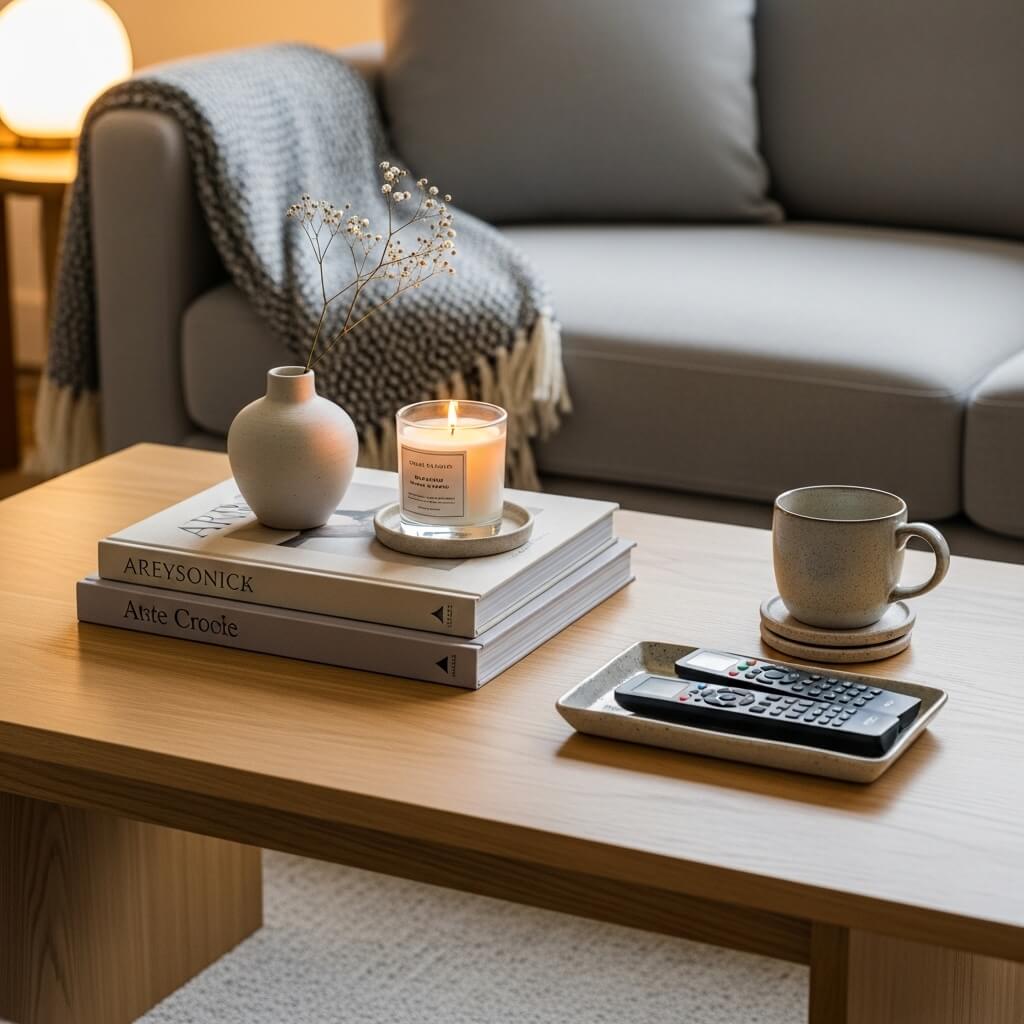
I always leave space for real use. My coffee table still holds drinks, remotes, and daily items.
A styled table that can’t be used is not practical. Function should always support style.
Add a Touch of the Unexpected
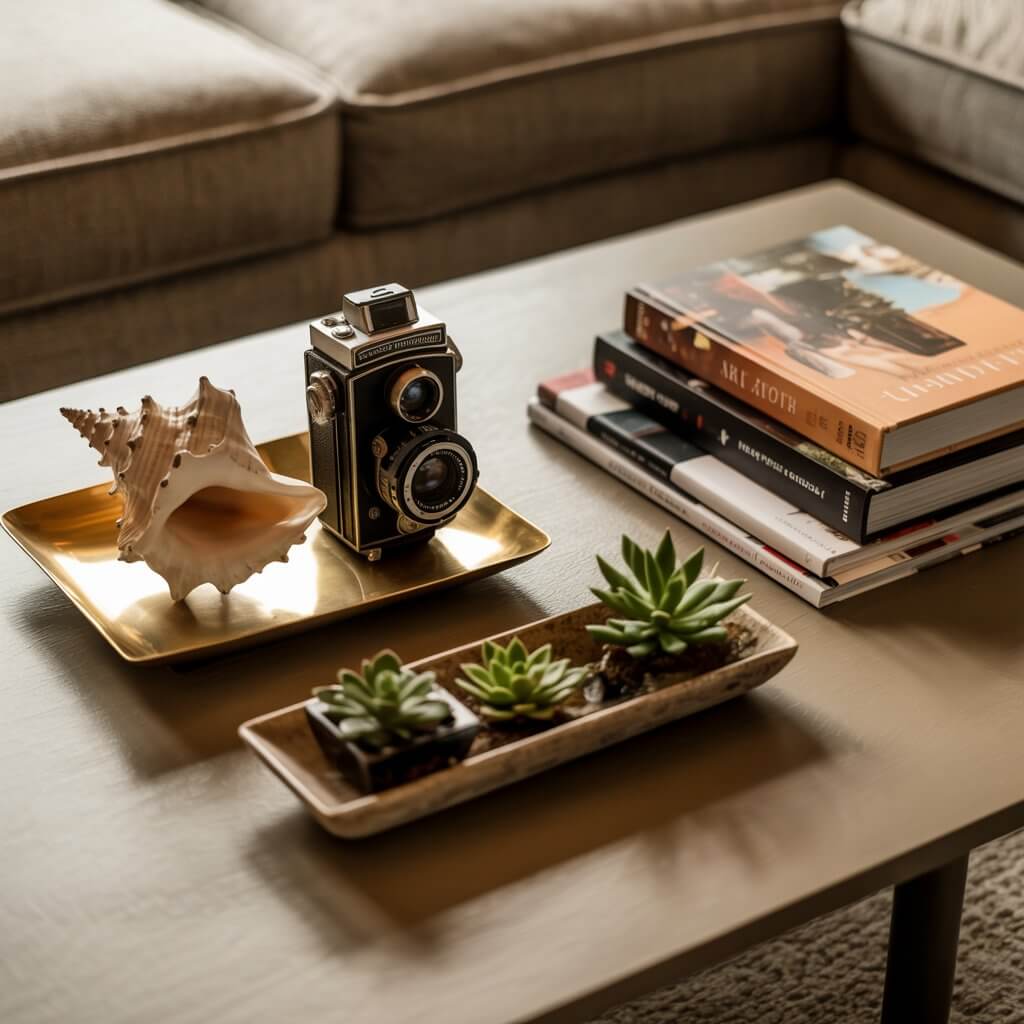
I like adding something personal or slightly unusual. It makes the setup feel unique instead of copied.
This could be a travel piece, a vintage item, or something meaningful.
Layer Your Lighting
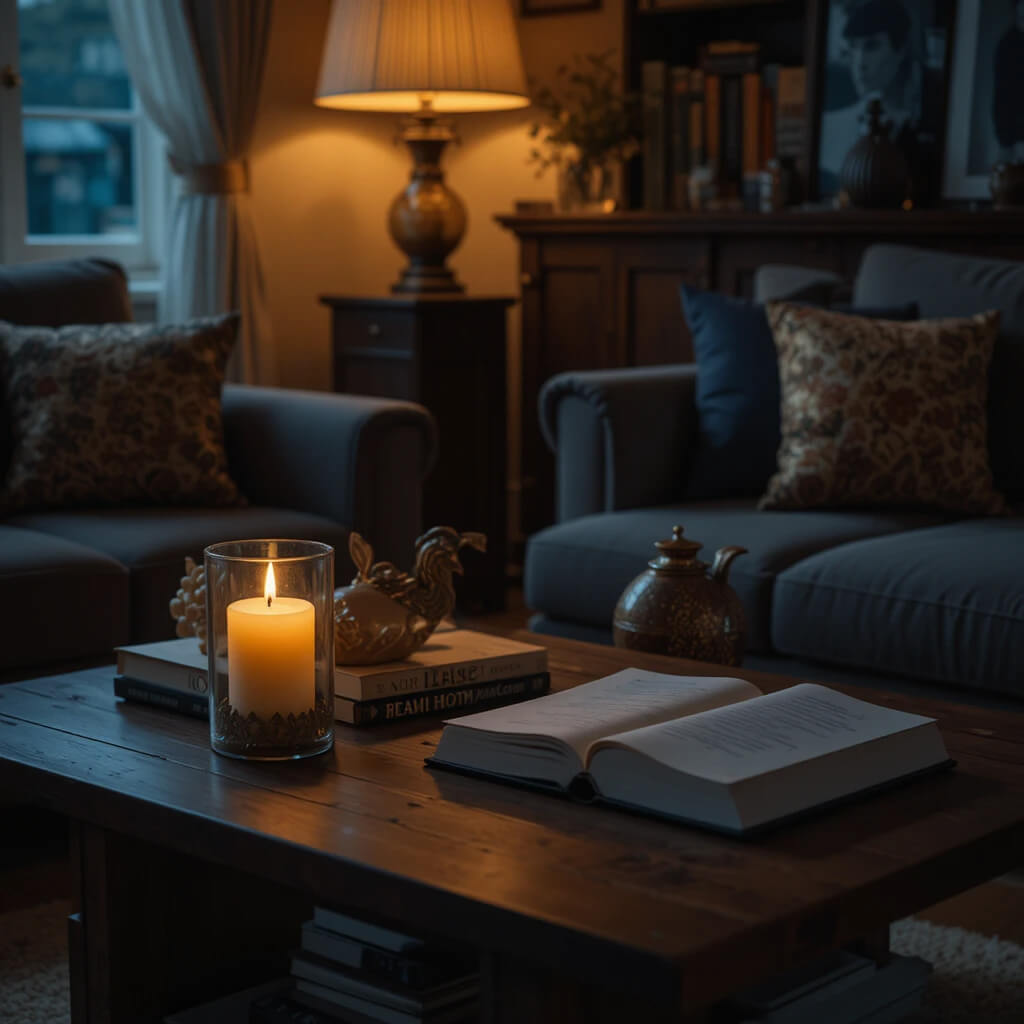
Lighting changes everything. I use candles or a small lamp to create a warm atmosphere.
Soft lighting makes the table feel cozy, especially in the evening.
Reflect Light with Metallics or Mirrors
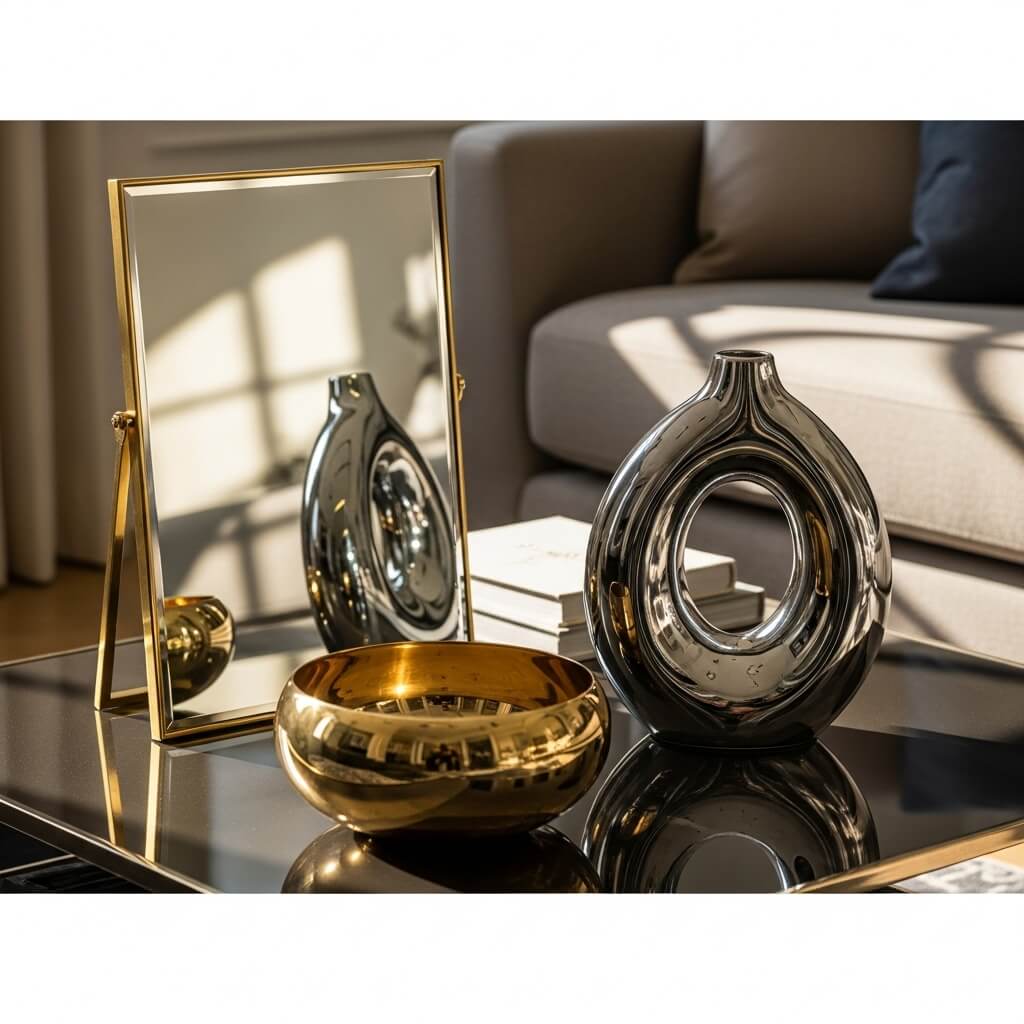
I sometimes add a reflective item like a metallic bowl or glass piece.
These elements bounce light and make the space feel brighter and more open.
Curate a Mini Art Gallery
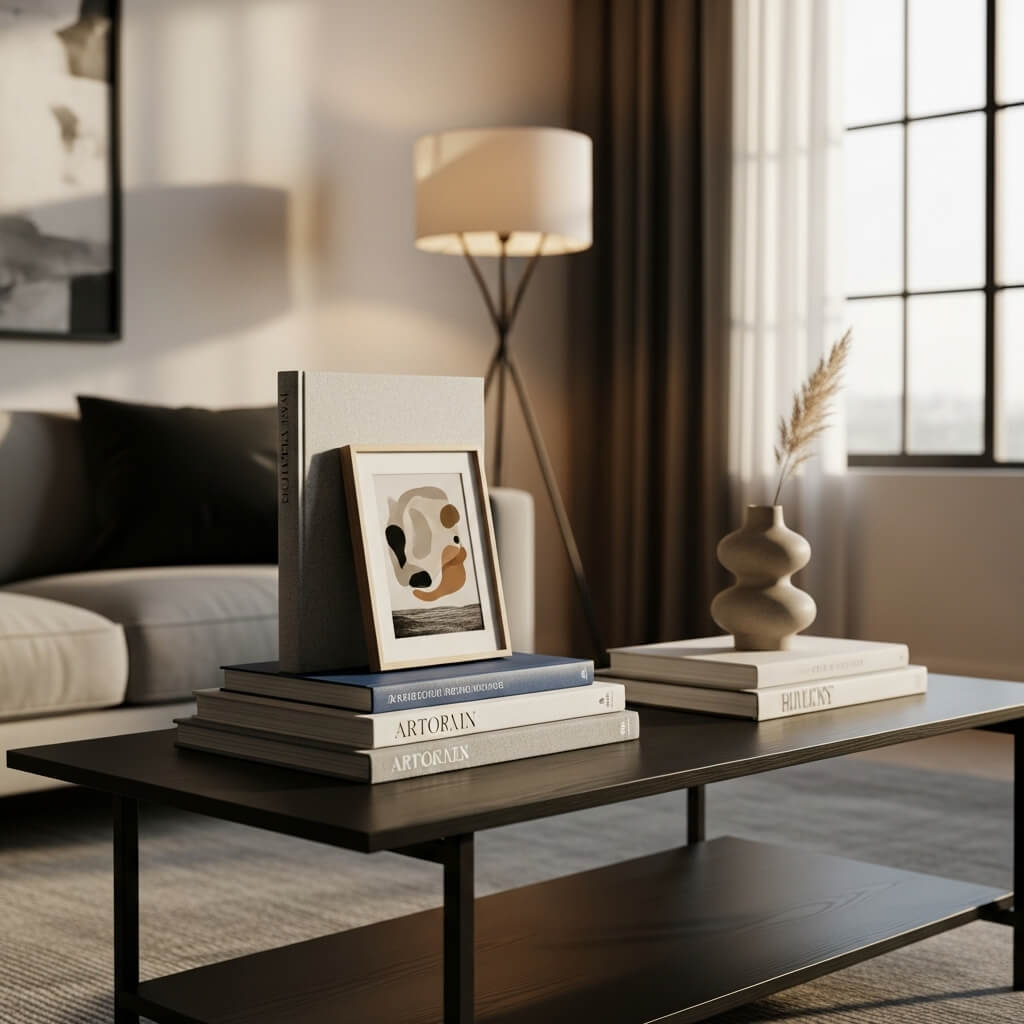
I like placing a small framed piece on or near the table. It adds height and personality.
It also makes the setup feel more intentional without taking up much space.
Change it Seasonally (But Keep it Simple)
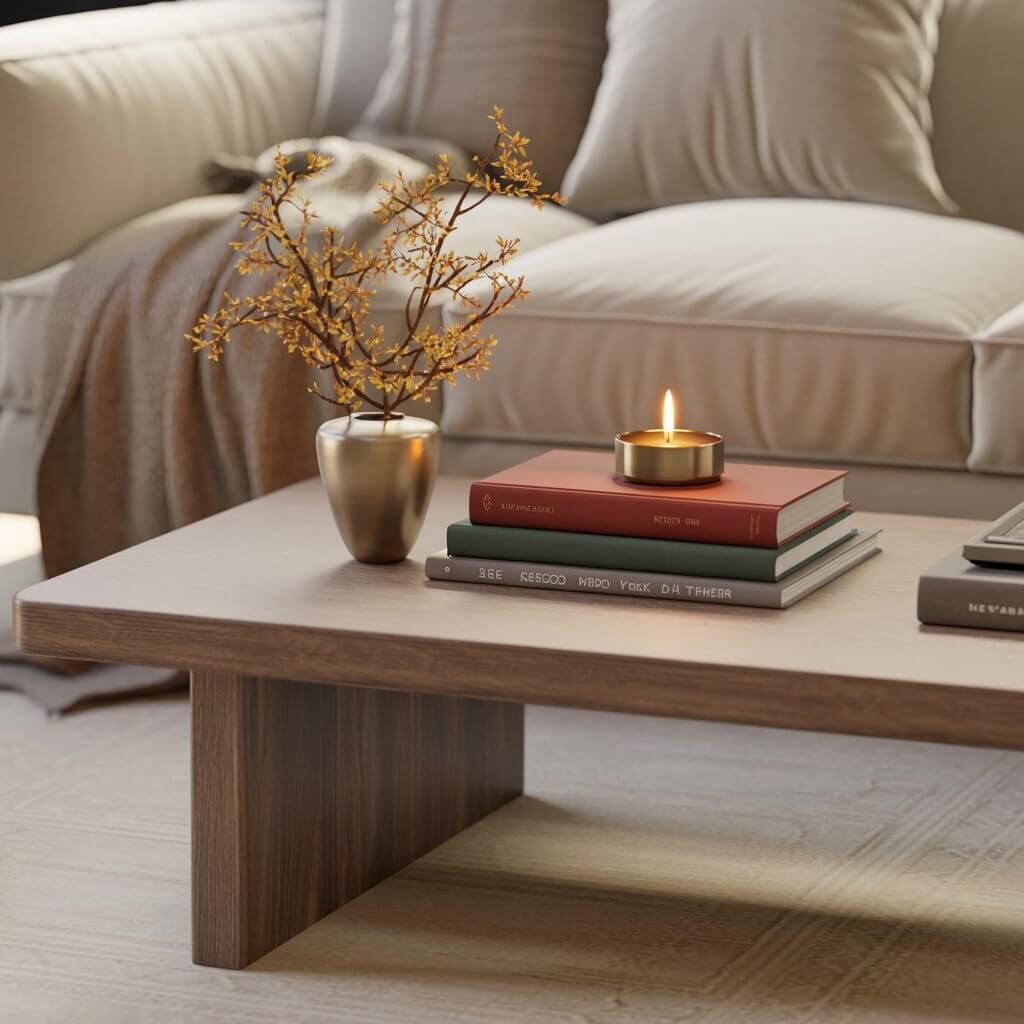
I don’t fully restyle my table every season. I just swap a few elements like flowers or colors.
This keeps things fresh without extra effort.
When in Doubt, Use the “Triangle” Rule
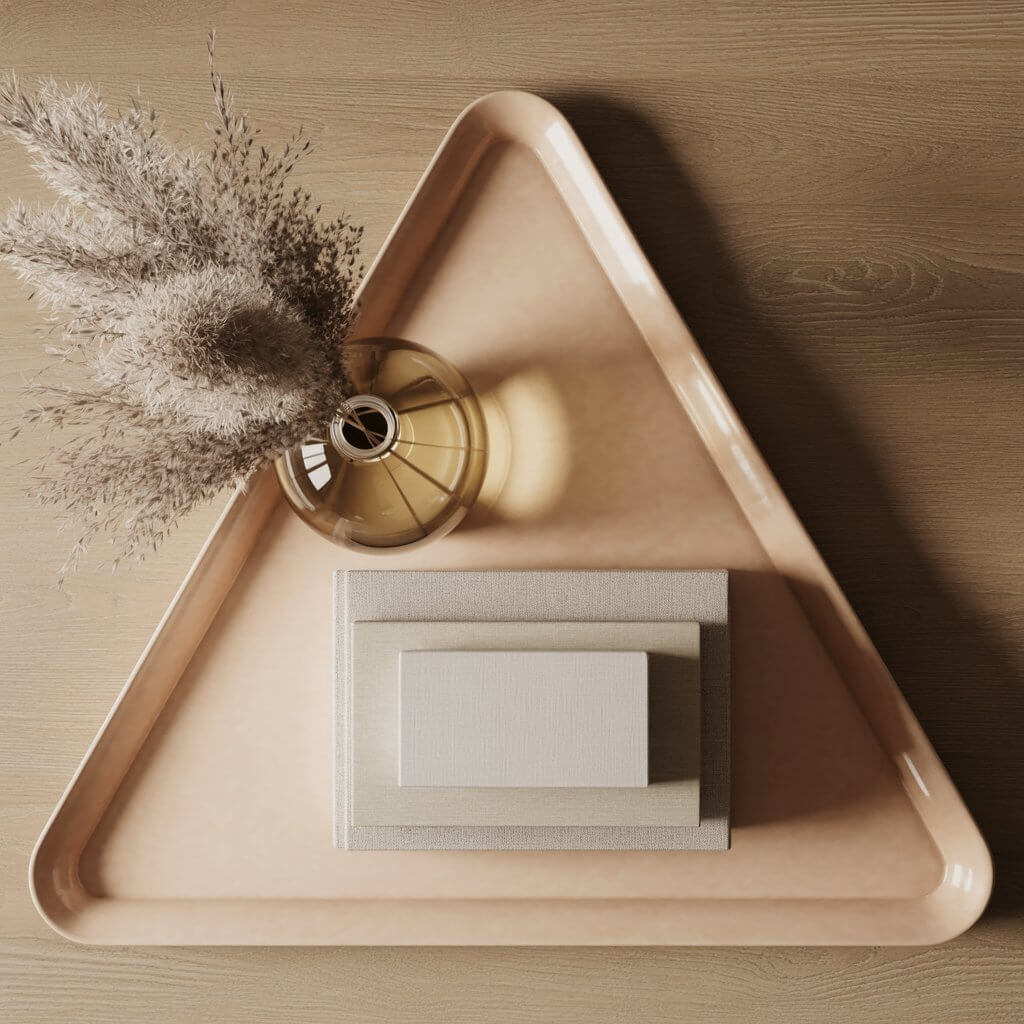
I arrange my main items so they form a triangle shape.
This layout feels balanced and natural, even if the items are different sizes.
Walk Away and Then Edit
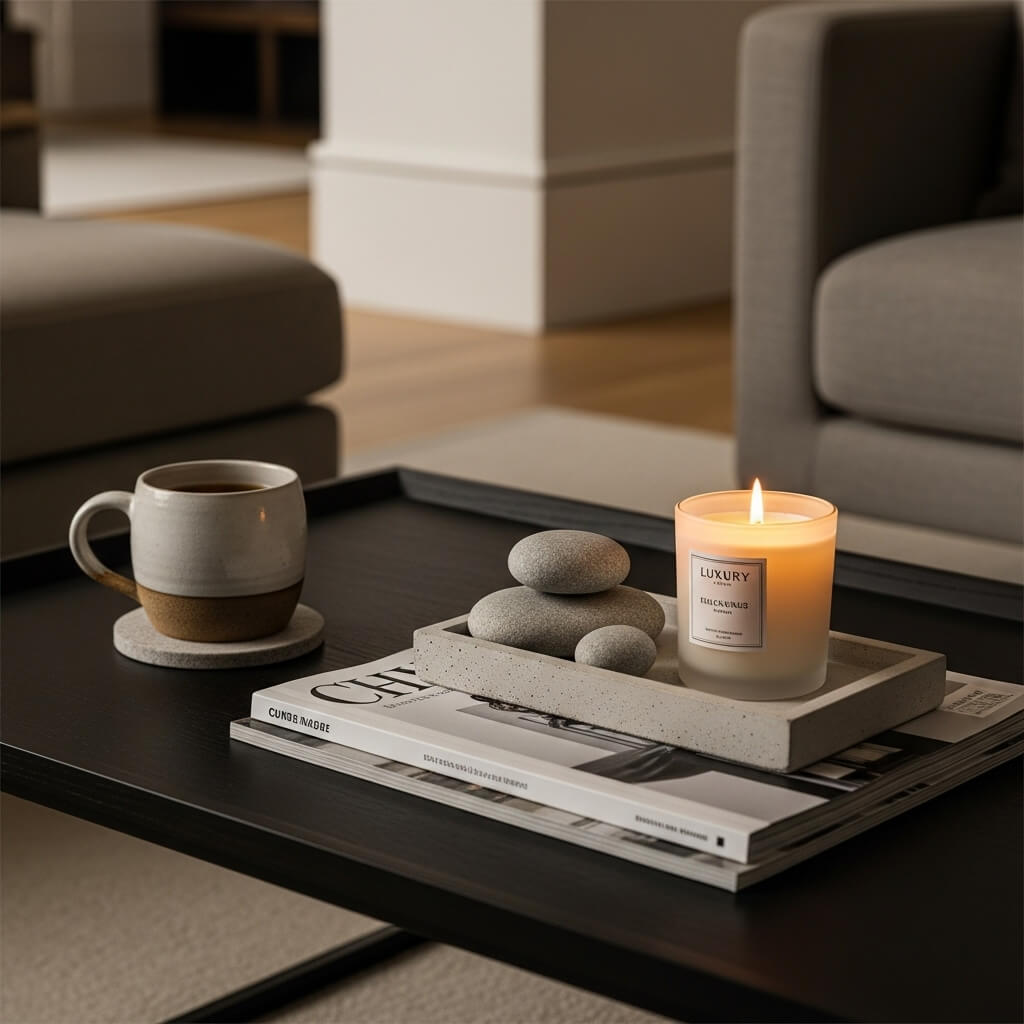
After styling, I step away for a bit. When I come back, I usually remove one item.
Editing is what makes the table look clean and intentional.
Pro Tip
Taking a quick photo helps me spot what feels off instantly.
Your Coffee Table, Your Masterpiece
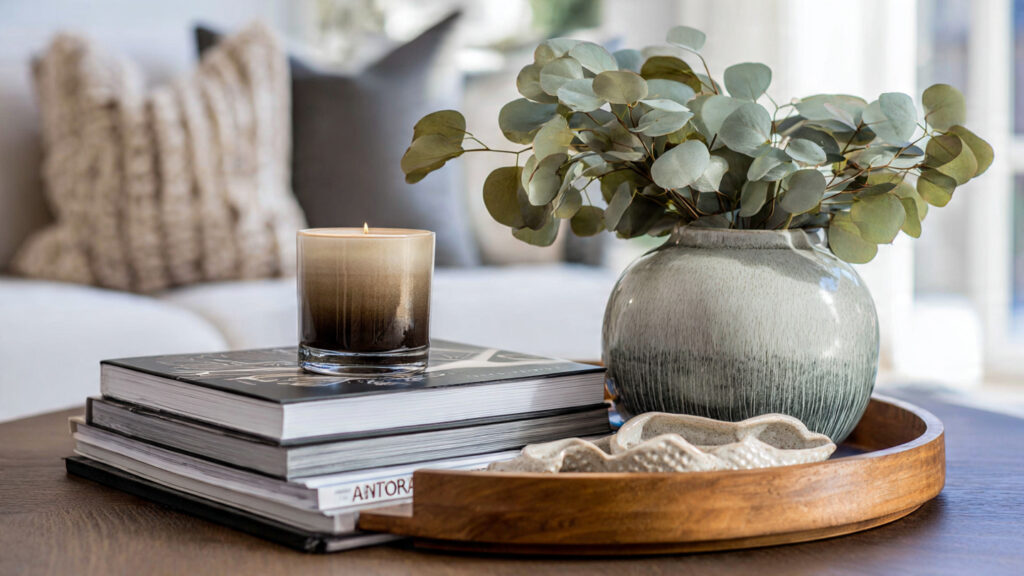
At the end of the day, How to Style a Coffee Table comes down to balance and personality. I don’t follow strict rules—I just use these principles as a guide.
What matters most is that the space feels like mine. Once I started focusing on that, styling became easier and way more enjoyable.
Conclusion
When I first started learning How to Style a Coffee Table, I thought it was all about following strict design rules. But over time, I realized it’s actually about creating balance while keeping things practical for everyday life. A well-styled coffee table isn’t just something that looks good in photos—it should work for how I live, relax, and use my space daily.
What made the biggest difference for me was focusing on simple principles instead of overcomplicating things. Layering objects, mixing textures, and leaving breathing room completely changed how my table looked. I also noticed that when I stopped trying to fill every inch, the pieces I chose actually stood out more. That’s something many designers agree on—less clutter often increases visual impact.
Another thing I’ve learned is that personality matters more than perfection. Adding something personal, whether it’s a book I love or a small object with meaning, makes the setup feel real and not staged. According to home styling trends, personalized décor increases emotional connection to a space, which is exactly what I aim for in my living room.
I also remind myself that function always comes first. My coffee table still needs to hold drinks, remotes, and everyday essentials. When style supports function instead of fighting it, the whole space feels more comfortable and natural. That balance is what truly makes a coffee table work.
At the end of the day, mastering How to Style a Coffee Table is less about copying a perfect setup and more about building something that feels right for me. I start simple, adjust as I go, and don’t hesitate to remove things if it feels crowded. Styling becomes easier when I treat it as an evolving process instead of a one-time task.
If there’s one thing I always keep in mind, it’s this: a coffee table should feel inviting, not intimidating. Once I embraced that idea, styling stopped feeling like a chore and started feeling creative. And honestly, that’s when the best results happen.
Many of the ideas I share are inspired by real-life experimentation. I often test décor concepts in my own living spaces and explore practical ways they can be applied in everyday homes. I also gather insights from working with homeowners who want to improve the comfort, beauty, and functionality of their spaces.
I share practical ideas for improving living rooms, bedrooms, and overall home aesthetics using simple design principles.
I explore creative ways to upgrade outdoor spaces including patio décor, small backyard styling, and relaxing outdoor setups.
I provide ideas for kitchen organization, décor accents, and functional layouts that make kitchens more beautiful and practical.
The concepts shared here are based on ideas I have personally experimented with or studied through real home décor improvements.