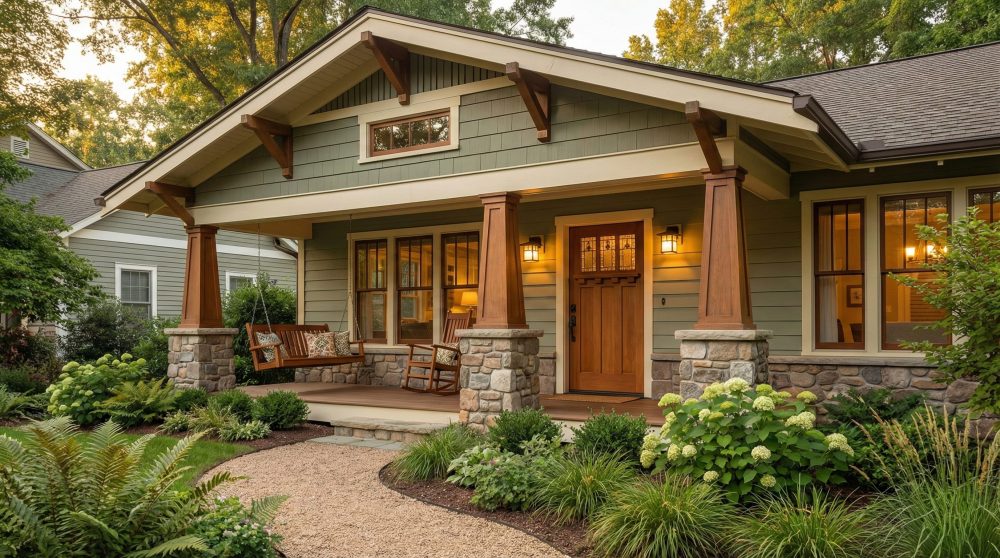
15 Green House Exterior Ideas:
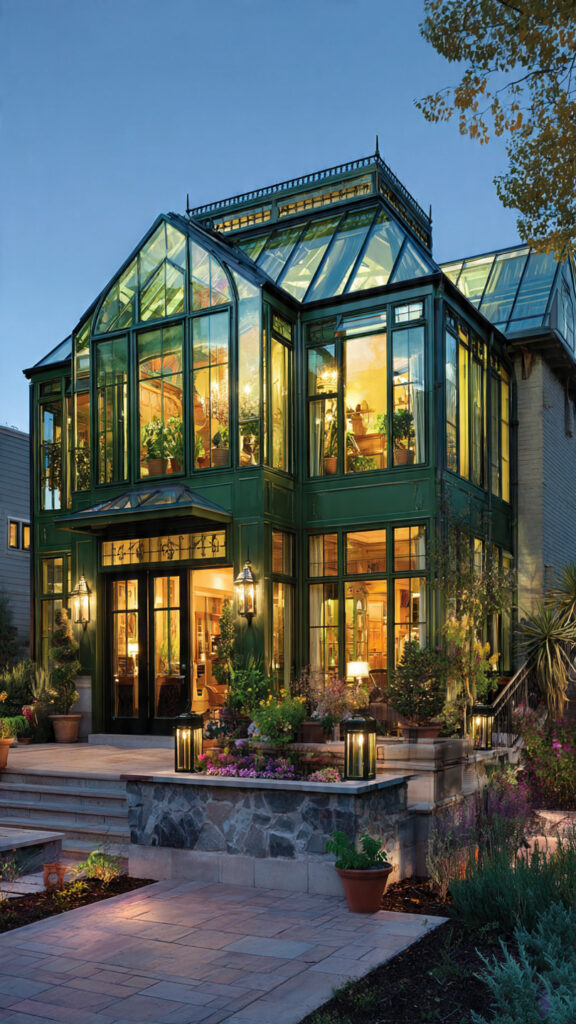
I’ve noticed most neighborhoods feel repetitive—too much beige and grey everywhere. When I explored Green House Exterior Ideas, I realized how powerful green can be when used right. It connects your home with nature and instantly improves curb appeal.
From my experience, green isn’t just one color—it can feel calm, bold, modern, or even historic depending on the shade. In this guide, I’ll walk through practical ideas, what actually works in real homes, and how to avoid costly mistakes.
Above all, choosing the right green can increase perceived home value. According to color psychology studies, natural tones like green can boost buyer interest by up to 15% because they feel relaxing and grounded.
Key Takeaways
- Green exteriors create a strong connection with nature and increase curb appeal
- Muted greens like sage are safest for beginners
- Dark greens add depth and make landscaping stand out
- Undertones (blue, yellow, grey) matter more than you think
- Always test paint in different lighting before committing
The Soft & Serene Palette
When I first experimented with green, I started with softer tones. These shades feel safe, calming, and work almost like neutrals in most homes.
1. Sage Green and Cream
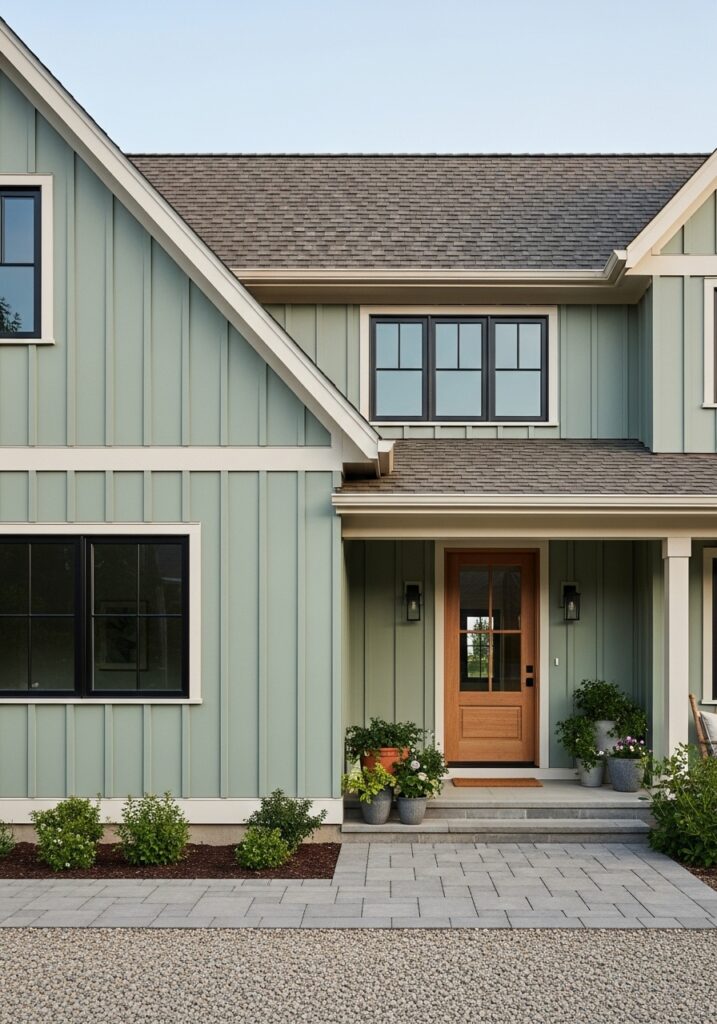
I’ve seen sage green become one of the most popular choices in recent years. Its grey undertones prevent it from looking too bright under sunlight.
From what I’ve tested, pairing it with cream trim creates a softer and more premium look than plain white. This combination works especially well for farmhouse-style homes and can increase visual warmth without overwhelming the exterior.
2. French Grey-Green
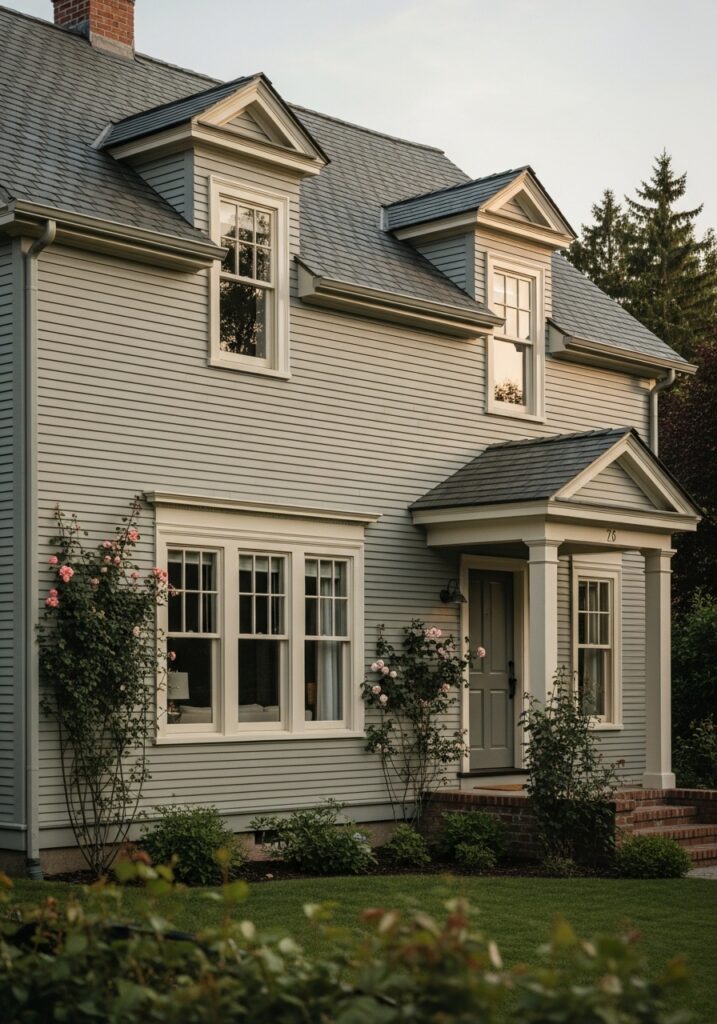
This shade changes throughout the day, and that’s what makes it interesting. I’ve noticed it looks more grey in shade and slightly green in sunlight.
It works best on older homes or cottages because it adds a sense of history. If you want a timeless look without going too bold, this is a reliable option that blends beautifully with darker roofs.
3. Mint Green and White
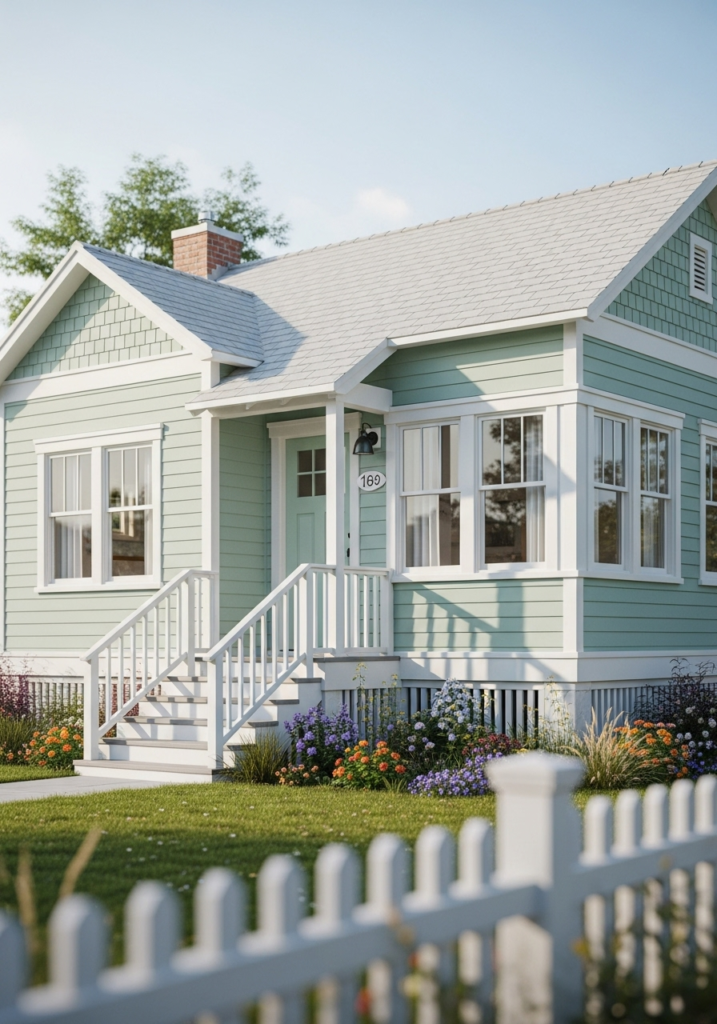
I used to think mint was too bright, but softer versions feel fresh and subtle. The key is choosing a dusty mint, not a neon tone.
This works best for smaller homes where you want a cheerful and light appearance. In my opinion, adding loose landscaping with flowers makes this style feel more natural and less artificial.
4. Pistachio and Natural Wood
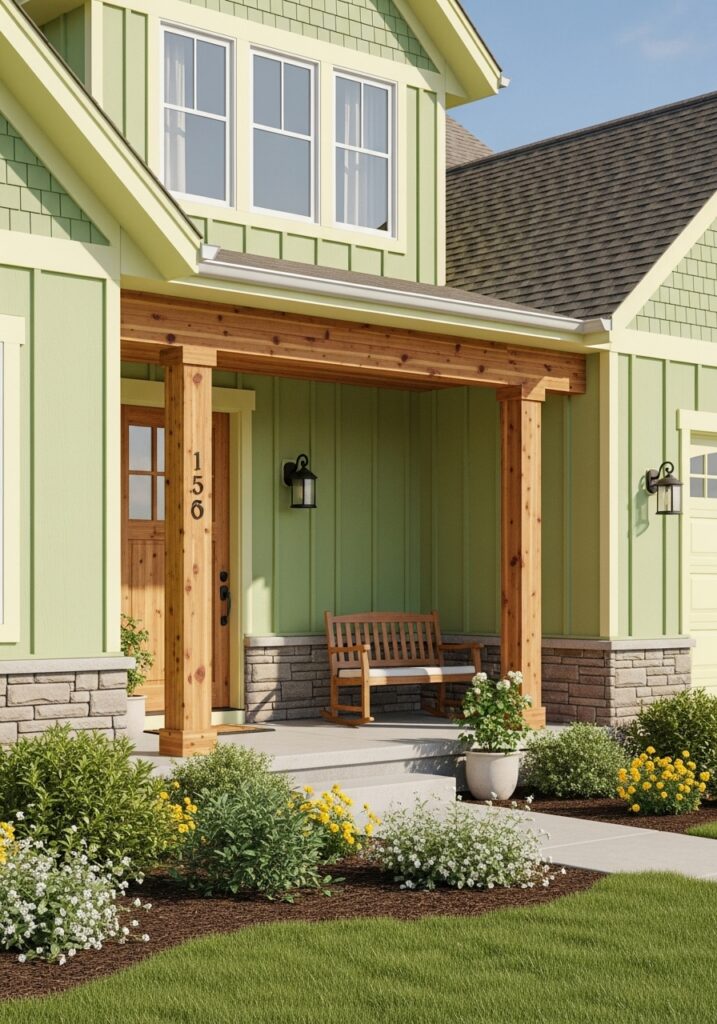
This is where things start getting interesting. Pistachio tones feel warm and inviting, but they can look overwhelming if not balanced.
I’ve found that adding natural wood elements—like a wooden door or porch—grounds the entire look. This combination works well if you want your home to feel welcoming and slightly unique without going extreme.
The Deep & Moody Collection
Darker shades are trending for a reason. I’ve seen how they add depth and make homes look more expensive from the outside.
5. Forest Green and Cedar
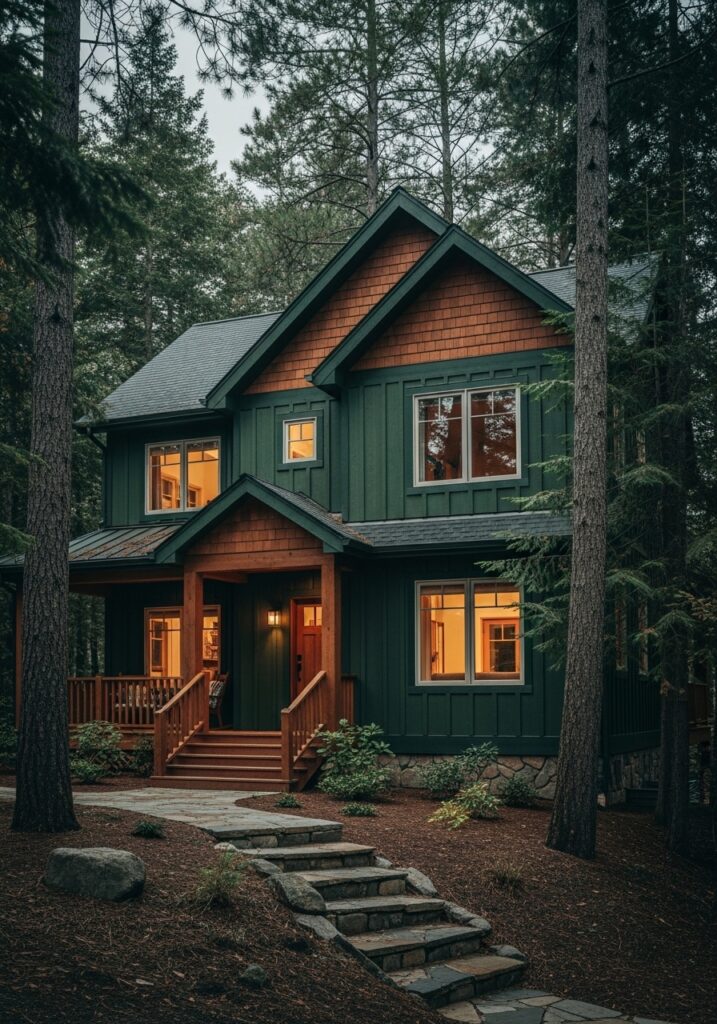
This combination gives a strong “nature retreat” feel. Forest green tends to recede visually, which makes the home blend into its surroundings.
In my experience, textures like wood siding or cedar accents make a big difference here. They add character and prevent the exterior from looking flat.
6. Blackened Green (The Nearly Black)
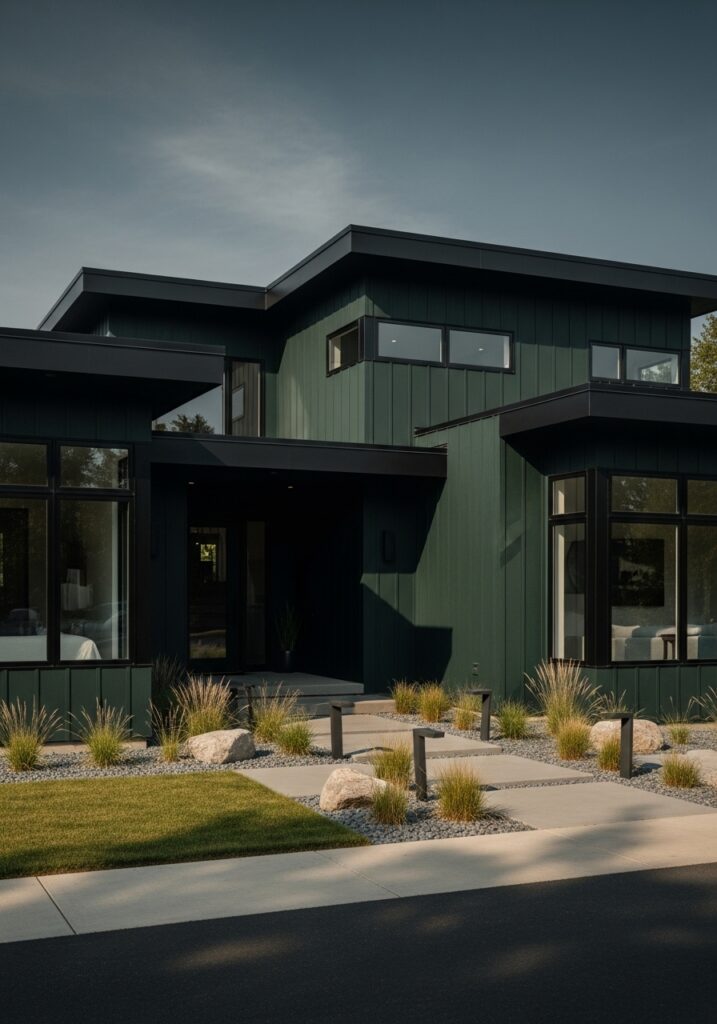
If you like modern homes, this is one of the best Green House Exterior Ideas to consider. It looks almost black but reveals green tones in sunlight.
I’ve noticed this works especially well on homes with clean lines and minimal design. It creates a sharp, high-end appearance without feeling too harsh like pure black.
7. Hunter Green and Red Brick
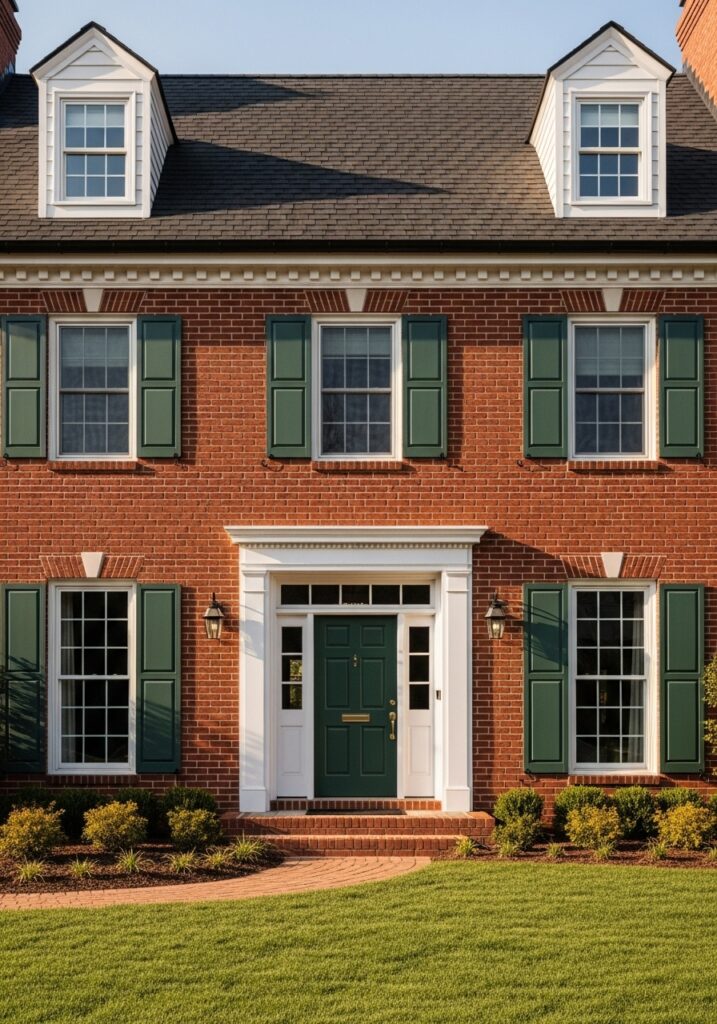
This is a classic combination that I’ve seen work consistently over time. The cool green balances the warmth of red brick.
The key is using a darker green. Lighter shades can clash and create an unbalanced look. I usually recommend this for shutters, doors, or accents rather than full exteriors.
8. Olive Drab and Industrial Metals
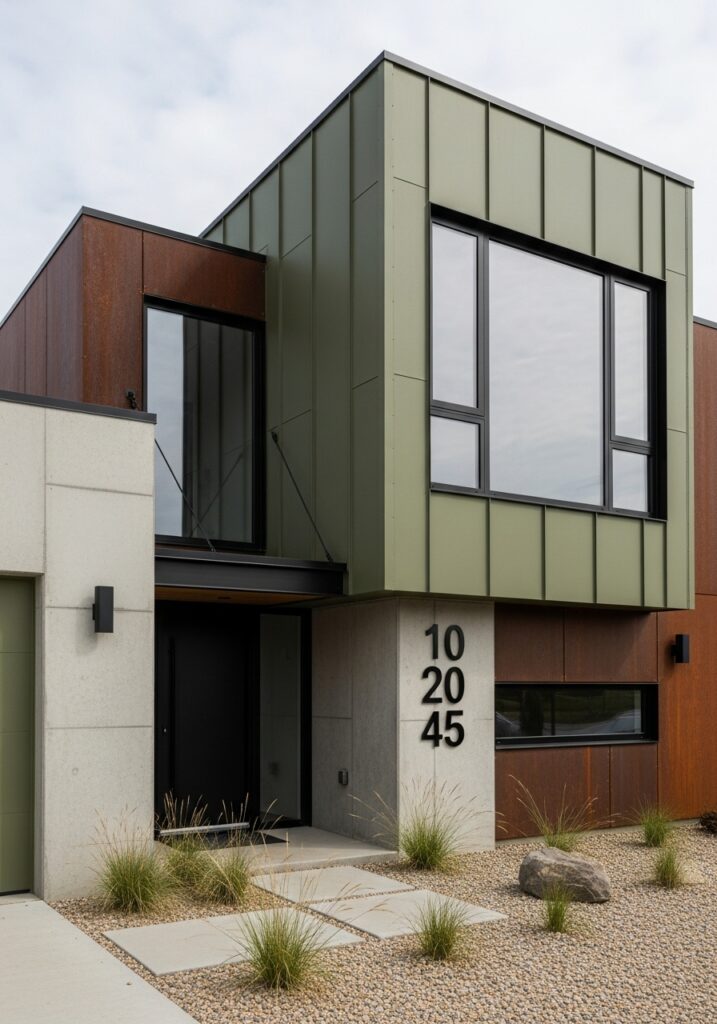
Olive green feels earthy and grounded. I’ve seen it pair extremely well with materials like steel, concrete, and black fixtures.
If you’re aiming for a modern-industrial look, this combination delivers strong visual impact. Adding matte black details can further enhance the overall finish.
The Bold & Unique Mix
Sometimes playing it safe isn’t the goal. These ideas stand out and give your home a strong personality.
9. Teal Green and Coral
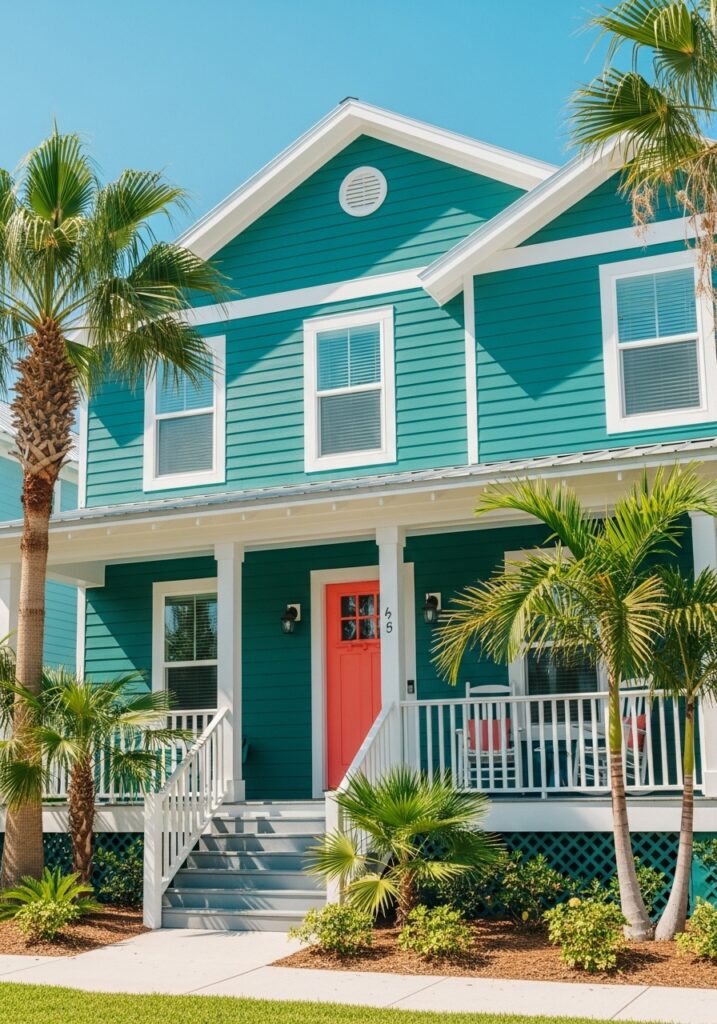
This is a bold mix, but when done right, it looks stunning. Teal provides depth while coral adds a vibrant contrast.
I recommend keeping the rest of the design simple so the colors don’t compete. This idea works best in warmer climates where brighter tones feel natural.
10. The Monochromatic Green
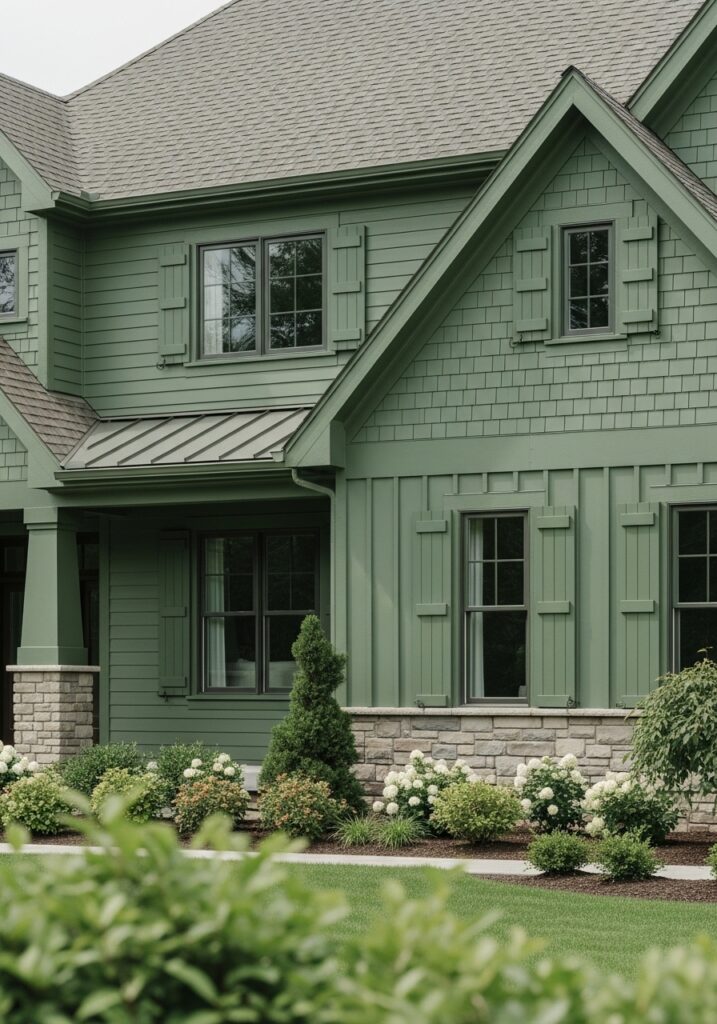
Using multiple shades of green in one exterior creates depth without adding too much contrast.
I’ve tried this approach on design mockups, and it works best when the house has different textures. It keeps the design interesting while maintaining a clean and cohesive look.
11. Chartreuse Accents (The “Pop”)
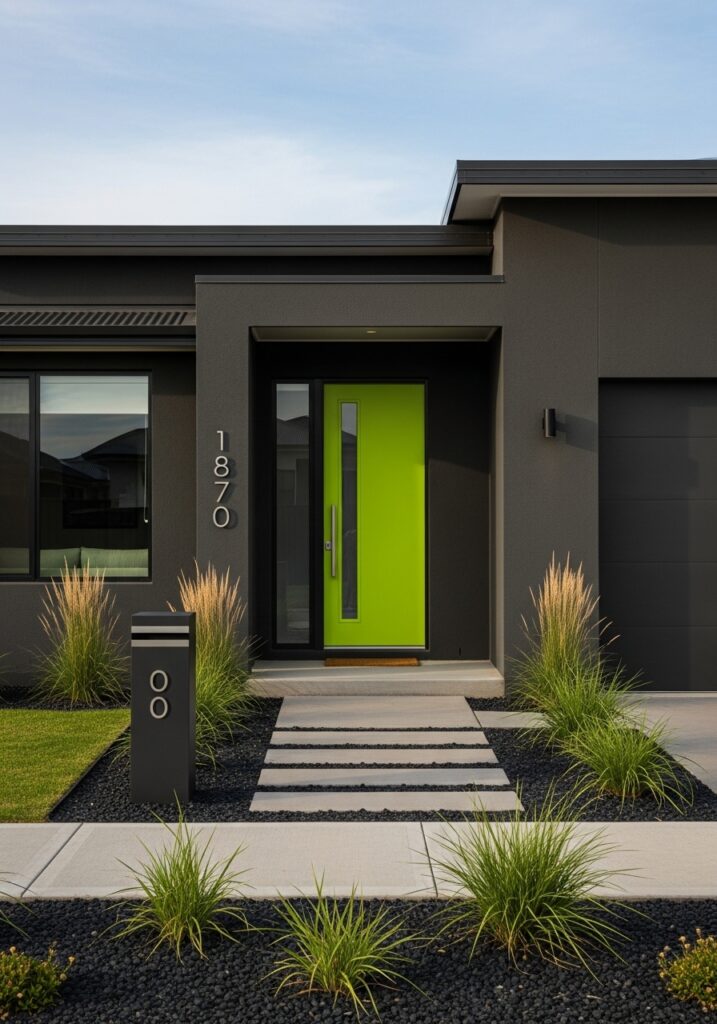
Instead of painting the whole house bright green, I prefer using it as an accent.
A bold front door in chartreuse instantly draws attention and creates a focal point. This works especially well against darker exteriors like charcoal or deep green.
Materials & Landscaping Synergy
From my experience, paint alone isn’t enough. The materials and landscaping you choose can completely change how the color feels.
12. Green Stained Wood
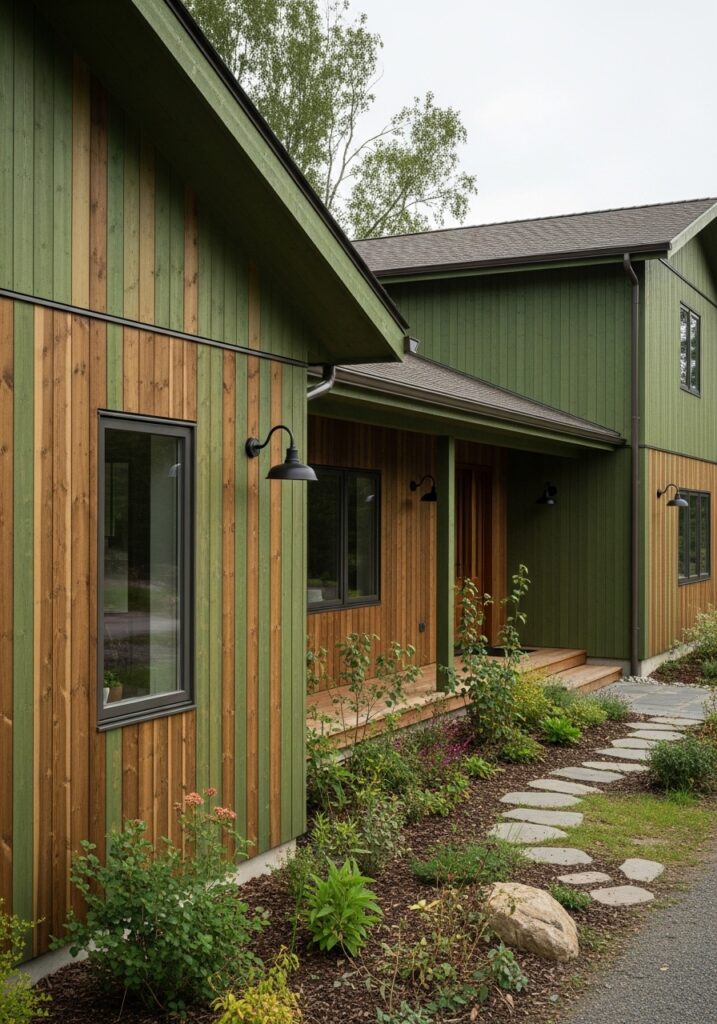
Staining wood instead of painting it keeps the natural texture visible. I’ve found this creates a more relaxed and organic look.
Another benefit is maintenance. Stains fade over time instead of peeling, which makes upkeep easier in the long run.
13. The Ivy-Covered Wall
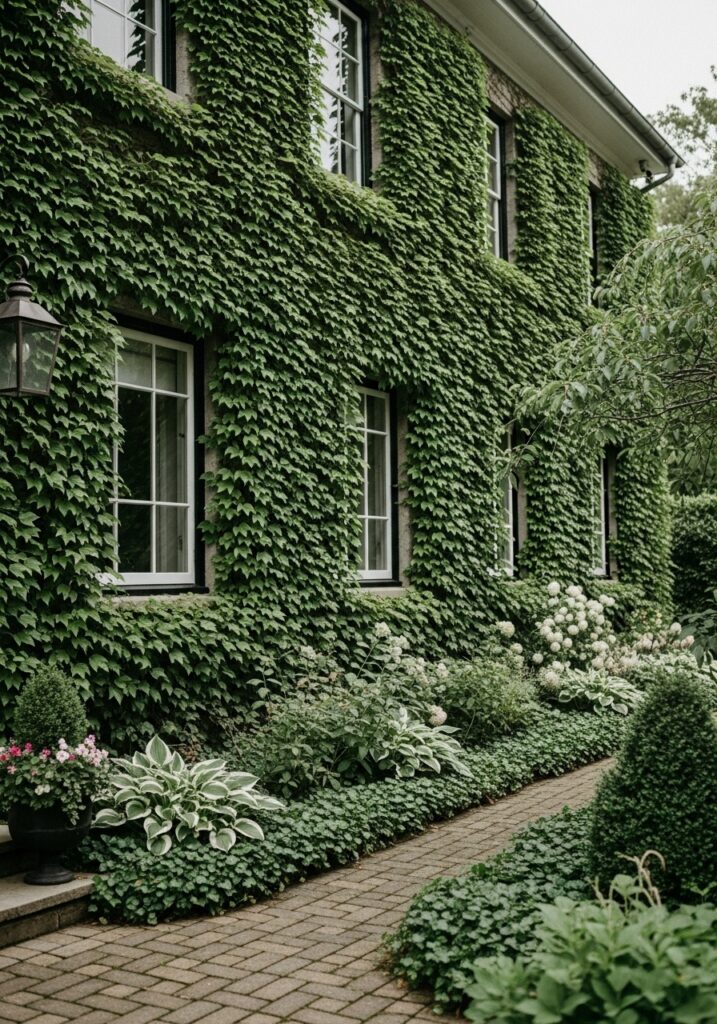
This is one of the most natural Green House Exterior Ideas I’ve seen. Instead of paint, you let plants create the color.
However, I always suggest checking if the vines are safe for your walls. Some plants can damage surfaces if not managed properly.
14. Green Metal Roofing
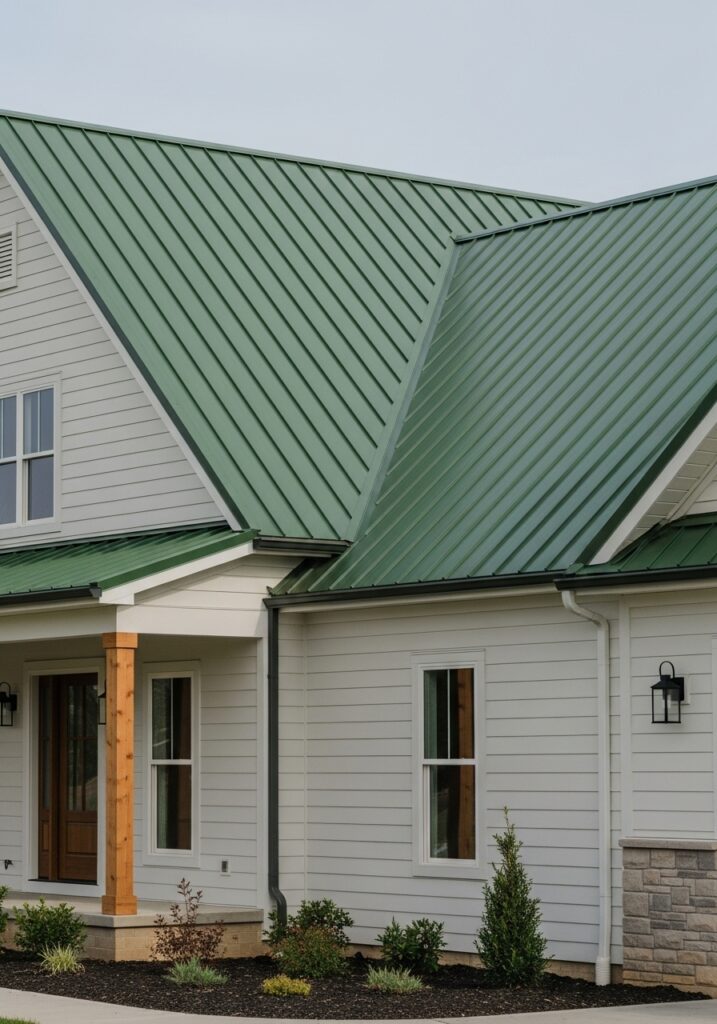
A green metal roof can completely transform a neutral house. I’ve noticed this works especially well with white or cream exteriors.
Metal roofs are also long-lasting. Many can last 40–70 years, which makes them a smart long-term investment.
15. The “Garden First” Exterior
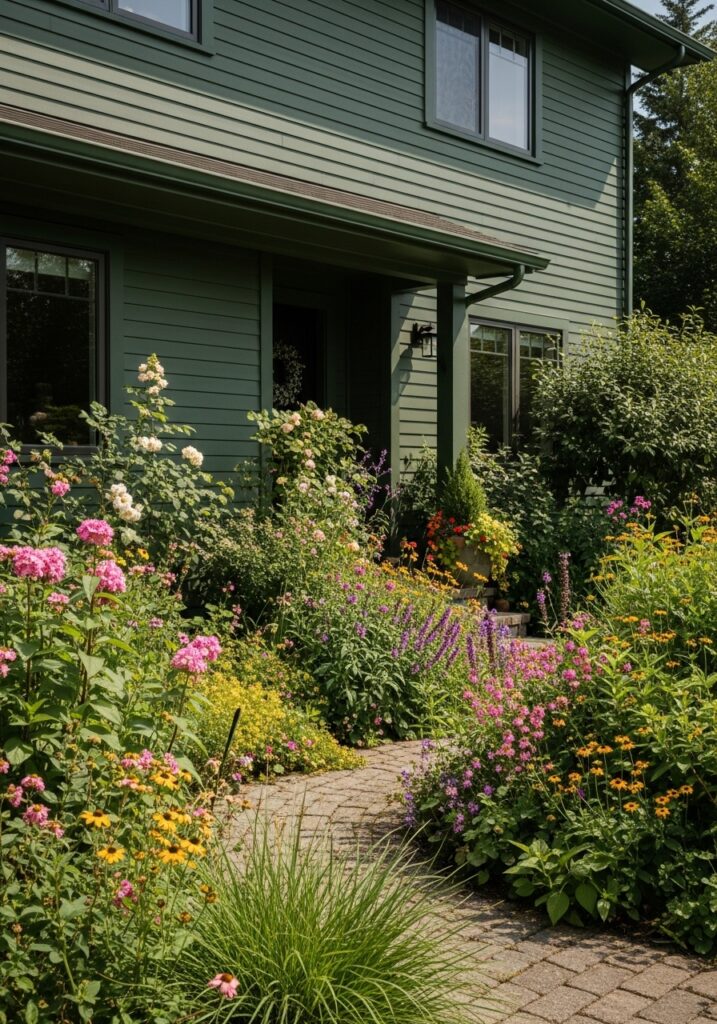
Sometimes the best approach is letting the garden stand out. A muted green exterior acts as a background for colorful flowers.
I’ve seen this technique used in landscaping design, where contrast increases visual appeal. Bright flowers appear more vibrant against darker green walls.
How to Choose the Right Shade (Without Panicking)
Choosing the right green can feel overwhelming. I’ve made mistakes before, so here’s what actually works.
Check the Undertones
Not all greens are the same. I always break them into three types:
Blue-based greens feel cool and modern
Yellow-based greens feel warm and earthy
Grey-based greens feel neutral and safe
Understanding this makes selection much easier.
Test in All Light
Lighting changes everything. I always test paint on different sides of the house.
A color that looks perfect in sunlight might look dull or muddy in shade. Testing for at least 24 hours helps avoid expensive repainting.
Consider Your Neighbors
I don’t think you need to match your neighbors, but you should avoid strong clashes.
If nearby homes have warm tones like brick, cooler greens usually balance better and feel more cohesive.
Accents That Make Green Pop
Once the main color is set, accents complete the look.
Metals
I’ve found different metals create very different styles:
Brass adds a traditional and rich feel
Black creates a modern and clean finish
Copper adds warmth and pairs beautifully with cooler greens
Choosing the right metal can elevate the entire exterior.
Porch Styling
Your porch should feel like an extension of the exterior design.
I usually recommend natural materials like wood furniture, wicker, and plants. These elements connect the house with the outdoor space and make the design feel complete.
Final Thoughts
From everything I’ve tried and seen, Green House Exterior Ideas offer one of the best ways to transform a home’s look. They feel natural, timeless, and visually appealing.
If you’re unsure, start with softer tones like sage. If you want something bold, go for deeper greens or contrast accents. Either way, testing and planning will save you time and money.
In my experience, once you go with green, it’s hard to go back to neutral shades.
FAQ,s
What is the best shade for Green House Exterior Ideas?
From my experience, sage green is the safest and most versatile option. It has grey undertones, so it doesn’t look too bright or overwhelming. It works well with most home styles and lighting conditions, which makes it a great starting point.
Do green house exteriors increase home value?
Yes, they can. I’ve seen data suggesting that nature-inspired colors like green can improve buyer perception and even increase interest by around 10–15%. A well-chosen green exterior makes a home feel calm, fresh, and more visually appealing.
Which trim colors work best with green exteriors?
I usually go for cream, off-white, or even soft beige for a balanced look. If I want something modern, black trim works really well with darker greens. The key is avoiding harsh contrast unless that’s the style you’re aiming for.
Are dark green exteriors hard to maintain?
In my experience, darker colors can show dust, pollen, and fading more than lighter shades. However, with good-quality paint and proper finishes, maintenance stays manageable. Matte or satin finishes tend to hide imperfections better.
How do I choose the right undertone for green paint?
I always look at undertones first because they change everything. Blue-based greens feel cooler and modern, yellow-based greens feel warmer and earthy, and grey-based greens feel neutral and safe. Testing samples is the best way to be sure.
Can I use green on a small house exterior?
Yes, and I’ve found lighter greens like mint or sage work best for smaller homes. They make the space feel more open and inviting. Dark greens can still work, but they may make the home appear smaller if not balanced properly.
What roofing color goes best with green exteriors?
From what I’ve seen, dark grey, black, and even green metal roofs pair really well. For lighter green homes, I prefer neutral roofing colors to keep everything balanced and cohesive.
Is green a good choice for modern home exteriors?
Absolutely. I’ve noticed darker greens like blackened green or deep forest tones work especially well for modern homes. They create a clean, high-end look while still feeling connected to nature.
How do I test green paint before committing?
I always paint sample patches on different sides of the house and observe them for at least 24 hours. Lighting changes throughout the day, and this step has saved me from making expensive mistakes more than once.
What accents make green exteriors stand out?
In my experience, metals like brass, black, and copper make a big difference. Adding natural wood elements and plants also enhances the overall look and makes the design feel more complete.
Many of the ideas I share are inspired by real-life experimentation. I often test décor concepts in my own living spaces and explore practical ways they can be applied in everyday homes. I also gather insights from working with homeowners who want to improve the comfort, beauty, and functionality of their spaces.
I share practical ideas for improving living rooms, bedrooms, and overall home aesthetics using simple design principles.
I explore creative ways to upgrade outdoor spaces including patio décor, small backyard styling, and relaxing outdoor setups.
I provide ideas for kitchen organization, décor accents, and functional layouts that make kitchens more beautiful and practical.
The concepts shared here are based on ideas I have personally experimented with or studied through real home décor improvements.