15 Inside Chicken Coop Designs: Creative & Functional Ideas for Your Flock
A chicken coop isn’t just four walls and a roof. It’s where your chickens sleep, lay eggs, stay warm, cool off, and feel safe. When the inside of a coop is thoughtfully designed, you start seeing real changes—cleaner eggs, calmer birds, and fewer daily issues that usually frustrate chicken keepers.
Whether you’re raising a small backyard flock or managing a larger group, the interior layout matters more than most people realize. Chickens respond quickly to comfort, routine, and organization. When their space works with their natural habits instead of against them, everything runs smoother for both you and them.
1. Multi-Level Roosting Bars

Chickens naturally prefer sleeping off the ground, and they also have strong preferences when it comes to height. Multi-level roosting bars allow them to choose where they feel most comfortable without overcrowding a single perch. This setup makes excellent use of vertical space and reduces nighttime tension. Over time, each chicken settles into a preferred spot, which leads to quieter evenings and fewer scuffles before roosting.
2. Built-in Egg-Laying Nooks
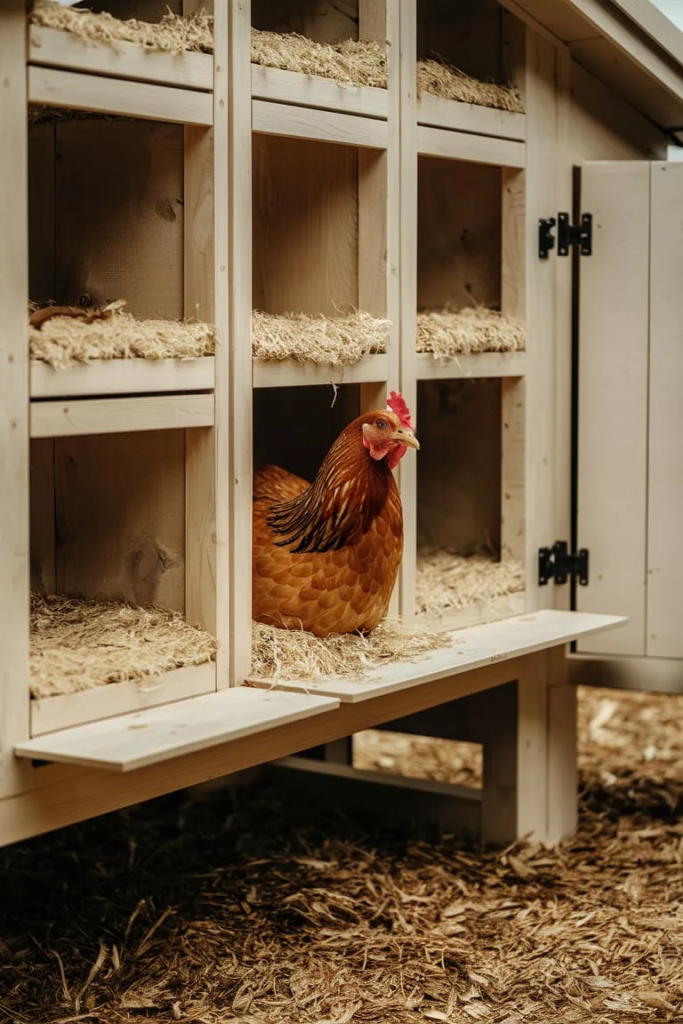
Hens need privacy and calm when laying eggs. Built-in egg-laying nooks create designated, secure spaces that feel natural and inviting. When nesting boxes are part of the coop’s structure, they stay cleaner and more stable. Soft bedding and consistent placement encourage hens to return to the same spots daily, making egg collection easier and reducing the chance of eggs being laid in random corners.
3. Bright and Airy Windows
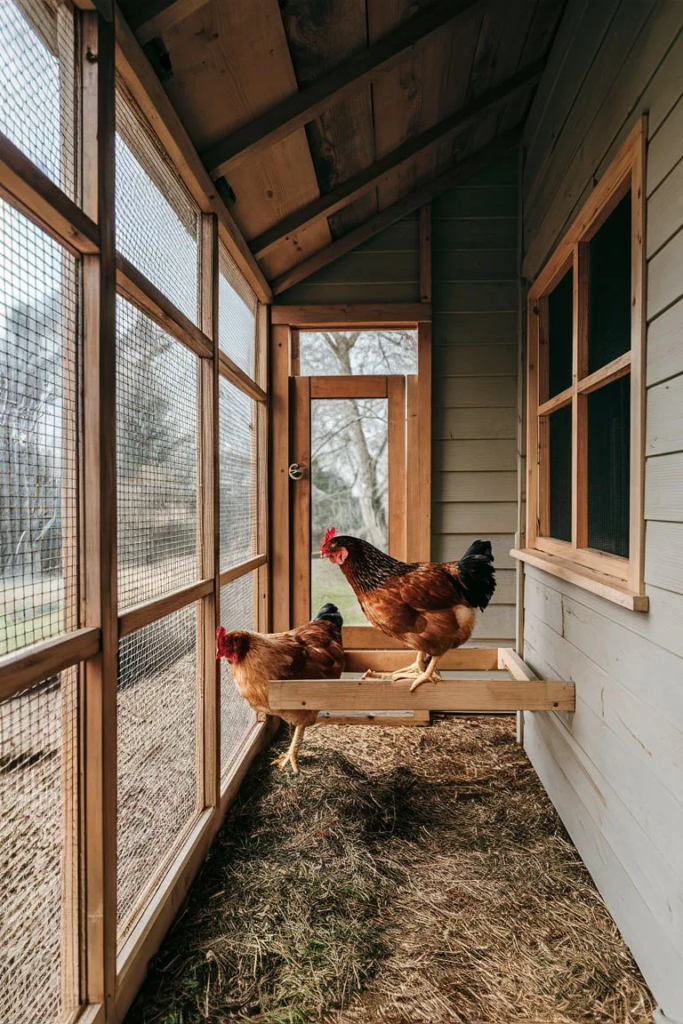
Light and airflow play a huge role in coop health. Bright, well-placed windows allow sunlight to enter while improving ventilation. This helps regulate temperature and keeps the interior from becoming damp or stale. Good airflow reduces odors and moisture buildup, which are common causes of respiratory problems. A well-ventilated coop simply feels healthier for everyone involved.
4. Hanging Feeders and Waterers
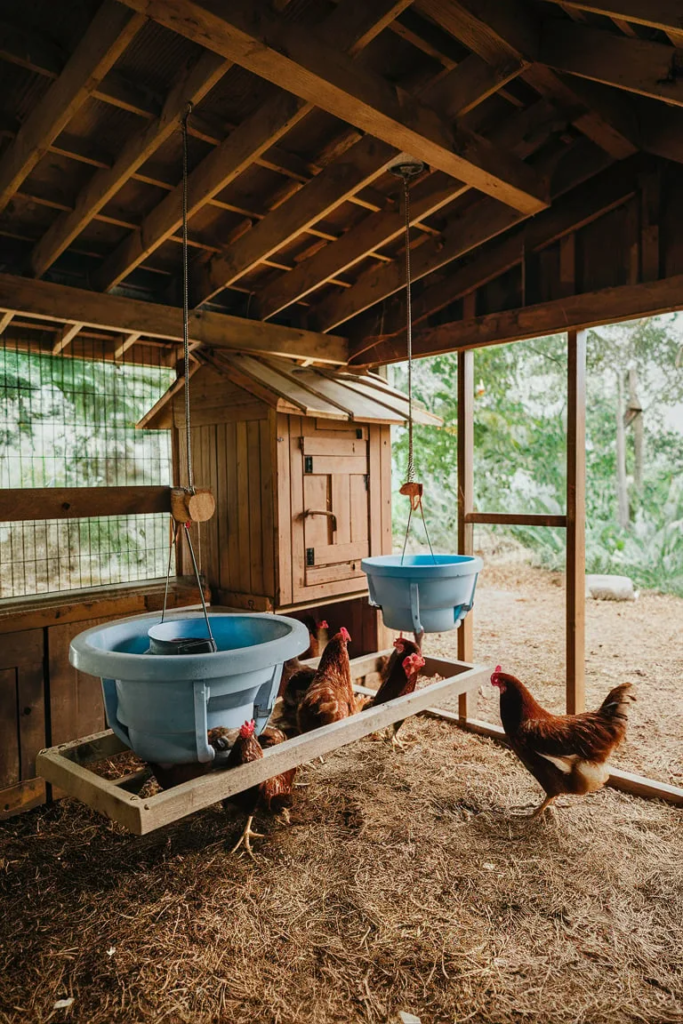
Feeders and waterers placed on the floor often lead to wasted feed, dirty water, and soggy bedding. Hanging them slightly off the ground keeps them cleaner and easier for chickens to access. This small adjustment saves money, reduces daily cleanup, and keeps the coop noticeably tidier over time.
5. Easy-Clean Sliding Trays
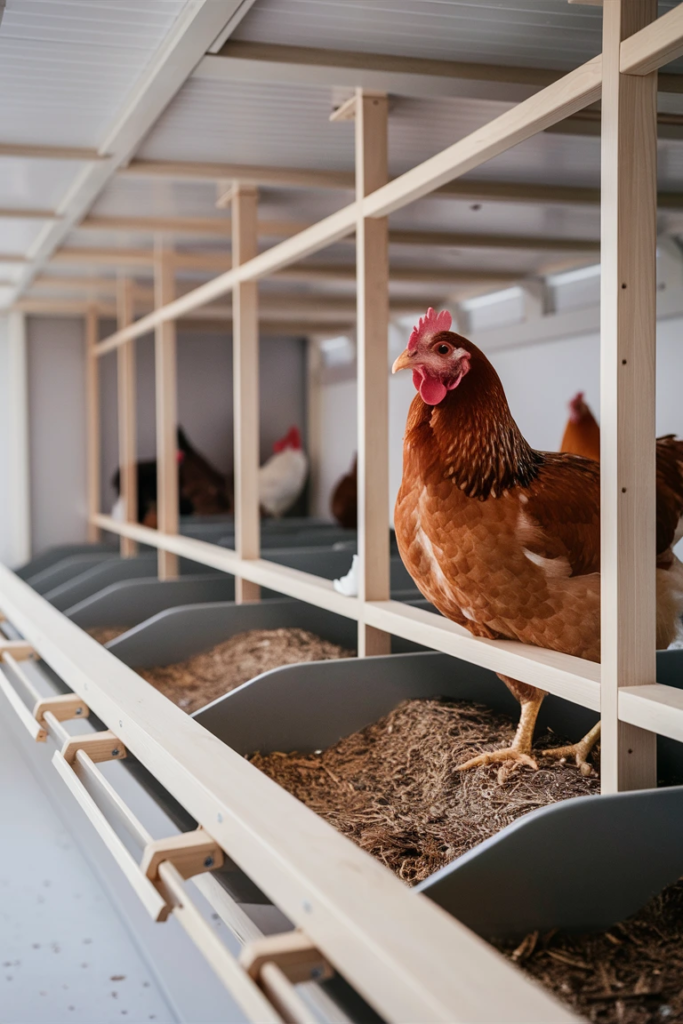
Cleaning becomes far less time-consuming when sliding trays are installed beneath roosting bars. These trays catch droppings before they spread across the coop floor. They slide out easily, making daily or weekly cleaning quick and manageable. This setup helps control odors and keeps the interior consistently clean.
6. Compact Design for Small Spaces
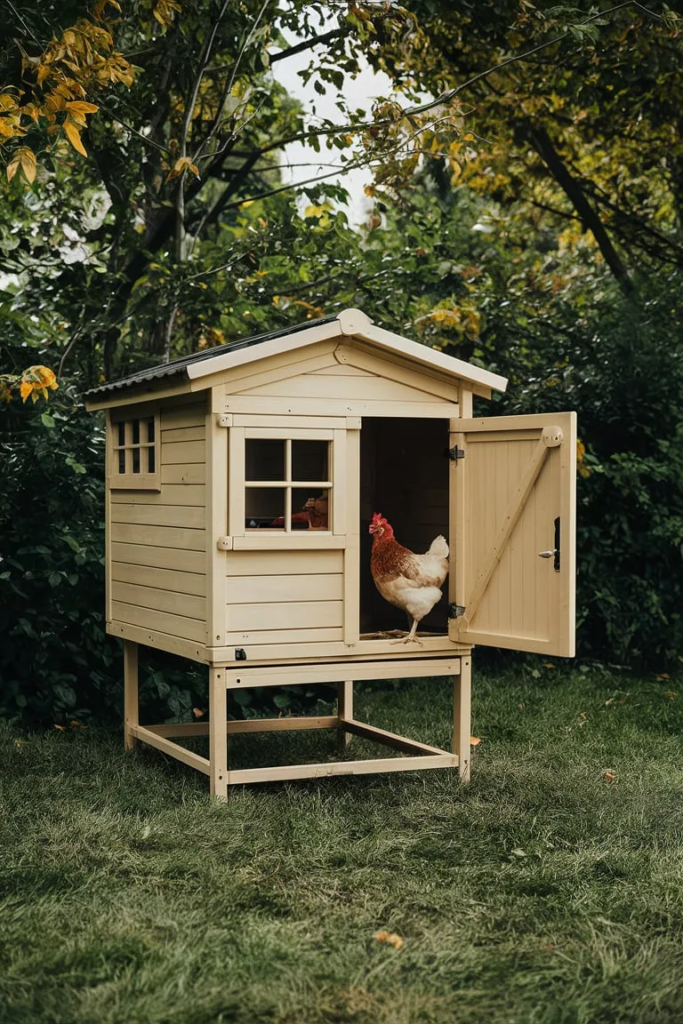
Limited space doesn’t mean sacrificing function. Compact coop designs focus on smart layouts, foldable features, and multi-purpose elements that maximize every inch. With the right planning, even a small coop can feel open, organized, and comfortable for chickens while remaining easy to maintain.
7. Natural Elements and Rustic Look

Using natural materials like wood, straw, logs, and reclaimed pieces creates a warm, inviting environment. These materials feel more comfortable for chickens and blend naturally with outdoor surroundings. They also age well, giving the coop character rather than making it look worn out over time.
8. Cozy Insulated Interiors

Insulation plays a major role in keeping chickens comfortable year-round. A well-insulated coop stays warmer during colder months and cooler during hot weather. This stable environment reduces stress, supports consistent egg production, and keeps chickens healthier overall.
9. Ladder-Style Perches
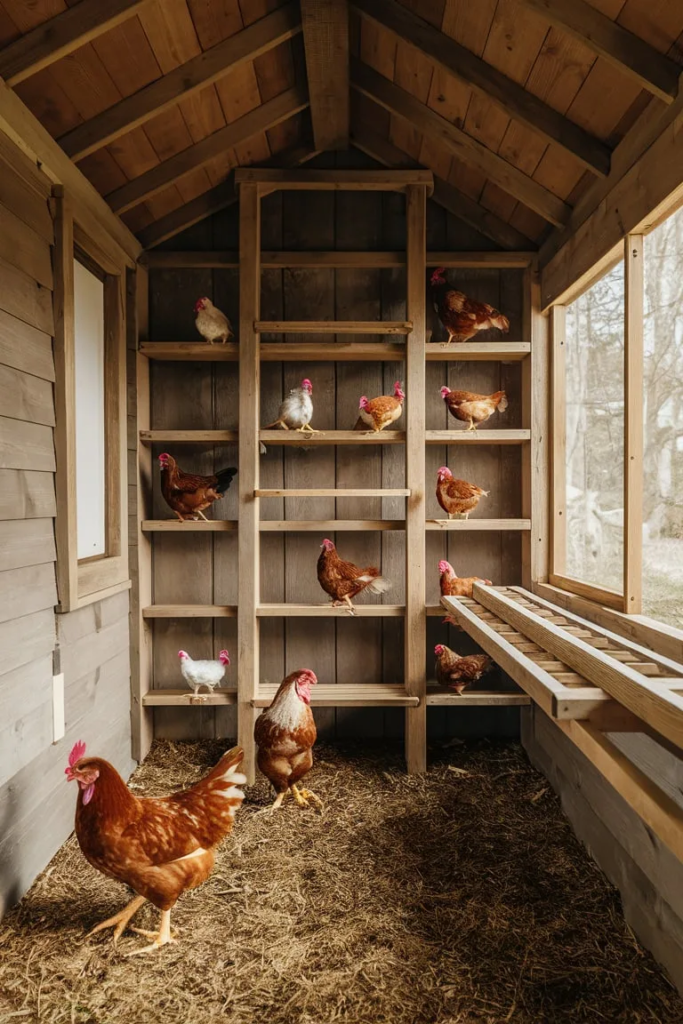
Ladder-style perches offer multiple roosting levels, allowing chickens to move naturally and choose their preferred height. This design supports a peaceful social structure within the flock and makes excellent use of vertical space without overcrowding.
10. Play Area Inside the Coop

Chickens are naturally curious and active. When confined indoors due to weather or limited outdoor access, boredom can lead to unwanted behaviors. Adding simple items like hanging objects or swings keeps them mentally engaged and physically active, which leads to a calmer flock.
11. Storage-Friendly Coop Design
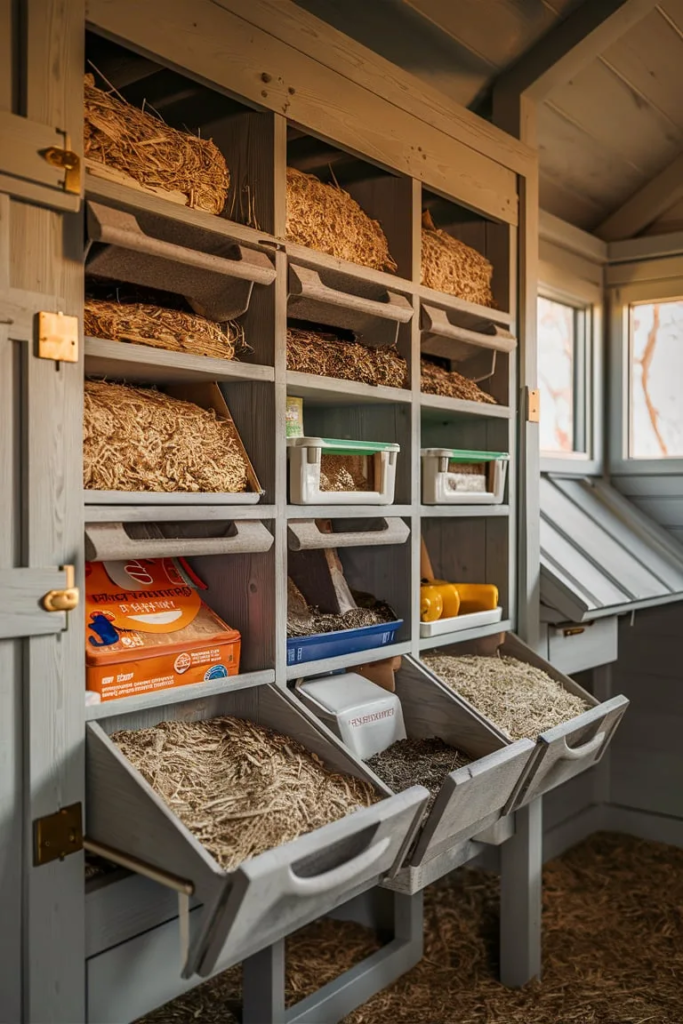
Built-in storage keeps feed, bedding, and tools organized and close at hand. When everything has a designated place, daily tasks become quicker and more efficient. Proper storage also protects supplies from moisture and pests while keeping the coop clutter-free.
12. DIY Chalkboard for Record-Keeping
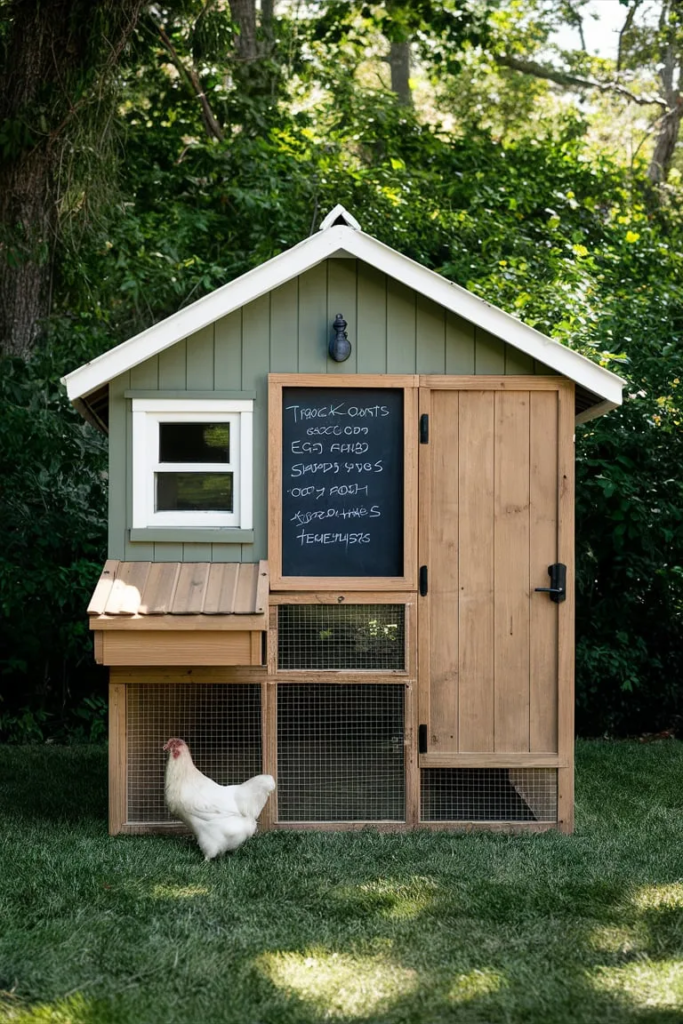
A chalkboard inside the coop is a simple yet effective way to stay organized. Tracking egg counts, feeding schedules, and maintenance reminders helps maintain consistency. It also adds a personal, hands-on feel to the space.
13. Indoor Dust Bath Corner
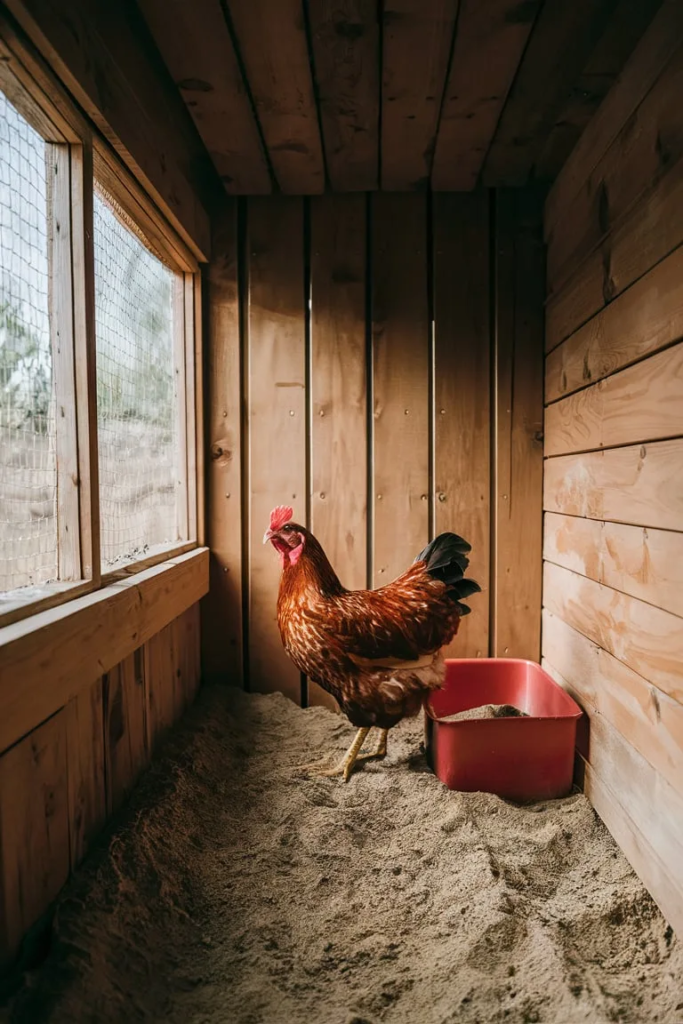
Dust bathing is essential for chicken hygiene. An indoor dust bath allows chickens to clean themselves even when outdoor conditions aren’t ideal. A dedicated corner with the right materials helps control parasites and keeps feathers in excellent condition throughout the year.
14. Painted and Themed Interiors

Painted walls or themed interiors bring personality into the coop. Light colors can brighten darker spaces, while creative themes reflect the care put into raising chickens. A visually pleasant coop makes daily upkeep more enjoyable.
15. Automatic Doors and Timers
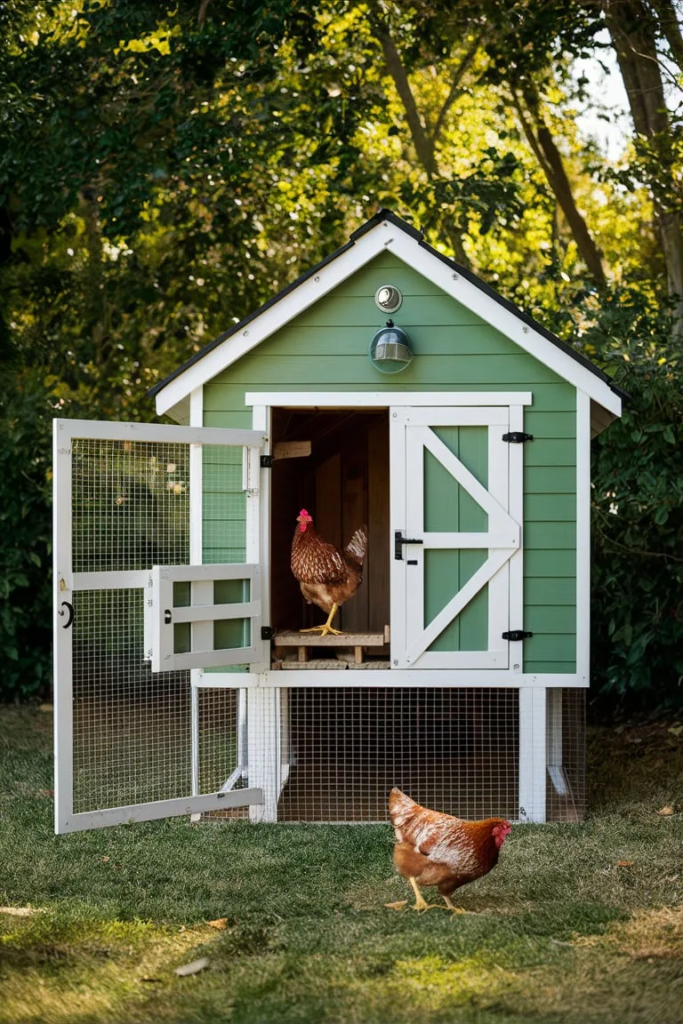
Automatic doors add reliability and security to your routine. They open and close consistently, protecting chickens from predators and removing guesswork from daily schedules. This feature is especially useful for busy mornings or late evenings.
Final thoughts
A well-designed chicken coop interior supports healthier chickens and a smoother daily routine. When the space is planned around natural chicken behavior and real-life care habits, it becomes easier to manage and more enjoyable to maintain. The best coop is one that feels comfortable, organized, and built to support both you and your flock long-term.