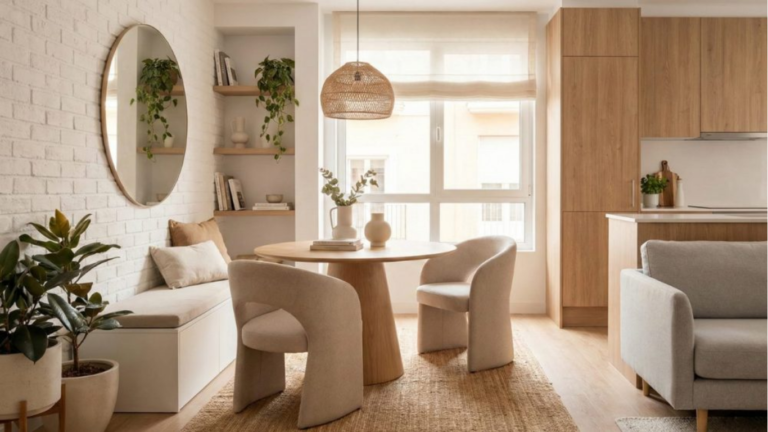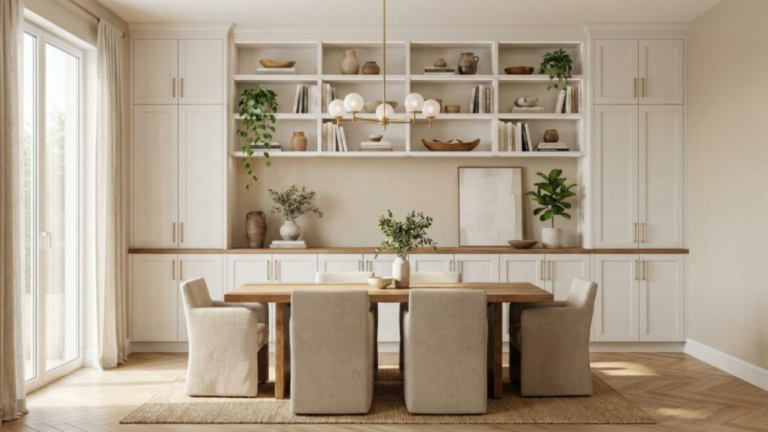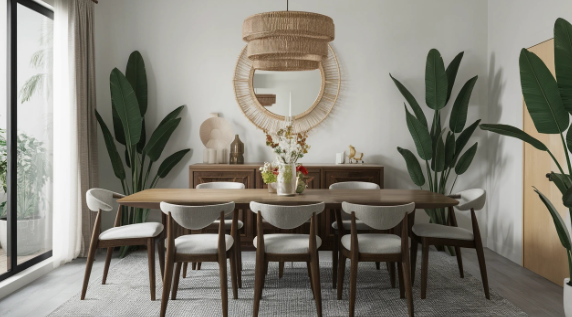
I’ve always believed a dining room should feel more than just functional—it should feel inviting, layered, and a little dramatic. When I first experimented with darker tones, I noticed how instantly the space felt warmer and more intimate. That’s the beauty of Moody Dining Room Ideas—they don’t make a room feel smaller, they make it feel intentional.
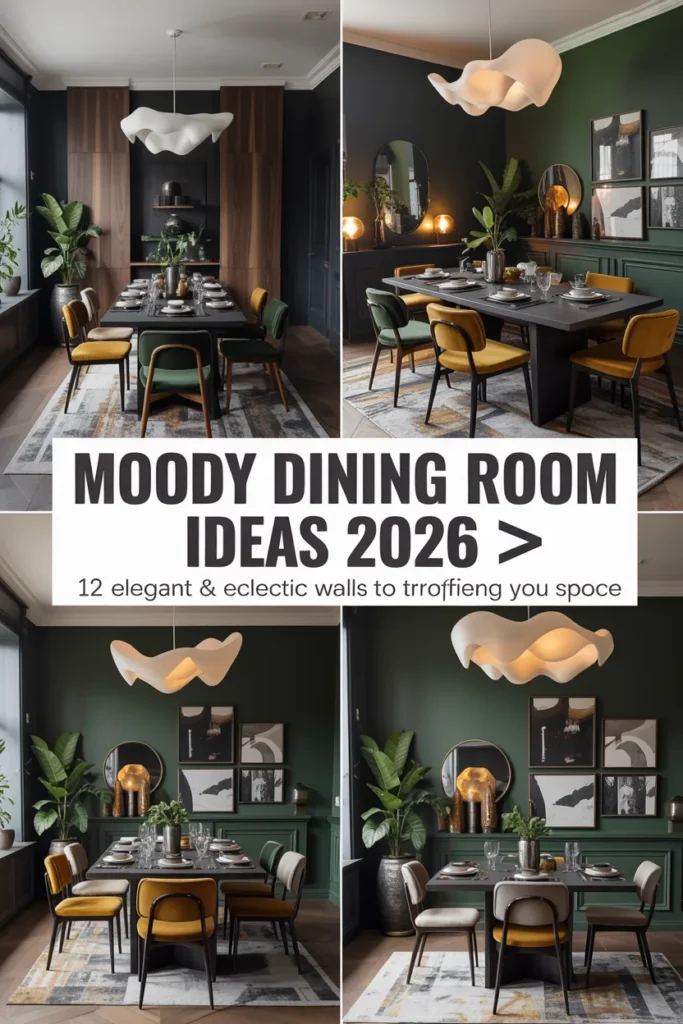
Introduction
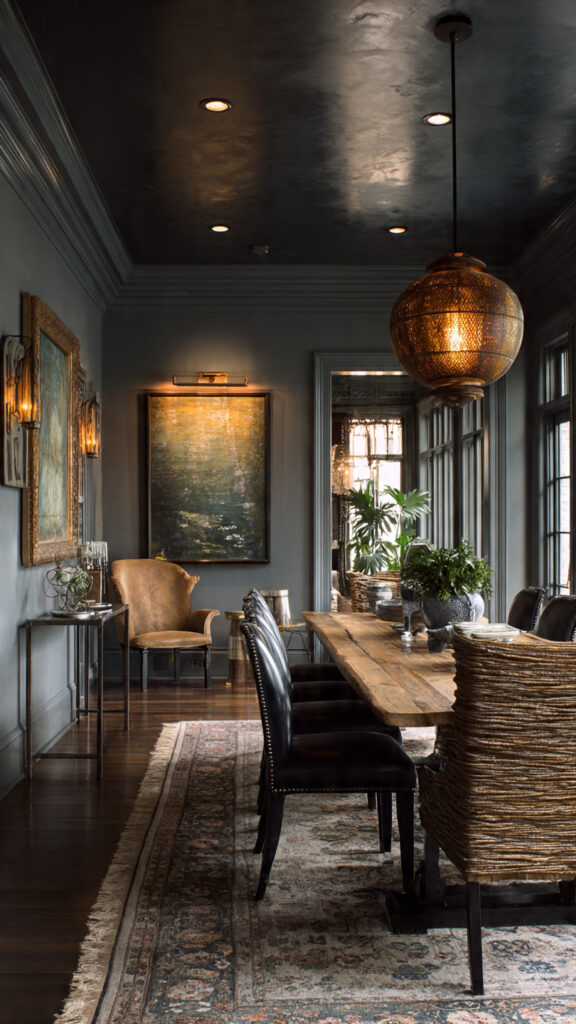
In this guide, I’m sharing practical ways I’ve used (and learned) to create a dining space that feels elegant yet personal, without overcomplicating things.
Complete Article Summary
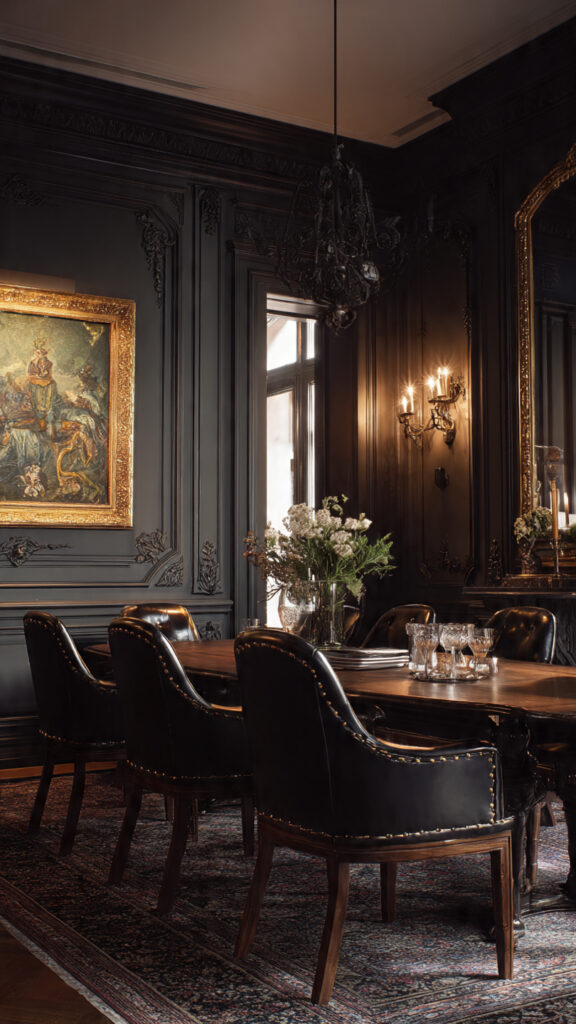
If you want a moody dining room that actually works, it comes down to a few key elements. I focus on dark wall colors, layered lighting, and textures that add depth instead of flatness. Mixing furniture styles, adding vintage pieces, and using metals for contrast also make a big difference.
From my experience, even small changes—like switching lighting or adding a rug—can shift the entire feel of the room. The goal is not perfection, but creating a space that feels cozy, stylish, and lived-in.
Key Takeaways
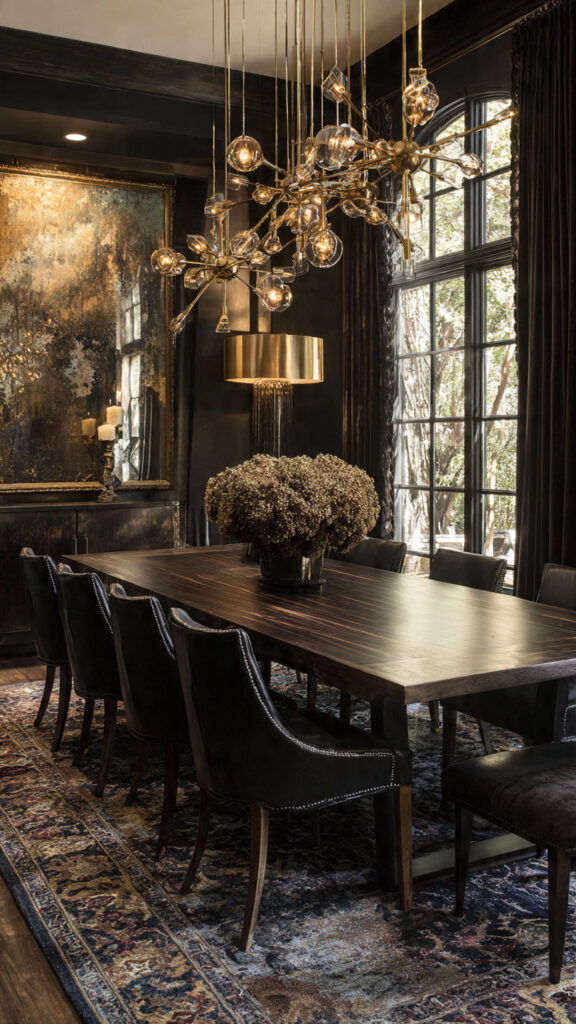
- Dark colors like navy, green, and charcoal create instant depth
- Layered lighting improves mood and usability by up to 70%
- Mixing textures prevents the space from looking flat
- Vintage rugs and eclectic decor add personality
- Mirrors and metallics balance darker tones
- Small updates (lighting, chairs, decor) can transform the space fast
1. Embrace the Dark Side with Wall Color
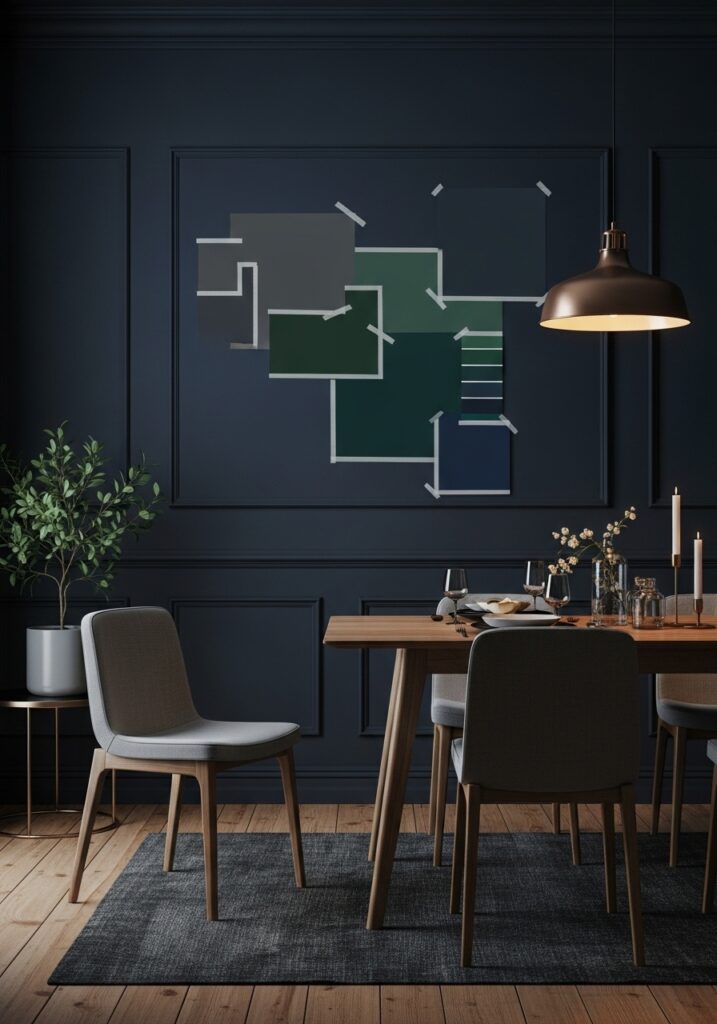
From what I’ve seen, wall color is the biggest factor in setting the tone. Dark shades absorb light, which creates that cozy, wrapped feeling most people want in a dining space.
I usually avoid plain black and go for deeper tones like navy or forest green. These colors feel rich without being overwhelming. If you’re unsure, start with one accent wall instead of the whole room.
Pro Tip: Paint samples can look very different throughout the day. I always test them in morning and evening light before deciding.
2. Layer Texture with Wall Treatments
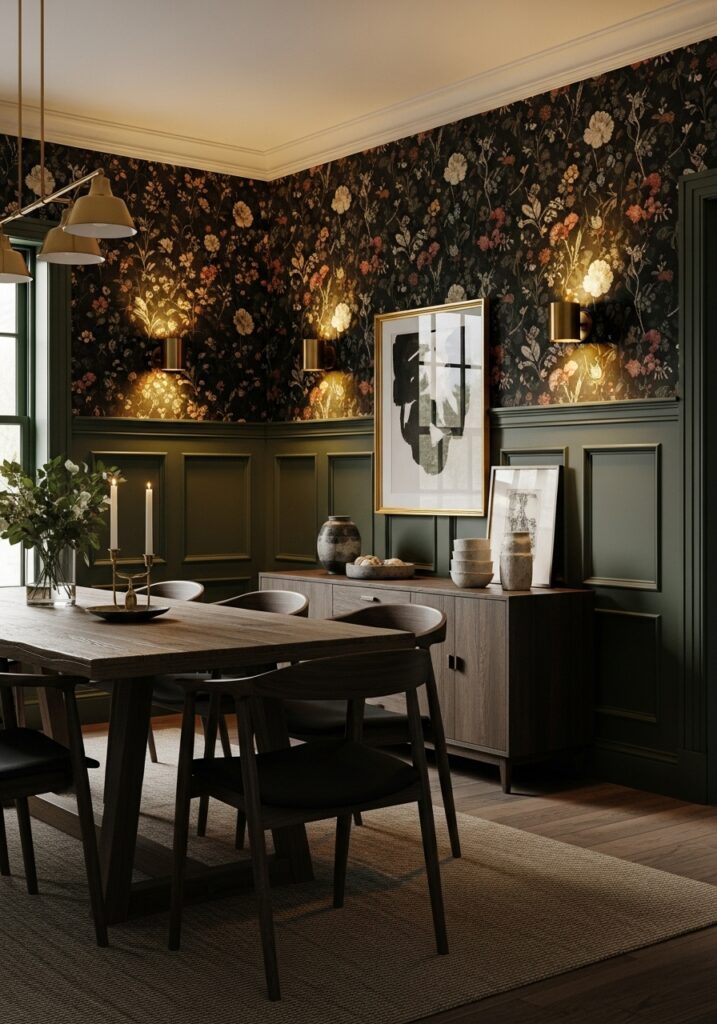
Flat walls can make even the best colors feel dull. That’s why I always add some form of texture to break things up.
Simple paneling or wall molding can instantly make the room feel more high-end. I’ve also noticed that combining paneling with wallpaper adds contrast and keeps the space visually interesting.
Insight: Homes with textured wall details often feel more premium and customized, which can even improve perceived property value.
3. Lighting: The Jewelry of the Room
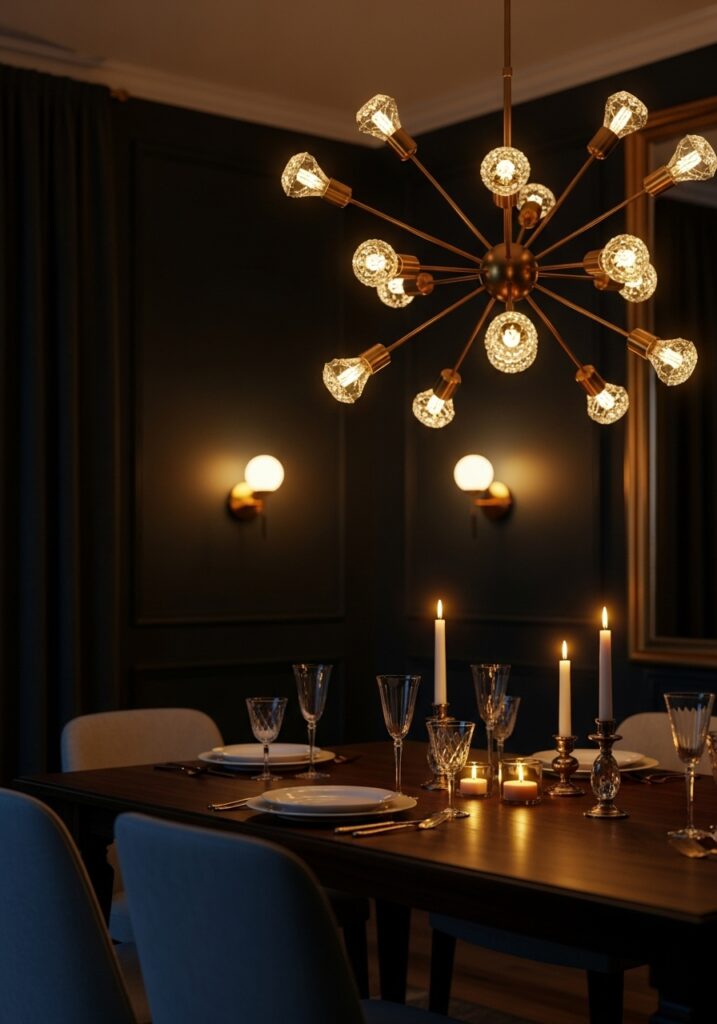
Lighting can either make or completely ruin a moody dining room. I never rely on just one light source anymore.
Instead, I layer lighting—ceiling fixture, wall lights, and sometimes a corner lamp. Warm lighting works best because it softens dark tones and makes the room feel comfortable.
Fact: Interior experts say layered lighting improves both ambiance and functionality by over 60%.
Pro Tip: Install dimmers. It’s one of the easiest upgrades with the biggest impact.
4. The Eclectic Gallery Wall
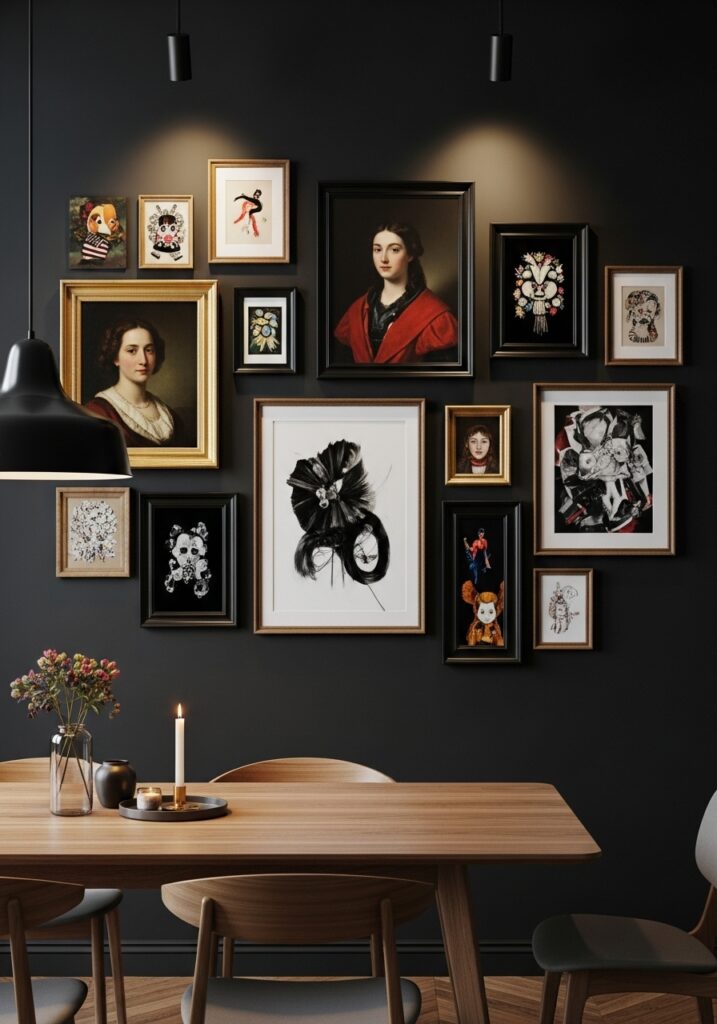
I like using gallery walls to make dark spaces feel more personal. It’s a great way to add contrast and break up heavy wall colors.
I mix different frame styles and art types—some modern, some vintage. The trick is keeping a common element like color or frame tone so it doesn’t look messy.
Tip: Start with a central piece and build around it to keep the layout balanced.
5. Sumptuous Velvet Upholstery
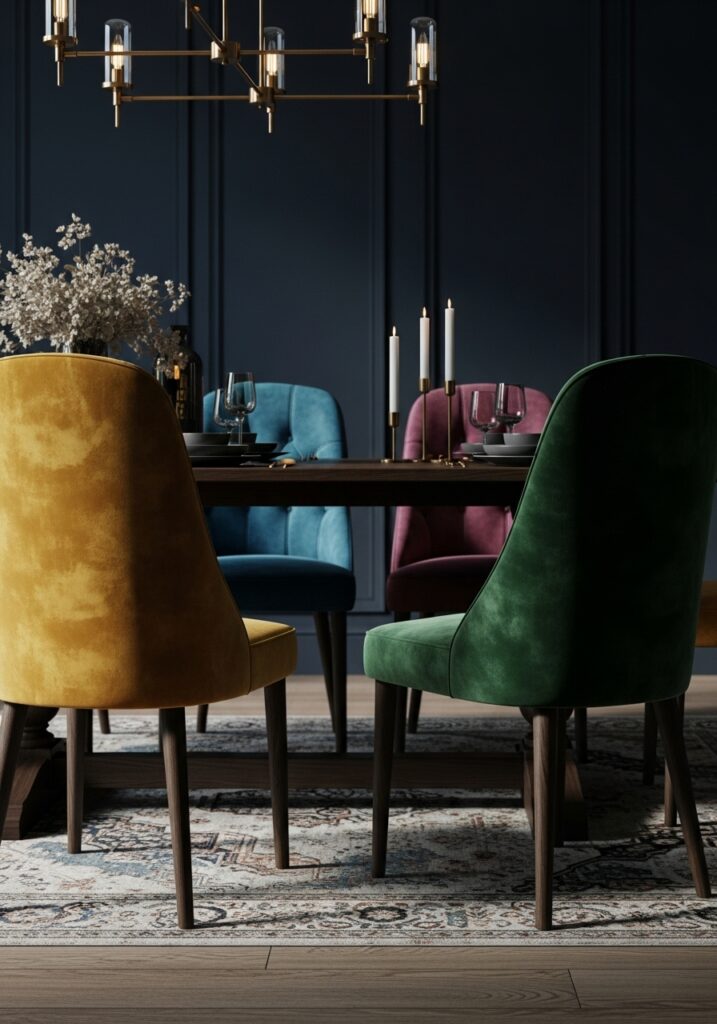
When I added velvet chairs to my dining area, the difference was immediate. Velvet reflects light slightly, which adds depth to darker rooms.
I prefer jewel tones like mustard or deep blue. They stand out without clashing and add a luxurious feel without needing expensive furniture.
Insight: Textured fabrics like velvet can make a room feel warmer by improving how light interacts with surfaces.
6. Vintage Rugs as a Foundation
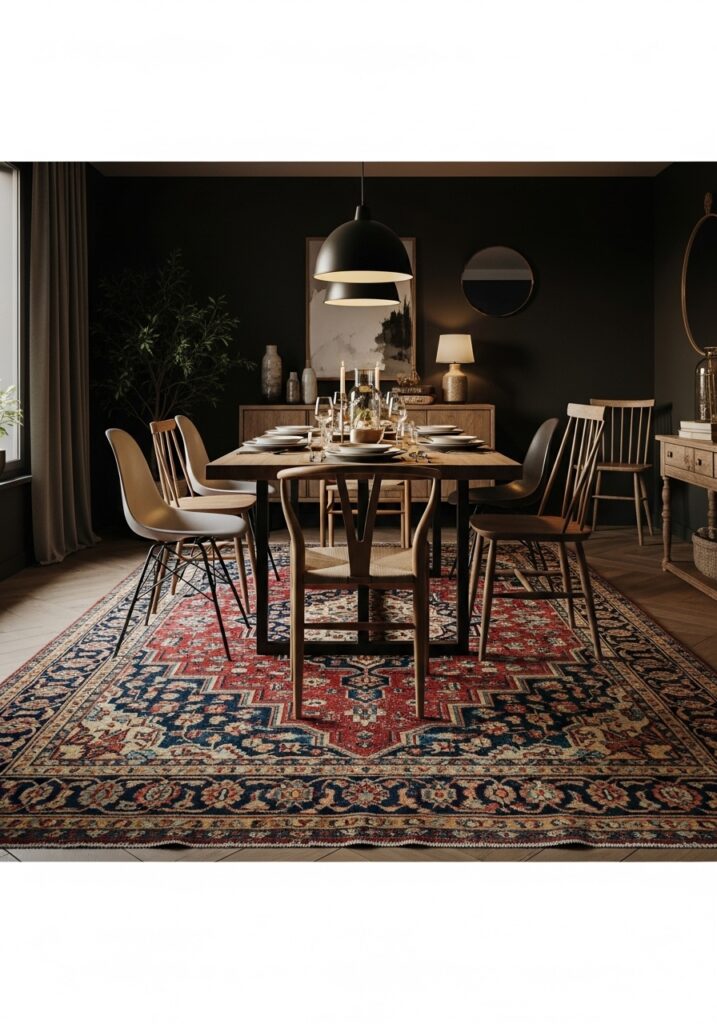
A dining room without a rug can feel incomplete, especially with darker themes. I always use a vintage-style rug to ground the space.
Patterns help hide stains, which is practical for dining areas. Plus, they add character that newer rugs often lack.
Fact: Layering textiles like rugs can reduce echo and noise, making the space feel calmer and more comfortable.
7. Mirror Magic for Depth
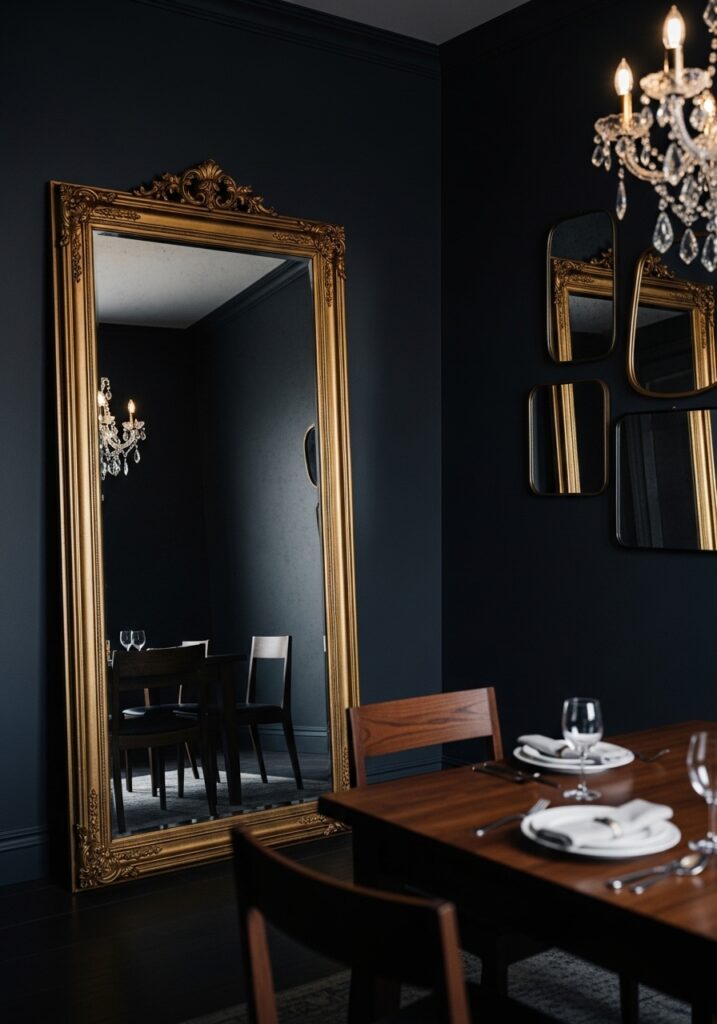
One concern I had with dark walls was making the room feel smaller. Mirrors solved that instantly.
I usually place a large mirror where it can reflect light or a focal point. It creates the illusion of more space and adds a subtle shine.
Pro Tip: Antique-style mirrors work best for moody spaces because they add character, not just reflection.
8. Curtains that Command Attention
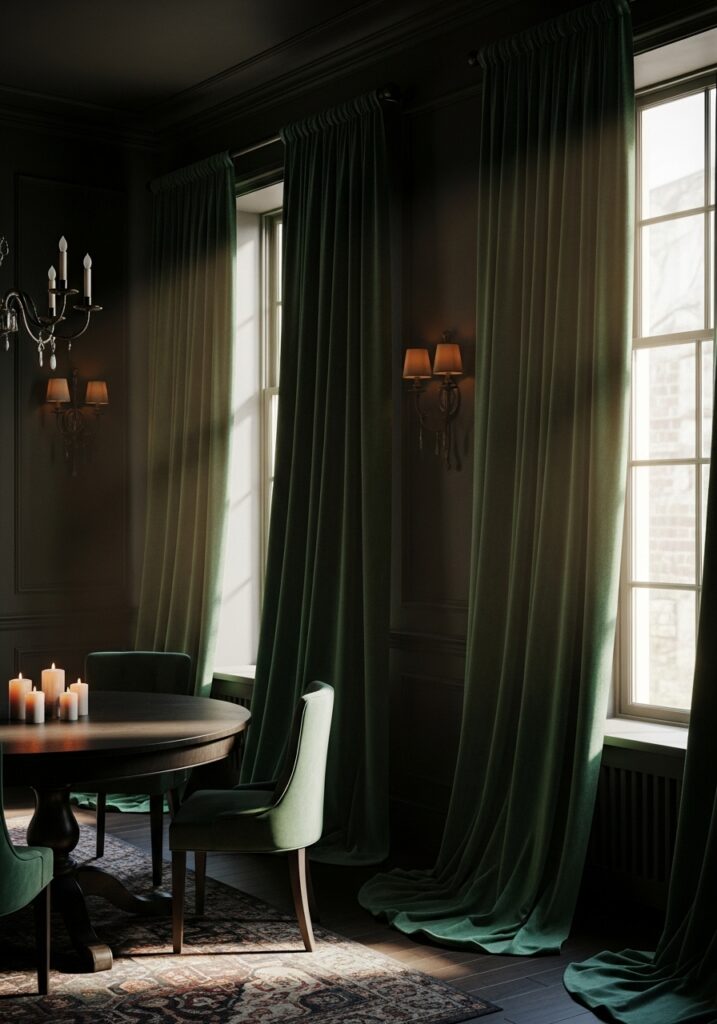
Curtains are often overlooked, but I’ve found they make a huge difference. Light fabrics just don’t work in a moody dining room.
I go for heavy, floor-length curtains. They make the room feel taller and more complete.
Tip: Hanging curtains higher than the window frame can make ceilings appear up to 15% taller visually.
9. The Mix-and-Match Furniture Approach
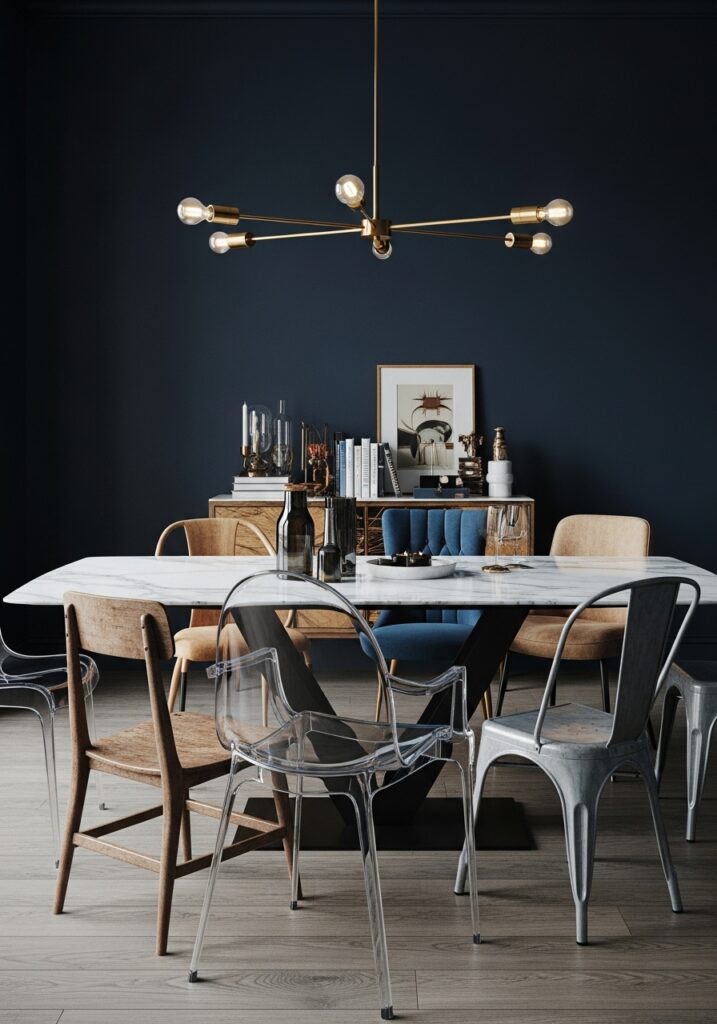
Matching furniture sets can feel too predictable. I prefer mixing styles to create a more natural and collected look.
For example, pairing a modern table with vintage chairs adds contrast. It makes the room feel designed rather than staged.
Insight: Eclectic interiors are trending because they reflect personality rather than showroom styling.
10. Dramatic Greenery
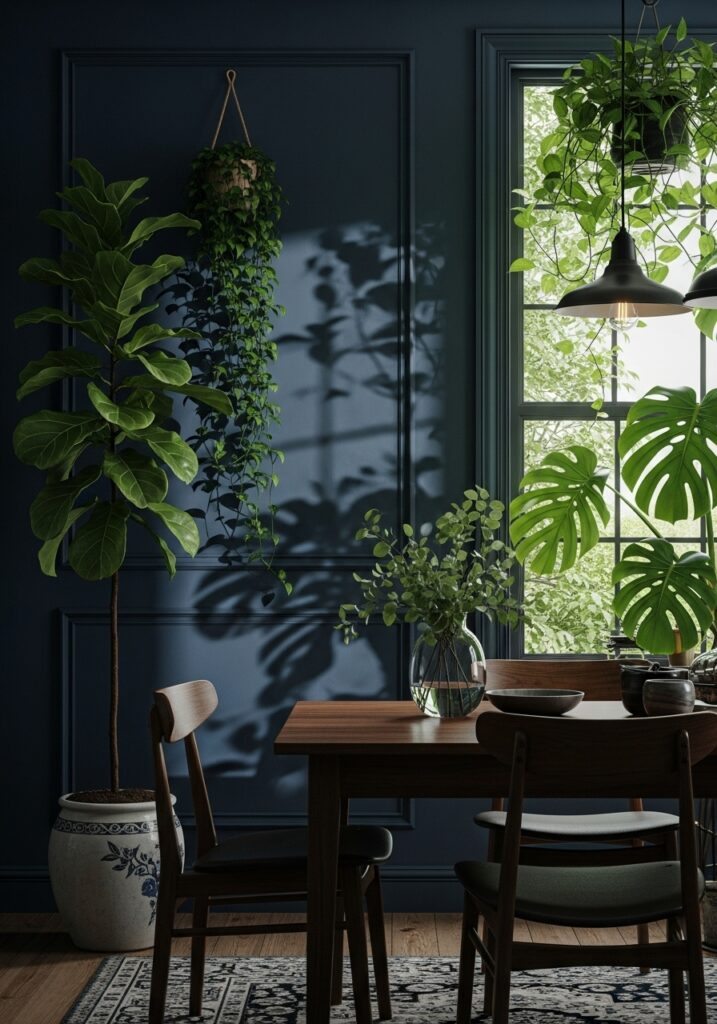
Plants are one of the easiest ways I add life to a dark dining room. The green color pops against deep walls.
I usually go for larger plants because they fill empty corners and add movement to the space.
If natural light is limited, I use low-maintenance plants or high-quality faux ones.
11. Metallic Accents and Hardware
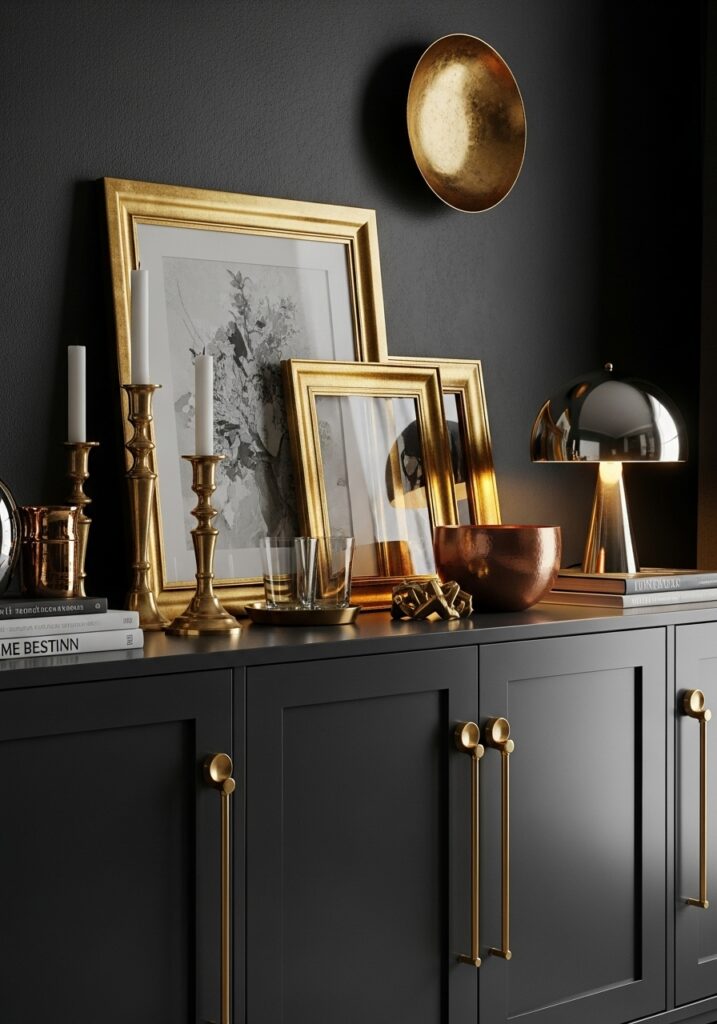
Dark rooms can feel flat without contrast. That’s where metallics come in.
I use brass, gold, or copper accents in lighting, handles, or decor. They reflect light and break up darker tones.
Fact: Even small metallic elements can increase visual contrast and make a space feel more dynamic.
12. The Art of the Centerpiece
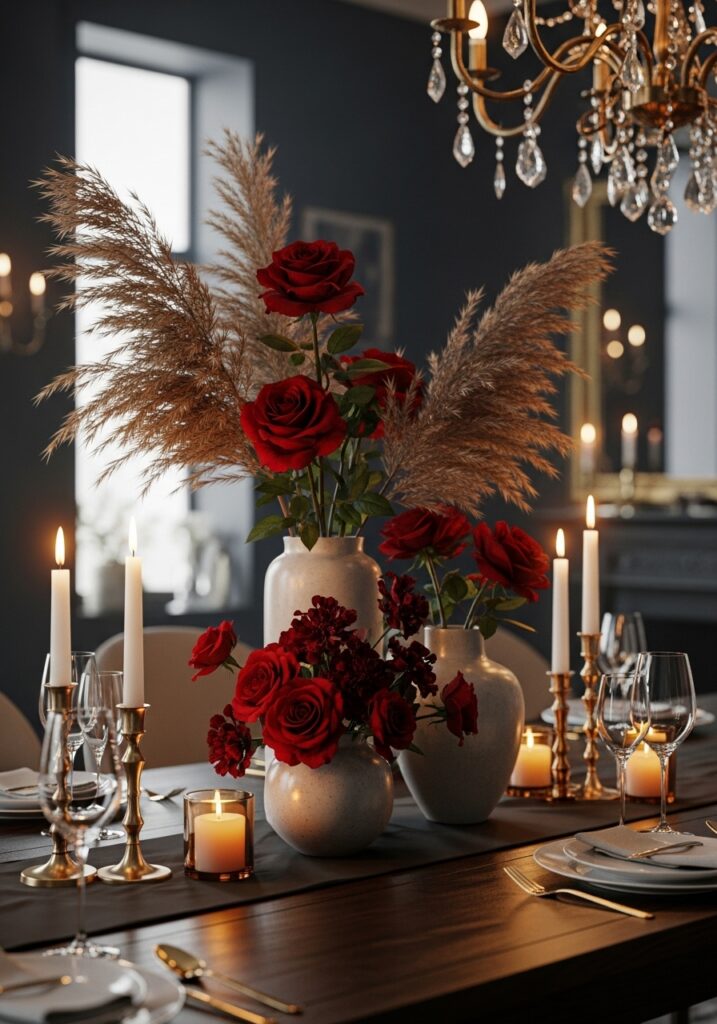
I never leave my dining table empty. A simple centerpiece makes the room feel styled and ready.
I usually group items in odd numbers—like a vase, candles, and a small object. It looks more natural and less staged.
Pro Tip: Dried flowers or seasonal elements work well and require less maintenance.
Conclusion
From my experience, creating a moody dining room isn’t about doing everything at once. It’s about making intentional choices that build over time.
Even starting with just paint or lighting can transform the entire space. Once you see the change, it becomes easier to add layers and experiment.
At the end of the day, the best Moody Dining Room Ideas are the ones that reflect your style and make you actually enjoy spending time there.
Many of the ideas I share are inspired by real-life experimentation. I often test décor concepts in my own living spaces and explore practical ways they can be applied in everyday homes. I also gather insights from working with homeowners who want to improve the comfort, beauty, and functionality of their spaces.
I share practical ideas for improving living rooms, bedrooms, and overall home aesthetics using simple design principles.
I explore creative ways to upgrade outdoor spaces including patio décor, small backyard styling, and relaxing outdoor setups.
I provide ideas for kitchen organization, décor accents, and functional layouts that make kitchens more beautiful and practical.
The concepts shared here are based on ideas I have personally experimented with or studied through real home décor improvements.