Dark Blue House Exterior Ideas
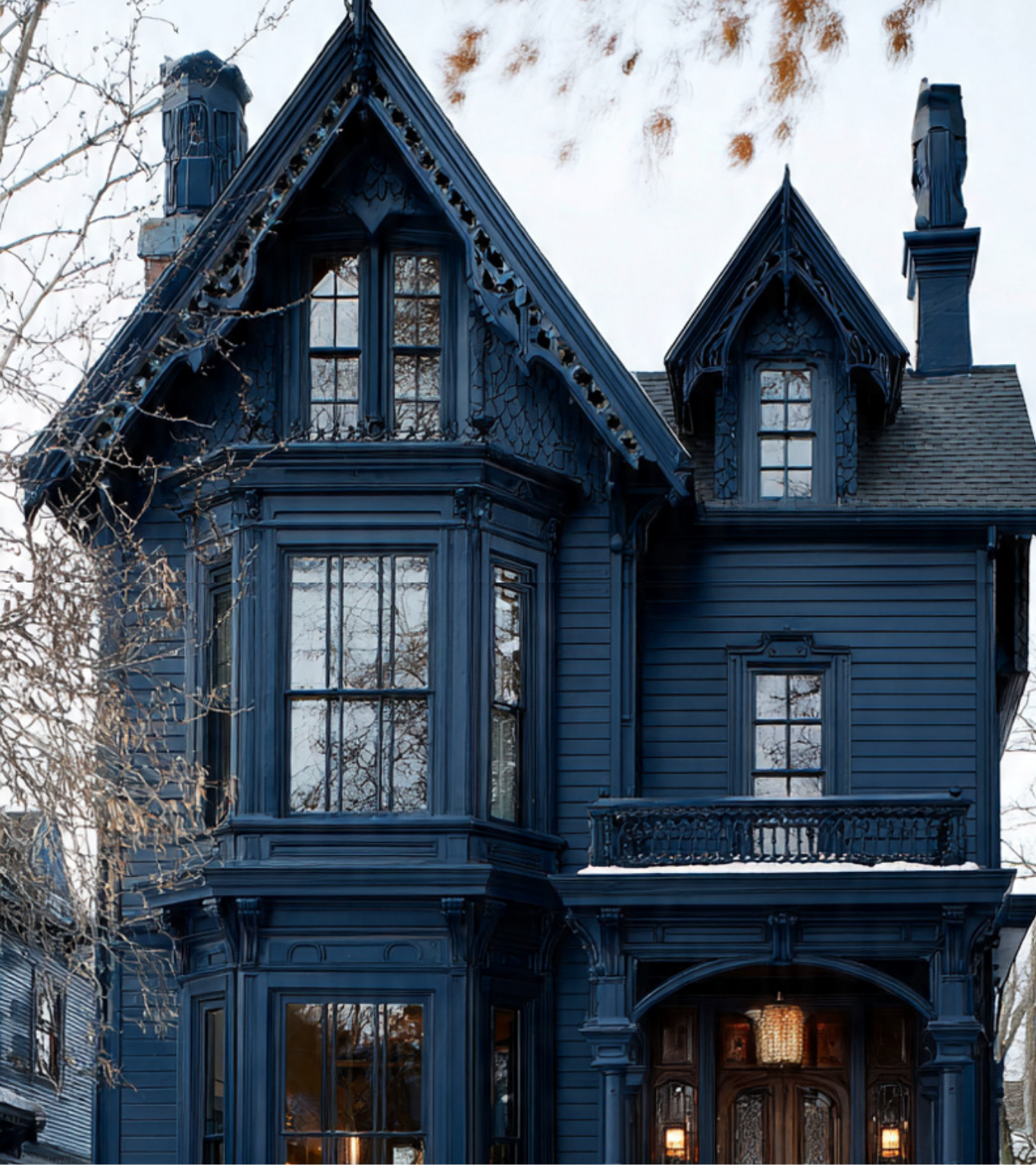
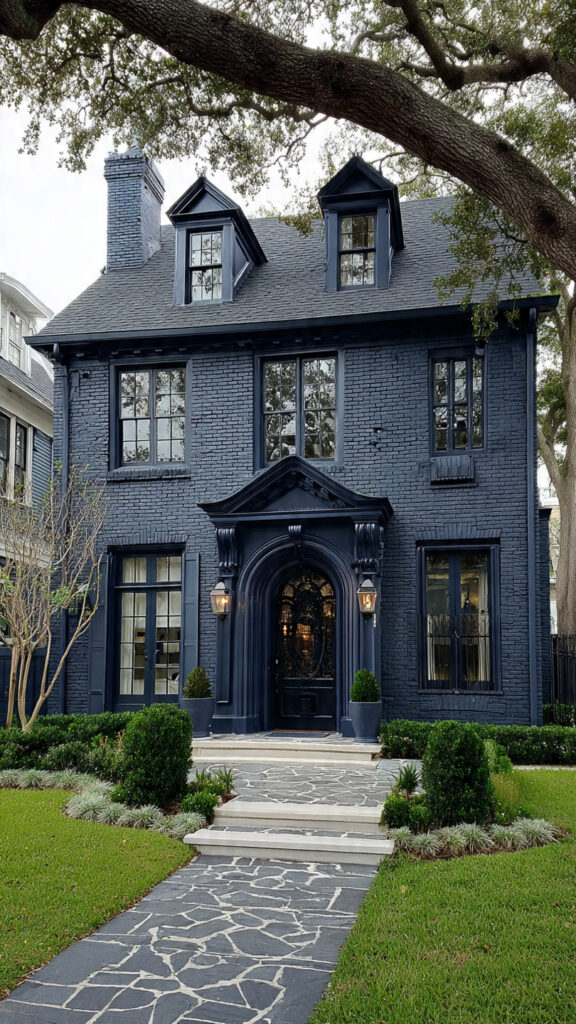
Many neighborhoods are filled with homes painted in safe, neutral shades that tend to blur together. It is easy to overlook one house from the next when beige and light gray dominate the streets. That feeling changed the moment a deep blue Victorian-style home came into view during a summer drive. Its color immediately stood out, proving how powerful a bold exterior choice can be. Unlike lighter tones, a dark blue exterior does not fade into the background. It commands attention in a confident yet refined way.
A dark blue house feels intentional and stylish rather than flashy. It brings depth, character, and a sense of individuality to the exterior. Choosing this color is not just about paint; it is about making a statement. For homeowners looking beyond predictable neutrals, dark shades open the door to some of the most striking Blue House Exterior Ideas that feel timeless and modern at the same time.
Why Go Dark Blue? The Psychology of the Shade
Dark blue works so well on exteriors because it balances calmness with strength. Blue is naturally associated with peace and stability, and when the shade becomes deeper, it adds a sense of permanence and confidence. This makes a home feel grounded and solid rather than light or temporary.
It Anchors the Home
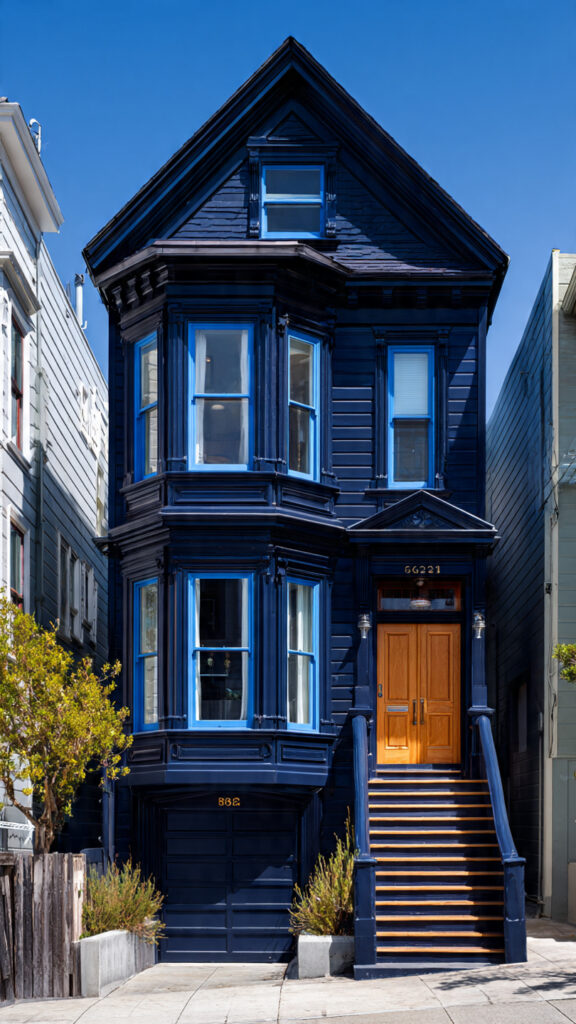
Lighter exterior colors can sometimes appear washed out, especially under strong sunlight, making a house feel less defined. Dark blue adds visual weight to the structure, helping it feel rooted and substantial. The color enhances architectural presence and gives the impression of a well-established home that belongs exactly where it is.
Incredible Versatility

One of the biggest advantages of dark blue is how easily it works with different materials and styles. It pairs beautifully with brick, stone, wood accents, and even vinyl siding. Whether the home leans modern, traditional, or rustic, dark blue adjusts effortlessly. This adaptability makes it a reliable choice for homeowners exploring Blue House Exterior Ideas that can complement many architectural designs without clashing.
The Top Dark Blue Color Schemes
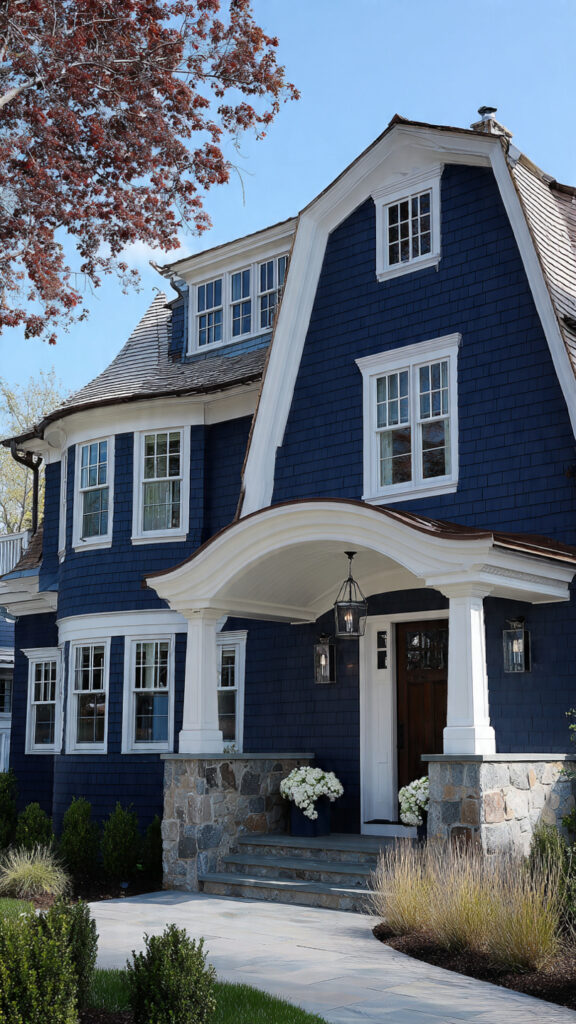
A successful exterior is rarely about a single color. The real impact comes from how different shades and materials work together. Dark blue provides a strong base that allows trims, accents, and textures to shine.
The Classic Nautical: Navy and Crisp White
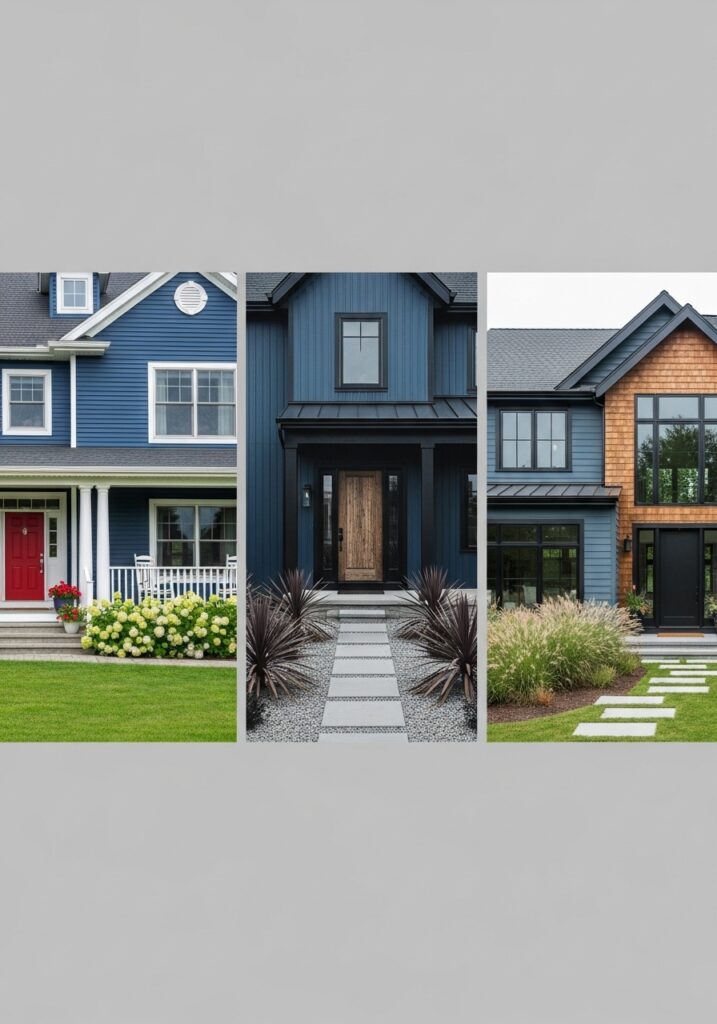
Navy paired with bright white trim is a timeless exterior combination. The deep blue creates richness, while the white adds contrast and clarity. This pairing feels clean, balanced, and enduring. The sharp contrast highlights architectural details such as rooflines, porches, and window frames, making the home look polished and well-defined. It is especially effective for farmhouse-inspired or traditional designs.
The Moody Monolith: Midnight Blue and Black
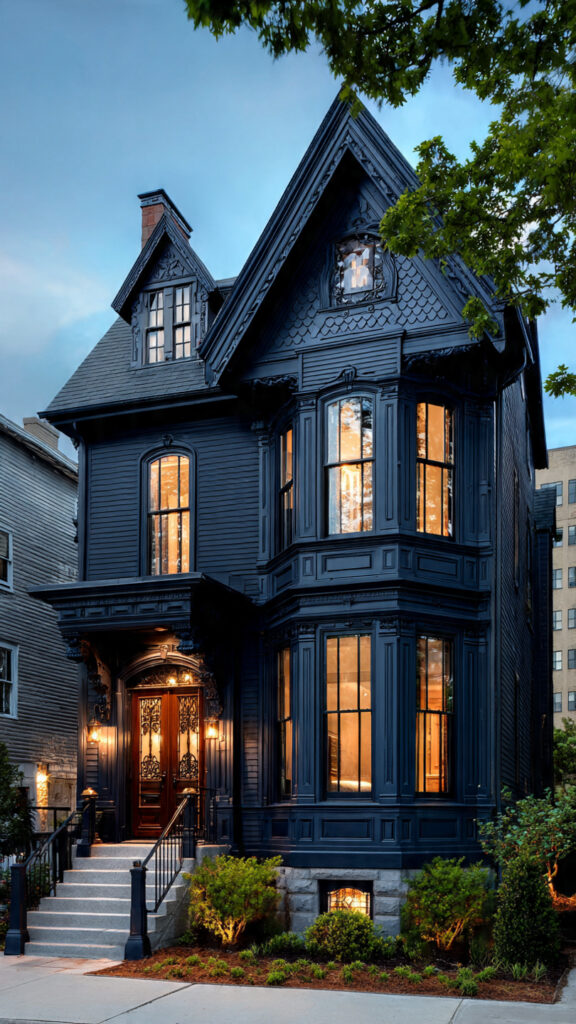
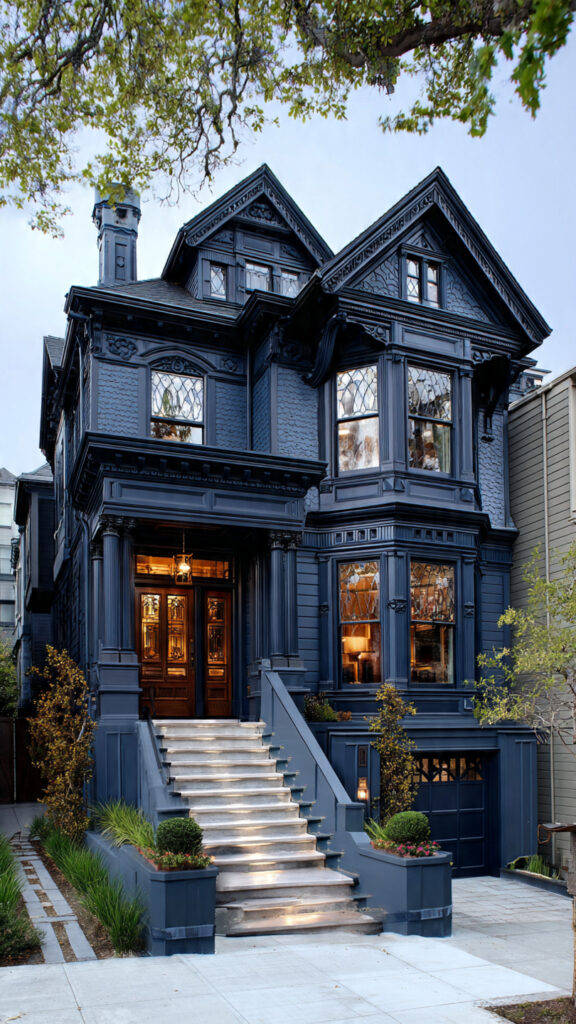
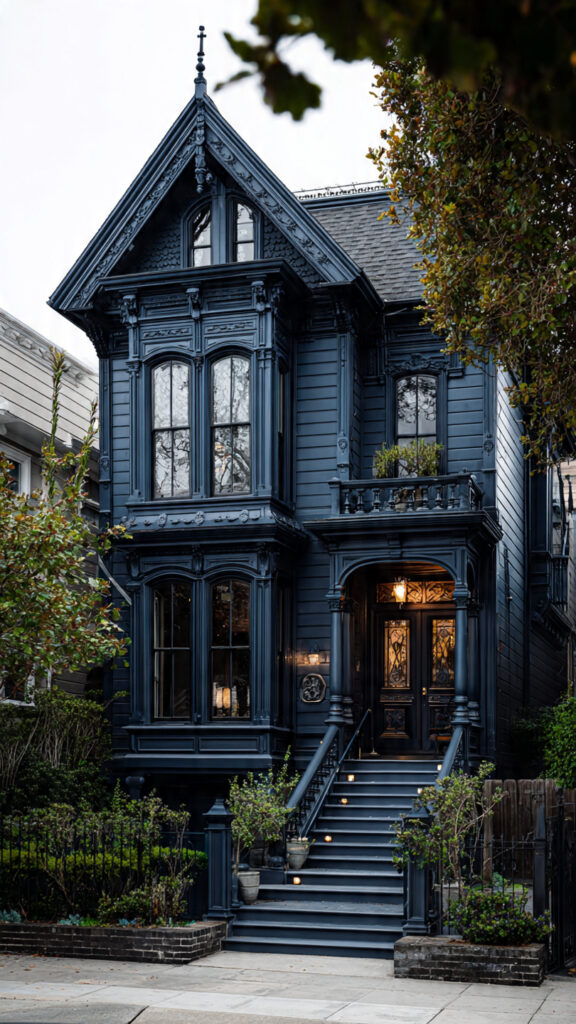
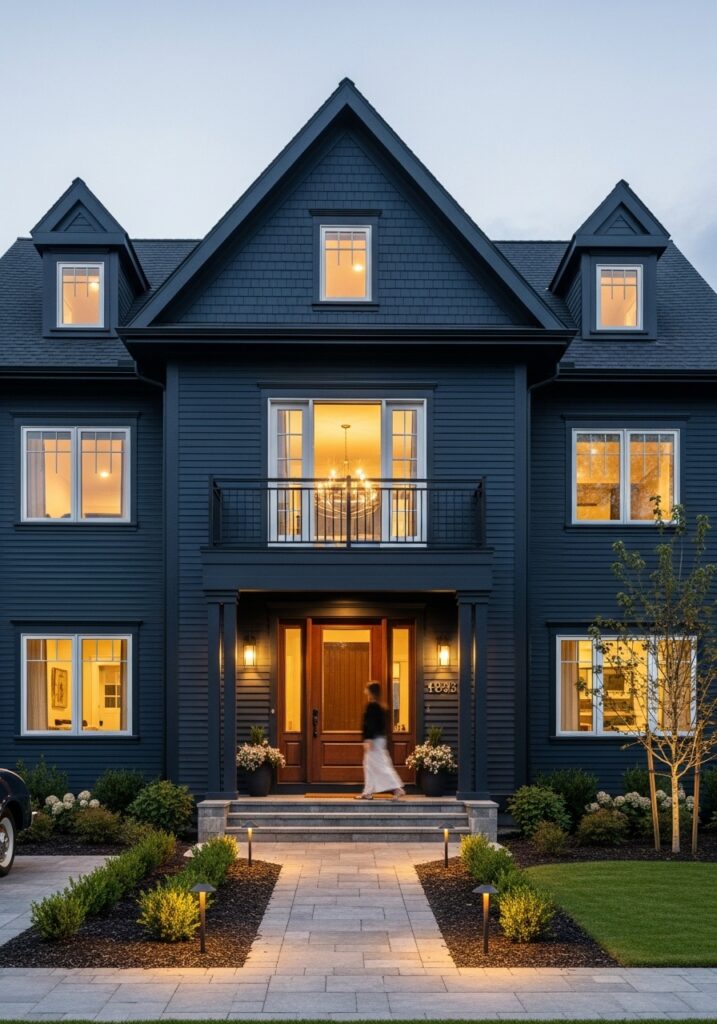
For a more modern and dramatic look, combining dark blue with black accents creates a sleek, monochromatic appearance. Black window frames, gutters, and fixtures blend seamlessly with midnight blue siding. This approach reduces contrast but increases sophistication, giving the home a bold, contemporary feel that suits clean lines and larger windows.
The Earthy Blend: Slate Blue and Cedar
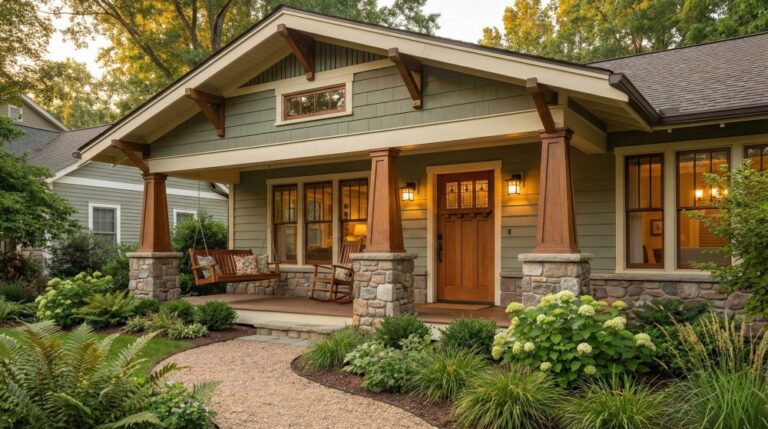
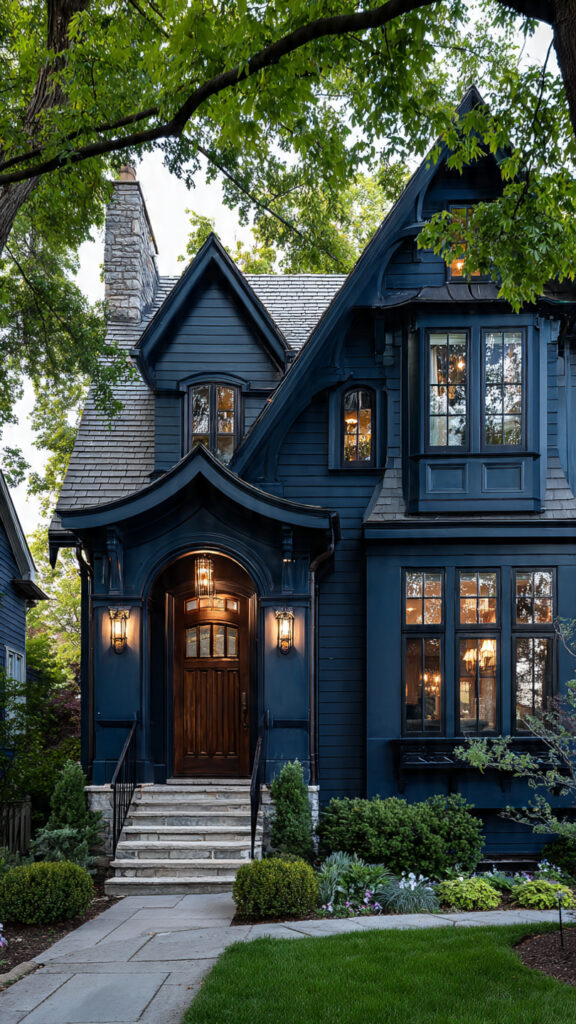
Slate blue combined with natural wood tones creates warmth and balance. The cool depth of blue contrasts beautifully with the richness of cedar or walnut accents. Using wood for porch columns or front doors softens the overall look, while stone details near the foundation help ground the design. This blend is ideal for homeowners who want Blue House Exterior Ideas that feel both modern and connected to nature.
Choosing the Right Shade (It’s Tricky!)
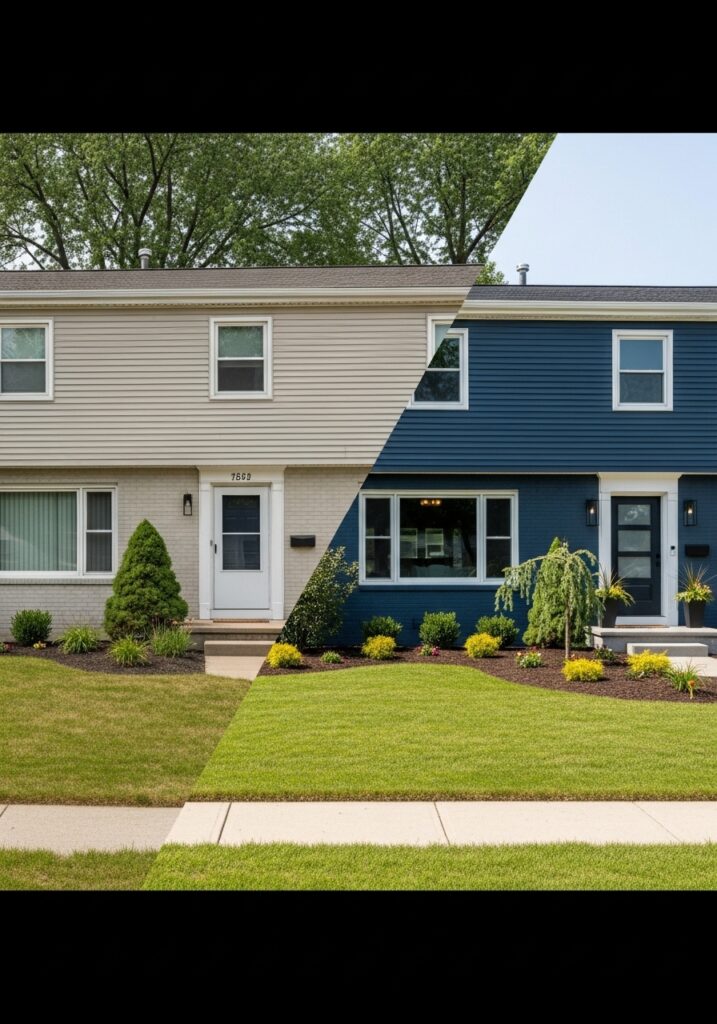
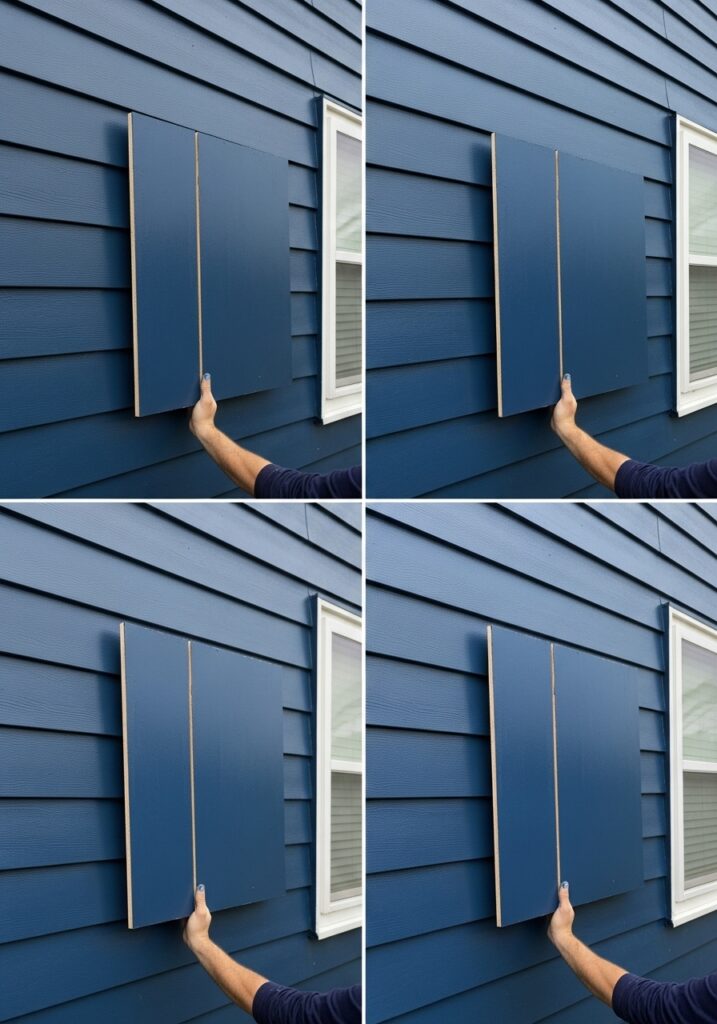
Selecting the perfect dark blue is not as simple as choosing a paint chip. Lighting, surroundings, and orientation all influence how a color appears once it is on the wall. Testing shades in real conditions is essential before committing.
The Compass Rule

The direction a house faces has a major impact on color appearance. North-facing homes receive cooler, softer light, which keeps blue tones muted and slightly gray. South-facing homes get intense sunlight that can wash out darker colors, so deeper shades are often needed to maintain richness. Understanding this helps avoid surprises once the paint is applied.
Watch the Undertones
Dark blue paints often include subtle undertones that affect the final look. Green undertones lean toward teal and feel more coastal. Purple undertones can appear richer and bolder but may feel less neutral. Gray undertones are usually the safest choice, offering a refined and understated finish that works well in many settings.
Accents That Make the Blue Pop
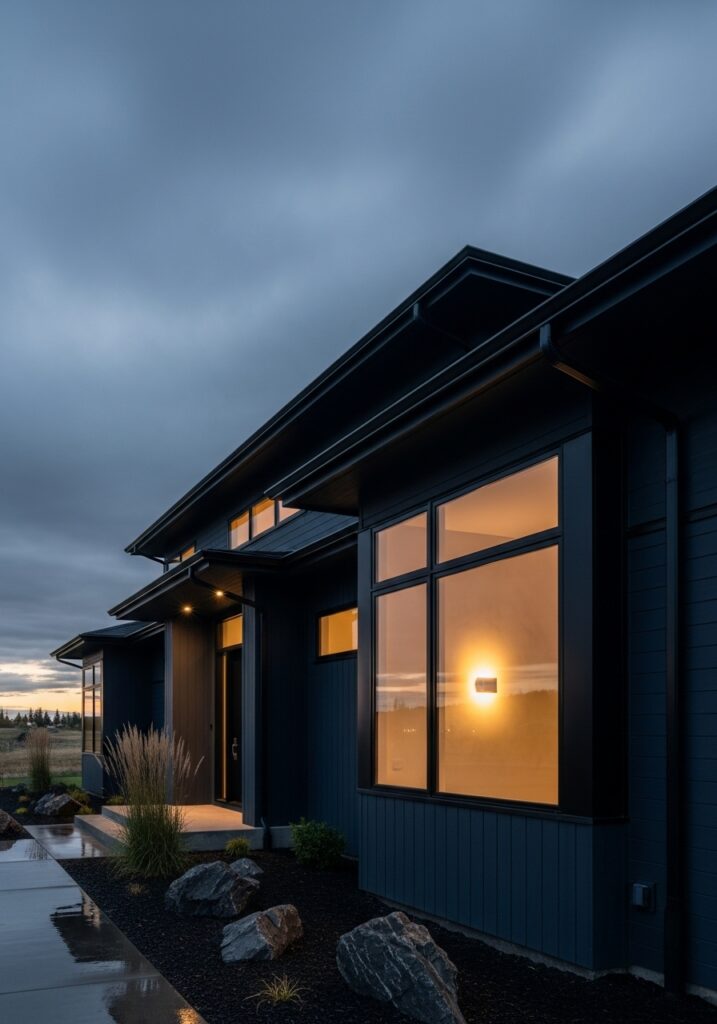
With a dark exterior, accent choices become even more important. The right details add contrast and personality, preventing the home from feeling flat or heavy.
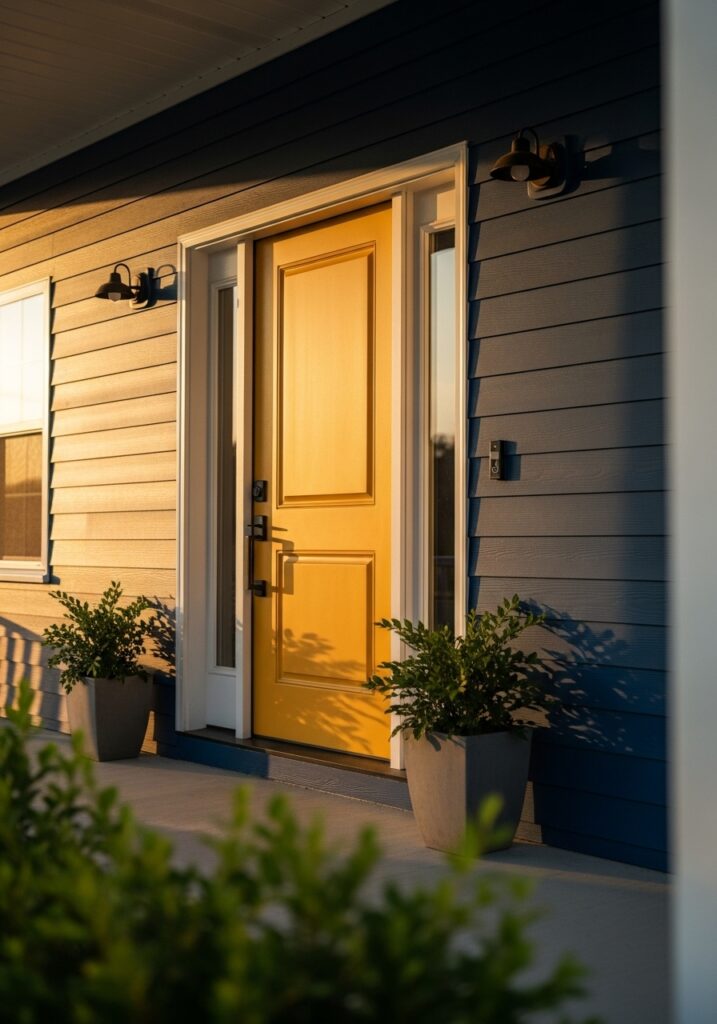
The Front Door Statement
A front door stands out beautifully against dark blue siding. Warm and bold colors create a welcoming focal point. Yellow or mustard adds energy, red brings a classic and traditional feel, and natural wood offers elegance and warmth. Each option creates a different mood while enhancing the overall design.
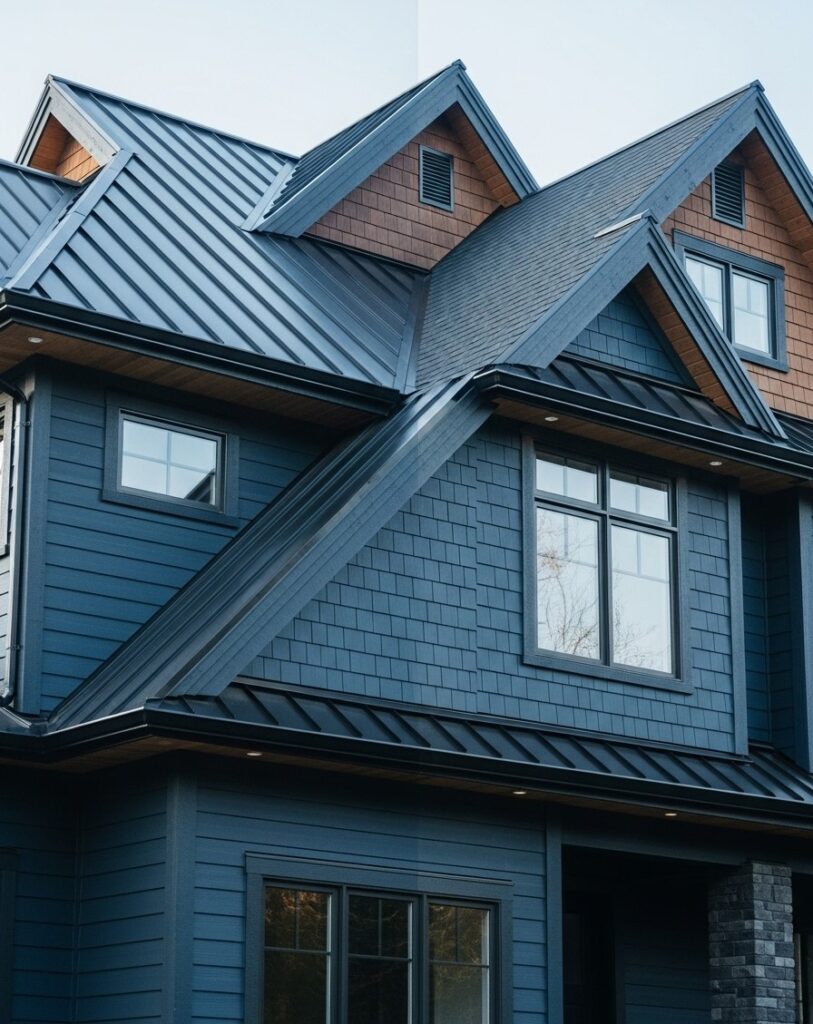
The Roof Factor
The roof color plays a key role in how blue siding is perceived. Brown roofs pair best with blues that have warmer undertones, while black or gray roofs allow cooler blues to shine. Matching undertones between the roof and siding helps the entire exterior feel cohesive.
Seasonal Decorations
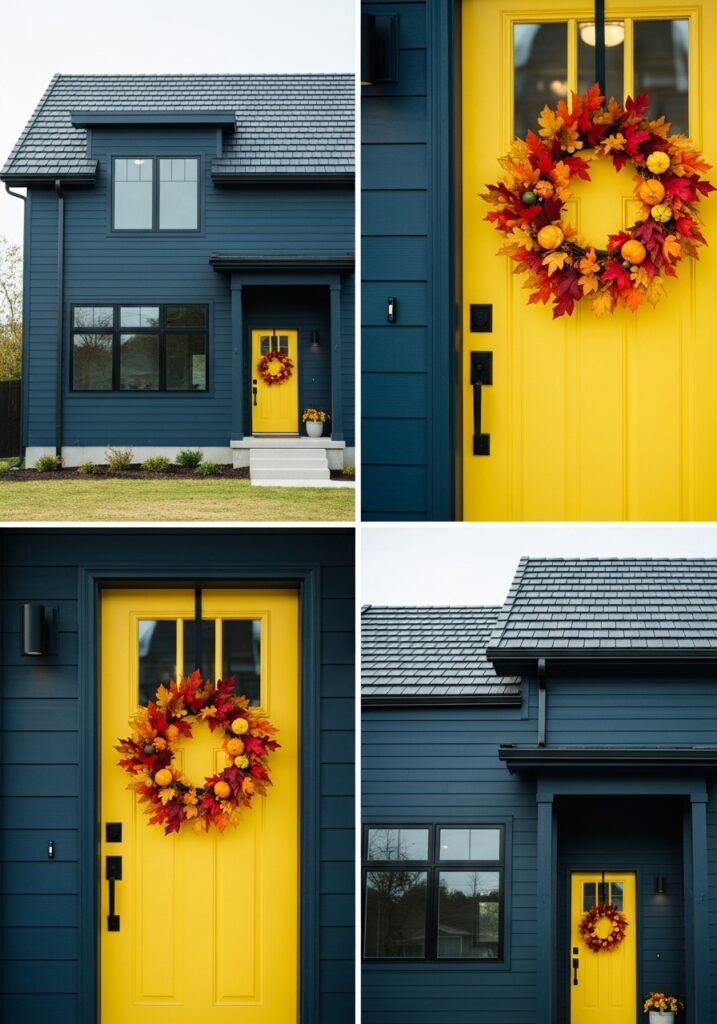
Dark blue exteriors provide a perfect backdrop for seasonal décor. Wreaths, garlands, and lights stand out clearly against the deep color. During colder months, greenery and soft lighting feel especially striking, making the home look festive and inviting without much effort.
Landscaping and Lighting
Once the exterior color is chosen, landscaping and lighting complete the picture. These elements frame the home and enhance curb appeal day and night.
Greenery is Your Best Friend

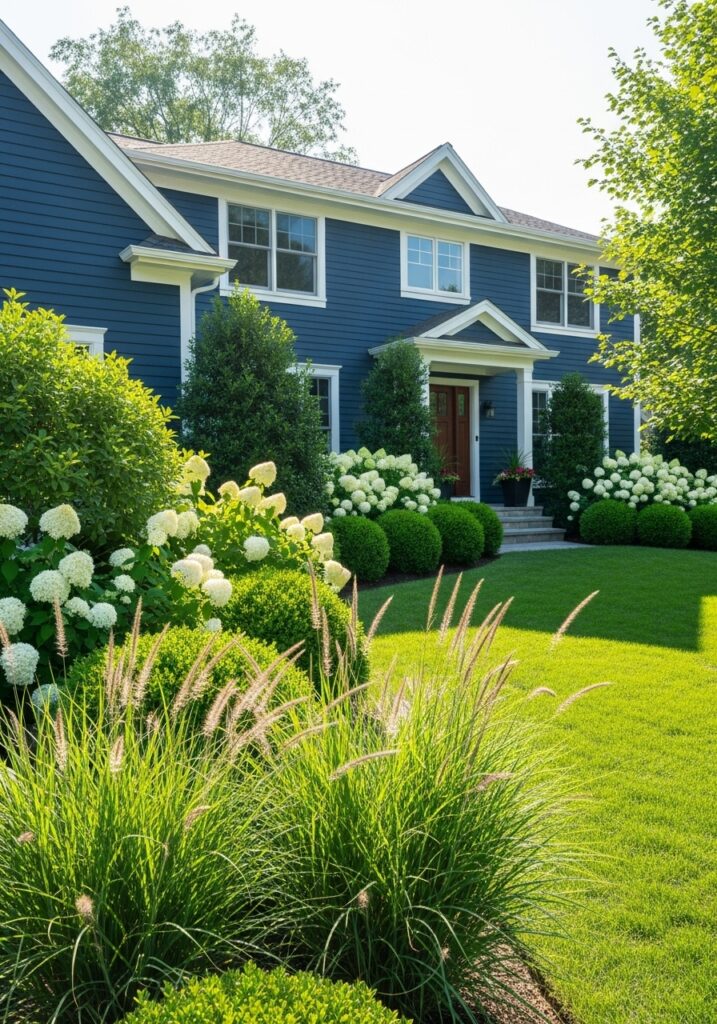
Dark blue absorbs light, so vibrant plants help bring balance back to the exterior. Bright green shrubs, flowering plants, and ornamental grasses add contrast and freshness. The greenery prevents the home from feeling too dark while highlighting the richness of the siding.
Lighting the Night
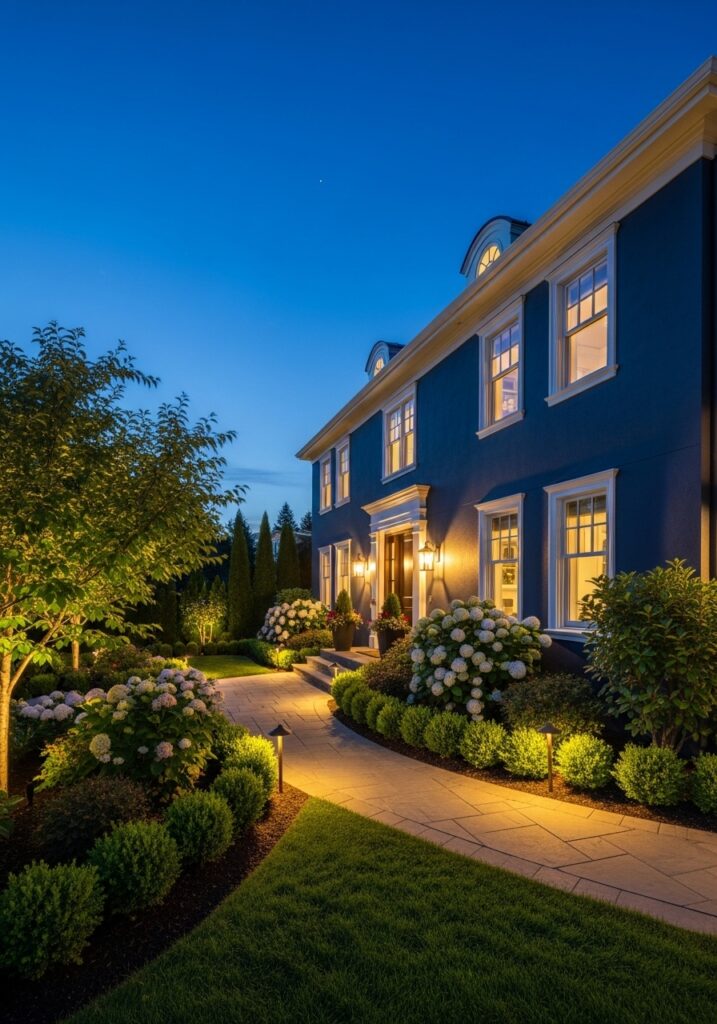
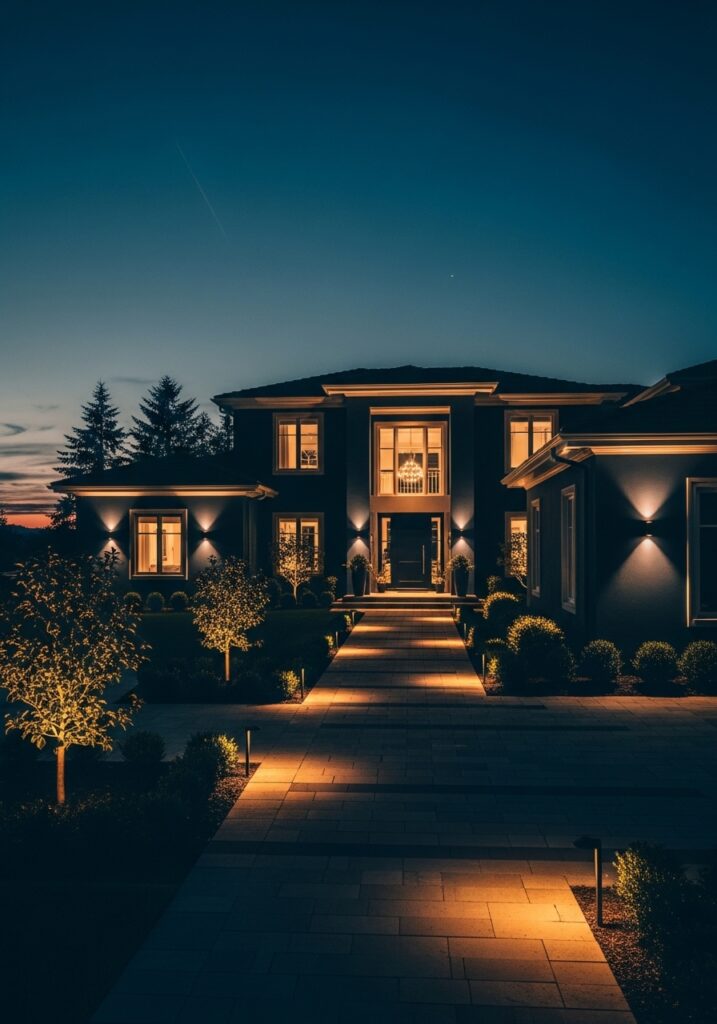
Proper lighting is essential for darker exteriors. Without it, the house can fade into the background after sunset. Larger wall sconces, well-placed path lights, and subtle uplighting on architectural features ensure the home remains visible, safe, and visually appealing at night.
Maintenance and Durability
While dark colors are bold, they also raise practical questions about heat and fading. Fortunately, modern materials address many of these concerns.
The Heat Factor
Dark shades do absorb more heat, which can slightly affect indoor temperatures in warmer climates. However, good insulation and ventilation usually minimize this impact, making it a manageable consideration rather than a dealbreaker.
The Fading Myth
Older paints were known to fade quickly, especially darker shades. Today’s high-quality exterior paints include UV protection that helps preserve color for many years. Proper surface preparation and the use of a strong primer ensure the paint adheres well and maintains its depth over time.
Final Thoughts
Choosing a dark blue exterior is a confident decision that delivers lasting impact. It adds character, increases perceived value, and sets a home apart from its surroundings. From deep navy to soft slate tones, there are countless Blue House Exterior Ideas that allow homeowners to express personality while maintaining elegance.
Exploring samples, testing them in natural light, and taking time to observe how they change throughout the day leads to the best results. Once the final shade is chosen, the transformation feels rewarding. A dark blue exterior replaces ordinary with memorable, creating a home that feels distinctive, welcoming, and truly personal.