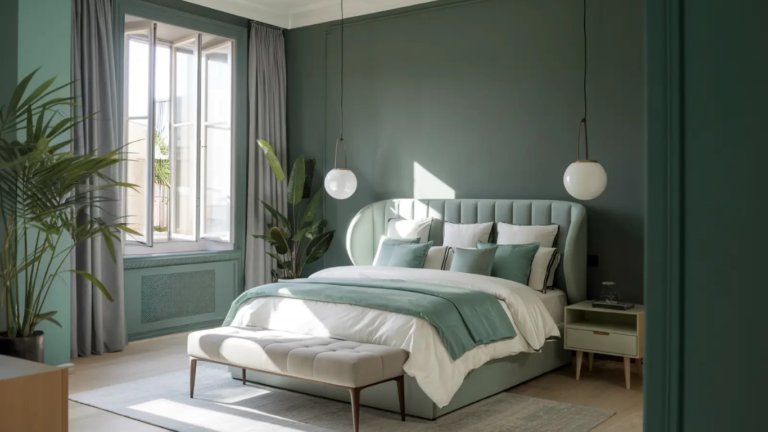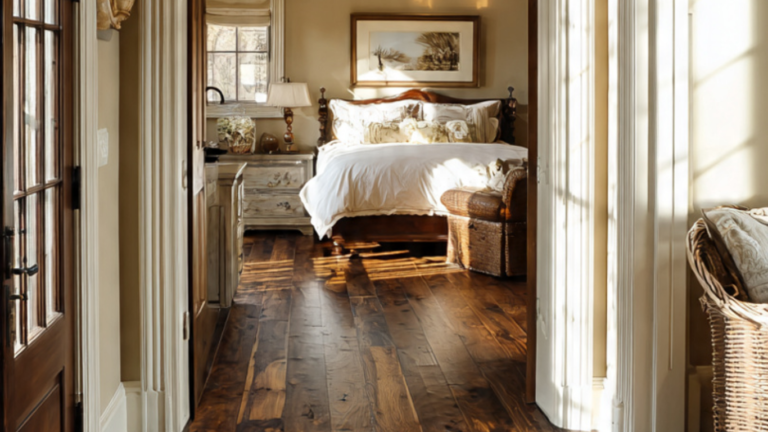

30 Dark Blue Bedroom Ideas for A Sense of Tranquility using navy walls and bedding furniture

When I want a bedroom to feel calm but still have plenty of character, dark blue is one of the colors I keep coming back to. I can use it on walls, bedding, curtains, furniture, ceilings, or even in small accents without making the whole room feel the same.
In this collection, I’m sharing 30 dark blue bedroom ideas that show how differently navy and other deep blue shades can work. Some combinations feel classic, while others use wood, gold, gray, teal, leather, pastels, or brick for a more personal look.
I also like that dark blue gives me room to adjust the mood without changing everything in the bedroom. If a full navy wall feels too strong, I can start with a headboard, rug, curtains, or bedding and build the color from there.
Key Takeaways

1. Layer Shades of Navy

I like the layered navy approach when I want a bedroom to feel rich without relying on lots of different colors. I can use a deep navy on the walls, a slightly lighter blue on the duvet, and softer blue pillows to create small changes in tone. White bedding details or light lamps can keep the room from feeling too heavy.
Pro Tip: I avoid making every blue exactly the same because small changes in shade help the bedding, walls, and accessories stand apart.
2. Velvet Blue Bedframe

A navy velvet bedframe gives me an easy way to make dark blue the main feature without painting the entire bedroom. I would pair it with crisp white or light bedding and warm metal details such as brass on the nightstands or lamps. The velvet also adds visual texture, which helps a simple bedroom feel more finished.
Insight: Upholstered furniture can introduce a strong color while keeping the surrounding walls neutral, making it a useful option for renters or anyone who does not want to repaint.
3. Navy Curtains

I like using navy curtains when I want to bring dark blue into a bedroom without committing to a blue wall. They work especially well with light gray walls, a neutral bed, and simple metal or glass furniture. For me, the key is letting the curtains act as a large color accent rather than adding navy to every other item.
Pro Tip: I choose curtains that extend close to the ceiling and toward the floor when possible because the larger fabric area makes the color feel intentional.
4. Navy Bookshelves
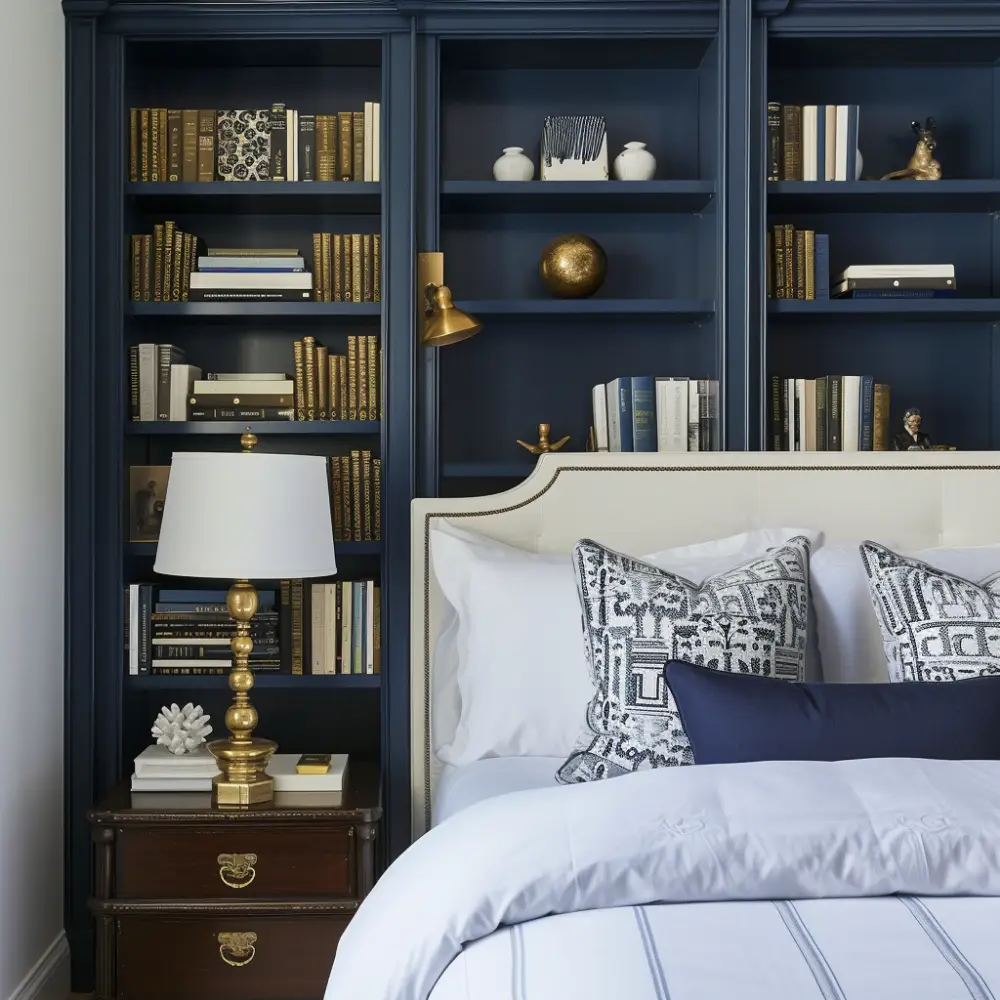
Navy bookshelves can give a bedroom both storage and a strong design feature. I like the idea of using dark blue shelving against neutral walls, then adding books, framed photos, ceramics, and a few lighter objects to break up the darker color. It gives the room a more collected feel without needing lots of decoration.
Fact: Open shelving naturally draws attention to whatever is placed on it, so I keep the display fairly simple instead of filling every shelf.
5. Navy Accent Wall

A navy accent wall is one of the easiest dark blue bedroom ideas for me to try. I would place it behind the bed so the darkest color naturally becomes the backdrop for the main furniture. Keeping the remaining walls lighter and adding natural wood can make the navy feel balanced rather than overwhelming.
Pro Tip: Before painting, I test the blue on the actual wall because the same paint can look noticeably different in morning, afternoon, and artificial light.
6. Dark Blue Ceiling with Stars

A dark blue ceiling gives me a different way to use color because the blue does not compete directly with the furniture. I can keep the walls lighter and add small star details or a subtle star projector for a night-sky effect. Simple white bedding works well here because it gives the darker ceiling some contrast.
Insight: A dark ceiling can make a bedroom feel more enclosed and cozy, so I prefer this idea in rooms where that snug feeling is part of the goal.
7. Mix Patterns

I like mixing navy patterns when I want the bedroom to feel playful rather than formal. Stripes, gingham, dots, and floral prints can all work together if I keep the colors connected. Using navy and white as the main palette gives me more freedom to mix patterns without making the room look chaotic.
Pro Tip: I usually vary the scale of patterns—one larger print, one medium pattern, and one smaller detail—to keep the combination easier on the eyes.
8. Navy and Gold

Navy and gold is a combination I use when I want a bedroom to feel polished. Deep blue provides a strong background, while gold or brass adds warmth through the bed frame, hardware, lamps, or small accessories. I prefer using gold in a few repeated places rather than covering the room with metallic finishes.
Insight: Warm metallic finishes tend to stand out clearly against deep blue, which is why even a few brass or gold details can have a noticeable effect.
9. Navy and Gray

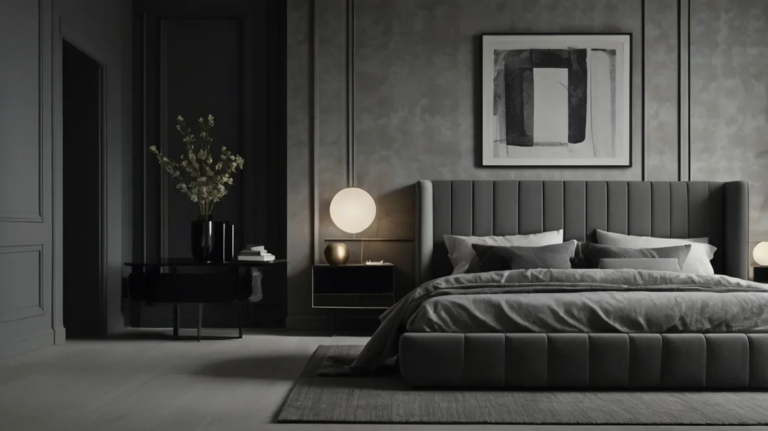
Navy and gray gives me a simple modern color scheme that is easy to live with. I can use navy on the walls and choose a light gray upholstered bed to soften the contrast. Dark gray nightstands and simple lamps can then fill in the room without introducing another strong color.
Pro Tip: I prefer combining different textures when using several neutral shades because linen, upholstery, metal, and wood keep the room from looking flat.
10. Textured Wallpaper

Textured navy wallpaper is useful when I want the wall itself to provide some visual interest. Instead of relying on artwork, I can let a subtle pattern or texture become the backdrop and keep the bedding fairly simple. Silver, white, or light gray accents can work well against the deeper blue.
Insight: Texture becomes especially important in a dark color because it creates small changes in how light reflects across the surface.
11. Rustic Touches

I like pairing dark blue with natural and distressed wood when I want the bedroom to feel warmer and less formal. A navy wall can work with a wooden bed, reclaimed-looking nightstands, woven materials, and simple white bedding. The wood keeps the deep blue from feeling too sleek or cold.
Pro Tip: I would choose one or two strong wood elements rather than filling the entire room with rustic furniture.
12. Geometric Navy Accents

Geometric navy accents give me a way to add structure without using complicated decoration. I can keep the walls simple and bring in navy through patterned pillows, rugs, lamps, or artwork. White bedding works particularly well because it gives the geometric shapes a clean background.
Fact: Repeating the same geometric shape in two or three places can make separate accessories feel like part of one design.
13. Navy Bedding

Navy bedding is one of my favorite choices when I want to test dark blue before making a permanent change. I can keep the walls, furniture, and larger surfaces neutral and let the bed become the main color feature. White, cream, or pale blue sheets can soften the darker duvet or comforter.
Pro Tip: I like using several layers instead of one solid navy piece because pillows and throws make the bed look more comfortable and less visually heavy.
14. Dark Ceiling

A dark navy ceiling paired with lighter blue walls creates a cozy layered effect. I would balance it with a light headboard, white bedding, and dark furniture so the ceiling remains the main dramatic element. Warm bedside lighting can also make the deeper colors feel more inviting at night.
Insight: When the ceiling is darker than the walls, the eye naturally notices the upper part of the room, so keeping the rest of the decor simple can prevent visual overload.
15. Navy and White Artwork
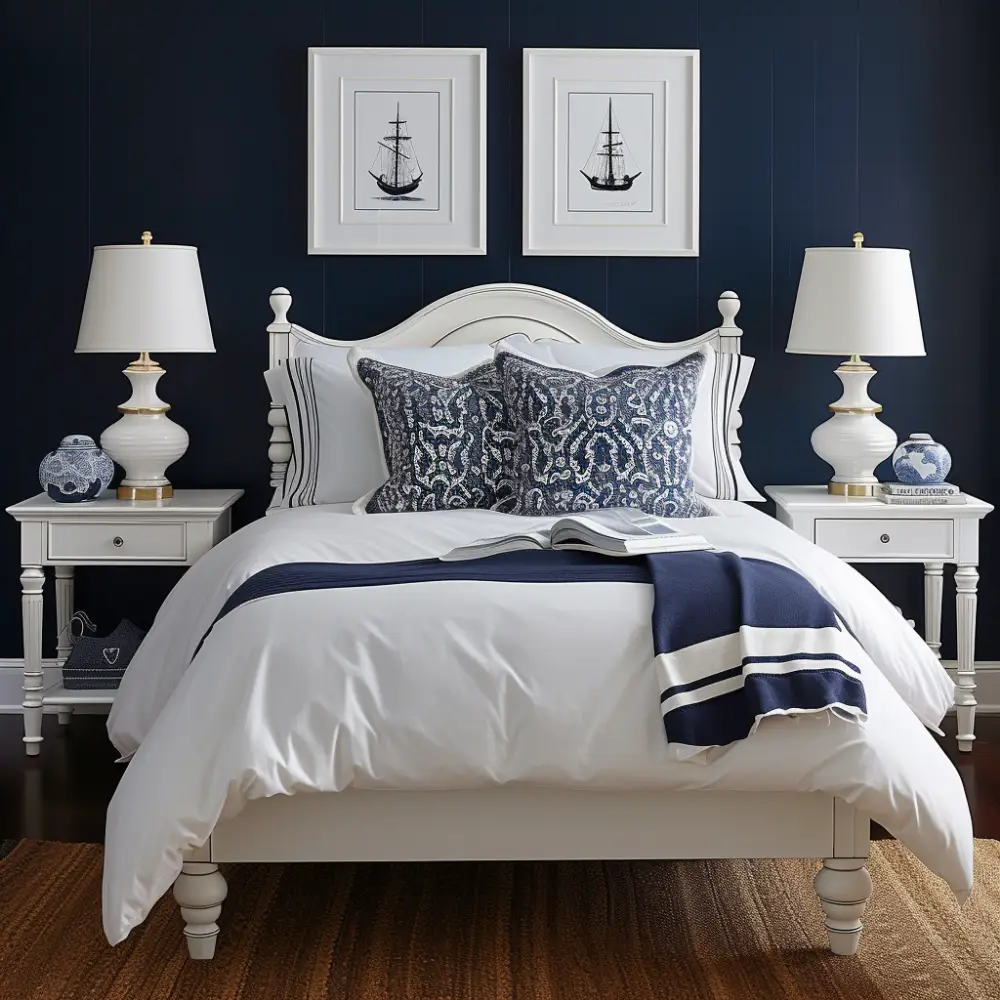
Navy and white artwork gives me a simple way to build a theme without adding another strong color. I can use framed prints above the bed or on an empty wall and repeat navy through pillows or a throw. This approach works particularly well when the main walls are already painted blue.
Pro Tip: I leave some empty wall space around a gallery arrangement because too many frames packed together can make a small bedroom feel busy.
16. Striped Navy Rug

A striped navy rug can anchor the bedroom while allowing the walls to stay neutral. I like pairing it with white bedding and a few navy pillows so the floor and bed connect visually. Light wood furniture can add warmth without competing with the striped pattern.
Insight: A rug does more than add color; it also helps visually define the sleeping area, especially in larger bedrooms or open layouts.
17. Navy and Teal
Navy and teal make a lively combination when I want more color than a traditional blue-and-white bedroom. I would keep the main furniture fairly simple and use teal in pillows, artwork, lamps, or a small accent chair. Walnut or medium-tone wood works nicely with both colors.
Pro Tip: I use teal as the smaller accent and navy as the dominant shade so the two blues do not compete equally for attention.
18. Industrial Elements
Dark blue works surprisingly well with industrial materials such as black metal, gunmetal finishes, exposed bulbs, and simple gray textiles. I like keeping the walls matte navy and using a soft gray bed or bedding to add comfort. The result can feel modern without becoming too polished.
Insight: Mixing hard materials such as metal with softer bedding and upholstery is important because too many industrial surfaces can make a bedroom feel less comfortable.
19. Navy Feature Furniture
A navy dresser is a practical choice when I want a dark blue focal point without changing the walls. I can keep the walls light gray, cream, or white and repeat the dresser color through a lamp or small accessory. This gives me flexibility if I decide to change the room later.
Pro Tip: If one piece of furniture is the main color statement, I repeat that color in at least one smaller item so it looks intentional rather than random.
20. Midnight Blue Walls

Midnight blue walls create a deep backdrop that can make lighter furniture stand out. I like combining them with a natural wood bed because the warm wood tone breaks up the darkness. White and pale blue bedding can then provide enough contrast around the sleeping area.
Insight: Very dark blue can look almost black in low light, so I always check a paint sample under the bedroom’s evening lighting before committing.
21. Chic Navy Headboard

A navy headboard is another low-commitment way to bring dark blue into the bedroom. I like a tall upholstered headboard with simple trim because it can frame the bed and give the room a more finished appearance. Gray, white, and navy bedding can build a calm layered palette around it.
Pro Tip: If the headboard is tall or detailed, I keep the wall behind it relatively simple so the bed remains the clear focal point.
22. Nautical Theme

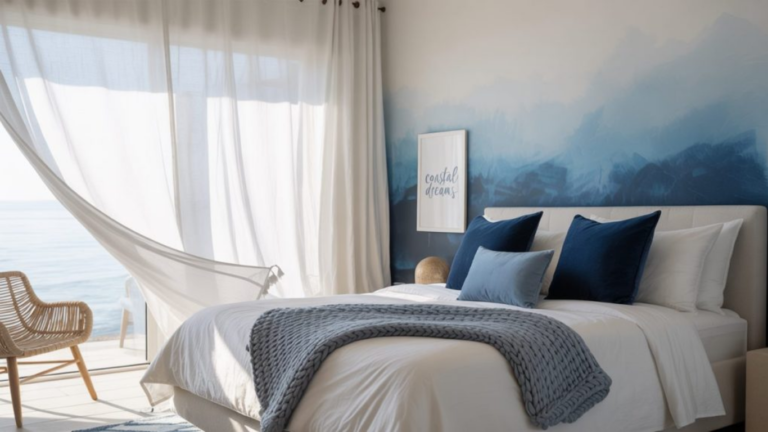
For a nautical bedroom, I would use navy and white as the base and add striped bedding, weathered wood, rope details, or simple coastal artwork. I prefer a few recognizable nautical touches instead of filling the room with anchors and seashells. That keeps the theme more grown-up and easier to live with.
Insight: Navy and white already create a strong coastal connection, so I only need a few supporting details to communicate the theme.
23. Navy with Pastels

Pastel pink, powder blue, or soft lavender can make a navy bedroom feel lighter and more relaxed. I like using these softer colors in pillows, throws, lamps, or small furniture while keeping navy as the stronger background. The contrast gives the room personality without making it overly bright.
Pro Tip: I choose muted pastels rather than several highly saturated colors because softer tones blend more naturally with deep navy.
24. Navy and Copper

Copper adds warmth to dark blue in a way that feels slightly different from traditional gold. I can use copper through a bed frame, lighting, hardware, or small decorative pieces while keeping the bedding neutral. Dark wood is another useful element because it connects the warm metal with the navy.
Insight: Warm metals are especially useful in dark bedrooms because they add reflected light and help prevent the palette from feeling too cold.
25. Marine-Inspired Accents

Marine-inspired details work naturally with a navy bedroom, especially when I add weathered wood, ocean artwork, or subtle sea-life patterns. I would keep the main furniture simple and use these details as accents rather than making every item ocean themed.
Pro Tip: I prefer using one strong marine print with a few smaller coastal references instead of mixing several competing ocean patterns.
26. Navy and Leather

Navy and leather create a strong combination that works particularly well for a bedroom with a masculine or tailored style. I can pair dark blue walls with a brown or black leather bed, dark wood nightstands, and simple white bedding. The different materials keep the color palette from feeling one-dimensional.
Insight: Leather brings both color and texture into the room, so I usually keep the surrounding accessories simple and let the material make the statement.
27. Bohemian Style

I like using deep navy as the base for a bohemian bedroom because it gives lighter textures somewhere to stand out. Cream bedding, macramé, tassels, woven materials, distressed furniture, and natural wood can all soften the darker wall color. The goal is to mix textures rather than simply adding more decoration.
Pro Tip: I limit the main color palette to a few shades and let texture provide most of the variety in a boho bedroom.
28. Floral Navy Prints

Navy floral bedding can add a classic look without requiring floral wallpaper or painted walls. I like combining a bold navy floral duvet with white or antique-style furniture and keeping the lamps and accessories fairly simple. This lets the floral print become the main feature.
Insight: Large floral patterns usually make a stronger statement than small prints, so I balance them with plain bedding layers and solid-color accessories.
29. Navy and Mustard

Mustard yellow gives navy a warm contrast that immediately adds energy to the bedroom. I can introduce mustard through pillows, a throw blanket, artwork, or a lamp while leaving most of the room navy and neutral. Medium-tone wood also fits naturally into this color combination.
Pro Tip: I use mustard as an accent rather than an equal partner to navy because a few warm touches are usually enough to brighten the space.
30. Navy and Brick

Navy walls and exposed brick create an interesting mix of urban texture and deep color. I would keep the bedding light and choose simple metal nightstands so the brick and navy walls remain visible. Gray upholstery can bridge the warm brick and cooler blue without adding another bold shade.
Insight: Brick already has strong texture and color variation, so I keep nearby furniture and accessories understated to avoid competing with the wall.
Conclusion
After working through these dark blue bedroom ideas, I think the biggest lesson is that I do not need to paint every wall navy to get the look. I can start with bedding, curtains, a headboard, rug, dresser, or one accent wall and build from there.
I also find that dark blue looks best when it has something lighter or warmer beside it. White, cream, gray, natural wood, brass, copper, teal, mustard, and soft pastels all give me different ways to change the mood without losing the calming quality of blue.
If I were starting from scratch, I would first decide how much dark blue I actually want in the room. Then I would choose one main blue element and repeat that shade in two or three smaller places rather than buying everything in the exact same color.
Frequently Asked Questions About Dark Blue Bedrooms
Is dark blue a good color for a bedroom?
Yes, I think dark blue is a great bedroom color when it is balanced with lighter shades and warm materials. Navy and midnight blue can create a cozy setting, while white, cream, gray, and natural wood keep the room from feeling too dark.
Pro Tip: I always test a dark blue paint sample in both daylight and artificial light before painting the entire room.
What colors go well with a dark blue bedroom?
I like pairing dark blue with white, cream, light gray, natural wood, brass, gold, copper, mustard, teal, and soft pastel shades. The best combination depends on whether I want the bedroom to feel modern, classic, rustic, coastal, or colorful.
Insight: Warm materials such as wood and brass can help balance the cooler appearance of deep blue.
Does dark blue make a bedroom look smaller?
Dark blue can make a room feel more enclosed, especially when used on several walls with limited natural light. I can avoid that effect by combining navy with lighter bedding, mirrors, light flooring, and good room lighting.
Pro Tip: In a small bedroom, I prefer starting with one navy accent wall or dark blue bedding instead of covering every wall.
What shade of blue is best for a bedroom?
I would choose the shade based on the amount of natural light and the mood I want. Navy works well for a classic look, while midnight blue creates a deeper mood and slightly softer dark blues can feel more relaxed.
Fact: The same blue can appear lighter or darker depending on the direction of the windows and the type of artificial lighting in the room.
How can I decorate a dark blue bedroom without making it too dark?
I use light bedding, pale rugs, warm wood, mirrors, lighter curtains, and layered lighting to balance dark blue. I also avoid using deep blue on every large surface because some contrast gives the eye a place to rest.
Pro Tip: White or cream bedding is one of the easiest ways I use to create contrast against navy walls.
What bedding goes with navy blue walls?
White, cream, light gray, pale blue, and soft pastel bedding all work well with navy walls. I usually start with a neutral duvet or comforter and then add navy pillows or throws to connect it with the walls.
Insight: Layering two or three related shades usually gives the bed more depth than using one solid navy bedding set.
Does dark blue work in a modern bedroom?
Yes. I can make dark blue feel modern by combining it with clean-lined furniture, simple lighting, gray upholstery, white bedding, black metal, or minimal accessories. A navy accent wall also works well with contemporary furniture.
Pro Tip: I keep patterns and decorative pieces limited when I want the bedroom to have a cleaner modern appearance.
Can I use dark blue in a small bedroom?
Yes, and I do not think a small bedroom has to avoid dark colors completely. I can use navy through a headboard, curtains, bedding, rug, or one feature wall while keeping the remaining surfaces lighter.
Insight: Repeating a dark blue accent in a few small areas can make the color feel intentional without visually filling the entire room.
What metallic colors look best with navy blue?
Gold, brass, and copper are my favorite warm metallic choices with navy because they create noticeable contrast. Silver and chrome can also work when I want a cooler, more contemporary bedroom.
Pro Tip: I repeat the same metallic finish in at least two or three places, such as the lighting and hardware, so it feels connected.
Is navy blue suitable for a cozy bedroom?
Yes. Navy is particularly useful when I want a bedroom to have a calm, enclosed feeling. I like combining it with soft bedding, upholstered furniture, warm lamps, wood, and textured fabrics to make the darker color feel comfortable rather than cold.
Fact: Darker wall colors can absorb more light visually, which is one reason they can create a more intimate atmosphere in a bedroom.
Many of the ideas I share are inspired by real-life experimentation. I often test décor concepts in my own living spaces and explore practical ways they can be applied in everyday homes. I also gather insights from working with homeowners who want to improve the comfort, beauty, and functionality of their spaces.
I share practical ideas for improving living rooms, bedrooms, and overall home aesthetics using simple design principles.
I explore creative ways to upgrade outdoor spaces including patio décor, small backyard styling, and relaxing outdoor setups.
I provide ideas for kitchen organization, décor accents, and functional layouts that make kitchens more beautiful and practical.
The concepts shared here are based on ideas I have personally experimented with or studied through real home décor improvements.