
Sage Green Bedroom Ideas for A Whispering Oasis and stylish spaces with practical color and decor
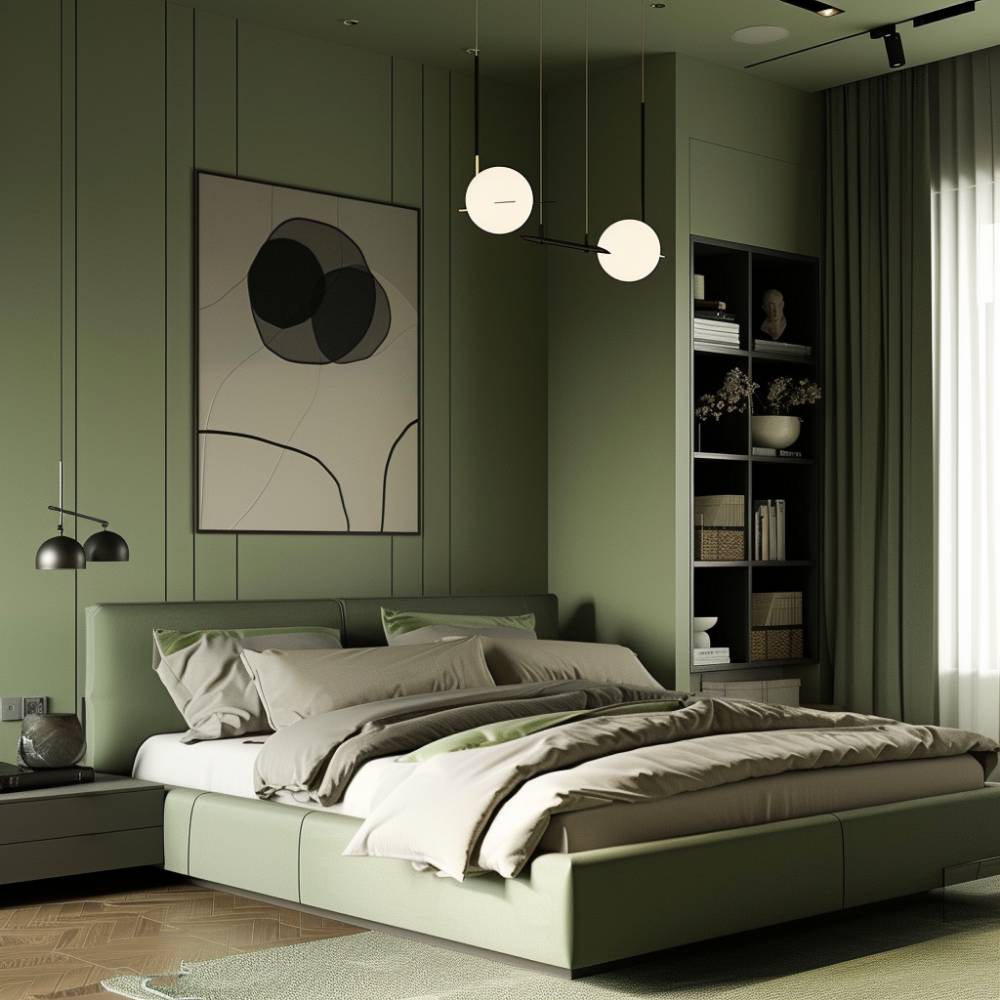
I’ve always liked sage green in bedrooms because it feels soft without making the room look plain. I can use it on walls, bedding, furniture, or small accents and still keep the room warm, calm, and personal. These 49 sage green bedroom ideas cover small rooms, modern spaces, farmhouse bedrooms, boho styles, cozy corners, and more.
When I plan a sage green bedroom, I usually balance the green with warm wood, cream, white, black, brass, or muted pink. I also pay attention to natural light because the same paint can look much lighter during the day and deeper at night. The goal is to build a room that feels comfortable rather than simply matching every item.
Key Takeaways

1. Sage Green Bedroom With Built-In Storage

I like using sage green built-ins when a bedroom needs more storage without adding bulky furniture. Matching the cabinets to the walls makes the storage feel like part of the room instead of a separate piece. A simple bed and light bedding keep the space from feeling crowded.
Pro Tip: In a small bedroom, use the same sage shade on storage and nearby walls to create a more continuous look.
2. Sage Green and Gray Bedroom

I find gray useful when I want sage green to feel a little more modern. A gray upholstered bed, soft sage walls, and simple black or metallic lighting can create a balanced color scheme. I would keep the bedding mostly neutral so the two colors don’t compete.
Insight: Cool gray can make sage feel cooler, while warm gray helps keep the bedroom softer and more inviting.
3. Color-Blocked Sage Green Bedroom

I can make sage green more interesting by using it on only part of the wall and pairing it with another shade. Extending the darker color onto the ceiling creates a cozy effect, especially in rooms with high ceilings. Patterned rugs and simple furniture help finish the look.
Pro Tip: Before painting a large color block, mark the edges with painter’s tape so I can check the proportions from across the room.
4. Sage Green Paneled Bedroom

I like wall paneling because it gives a plain bedroom wall more texture without requiring lots of artwork. Sage green works especially well on vertical panels behind the bed, while white bedding and natural wood keep the room light. A woven pendant can add another layer of texture.
Fact: Vertical wall details can draw the eye upward, which can make a room feel taller.
5. Small Sage Green Bedroom With a Reading Nook

I would use a window corner as a small reading space rather than leaving it unused. Sage walls, an ivory chair or cushion, and a compact lamp can make the area feel intentional. I’d keep the furniture narrow so the walkway remains clear.
Pro Tip: A small reading nook needs task lighting, so I would place the lamp where the light falls directly onto the reading area.
6. Scandinavian Sage Green Bedroom

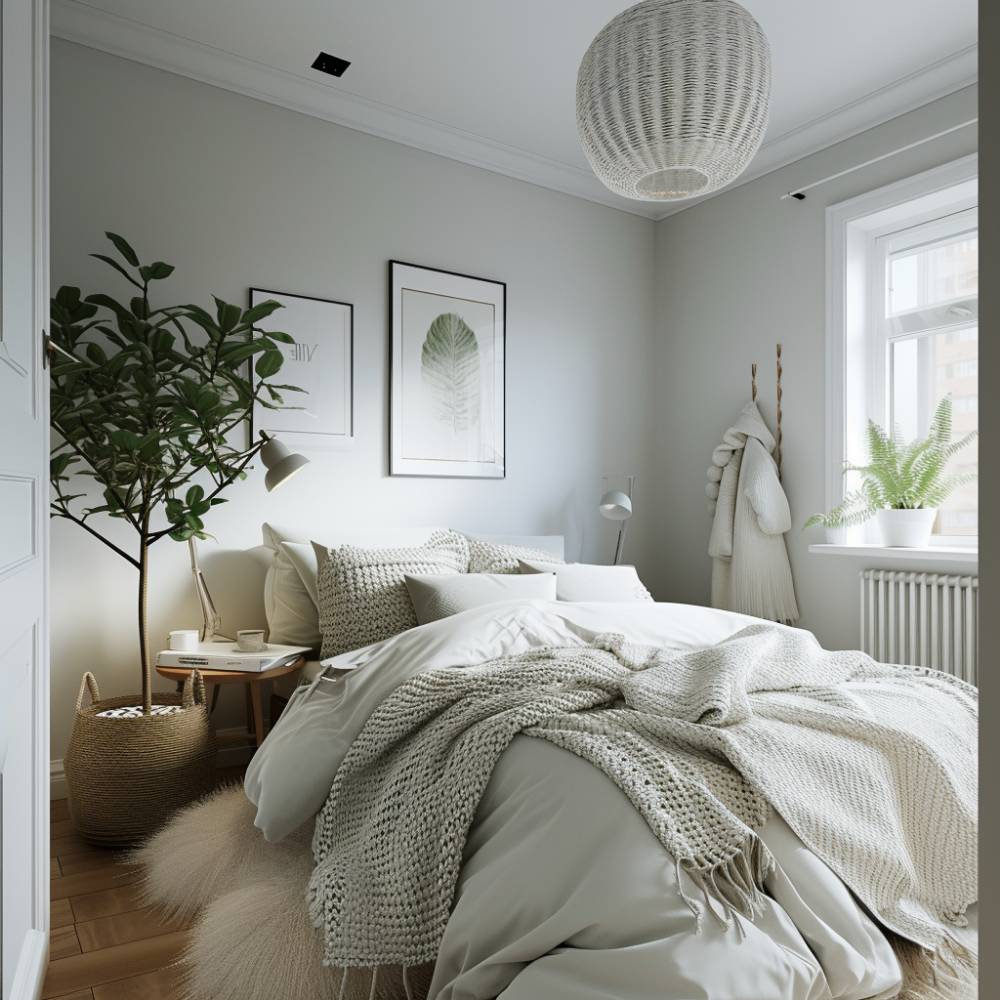
I like the combination of muted sage, pale wood, white bedding, and simple furniture for a Scandinavian-inspired bedroom. Keeping decorations limited makes the room feel open and easy to maintain. A few plants can add natural color without making the room busy.
Insight: Light wood is useful with sage green because it adds warmth while keeping the overall palette soft.
7. Farmhouse Sage Green Bedroom

I can give sage green a farmhouse feel with an iron bed, aged wood furniture, gingham fabric, and traditional lighting. I prefer mixing old-looking pieces with comfortable bedding so the room feels lived-in rather than staged. A few vintage accents are enough.
Pro Tip: Instead of matching every farmhouse item, I mix two or three finishes to make the bedroom feel more natural.
8. Sage Green Bedroom With Mirrors

I use mirrors when a sage green bedroom feels smaller than I want. A large mirror opposite or near a window can reflect available daylight and make the room appear more open. Storage beds and simple nightstands can save additional floor space.
Fact: A mirror doesn’t add actual square footage, but its reflection can create a stronger sense of visual depth.
9. Sage Green and Gray Upholstered Bedroom

I like an upholstered gray bed against sage walls because the fabric softens the stronger lines of modern furniture. I can add cream bedding, a wood dresser, and black accents without making the room feel too dark. This combination works well for a simple adult bedroom.
Pro Tip: If the walls and bed are both muted, I add texture through a quilt, rug, or woven basket rather than another strong color.
10. Sage Green Bedroom With Wall Sconces
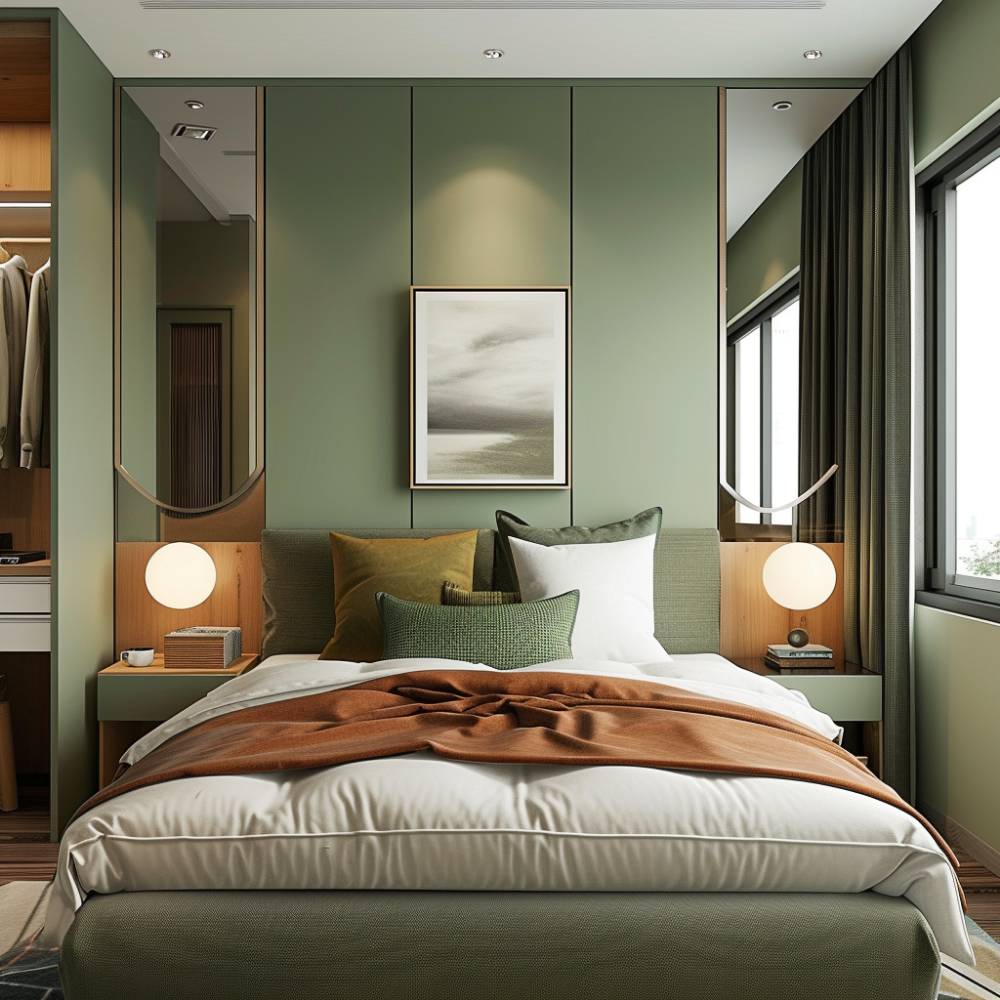
I prefer wall sconces when bedside tables are small or when I want to keep the floor area open. They provide useful bedside lighting without taking up the surface where I keep books or other items. A floating shelf can also work as a compact nightstand.
Insight: Mounting bedside lighting on the wall is especially useful when every inch of floor space matters.
11. Dark Ceiling With Sage Green Walls

I like using a darker green on the ceiling when I want the bedroom to feel more enclosed and cozy. The sage walls prevent the darker ceiling from taking over the entire room. Light bedding and warm lighting help balance the deeper color.
Pro Tip: I would test the ceiling color at night as well as during the day because artificial lighting can make dark green look noticeably different.
12. Scandinavian Bedroom With Sage Accents

I don’t always need to paint the walls sage green. I can keep the walls white and introduce the color through bedding, cushions, curtains, or a small chair. This is a good approach when I want flexibility to change the room later.
Pro Tip: Starting with removable sage accents is a low-commitment way to see whether the color works with existing furniture.
13. Modern Sage Green Bedroom With Under-Bed Lighting

I like a low-profile bed when I want a clean modern bedroom. Adding subtle lighting below the bed can create a soft evening glow while sage walls keep the room grounded. I would avoid too many decorative pieces so the furniture remains the focus.
Insight: Indirect lighting usually feels softer at night than a bright overhead fixture pointed directly into the room.
14. Four-Poster Sage Green Bedroom
I can make a four-poster bed feel less traditional by combining it with soft sage walls and simple white linens. Sheer curtains add privacy without making the bed look heavy. A vintage chest or wooden nightstand can bring warmth to the arrangement.
Pro Tip: Keep the fabric around a four-poster bed light if the room already has darker furniture.
15. Luxurious Sage Green Bedroom

I like using velvet, brass, plush bedding, and an upholstered bench when I want sage green to feel more polished. The color keeps these richer materials from looking too heavy. I would choose one statement light instead of filling the room with metallic decorations.
Insight: Mixing textures is often more effective than adding more colors when creating a luxurious bedroom.
16. Small Sage Green Bedroom With Coral Bedding

I enjoy adding a muted coral accent to sage green because it gives the room some warmth. I can use coral in the duvet, cushions, artwork, or a small throw while keeping most of the room neutral. This works particularly well in compact bedrooms.
Pro Tip: I use the brighter color in small doses so the sage green remains the main color.
Final Thoughts
I think sage green is one of the easier bedroom colors to work with because I can make it modern, rustic, traditional, boho, or simple depending on what I pair with it. I don’t need to repaint every wall or replace all my furniture to use it. Even sage bedding, a single accent wall, or a few small accessories can change the feel of the room.
When I plan a sage green bedroom, I start with the amount of natural light, then choose the shade and build the rest of the palette around it. Warm wood and cream keep it cozy, black makes it more modern, and brass or gold adds a polished touch. The best version is the one that fits how I actually use my bedroom.
Many of the ideas I share are inspired by real-life experimentation. I often test décor concepts in my own living spaces and explore practical ways they can be applied in everyday homes. I also gather insights from working with homeowners who want to improve the comfort, beauty, and functionality of their spaces.
I share practical ideas for improving living rooms, bedrooms, and overall home aesthetics using simple design principles.
I explore creative ways to upgrade outdoor spaces including patio décor, small backyard styling, and relaxing outdoor setups.
I provide ideas for kitchen organization, décor accents, and functional layouts that make kitchens more beautiful and practical.
The concepts shared here are based on ideas I have personally experimented with or studied through real home décor improvements.