24 Luxury Bathroom Decor Ideas freestanding tubs elegant lighting
A luxury bathroom does not have to be oversized or filled with expensive products. I have found that the biggest difference often comes from a few well-chosen details, such as a stone vanity, better lighting, quality fixtures, warm towels, natural materials, and thoughtful storage. These 24 luxury bathroom decor ideas cover both major upgrades and smaller changes that can make a bathroom feel more polished, comfortable, and personal.
From marble countertops and freestanding tubs to heated floors, wall sconces, floating shelves, and indoor plants, I have included ideas for different bathroom sizes and decorating styles. I also point out practical details that matter before spending money, including moisture resistance, lighting placement, water pressure, ventilation, cleaning, and material maintenance.
Key Takeaways
I would start with the features you use every day rather than buying decorative pieces first. A comfortable shower, useful vanity, good lighting, warm flooring, and plenty of storage can have more impact than expensive accessories that only look impressive.
I also recommend choosing two or three finishes and repeating them throughout the bathroom. For example, brass hardware with warm wood and creamy stone can create a consistent look without making the room feel overly matched.
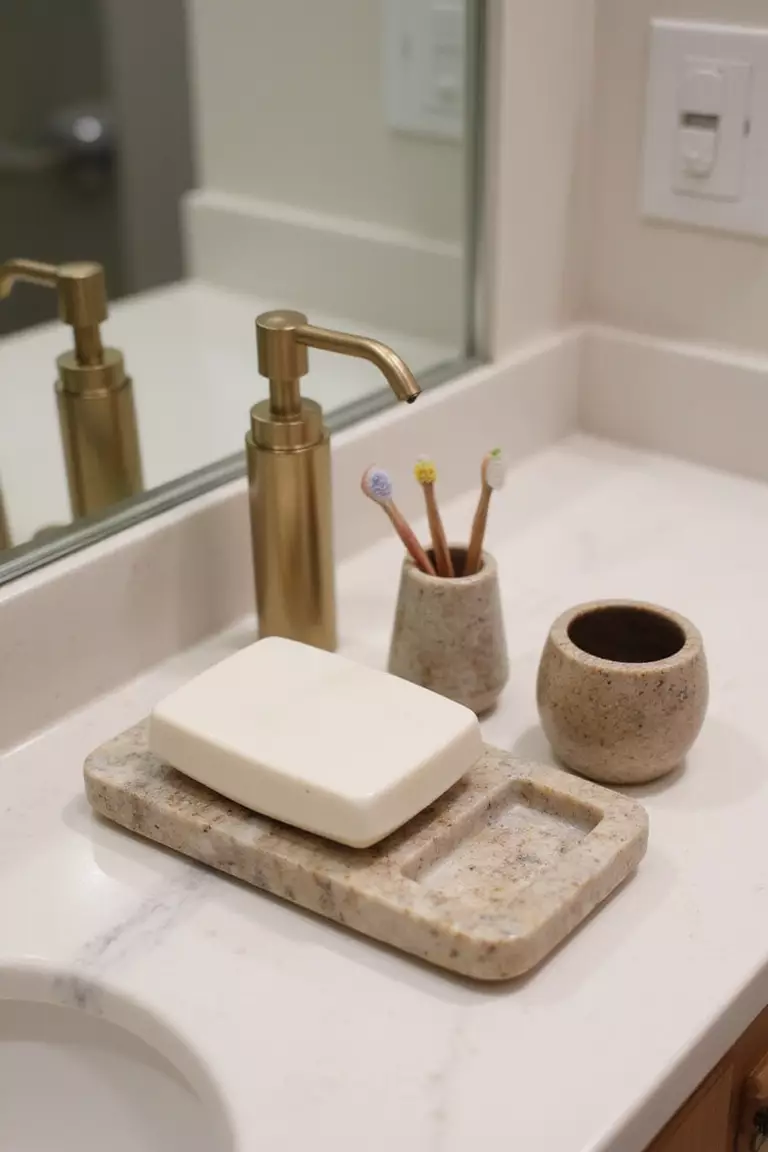
1 Opulent Marble Countertops
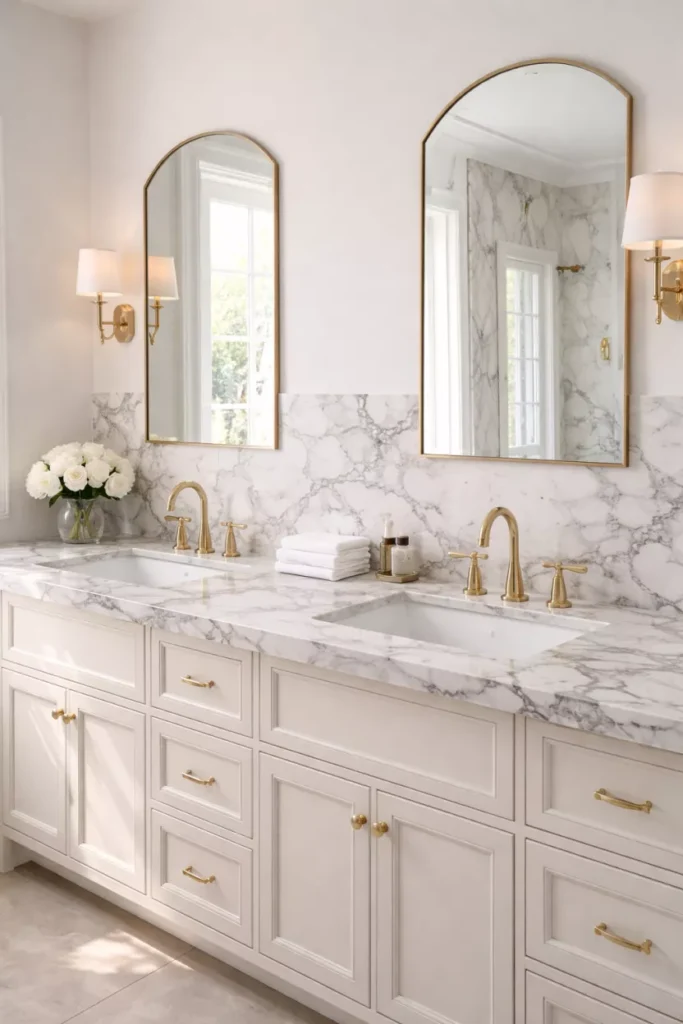
I like marble countertops when I want the vanity to become the main feature of a luxury bathroom. Carrara marble has softer gray veining, while Calacatta varieties usually have bolder patterns, so I would choose based on how much visual movement the room can handle. A matching backsplash can make the vanity feel like one continuous piece.
Pro Tip: Marble is porous and can react to acidic substances, so I would confirm the stone’s care requirements and sealing schedule with the fabricator before installation.
2 Elegant Freestanding Bathtubs
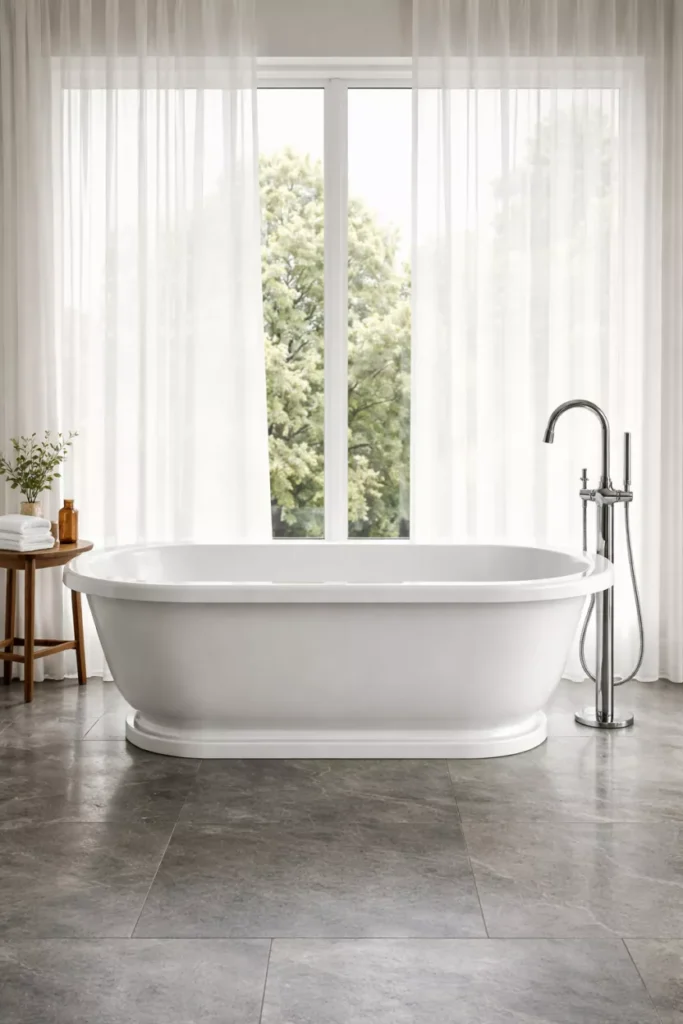
A freestanding bathtub can give a bathroom a strong focal point without requiring a complicated design. I prefer simple oval and slipper shapes when the rest of the room already has plenty of detail. Before buying one, I would check the tub dimensions, filled weight, floor structure, plumbing location, and clearance around it.
Fact: A freestanding tub needs more planning than an ordinary alcove tub because the drain and water supply may need to be positioned in the floor.
3 Luxurious Rainfall Showerheads
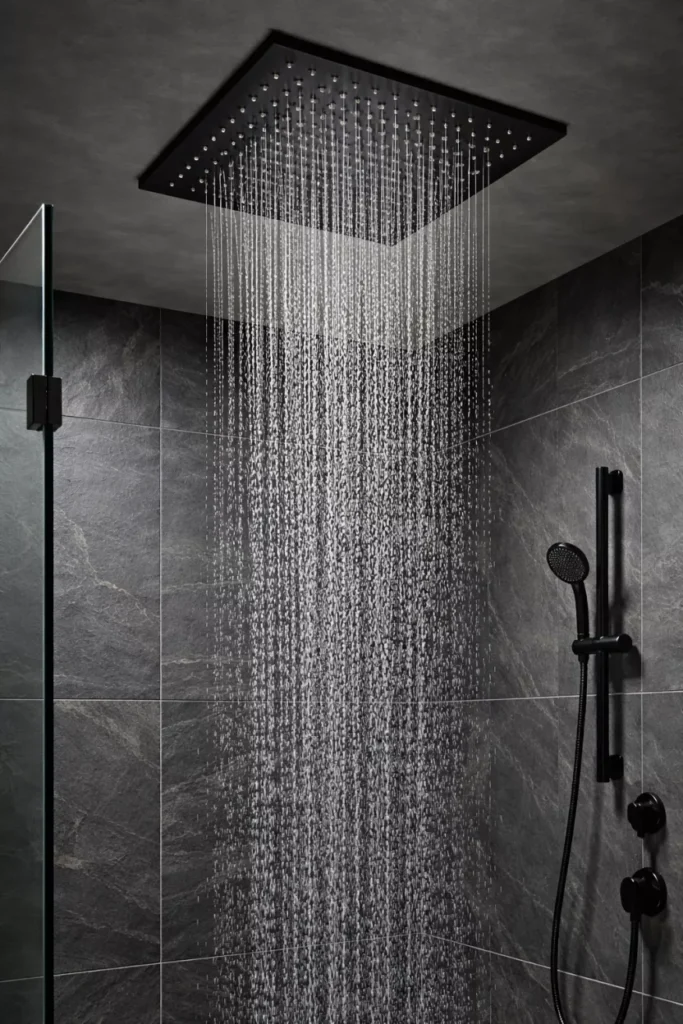
I find rainfall showerheads most useful when the shower has enough space to keep the spray comfortable and well contained. A large ceiling-mounted head can create a clean appearance, while a separate handheld shower adds flexibility for rinsing and cleaning. I would also check the home’s water pressure before choosing an oversized shower system.
Pro Tip: Do not choose a showerhead based only on its size. Check its flow rate and make sure your existing plumbing can support the system you want.
4 Underfloor Heating Systems
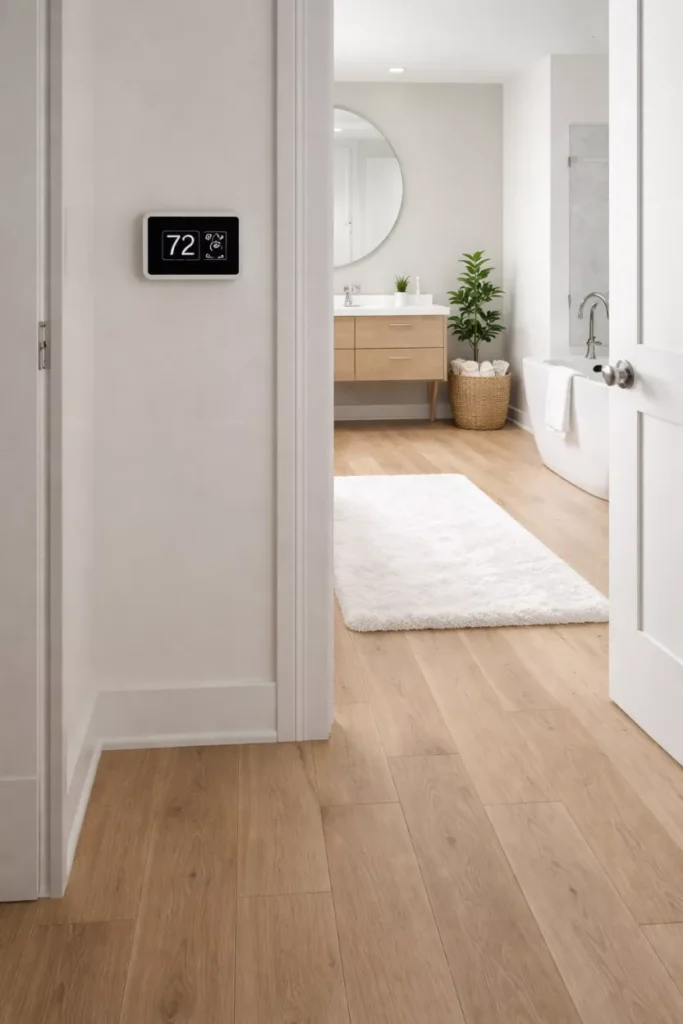
Cold bathroom tile can be unpleasant, especially during winter, which is why heated flooring is one of my favorite hidden luxury upgrades. Electric radiant mats are often considered for smaller remodeling projects, while hydronic systems can make sense in larger renovations where plumbing and heating work are already planned.
Insight: Heated flooring is easiest to plan before the finished floor goes in, so I would make this decision early rather than treating it as a last-minute addition.
5 Crystal Chandeliers
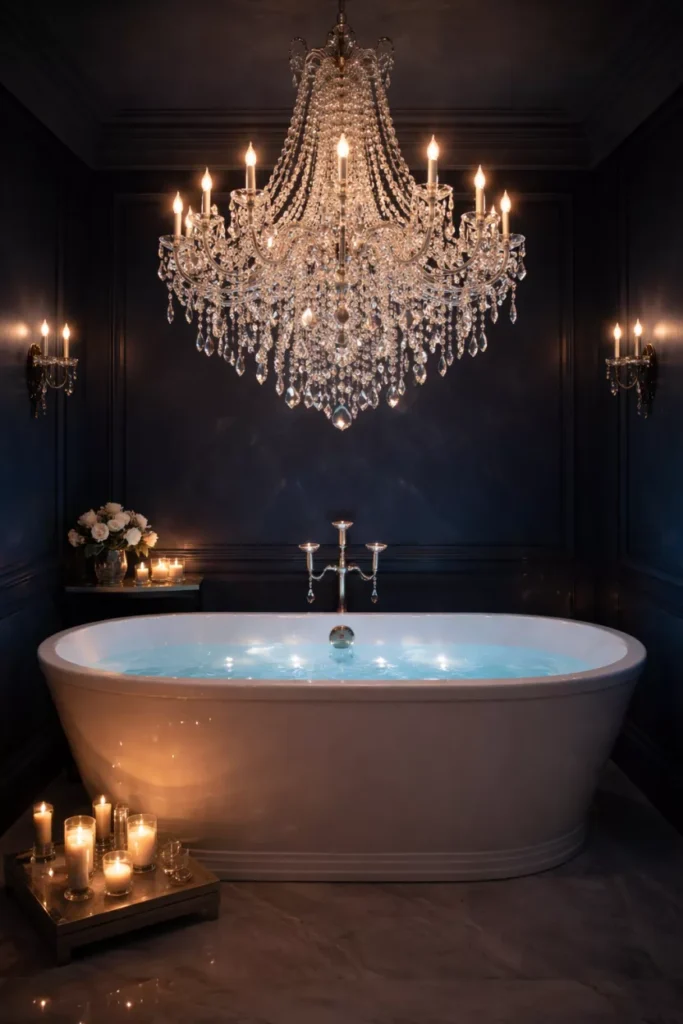
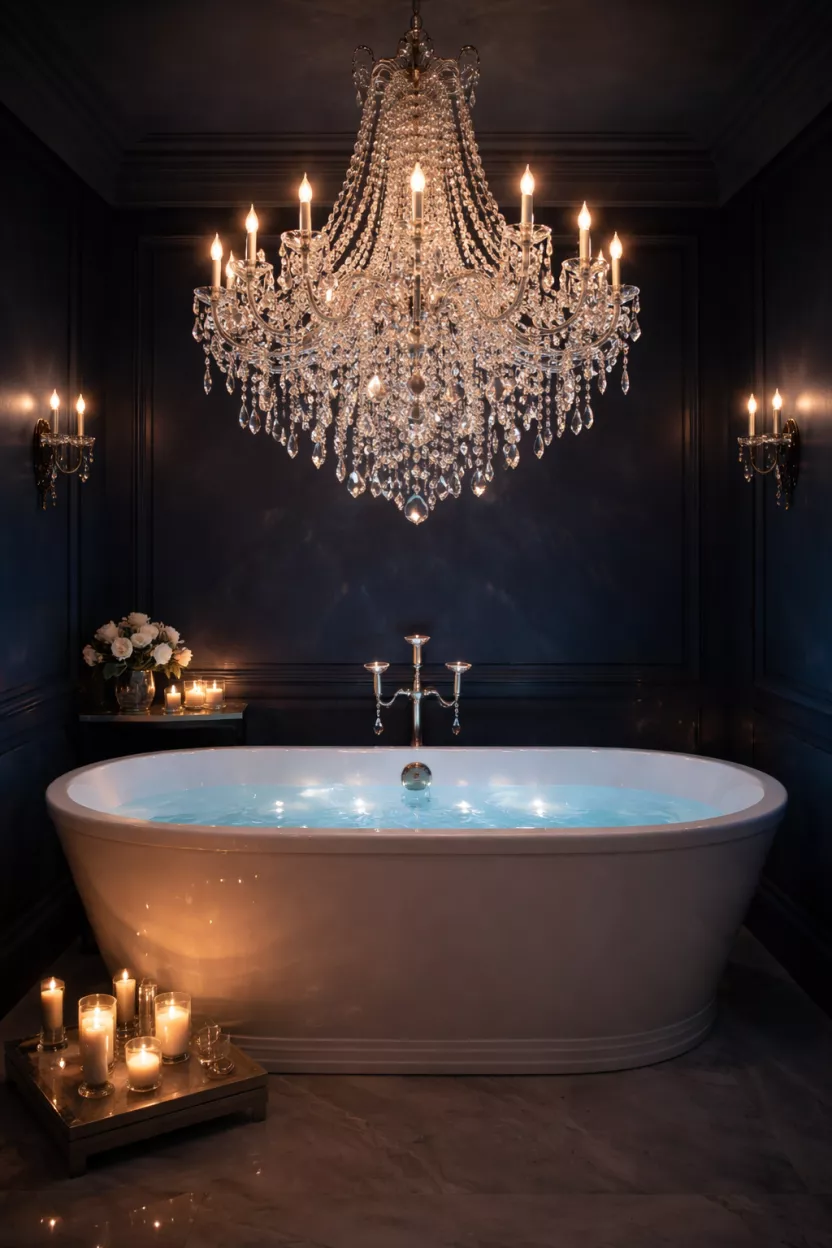
A chandelier can add personality to a bathroom, especially when it is positioned near a freestanding tub or used as the room’s decorative centerpiece. I would keep the rest of the lighting simple so the fixture does not compete with mirrors, tile, and other finishes. Safety matters just as much as appearance in a bathroom.
Pro Tip: Use only lighting fixtures approved for the specific bathroom location and have a qualified electrician handle installation where required by local code.
6 Polished Brass Fixtures
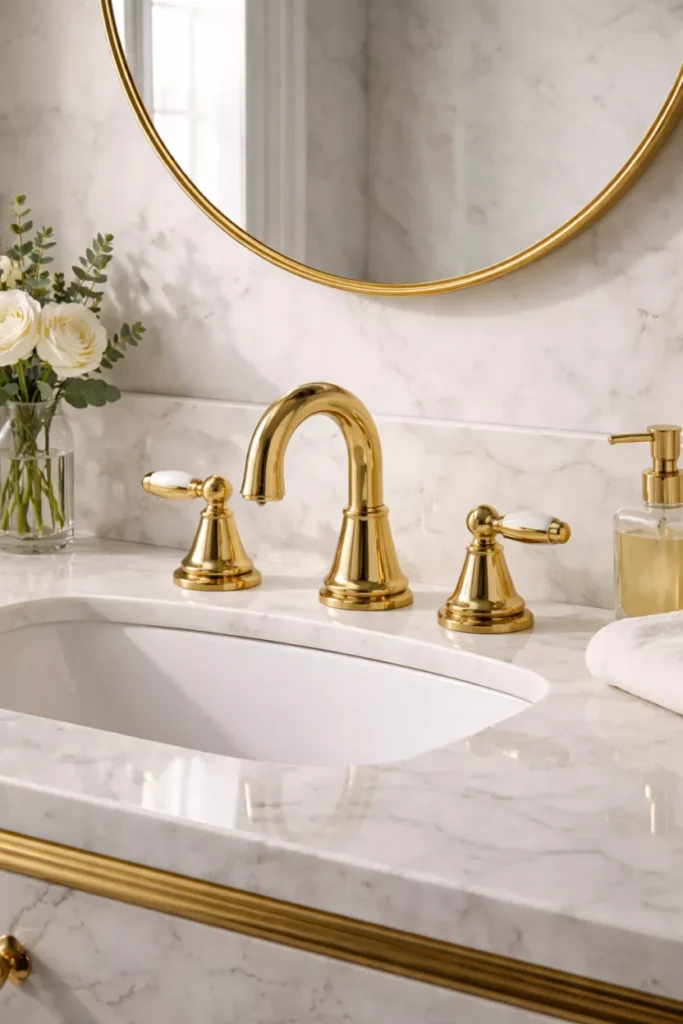
Polished brass can bring warmth to a bathroom that might otherwise feel too white, gray, or cold. I like using it on faucets, cabinet hardware, towel bars, and mirror frames so the finish appears intentional instead of scattered. If you prefer less shine, brushed brass can create a softer effect.
Fact: Brass finishes vary significantly between manufacturers, so I would order samples or compare products in person before mixing pieces from different collections.
7 Heated Towel Warmers
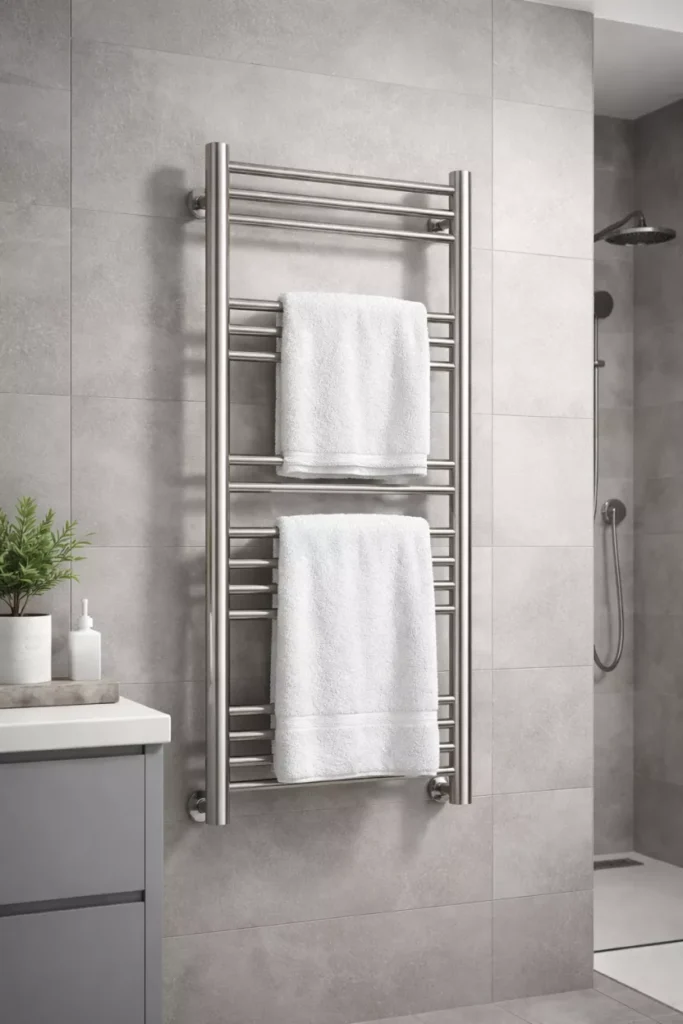
A heated towel warmer is a relatively small addition that can make an everyday bathroom routine feel much more comfortable. Ladder-style models are useful because they can hold several towels while taking up vertical wall space. I would choose the size according to the towels my household actually uses rather than buying the largest model available.
Pro Tip: Look for a model with a timer or programmable control if you want warmth during specific hours without leaving it running continuously.
8 Bespoke Custom Vanities
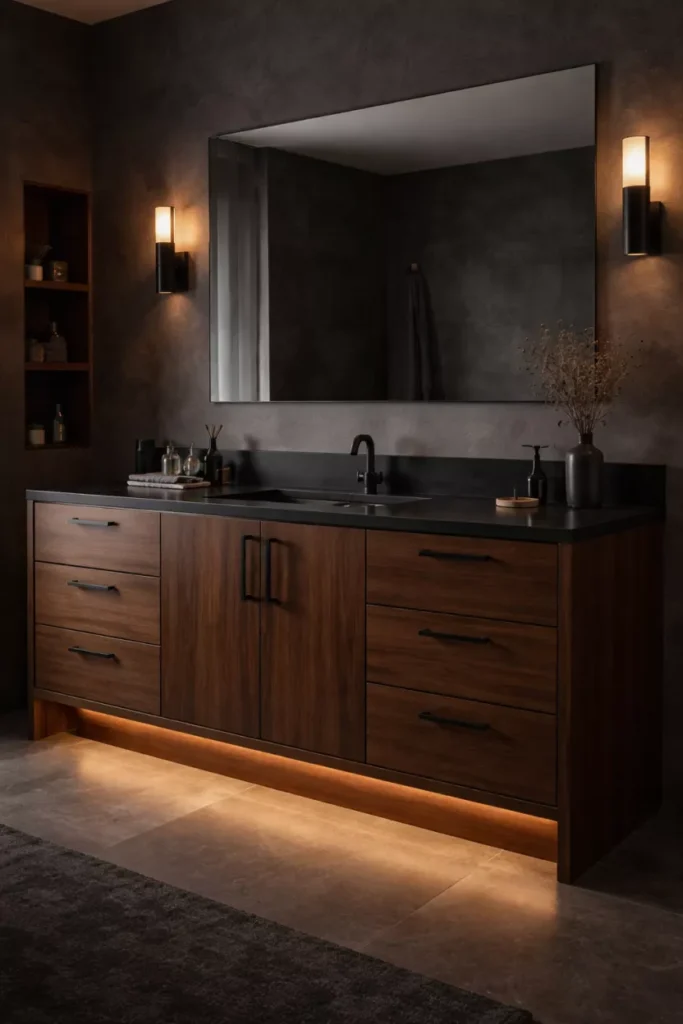
A custom vanity can solve two problems at once: appearance and storage. I like walnut, oak, and painted cabinetry because they can make the bathroom feel more like a furnished room instead of a collection of fixtures. Soft-close drawers, interior organizers, and integrated lighting can also make the vanity easier to use.
Insight: Before choosing a vanity style, I would measure what needs to be stored inside it. Good luxury design should look attractive while still making daily routines easier.
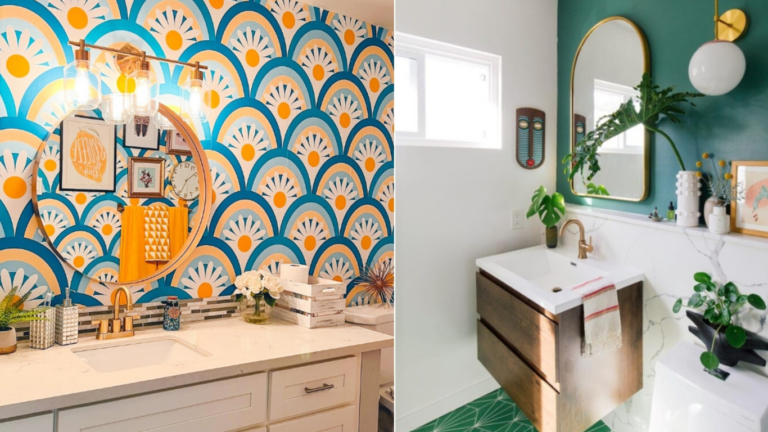
9 Handcrafted Mosaic Tile Walls

Mosaic tile can give a bathroom more texture without covering every surface with a busy pattern. I would use a detailed mosaic on one accent wall, shower niche, or backsplash and keep nearby surfaces quieter. Glass, stone, ceramic, and porcelain mosaics each have different maintenance requirements.
Pro Tip: Grout color can change the entire appearance of a mosaic. A contrasting grout emphasizes the pattern, while a similar shade creates a calmer and more continuous surface.
10 Deep Soaking Tubs
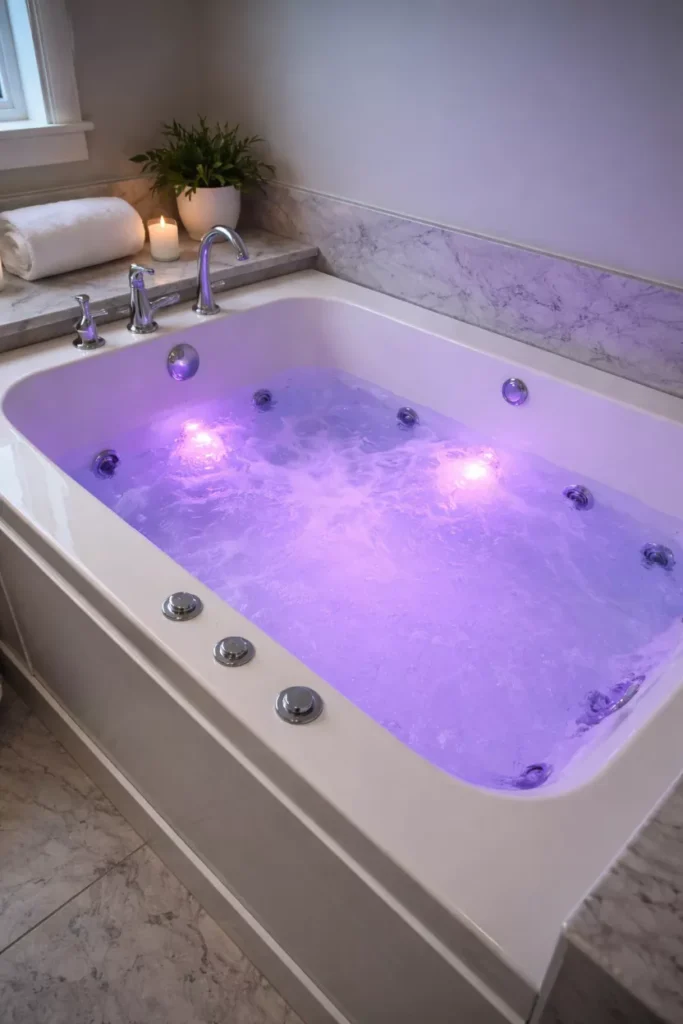
For anyone who genuinely enjoys long baths, a deep soaking tub can be more useful than a standard decorative bathtub. I would pay attention to the actual interior soaking depth rather than judging a tub by its outside dimensions. It is also important to check whether the finished floor and plumbing can handle the tub’s filled weight.
Fact: Tub dimensions can be misleading because thick walls and sloped interiors reduce the usable bathing space inside.
11 LED Backlit Walls
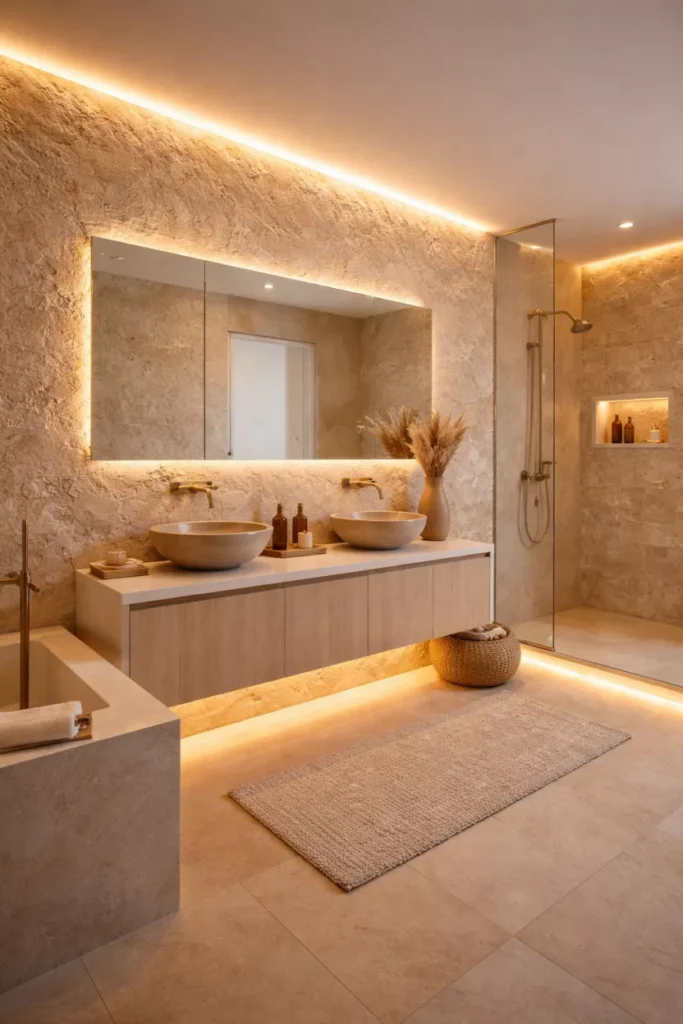
I like concealed LED lighting because it can add atmosphere without filling the bathroom with visible fixtures. LEDs can be placed behind mirrors, beneath vanities, inside niches, or along architectural features to create gentle layers of light. Warm white lighting usually works well when I want the bathroom to feel calm and comfortable.
Pro Tip: Use dimmable lighting where possible and separate ambient, task, and accent lighting so you can change the brightness for different parts of the day.
12 Natural Stone Accent Walls

Natural stone can bring depth and texture to a luxury bathroom, particularly when the rest of the space uses smooth glass, porcelain, or painted surfaces. Slate, travertine, and other stones can each create a different mood, but I would check whether the selected material needs sealing and regular maintenance before installing it in a wet area.
Fact: Not every natural stone has the same water resistance, so the stone’s technical specifications matter more than its appearance alone.
13 Designer Faucetry Collections
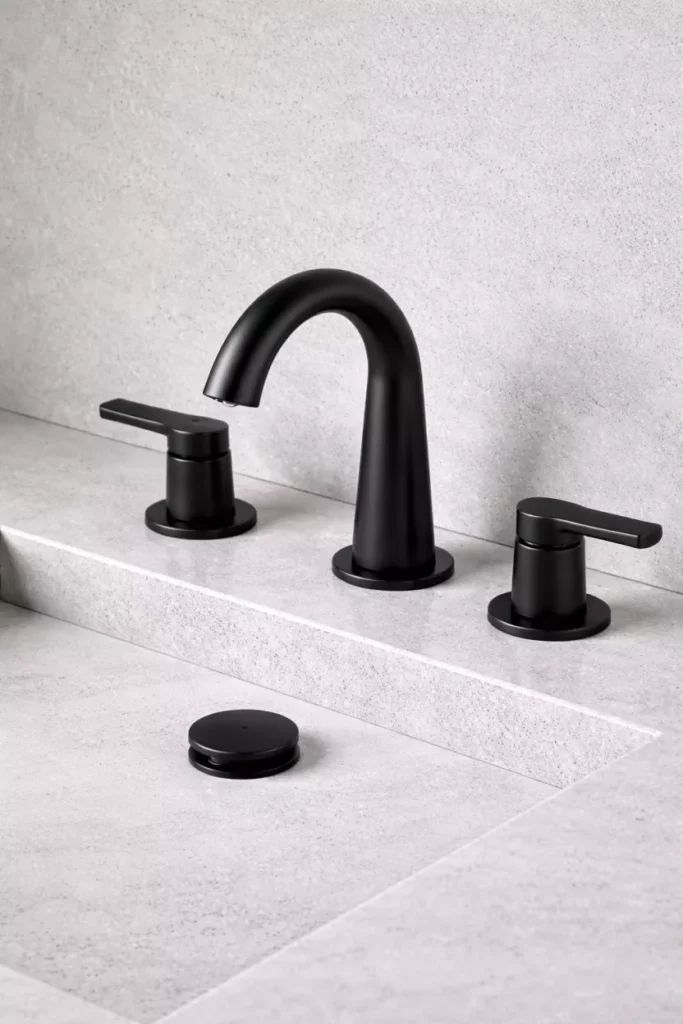
I prefer coordinated faucet collections when I want the bathroom to look carefully planned. Matching the sink faucet, shower controls, and other visible hardware can make even a simple bathroom feel more finished. Matte black, brushed nickel, chrome, and brass can all work well when they suit the rest of the room.
Pro Tip: Check replacement parts and warranty support before buying expensive fixtures. A beautiful faucet is less useful if repairs become difficult later.
14 Aromatherapy Steam Showers
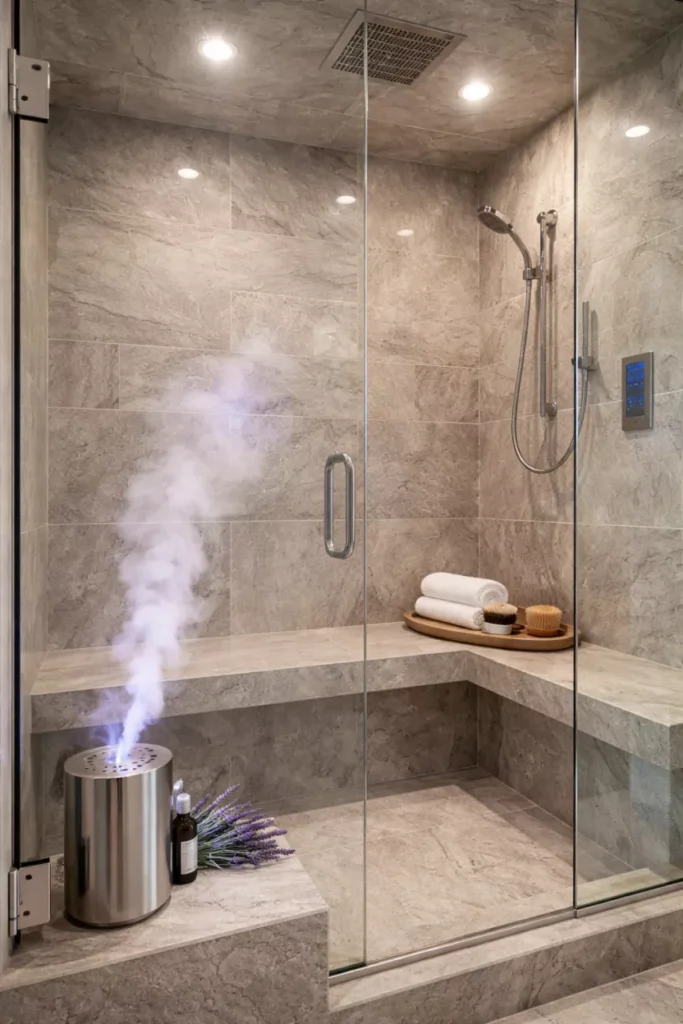
A steam shower can turn a regular shower area into a more spa-like space, but it requires more planning than simply adding a showerhead. The enclosure, steam generator, ventilation strategy, waterproofing, controls, and seating all need to work together. I would treat this as a proper renovation project rather than a decorative upgrade.
Insight: Steam creates much more moisture than an ordinary shower, so waterproofing and ventilation deserve serious attention before installation.
15 Plush Persian-Style Rugs
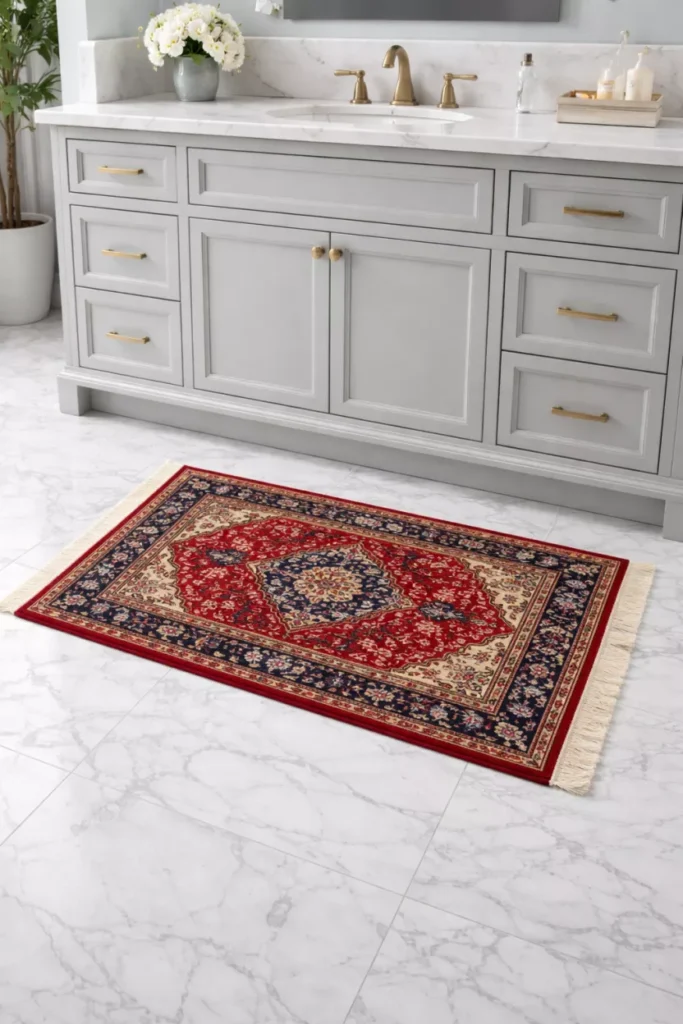
A Persian-style rug can soften a bathroom filled with hard tile and stone while adding color and pattern. I like using a smaller rug outside the main wet zone rather than placing valuable textiles where they will constantly get soaked. A washable or moisture-tolerant option can be more practical for busy bathrooms.
Pro Tip: Always use a quality non-slip rug pad on smooth bathroom flooring and keep the rug dry enough to prevent moisture from becoming trapped underneath.
16 Curated Gallery Wall Art
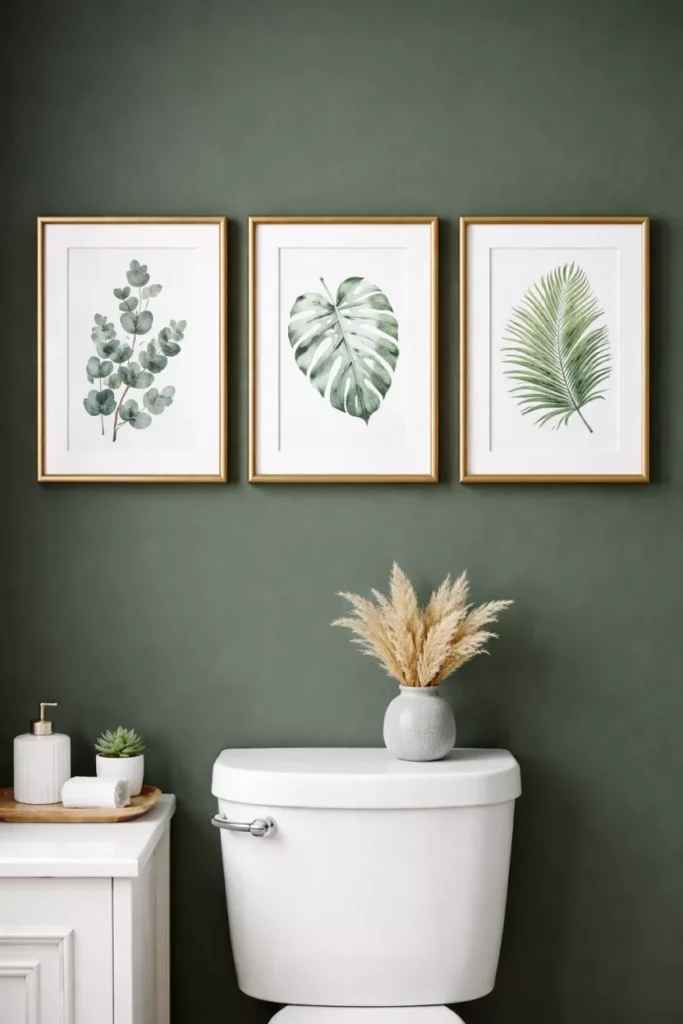
Artwork can make a bathroom feel connected to the rest of the home instead of treating it like a purely functional space. I would choose a small collection of botanical prints, abstract pieces, photography, or other artwork that suits the room’s colors. Humidity should always be considered when selecting paper, frames, and placement.
Pro Tip: Keep valuable originals away from areas exposed to direct steam and frequent water splashes. Affordable prints are often a smarter choice for humid bathrooms.
17 Floating Walnut Shelves
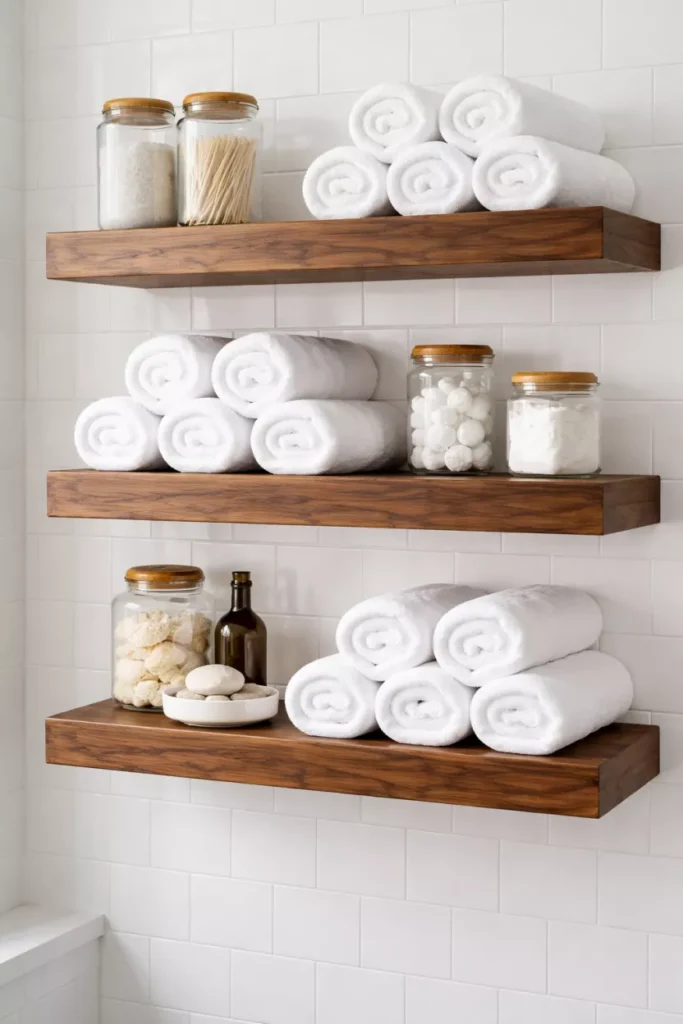
Floating shelves give me a practical way to add storage without making a bathroom feel crowded with cabinets. Walnut brings warmth against white or light tile, while rolled towels, small containers, and a few decorative pieces can keep the shelves useful and attractive. I would avoid filling every inch because open shelving looks better with some empty space.
Fact: Bathroom humidity can affect untreated wood, so wooden shelves should have an appropriate protective finish and should not be installed where they receive constant direct water.
18 Artistic Vessel Sinks
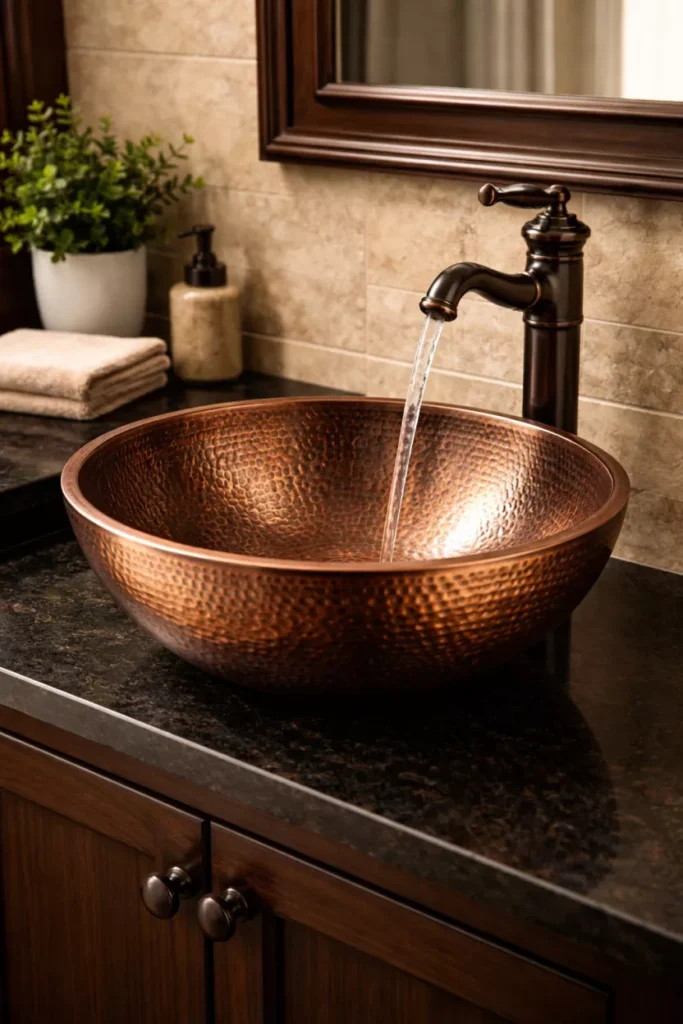
A vessel sink can become a noticeable design feature because the basin sits above the countertop rather than being recessed into it. I like stone, ceramic, glass, and metal options when they fit the overall style. The faucet height and reach need to be selected carefully so the sink remains comfortable to use.
Pro Tip: Measure the sink, faucet, countertop, and user height together before ordering. A beautiful vessel sink can be awkward when the faucet is too low or too far away.
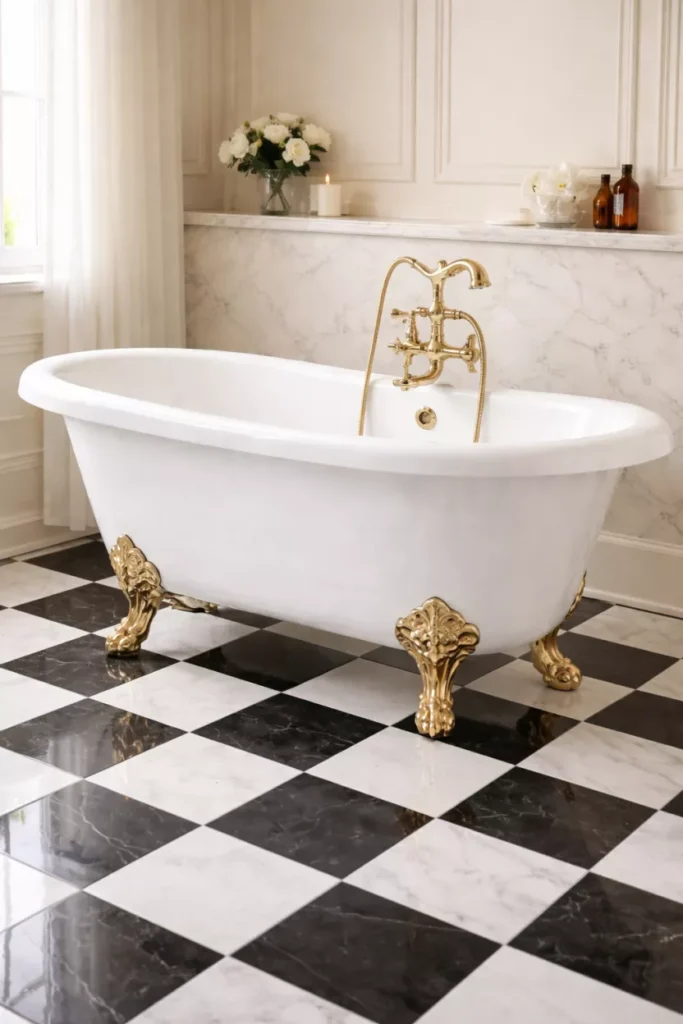
19 Vintage Clawfoot Bathtubs
A clawfoot bathtub works particularly well when I want a bathroom with vintage, traditional, or collected character. Cast iron has a substantial feel, while modern acrylic versions can reduce the weight and may be easier to handle during installation. I would leave enough space around the tub for cleaning and comfortable movement.
Insight: The floor underneath an open tub is more visible than with a built-in model, so I would choose flooring that looks good across the entire area rather than only around the edges.
20 Sculptural Wall Sconces
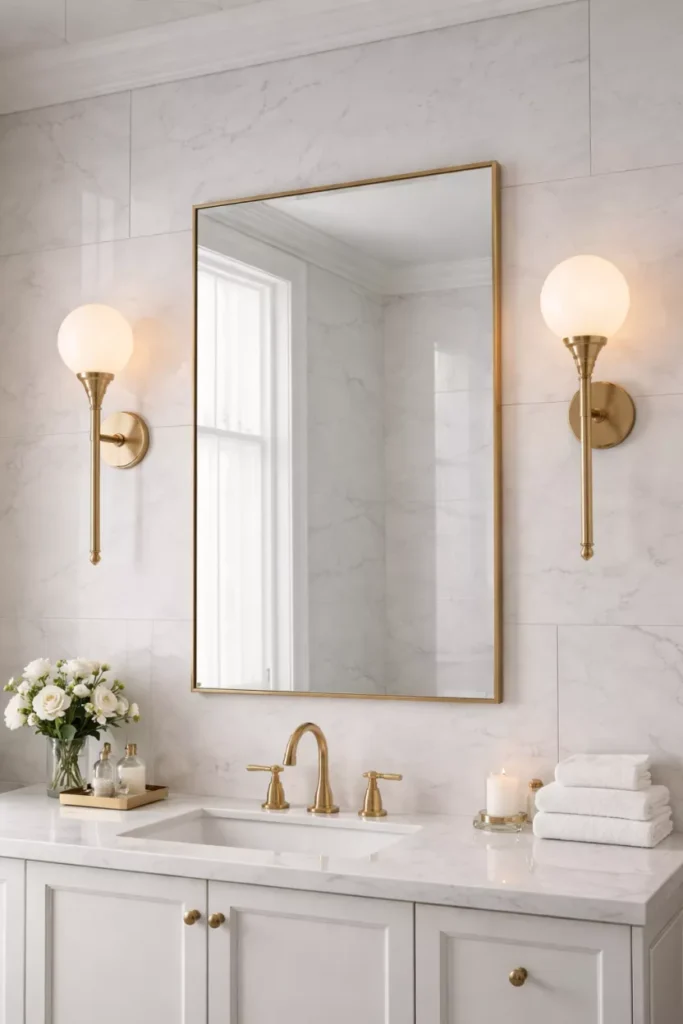
Wall sconces can improve both the appearance and usefulness of a bathroom mirror area. I prefer placing matching fixtures on both sides of the mirror because side lighting can reduce the strong shadows that often come from a single overhead fixture. Opal glass and soft finishes can create a comfortable look without making the space feel overly formal.
Fact: Vanity lighting should be planned around where light falls on the face, not simply where a fixture looks attractive on the wall.
21 Multi-Head Body Shower Systems
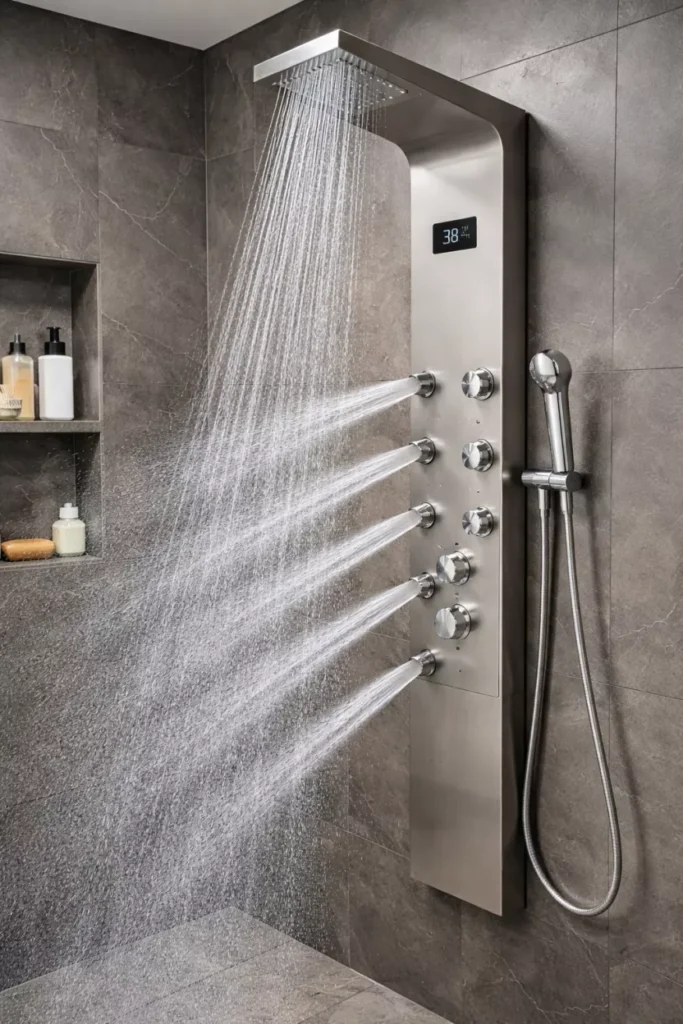
A multi-head shower system can provide several spray positions, including overhead, handheld, and body jets. I would only consider one after checking the available water pressure, pipe capacity, shower valve requirements, and local plumbing rules. A handheld attachment is especially useful for cleaning the shower and rinsing hard-to-reach areas.
Pro Tip: More shower outlets do not automatically mean a better shower. A well-designed system with comfortable pressure can be more useful than several outlets that divide the available flow.
22 Designer Egyptian Cotton Towels

Soft, substantial towels can make a noticeable difference because they are something I use every day. When comparing towels, I look at material, construction, absorbency, and GSM rather than relying only on the word “luxury” on the packaging. A coordinated neutral palette can also make open towel storage look more intentional.
Fact: GSM refers to grams per square meter and is commonly used to describe towel weight, but a higher GSM alone does not guarantee better absorbency or durability.
23 Dimmable Recessed Lighting
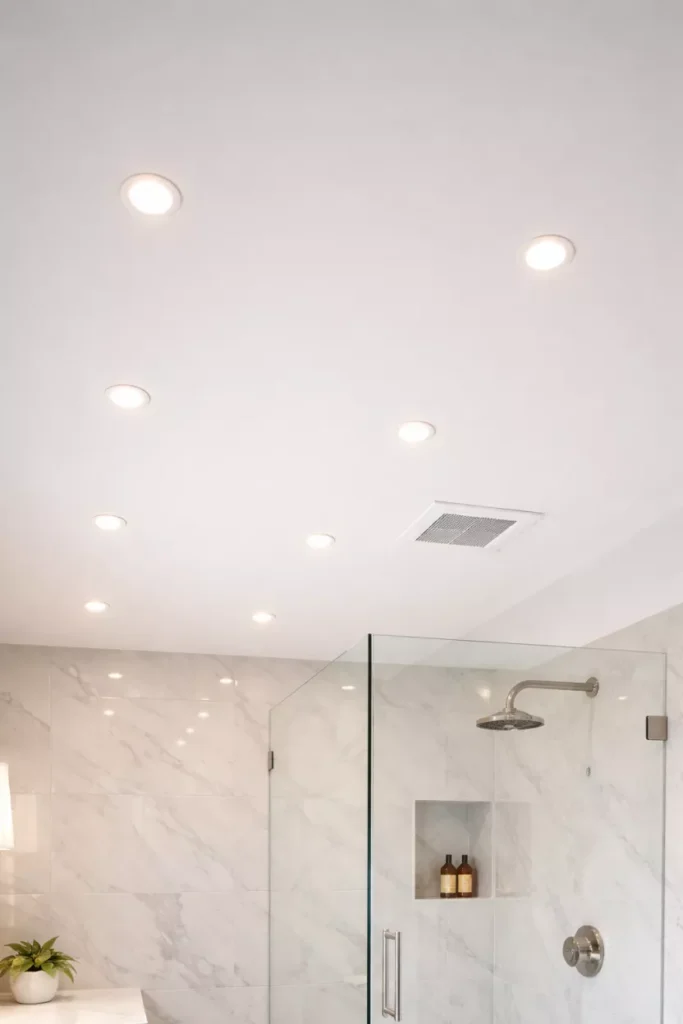
Recessed lighting is useful when I want even general illumination without adding bulky fixtures to the ceiling. I prefer combining it with vanity lighting rather than relying on recessed lights alone. Dividing the bathroom into lighting zones also makes it easier to keep the room comfortable at night.
Pro Tip: Choose bathroom-rated fixtures for their intended locations and use dimmers that are compatible with the selected LED lamps or integrated fixtures.
24 Lush Tropical Indoor Plants

Plants can soften the hard surfaces found in many bathrooms and add a natural color that works especially well with stone, wood, and neutral tile. I would choose plants according to the actual light level rather than assuming every bathroom is suitable for tropical greenery. Ferns and other moisture-tolerant plants can work well when the room also receives suitable natural or supplemental light.
Insight: Humidity alone is not enough for healthy indoor plants. Light is one of the most important factors, so a dark bathroom may need a grow light or a different decorating approach.
Conclusion
I think the best luxury bathroom is not necessarily the one with the highest price tag. It is the bathroom where the materials work together, the lighting feels right, storage is easy to use, and everyday features make the space more comfortable. A marble vanity, warm lighting, quality hardware, soft towels, natural wood, or even one well-placed plant can make a noticeable difference when chosen carefully.
If I were updating a bathroom today, I would first decide on the overall style and budget, then prioritize the features that are difficult to change later. Plumbing, lighting, flooring, waterproofing, and built-in cabinetry should come before decorative accessories. Once those foundations are right, smaller details can give the room the polished luxury bathroom look without making every element expensive.
Frequently Asked Questions About Luxury Bathroom Decor
What makes a bathroom look luxurious?
I find that a luxury bathroom usually comes from a balanced mix of quality materials, good lighting, attractive fixtures, and practical details. Marble, natural stone, warm wood, brass hardware, large mirrors, and layered lighting can all add a high-end feel without requiring every item to be expensive.
Pro Tip: Pick a few finishes and repeat them throughout the room instead of mixing too many different materials.
How can I make a small bathroom look luxurious?
I would focus on lighting, mirrors, clean surfaces, and fewer but better-looking accessories. A wall-mounted vanity, large mirror, glass shower enclosure, and light-colored tile can help a small bathroom feel more open while still looking polished.
Fact: Keeping the floor visually continuous can make a compact bathroom appear larger because there are fewer visual breaks.
What colors work best for a luxury bathroom?
Neutral shades such as warm white, cream, beige, taupe, gray, and natural stone tones are easy choices for a timeless luxury bathroom. I also like adding darker green, navy, charcoal, or black through smaller features when the room needs more contrast.
Insight: A neutral base gives you more freedom to change towels, artwork, and accessories later without redesigning the entire bathroom.
Are marble countertops good for bathrooms?
Marble can be an excellent bathroom countertop material because it offers a natural pattern and a classic appearance. However, I would remember that marble needs proper care because it can stain or etch when exposed to certain substances.
Pro Tip: Ask the stone supplier about sealing, cleaning products, and maintenance before choosing a specific marble slab.
How do I add luxury to a bathroom on a budget?
I would start with changes that are easy to see and use every day, such as new cabinet hardware, a better mirror, updated lighting, fresh towels, matching accessories, or a carefully chosen paint color. These upgrades can give the room a more finished appearance without replacing major fixtures.
Fact: Updating several small visible details can often create a stronger design effect than adding one expensive decorative item.
What lighting is best for a luxury bathroom?
I prefer layered lighting that combines general illumination with dedicated vanity and accent lighting. Wall sconces near the mirror can provide useful facial lighting, while recessed or concealed LED fixtures can handle general and mood lighting.
Pro Tip: Choose dimmable lighting when possible so you can use brighter light for grooming and softer light when you want a calmer atmosphere.
Are freestanding tubs worth it?
A freestanding tub can be worth considering if you have enough floor space and actually enjoy taking baths. I would check the tub’s dimensions, weight when filled, plumbing requirements, and clearance before buying one.
Insight: A freestanding tub is a major visual feature, so it usually works best when the surrounding area is kept relatively uncluttered.
How can I make my bathroom feel like a spa?
I would combine warm lighting, comfortable towels, natural materials, a rainfall shower, calming colors, and organized storage. Adding a bench, heated towel warmer, freestanding tub, or subtle greenery can make the room feel more relaxing without requiring all of these features at once.
Pro Tip: Focus on comfort first. A well-organized bathroom with good lighting can feel more relaxing than a room filled with expensive accessories.
Many of the ideas I share are inspired by real-life experimentation. I often test décor concepts in my own living spaces and explore practical ways they can be applied in everyday homes. I also gather insights from working with homeowners who want to improve the comfort, beauty, and functionality of their spaces.
I share practical ideas for improving living rooms, bedrooms, and overall home aesthetics using simple design principles.
I explore creative ways to upgrade outdoor spaces including patio décor, small backyard styling, and relaxing outdoor setups.
I provide ideas for kitchen organization, décor accents, and functional layouts that make kitchens more beautiful and practical.
The concepts shared here are based on ideas I have personally experimented with or studied through real home décor improvements.