23 DIY Wall Decor Ideas for 2026 – Creative & Modern Home Wall Design
How can I make my walls look interesting?
If you want your walls to stand out, you need to give the eye different things to focus on. Walls that have items all the same size or hung at the same height often feel plain and boring. The key is contrast. Mixing large and small pieces together can create a more exciting and dynamic look.
You can also use the height of your wall creatively. Hang some pieces higher and some lower, and try to let them connect visually. Instead of putting single items alone, group them together. A wall feels complete when every piece relates to the others, creating a planned and balanced display.
Mixed Wall Cluster
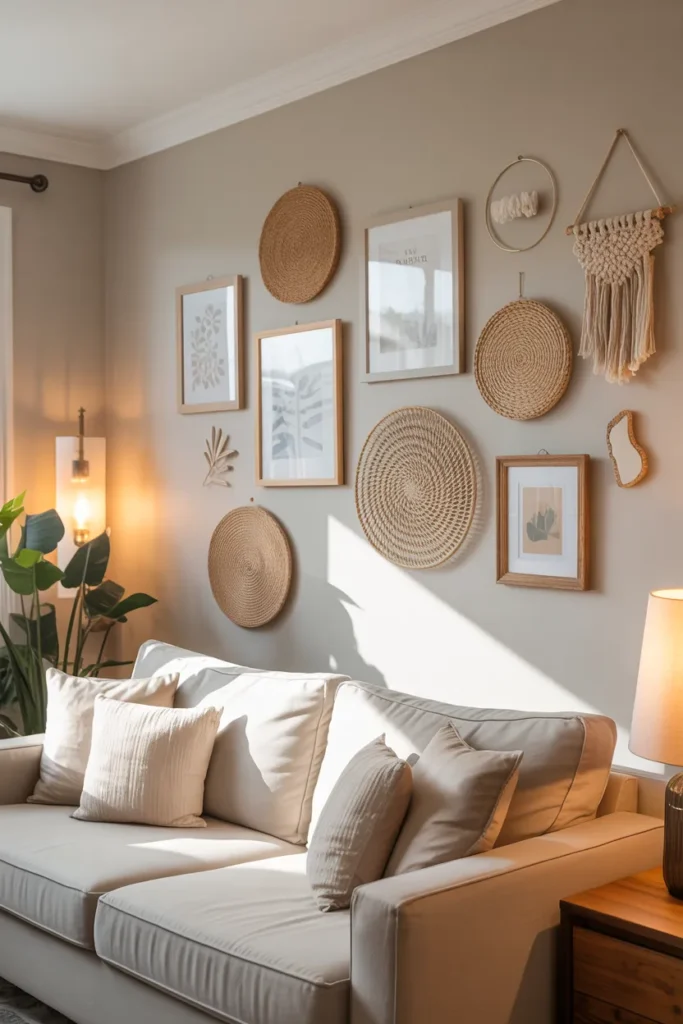
A mixed wall cluster is perfect if you do not want one large artwork dominating the space. It includes small handmade pieces that together tell a story. You can use items you already have, such as leftover fabric, a small hanging plant, embroidery hoops, or a simple wooden sign.
Hang the items close together so the cluster looks like one unit. The goal is to make the wall feel cozy and personal rather than heavy or messy. This is an ideal option when you want to add a personal touch without using a big statement piece.
Shaped Wall Shelf
Shaped shelves add charm to children’s rooms or cozy reading areas. A shelf in a soft shape, like a cloud or star, can be made from light wood or MDF. You can style it simply with a few small books, a plant, or little decorative toys.
The key is to keep the look soft and uncluttered. Placing a warm lamp or night light nearby makes the shelf appear more inviting and magical. It adds a playful yet gentle accent to the room.
Staircase Gallery Flow
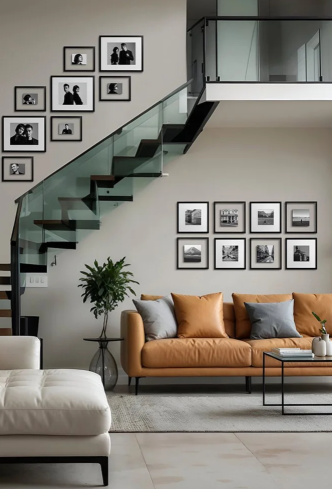
Staircase walls are perfect for gallery displays. Start with one anchor frame on the wall partway up the stairs, then add more frames as you follow the staircase line. Choose simple frames that look good together for a harmonious look.
The pictures should feel calm and organized, not chaotic. If the space is dark, a soft floor lamp at the bottom of the stairs or natural light from a nearby window will enhance the gallery. A staircase gallery can transform a plain wall into a curated, eye-catching display.
Metallic Wall Panels
Flat walls, especially in dim lighting, can be brought to life with metallic panels. You can use wire shapes or metal pieces sprayed with gold or copper paint. Instead of hanging them flat, lean them slightly against the wall for depth and texture.
This works particularly well behind a sofa or in living areas. Floor lamps or warm table lamps will make the metallic surfaces shine and create interesting reflections, adding depth and elegance to your wall decor.
Chevron Frame Layout
A chevron layout gives movement to a wall when a standard gallery arrangement feels predictable. Arrange frames in a zigzag or V pattern, starting from a central frame and working outward.
Soft overhead lighting or wall sconces work best to highlight the angles without creating harsh shadows. This layout adds energy and interest to a wall while keeping the design clean and intentional.
Textured Wall Hangings
Adding texture is an easy way to make a wall feel warm and inviting. Woven mats, fabric circles, or embroidery hoops tied with rope or beads create depth. Natural, earthy colors make the wall feel comfortable and balanced.
Natural sunlight during the day enhances these textures, and a soft lamp in the evening creates shadows that give the wall dimension. Textured hangings are perfect for rooms that need a cozy touch without overcrowding the space.
Wood Slat Accent
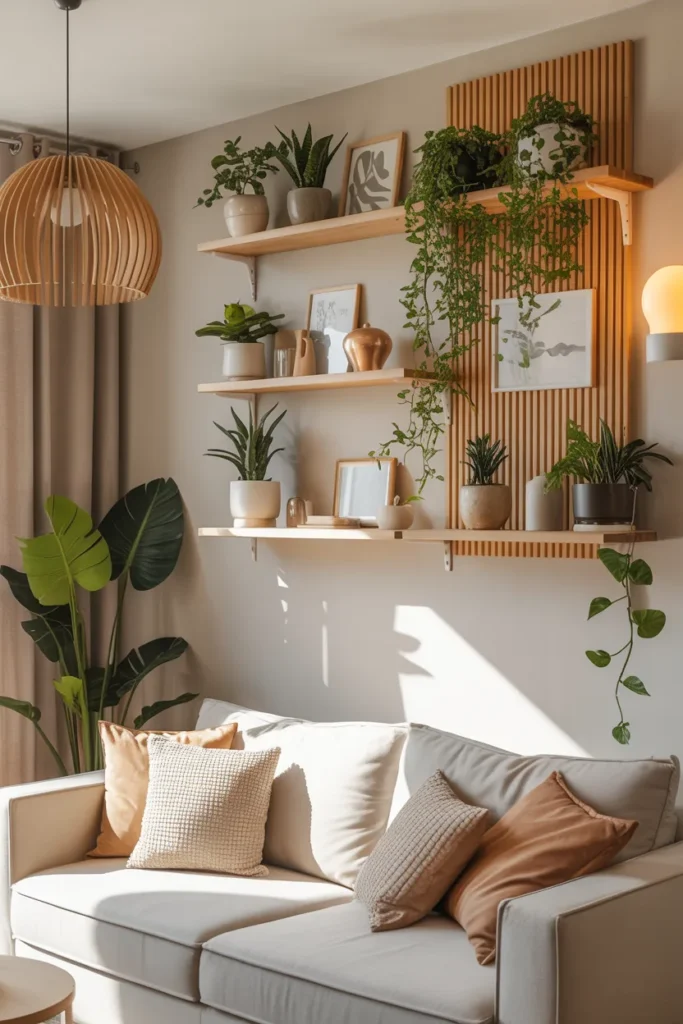
Wood slats add depth to plain walls. Attach thin wooden slats vertically or horizontally, leaving small gaps between them. Cutting slats at different lengths can make the wall more dynamic. This works well behind chairs, sofas, or in living spaces.
A floor lamp or ambient light creates long shadows across the slats, making the wall feel alive and adding a subtle visual interest that draws the eye.
Plant Layered Wall
A plant wall brings life and freshness to any room. Mix floor potted plants, wall-mounted pots, and shelves to make greenery climb naturally up the wall. Use simple, neutral-colored pots for a clean look.
Place this wall near a window to use natural daylight. In the evening, pendant lamps or small lights can highlight the greenery, keeping the wall lively and vibrant.
Botanical Wall Grid
Instead of frames, create a botanical display using ceramic, clay, or molded leaf shapes. Arrange them in a neat grid and limit colors to two or three for a calm and elegant look.
Daylight highlights natural textures, while gentle floor lighting at night can accentuate the shapes without overpowering the room. A botanical grid adds a structured yet natural feel to your wall decor.
Woven Wall Circles
For a wall without frames, woven circles are a simple solution. Use rope or small woven trays in different sizes and hang them in a loose, casual arrangement.
Natural light showcases the texture beautifully, and soft pendant lights at night enhance the cozy, handmade feel. These walls add warmth without appearing formal or rigid.
Abstract Wall Mural
Paint a mural for a wall without hanging anything. Use wall decals or hand-painted abstract shapes in soft, subdued colors. This works well behind couches or in living spaces.
Keep furniture simple so the mural stands out naturally. Ambient lighting at night keeps the mural calm and integrated into the room rather than overpowering the space.
Triangle Shelf Play
Triangle shelves are a functional and decorative solution. Place small wooden triangle shelves or frames and display a single plant or decorative object on each.
This is perfect for small spaces like entryways or bedrooms. Daylight is ideal, while soft ambient lighting at night enhances the charm of the shelves and their items.
Layered Basket Wall
Baskets create warmth without formal frames. Use a variety of sizes and textures, arrange them loosely, and let them overlap slightly. Natural tones like tan, cream, or brown work best.
Pendant lights or soft overhead lighting bring out the woven textures, creating a tactile and inviting wall feature.
Green Entry Corner
Transform an entryway by combining narrow shelves and wood slats with trailing plants at different heights. Simple pots keep the look clean and natural.
Warm overhead or wall lighting in the corner highlights the plants, turning a plain entrance into a welcoming and lively space.
Embroidery Hoop Art
Embroidery hoops can be used as unique wall art. Stretch different fabrics in hoops of varying sizes and paint simple designs on some if desired. Hang in vertical lines or corners.
Soft lighting enhances the textures and colors, especially on darker walls, giving the room a personal and handmade touch.
Green Mirror Wall
Combine a mirror with greenery for visual depth. Place a round mirror at the center and surround it with rattan elements and plants, real or artificial. Keep the arrangement loose.
Use natural light during the day and subtle ambient lighting at night. The mirror reflects the greenery and adds depth, making the wall look larger and lively.
Mini Frame Grid
A grid of small frames gives a clean and modern look. Use identical frames or small shadow boxes with even spacing and a unified theme.
This works well in offices or hallways. Proper overhead lighting ensures the grid looks organized and sharp, not cluttered.
Painted Arch Accent
A painted arch adds a soft accent behind a bed, desk, or reading nook. Use painter’s tape for a neat arch shape and fill it with muted colors. Keep the furniture in front simple.
Daylight reveals the shape, and warm bulbs soften the edges at night. This adds a cozy built-in feature without overwhelming the room.
Fabric Wall Panels
Fabric panels make rooms feel soft and less echoey. Stretch fabric over thin frames or boards and hang several in a row or grid. Choose fabrics in the same color family for a calm effect.
Soft ambient lighting enhances the textures and creates a sophisticated, comfortable atmosphere.
Floating Picture Ledge
A floating ledge gives flexibility for displaying art. Lean pictures or frames on the ledge without fixing them to the wall. You can change items anytime without creating holes.
It works well above sofas or tables. Using frames in similar tones keeps the display organized. Normal room lighting is enough to highlight the art.
Rope Wall Art
Rope can become beautiful wall art. Shape thick rope into curves or abstract lines on the wall. Keep the wall color simple to make the rope stand out.
Natural light highlights the texture, and soft lighting at night creates shadows, making the rope appear three-dimensional and striking.
Accent Paint Block
If a full accent wall feels too much, paint a single block. Make it slightly larger than the furniture beneath it. Avoid adding extra decorations.
Choose muted colors. Daylight shows the shape clearly, and warm lighting at night enhances the style, keeping the look modern and simple.
Framed Fabric Art
Fabric can be unique wall art. Cut textured or patterned fabric and frame it like a poster. Hang it in hallways or dining areas using simple frames to let the fabric stand out.
Use only two or three colors for cohesion. Soft overhead lighting ensures the fabric is evenly highlighted, giving the wall a deliberate and balanced appearance.
FAQs – Wall Decor Ideas for 2026
How can I decorate my wall myself?
You can decorate your wall yourself by layering different elements. Start with a base like a painted shape, wall shelf, or wood slats. Then add small handmade items such as woven pieces, framed fabric, or tiny plants. Grouping items together makes the wall look planned and balanced rather than cluttered.
What are the latest trends in wall decor?
Wall decor that feels warm, textured, and personal is popular. This includes plant walls, rope art, fabric panels, baskets, and floating shelves with handmade items. People like walls that tell a story over time instead of buying matching sets all at once.
How do I make a gallery wall look good?
Mix different sizes and types of frames or wall pieces. Hang some higher and some lower to create movement. Keep the colors and themes balanced so the wall feels organized. Adding soft lighting or natural light helps the artwork stand out and look inviting.
Can I use small items instead of one big piece?
Yes. Mixed clusters of small items like embroidery hoops, tiny plants, or handmade art can make a wall feel cozy and personal. Hanging items close together creates a single unit that draws attention without needing a large statement piece.
How do I add texture to my walls?
Use materials like woven mats, fabric panels, rope, or wooden slats. Arrange them in groups or patterns to create depth. Natural light during the day and soft lamps at night will highlight textures and shadows, making the wall lively and interesting.
Are plant walls still trendy?
Yes. Plant walls remain popular because they bring life and color to a room. Mix potted plants on the floor, shelves, and hanging pots. Keep the pots simple and place the wall near natural light. Evening lighting can keep the plants vibrant and inviting.
Can I make a wall look stylish with paint only?
Yes. You can paint an accent block or an arch to create a soft, modern feature. Use muted or neutral colors. Keep furniture simple in front of it, and use warm lighting at night to highlight the shape without overpowering the room.