I’ve learned that bathrooms easily trap humidity from daily showers and baths, which can quickly lead to mold, mildew, and poor air quality. In my experience, using Moisture Absorbing Bathroom Plants is one of the simplest natural ways to control this issue while also improving the look and feel of the space. These plants help reduce excess moisture, purify indoor air, and create a calm, spa-like environment without needing expensive gadgets.
Above the Fold Summary
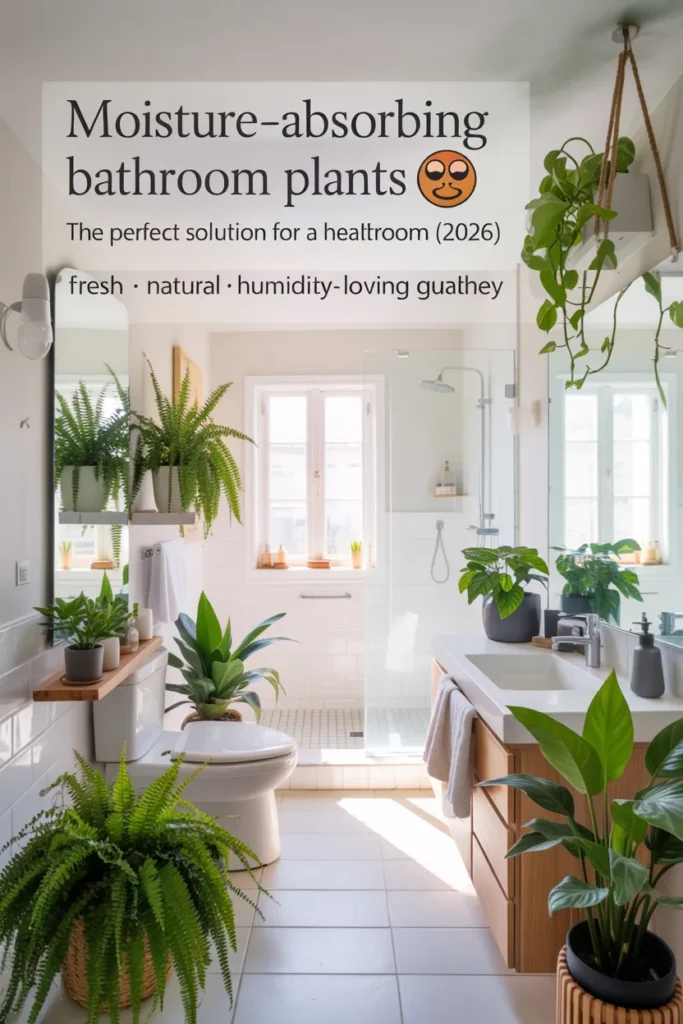
From my research and use, plants like English Ivy, Peace Lily, and Spider Plant are especially effective because they thrive in damp conditions and naturally balance humidity levels. I also found that combining multiple plants works better than relying on just one, especially in smaller, poorly ventilated bathrooms.
Key Takeaways
- Moisture Absorbing Bathroom Plants help reduce humidity and lower mold risk
- They improve indoor air quality by filtering toxins like formaldehyde
- Best results come from combining multiple humidity-loving plants
- Most bathroom plants thrive in indirect light and need moderate watering
- They also improve bathroom aesthetics and create a spa-like feel
Why I Choose Moisture Absorbing Bathroom Plants?
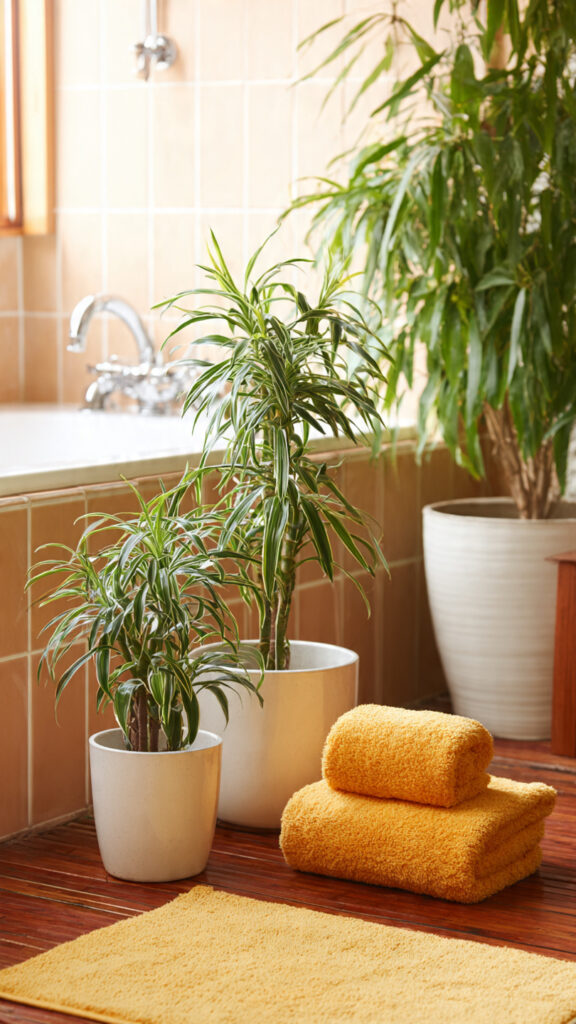
From my experience, bathrooms with poor airflow quickly become damp and uncomfortable. I noticed that excess moisture not only causes a musty smell but also damages walls, paint, and fixtures over time. That’s why I started using Moisture Absorbing Bathroom Plants as a natural solution instead of relying only on exhaust fans.
What I like most is that these plants don’t just reduce humidity—they also improve air quality. Studies show that indoor plants can reduce airborne toxins and slightly regulate humidity levels by absorbing water through leaves and releasing oxygen. In my case, the bathroom feels fresher and less heavy after adding just a few plants.
Best Moisture Absorbing Bathroom Plants for Your Home
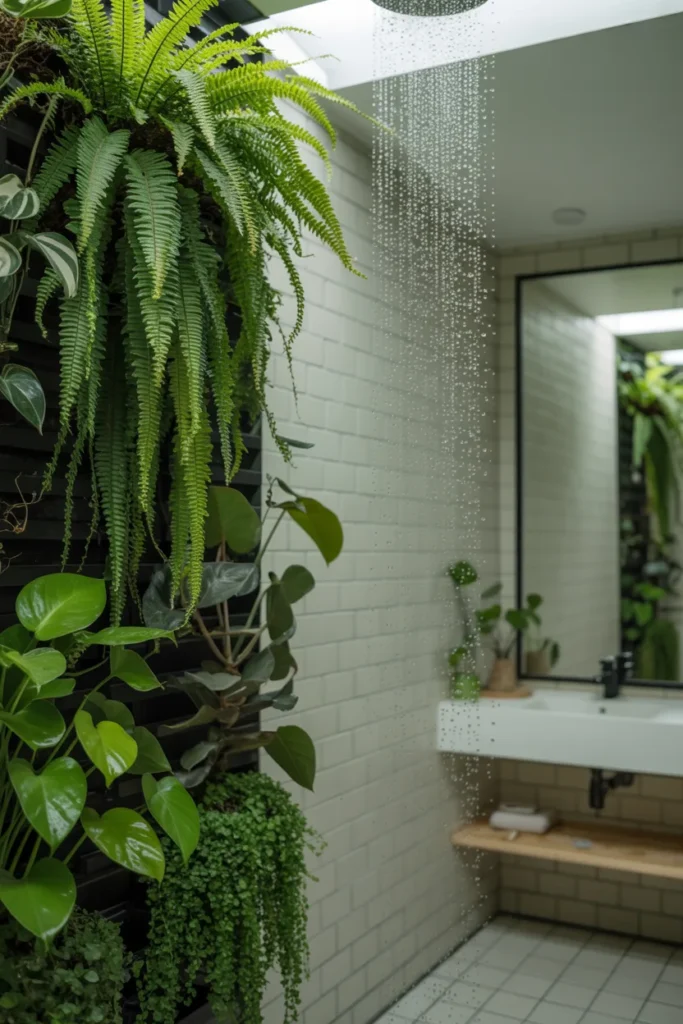
In my testing and research, I found several plants that perform well in humid bathroom environments. Each one has its own strength, but all of them help manage moisture and improve air freshness naturally.
English Ivy (Hedera helix)
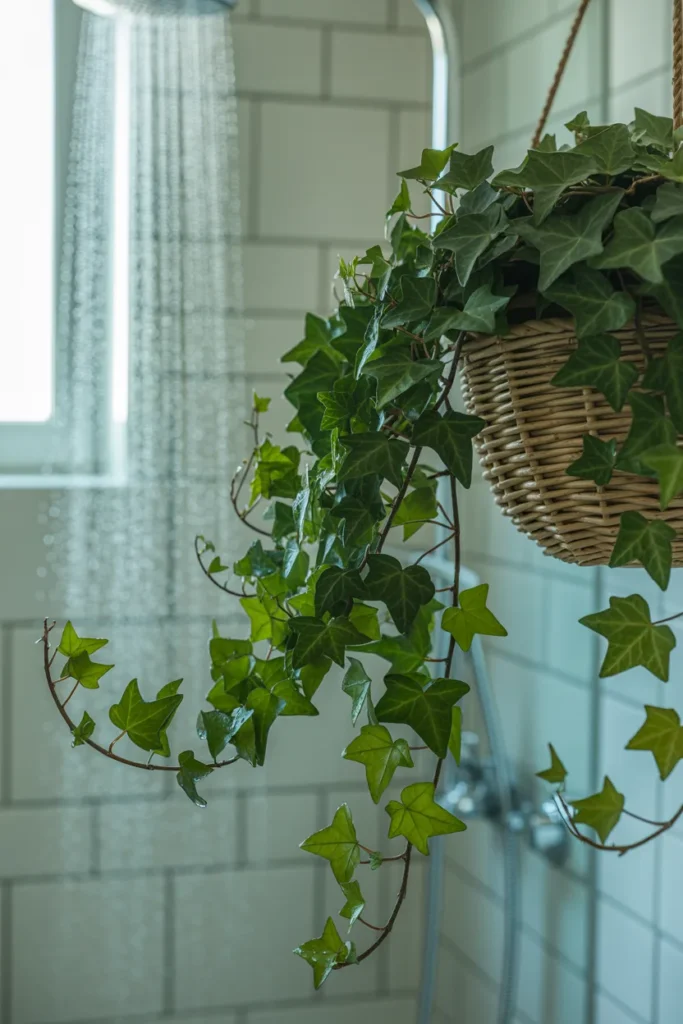
English Ivy has been one of my top choices because it handles humidity extremely well. I’ve seen it thrive even in low-light bathrooms, which makes it very practical for small spaces. It also helps filter common indoor toxins, which improves overall air quality.
I usually place it in a hanging basket so the vines can grow freely. This also helps with airflow around the leaves, improving its moisture absorption ability. It’s low maintenance, which makes it ideal for beginners.
Peace Lily (Spathiphyllum)
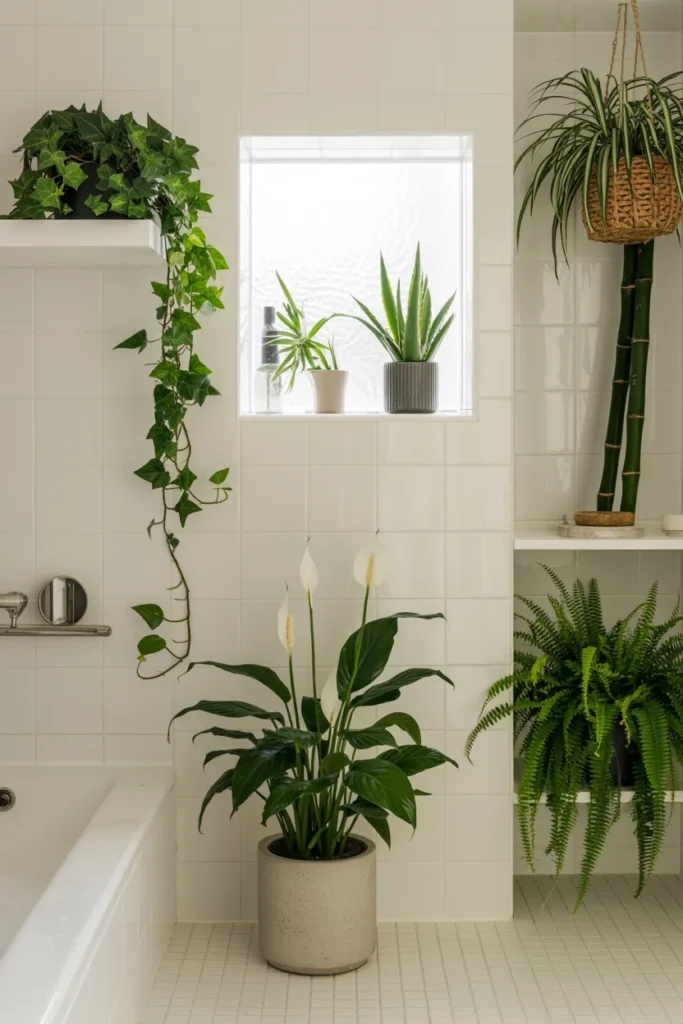
From my experience, Peace Lily is both decorative and functional. It survives well in low-light bathrooms and continues to grow even with minimal care. It also helps reduce airborne toxins like ammonia and benzene, which are commonly found indoors.
I’ve noticed that Peace Lily performs best when the soil is kept slightly moist but not wet. It also gives a calming effect to the space, which makes the bathroom feel more relaxing and balanced.
Spider Plant (Chlorophytum comosum)
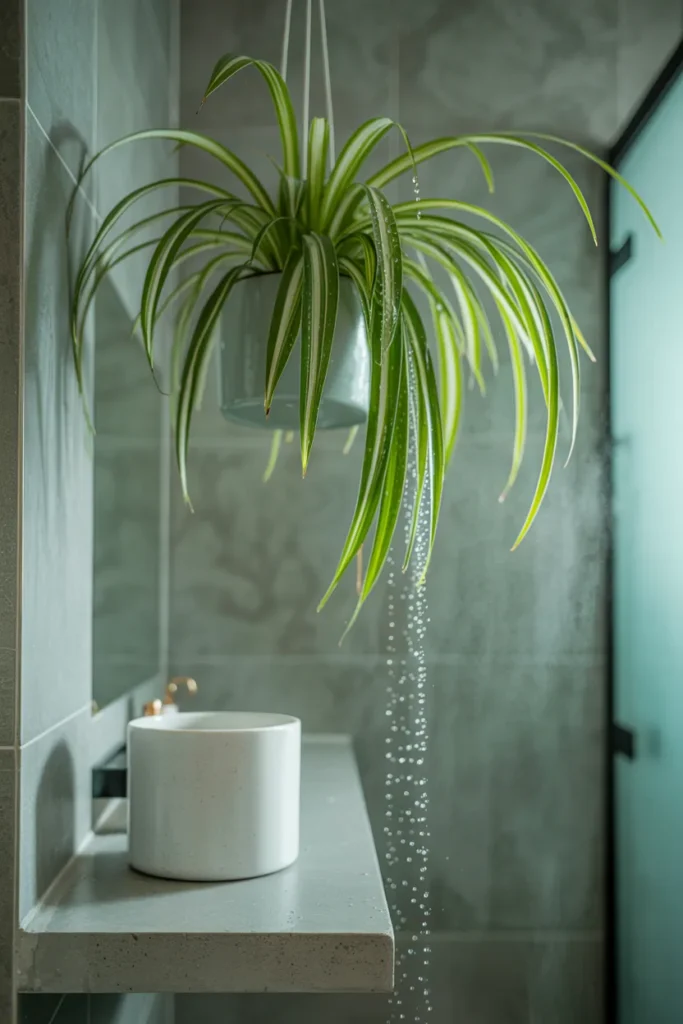
Spider Plant is one of the easiest plants I’ve ever cared for. It adapts quickly to bathroom humidity and helps regulate moisture naturally. I’ve found it especially useful in compact bathrooms where airflow is limited.
It also produces “baby plants,” which makes it cost-effective because I can propagate new plants easily. This makes it a smart long-term choice for home decoration.
Bamboo (Bambusoideae)
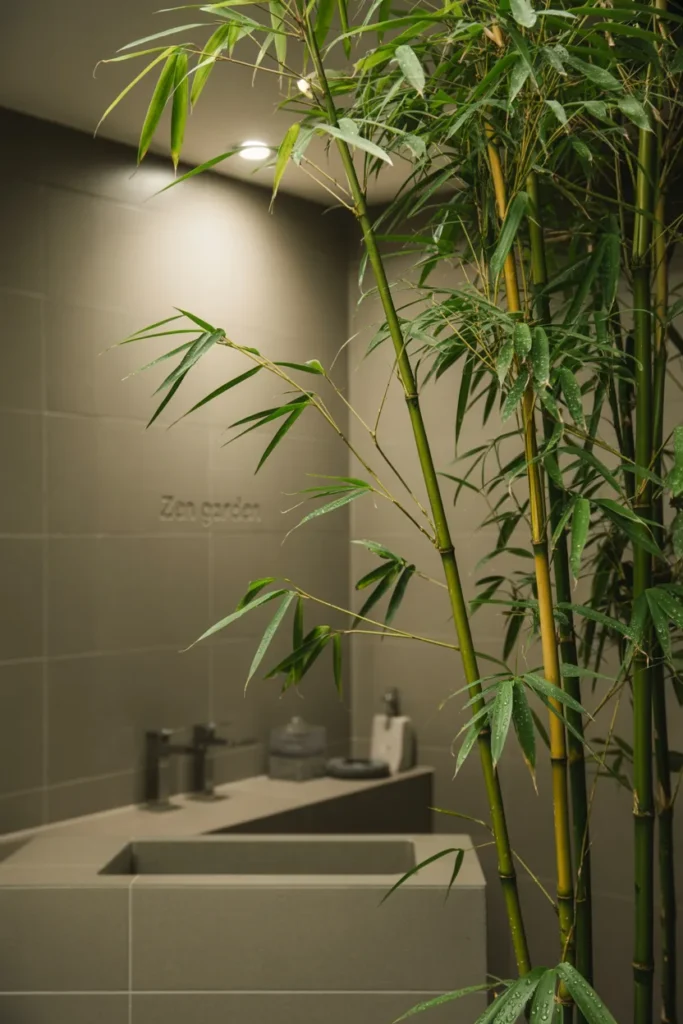
I like using Bamboo in bathrooms because it adds a clean, modern look while also helping manage humidity. It grows well in low light and adapts to moist environments easily.
In my setup, Bamboo helps create a spa-like feeling. It requires very little maintenance, which is perfect for busy homeowners who still want greenery in their bathroom.
Ferns (Nephrolepis exaltata)
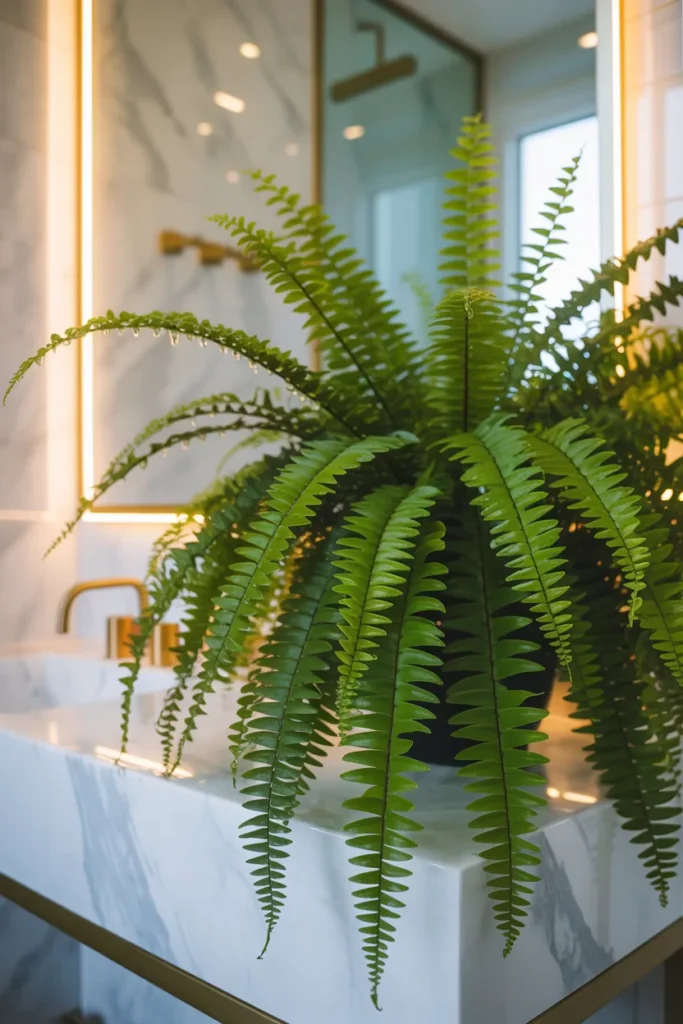
Ferns are naturally suited for humid environments, so they perform really well in bathrooms. I’ve noticed they stay healthy even in constant moisture conditions. They also help improve air freshness and reduce damp odors.
Boston Fern works best in my experience because of its dense leaves, which help in moisture absorption. It does require regular watering to maintain soil balance.
Aloe Vera (Aloe barbadensis miller)
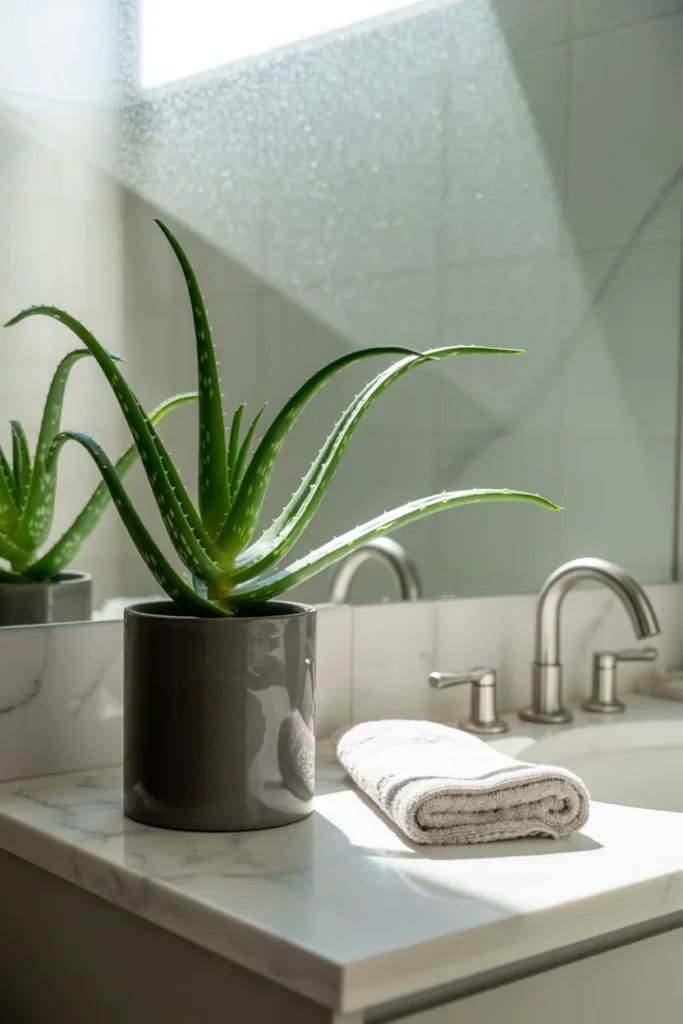
Aloe Vera is slightly different because it prefers drier conditions, but I still use it in bathrooms with controlled humidity. It’s also useful for skin care, which makes it a practical plant to keep nearby.
From my experience, Aloe Vera is best placed where it gets indirect sunlight and good airflow. It needs less water compared to other bathroom plants, so overwatering should be avoided.
Philodendron (Philodendron spp.)
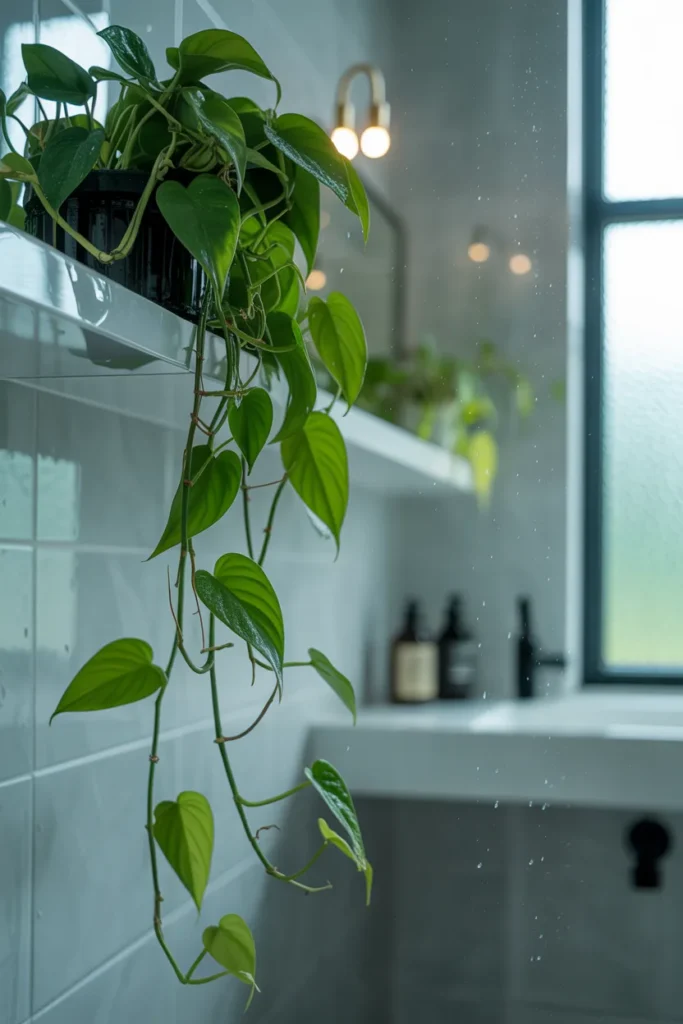
Philodendron has been one of my most reliable bathroom plants. It grows well in humidity and doesn’t require much attention. I’ve found it very effective in improving indoor air quality while also absorbing excess moisture.
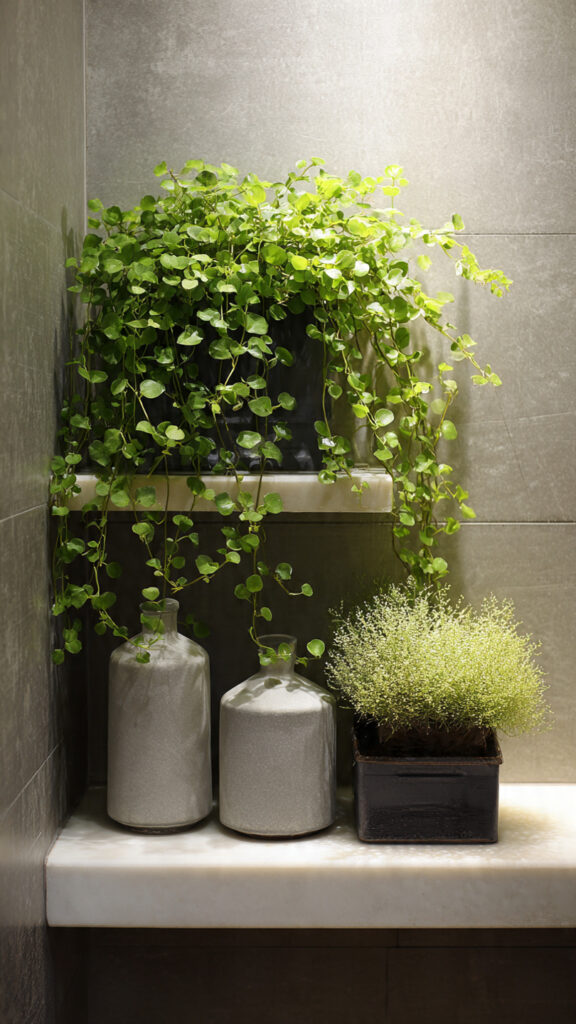
Its trailing vines make it perfect for shelves or hanging pots. It also stays green year-round, which keeps the bathroom looking fresh.
How I Care for Moisture Absorbing Bathroom Plants
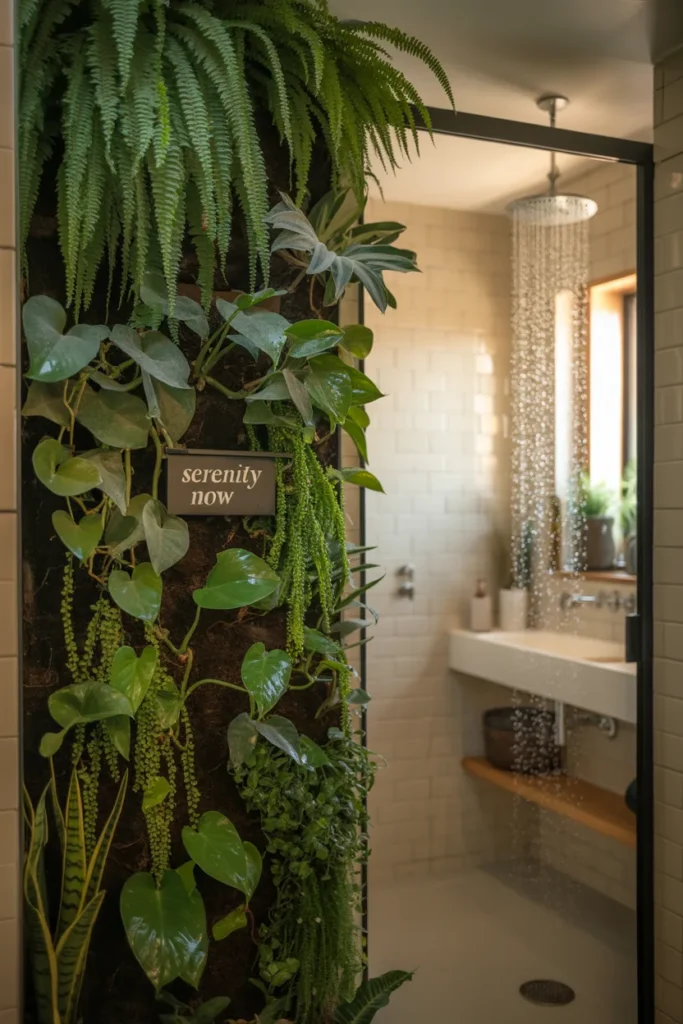
From my personal experience, plant care in bathrooms is simple if you follow a few basic rules. I always make sure the plants get indirect light because direct sunlight is rare in bathrooms.
I also avoid overwatering because humidity already provides moisture. Instead, I check soil dryness before adding water. Cleaning leaves regularly is also important because dust can block moisture absorption.
Final Thoughts
In my experience, adding Moisture Absorbing Bathroom Plants is one of the easiest ways to improve bathroom air quality and reduce humidity naturally. These plants not only prevent mold growth but also make the space feel fresher and more relaxing.
I’ve seen a noticeable difference in how my bathroom feels after adding just a few of these plants. They are low cost, low maintenance, and highly effective, making them a smart long-term solution for any home.
Many of the ideas I share are inspired by real-life experimentation. I often test décor concepts in my own living spaces and explore practical ways they can be applied in everyday homes. I also gather insights from working with homeowners who want to improve the comfort, beauty, and functionality of their spaces.
I share practical ideas for improving living rooms, bedrooms, and overall home aesthetics using simple design principles.
I explore creative ways to upgrade outdoor spaces including patio décor, small backyard styling, and relaxing outdoor setups.
I provide ideas for kitchen organization, décor accents, and functional layouts that make kitchens more beautiful and practical.
The concepts shared here are based on ideas I have personally experimented with or studied through real home décor improvements.