Getting kids to work together is not always easy. I’ve noticed that children learn teamwork faster when they’re having fun rather than being told how to cooperate. That’s why I love using Team Building Games for Kids. These activities help children communicate better, solve problems together, build confidence, and create stronger friendships.
Whether you’re a parent, teacher, coach, camp leader, or homeschooler, these games can help kids develop important social skills while staying active and engaged. Many of these activities require little preparation and can be played indoors or outdoors.
Research shows that cooperative play helps children improve communication, emotional intelligence, leadership, and problem-solving abilities. According to child development experts, kids who regularly participate in group activities often develop stronger social skills and greater confidence in group settings.
In this guide, I’m sharing 45 of my favorite Team Building Games for Kids that encourage teamwork, trust, creativity, and collaboration.
Key Takeaways
1. Picture Pieces
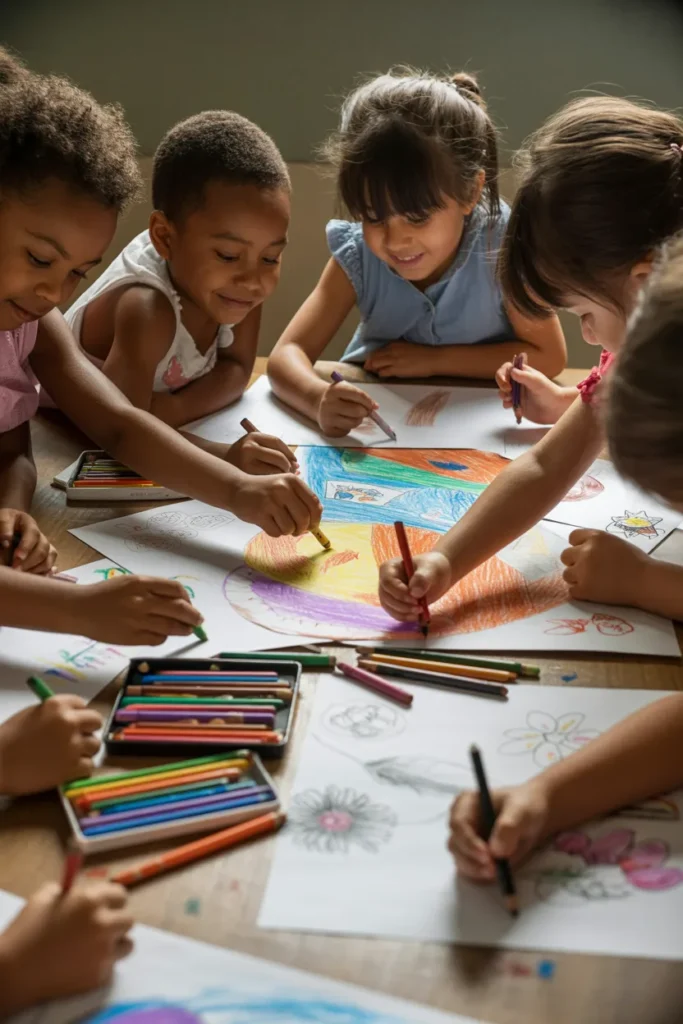
This is one of my favorite creative teamwork activities because every child contributes to a bigger goal.
I divide a large picture into several sections and give each child one piece to recreate. Once everyone finishes drawing, the pieces are assembled to reveal the complete image.
Kids quickly realize that every contribution matters. It’s a great lesson in cooperation while encouraging creativity and patience.
Pro Tip: Choose colorful images with simple shapes for younger children.
2. Get To Know You Balloons
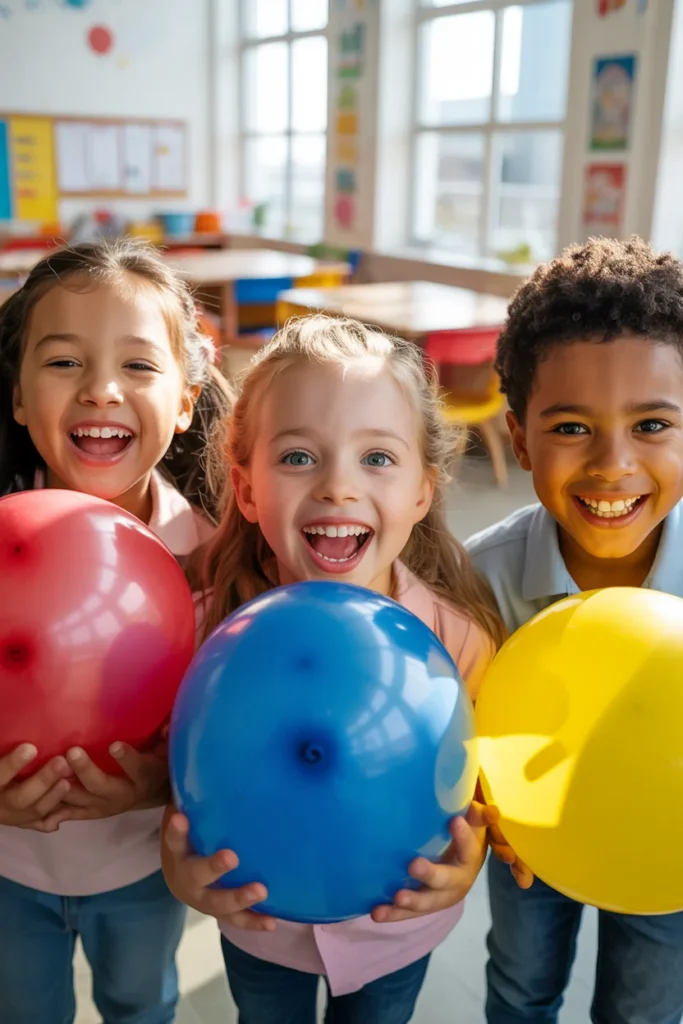
Whenever I have a group of kids meeting for the first time, this activity helps break the ice quickly.
Each child writes a fun question on paper and places it inside a balloon before inflating it. After tossing balloons around for a few minutes, everyone pops one and answers the question inside.
The activity creates laughter while helping children learn interesting facts about one another.
3. Hot and Cold
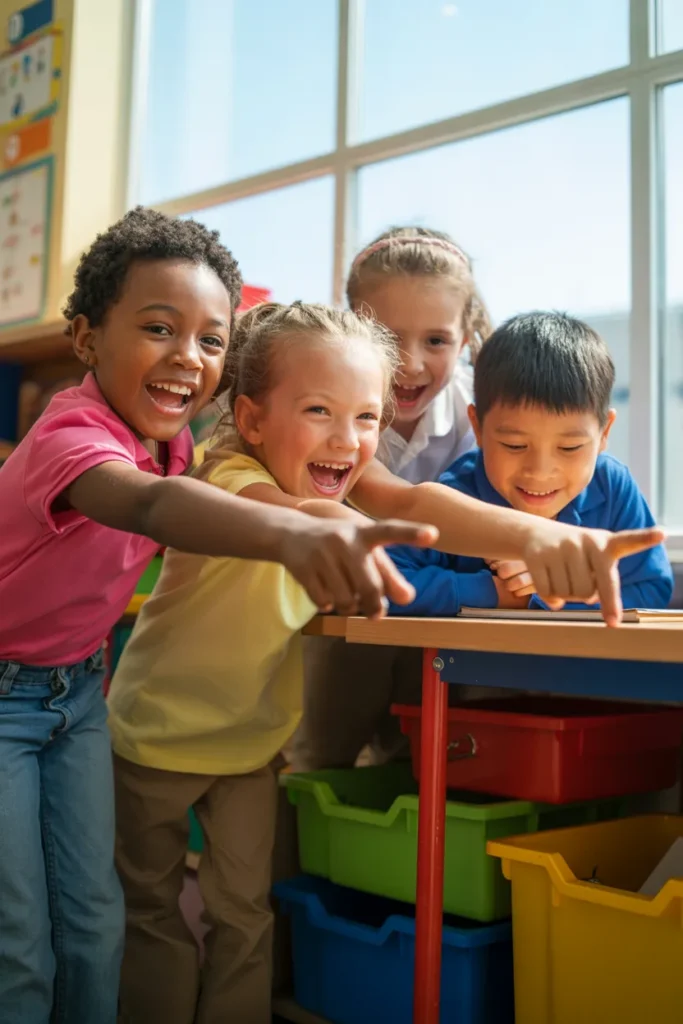
This classic game never seems to get old.
One child searches for a hidden object while teammates guide them using “hot” and “cold” clues. The closer they get, the hotter the clues become.
I’ve found this game improves listening skills and teaches children how to give clear instructions.
4. Marshmallow-and-Toothpick Challenge
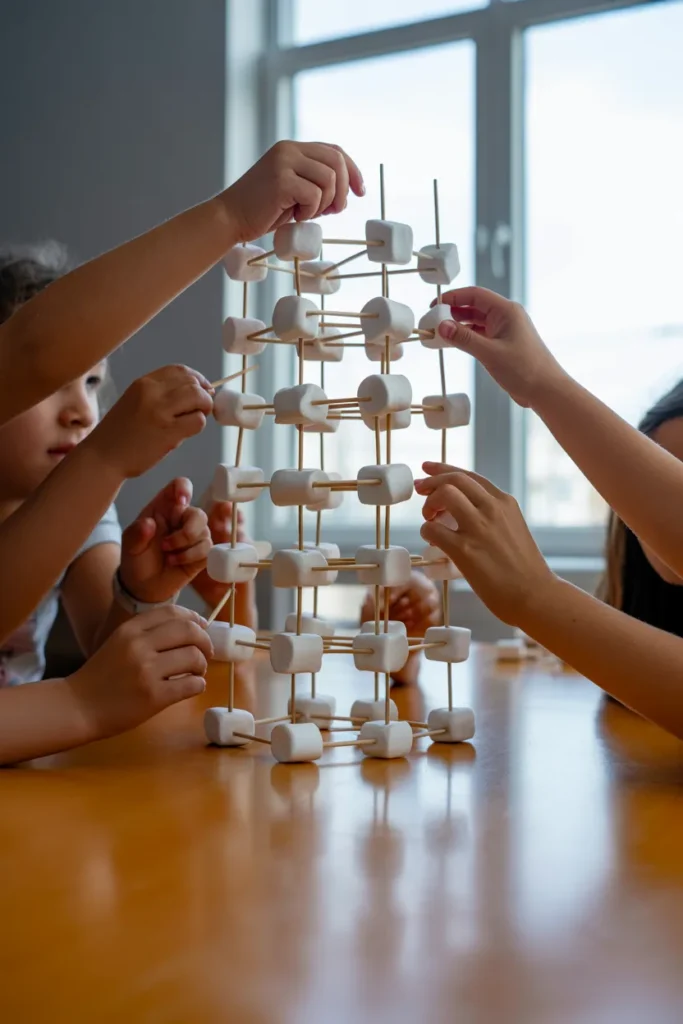
Kids love building things, which makes this challenge a huge success.
I give each team marshmallows and toothpicks and challenge them to build the tallest structure possible within a set time limit.
The game encourages planning, teamwork, and creative thinking while showing children how different ideas can work together.
Pro Tip: Set a stability requirement so structures must stand on their own.
5. Hula-Hoop Pass
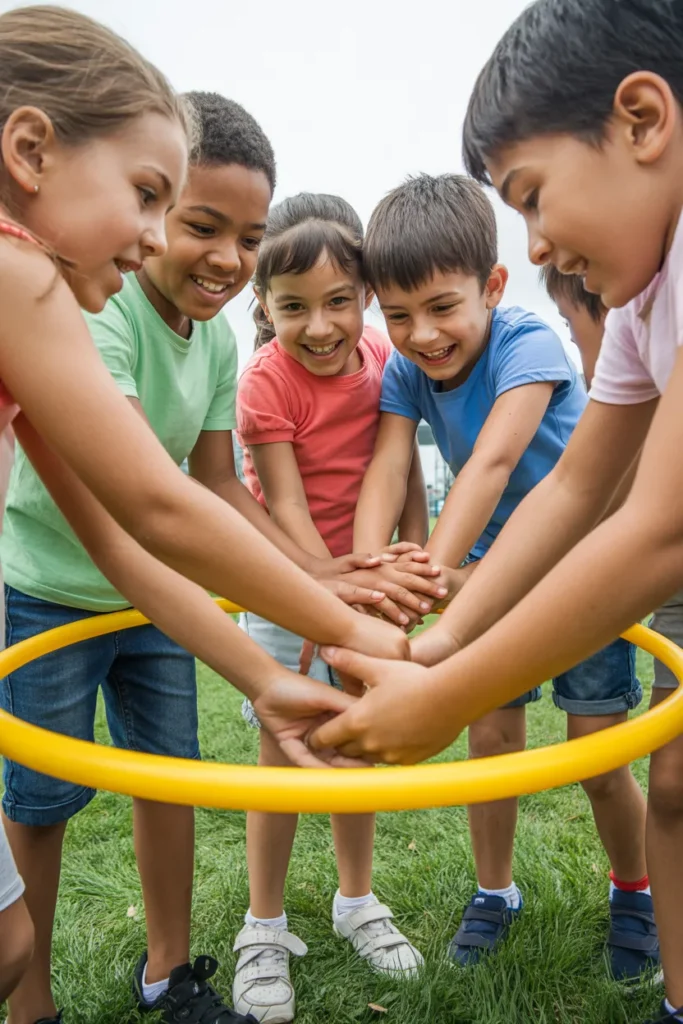
This simple activity creates lots of teamwork and laughter.
Children stand in a circle holding hands while a hula hoop is placed over one person’s arm. The goal is to move the hoop around the circle without letting go of hands.
I’ve noticed kids naturally start communicating and helping one another solve the challenge.
6. Bumpity-Ump-Bump-Bump
This fast-paced name game works especially well with new groups.
One child stands in the center and points to another player while giving directions. The selected child must respond correctly before the leader finishes saying the phrase.
It’s an excellent way to help children remember names while improving focus and quick thinking.
7. Snakes
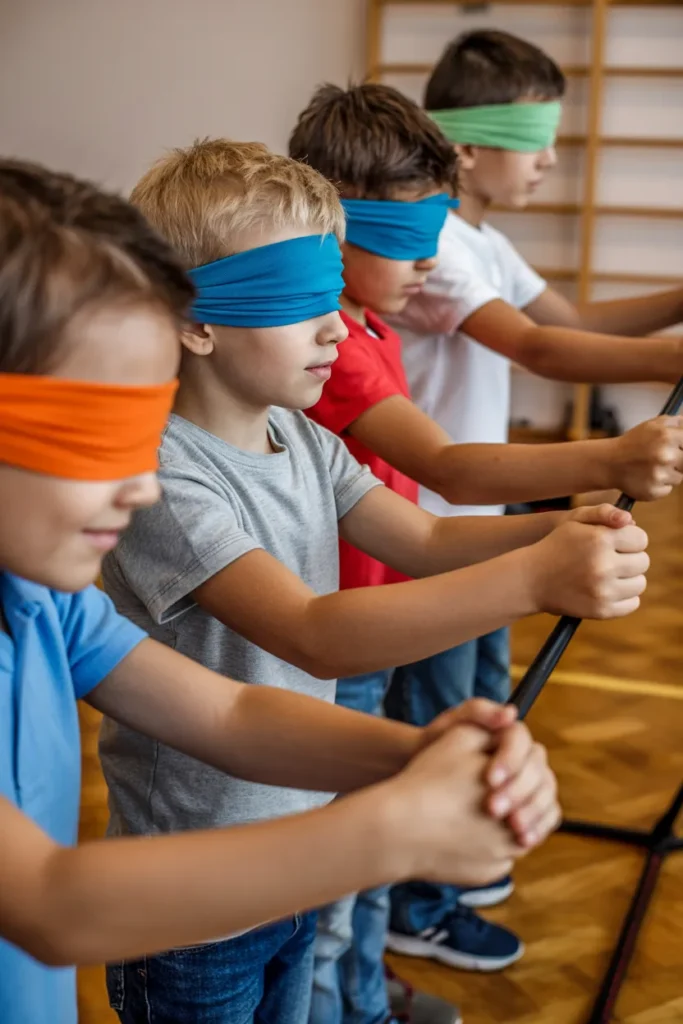
This activity builds trust and non-verbal communication.
Most team members wear blindfolds while one child guides them using shoulder taps rather than words. The team must collect objects scattered around the area.
Kids quickly learn the importance of paying attention and trusting teammates.
8. Human Tic-Tac-Toe
I love turning traditional games into active challenges.
Instead of using paper, children become the Xs and Os on a giant game board. Teams must plan strategically to create a winning line.
This activity combines movement, communication, and teamwork.
9. Relay Races
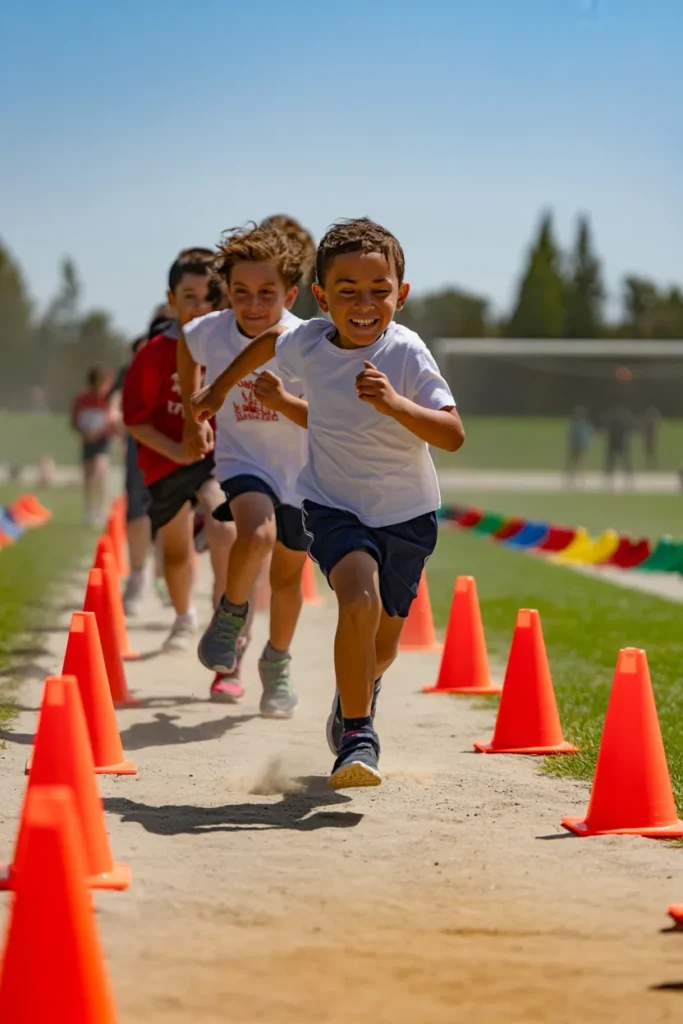
Relay races are always a crowd favorite.
I create different stations with tasks like balancing objects, running around cones, or hopping through hoops. Each teammate completes a section before tagging the next player.
The activity teaches cooperation while keeping kids physically active.
10. Group Juggle
This game helps children learn names while developing coordination.
Children stand in a circle and toss a ball while saying the receiver’s name. As they improve, additional balls are added to increase difficulty.
I’ve found this activity works particularly well with larger groups.
11. Trust Walk
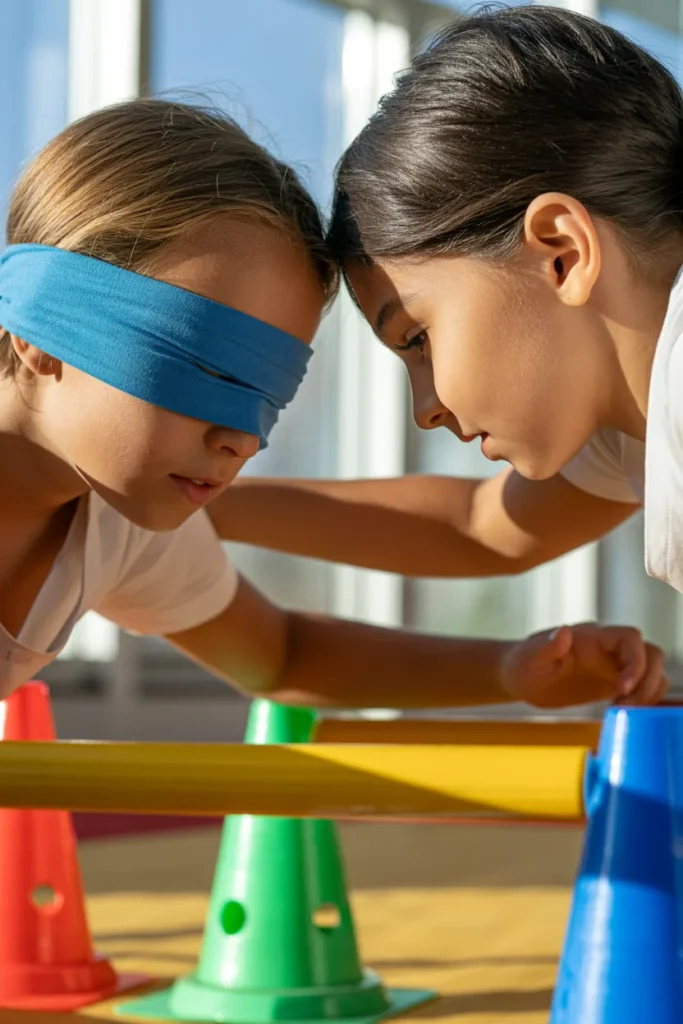
Trust Walk is one of the most effective trust-building activities for kids.
One child wears a blindfold while their partner guides them through an obstacle course using only verbal directions.
The exercise strengthens listening skills and builds confidence between partners.
12. Circle Sit
This activity teaches children how teamwork creates support.
Kids form a circle, turn sideways, and carefully sit on the lap of the person behind them.
When everyone works together, the entire group remains balanced and supported.
13. Cross the River
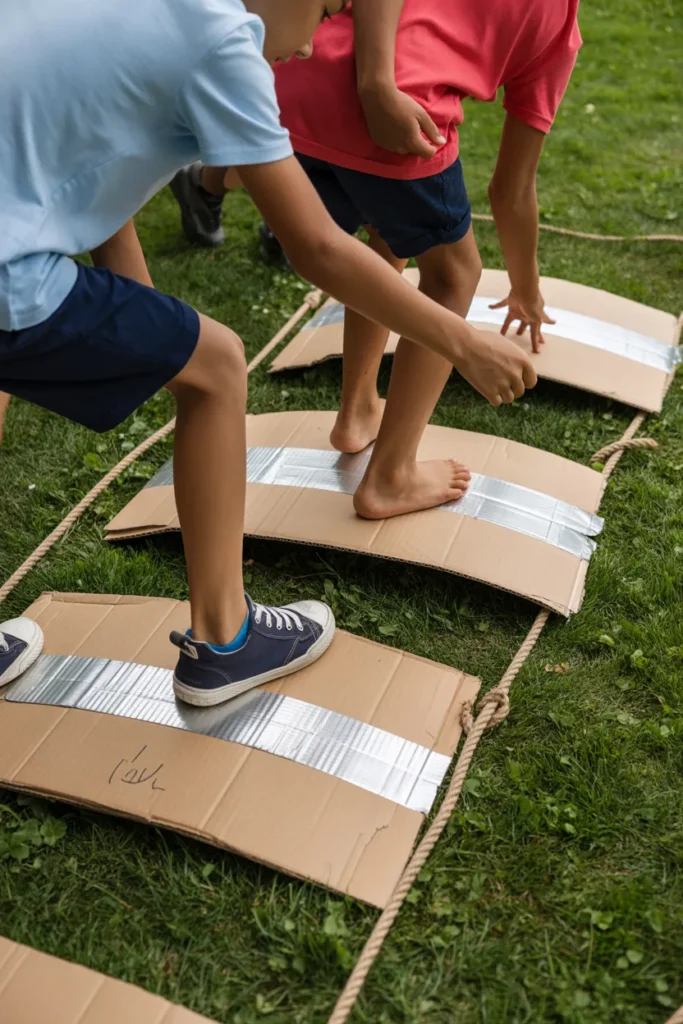
Cross the River encourages teamwork and problem-solving.
Teams receive a limited number of stepping platforms and must transport every member across an imaginary river without touching the ground.
I’ve seen kids develop creative strategies and leadership skills during this challenge.
14. Floating Hula Hoop
At first glance, this game looks easy.
Children hold a hula hoop using only their fingertips and attempt to lower it slowly to the ground without losing contact.
The challenge teaches patience, communication, and group coordination.
15. Scavenger Hunt
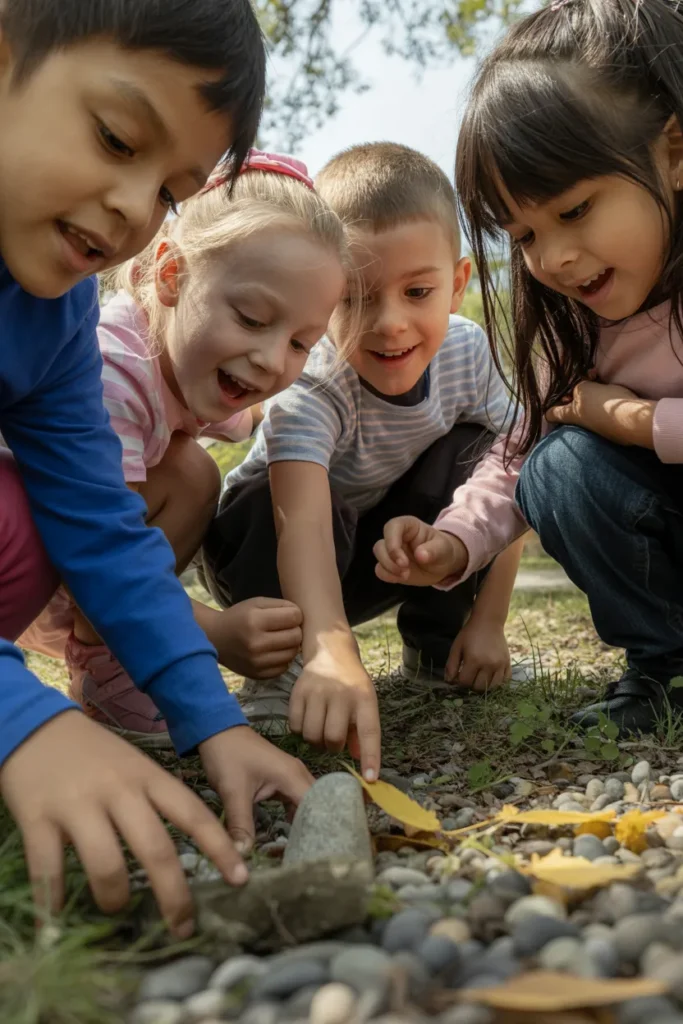
Scavenger hunts combine teamwork with problem-solving.
Teams search for hidden objects or clues within a time limit. Some clues may require solving riddles or completing small tasks.
Kids stay engaged while working together toward a shared goal.
16. Stranded
This imaginative challenge encourages creative thinking.
A few children are “stranded” on an island while teammates must rescue them using available materials.
The activity promotes teamwork, innovation, and planning.
17. Do Not Wake the Dragon
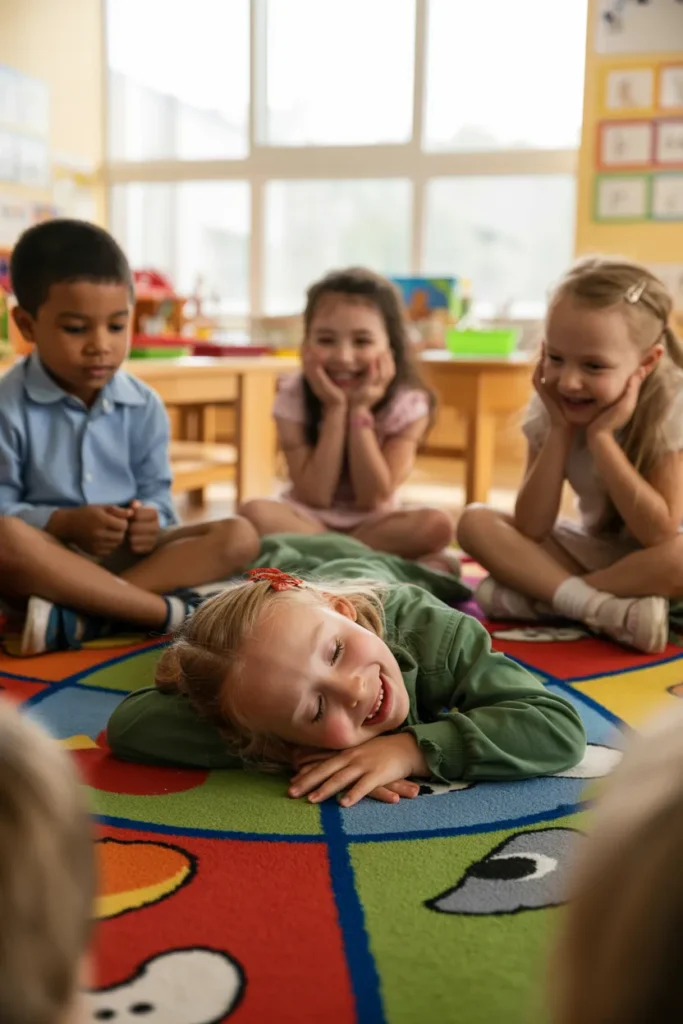
Children love the playful theme of this game.
One child acts as the sleeping dragon while everyone else silently completes a task without making noise.
The game helps improve self-control, cooperation, and communication.
18. Leaps and Bounds
This activity develops balance and coordination.
Children jump across stepping stones placed over an imaginary river. The challenge becomes harder as the stones are spaced farther apart.
I’ve found that kids naturally encourage one another throughout the game.
19. Magnetic Fishing Game
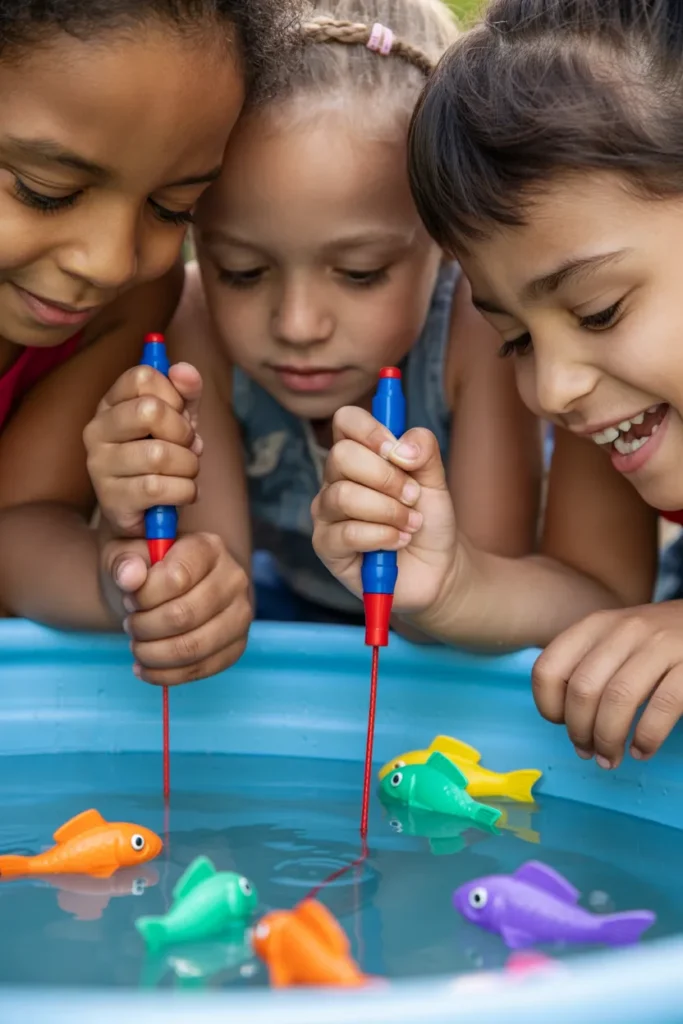
This game is especially popular with younger children.
Using magnetic fishing rods, players work individually or in teams to catch magnetic fish from a pool.
The activity helps improve focus, patience, and hand-eye coordination.
20. Balloon Pop Relay
Balloon Pop Relay combines teamwork and excitement.
Players race to a balloon, pop it, and return to tag the next teammate.
The fast pace keeps children engaged while promoting cooperation.
21. Wheelbarrow Race
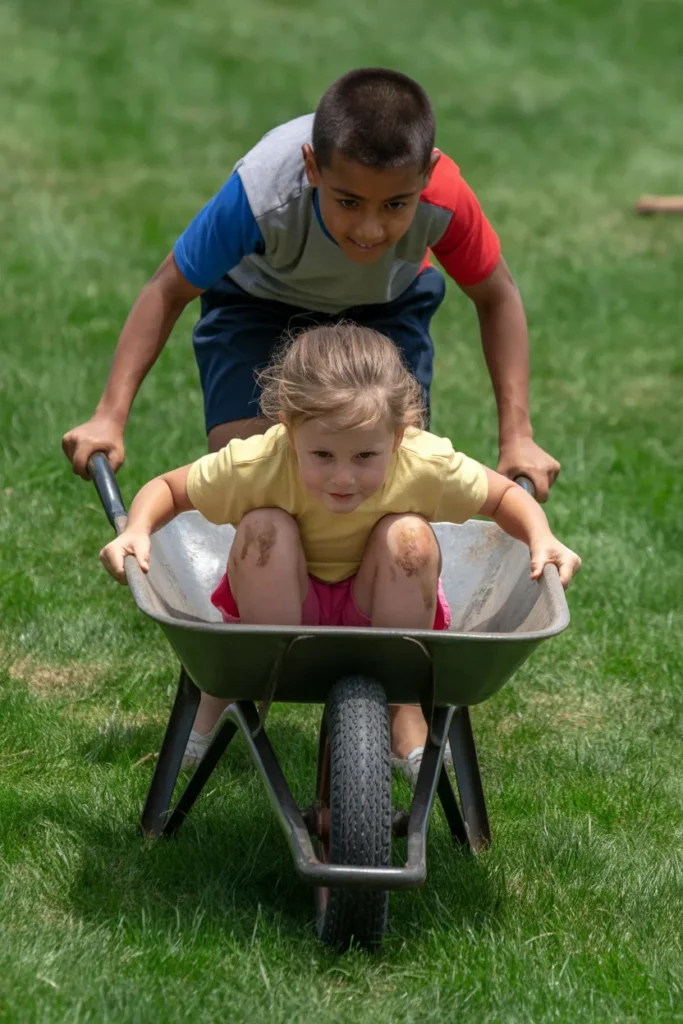
This classic activity requires excellent teamwork.
One child walks on their hands while their partner supports their legs.
Success depends on communication, balance, and coordination.
22. Triangle Tag
Triangle Tag encourages quick decision-making.
Three children form a triangle while protecting one teammate from a tagger.
The game develops teamwork, awareness, and communication skills.
23. Group Juggle
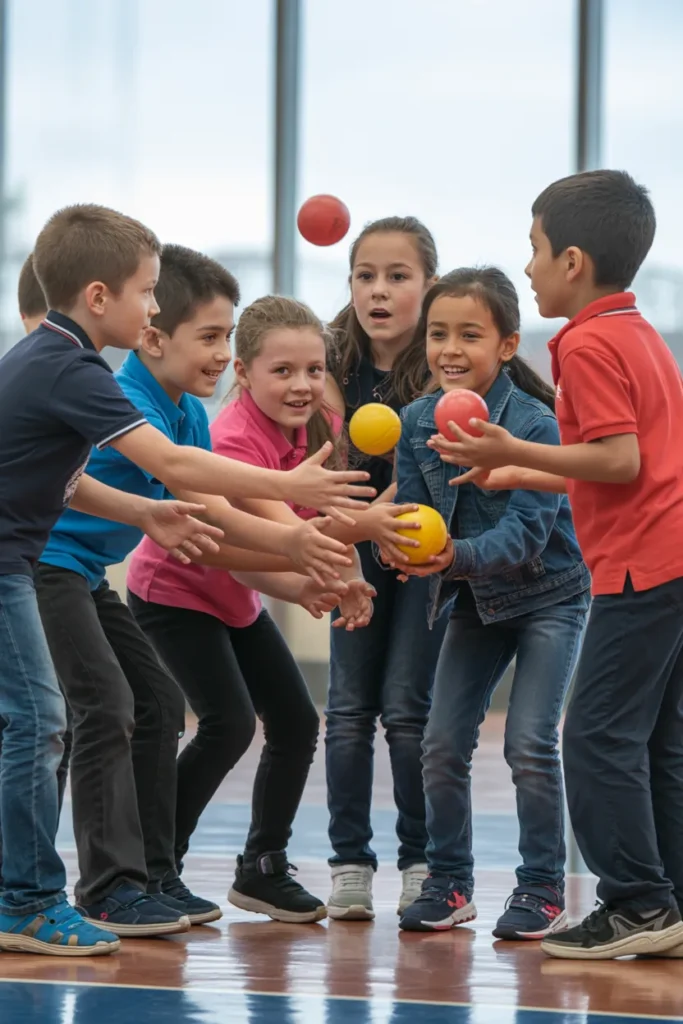
This second variation of Group Juggle adds more complexity.
Additional balls increase the challenge, forcing children to focus while working together.
I’ve found it works well as groups become more confident.
24. Snakes
In this version, blindfolded children form a line and follow a guide without verbal communication.
The challenge requires teamwork, trust, and careful observation.
Kids often find it both fun and surprisingly challenging.
25. Human Tic-Tac-Toe
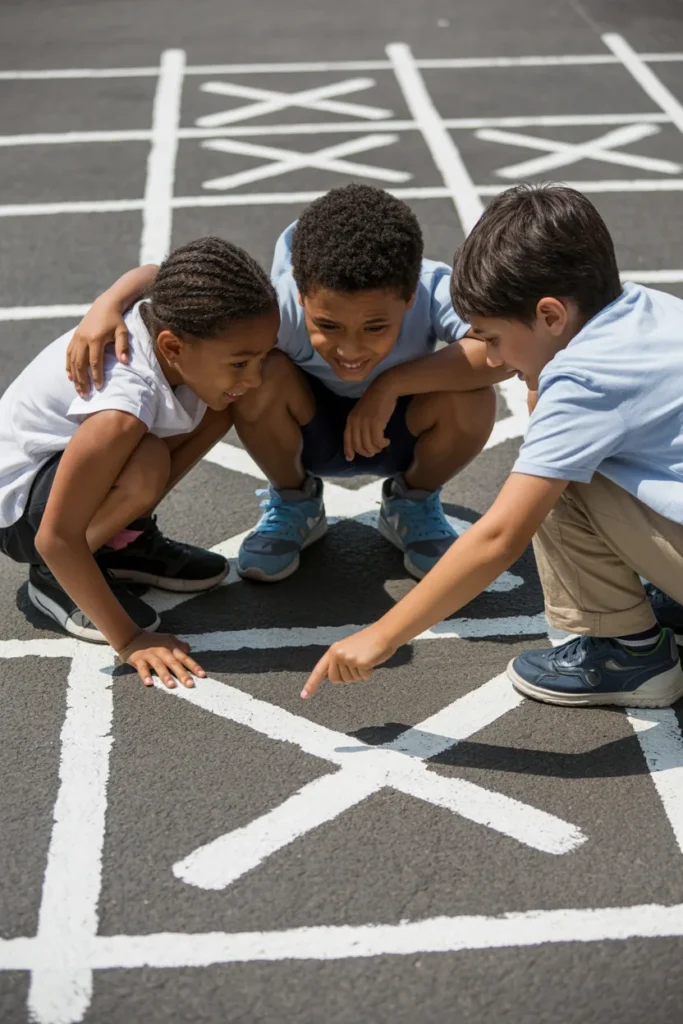
This strategy-based game encourages children to think ahead.
Teams take turns occupying squares on a giant tic-tac-toe grid.
Communication becomes essential as players decide their next move.
26. Relay Races
Different relay variations can keep kids interested for hours.
Adding obstacles, balance challenges, or teamwork tasks makes the activity even more engaging.
The game encourages physical activity and collaboration.
27. River Crossing
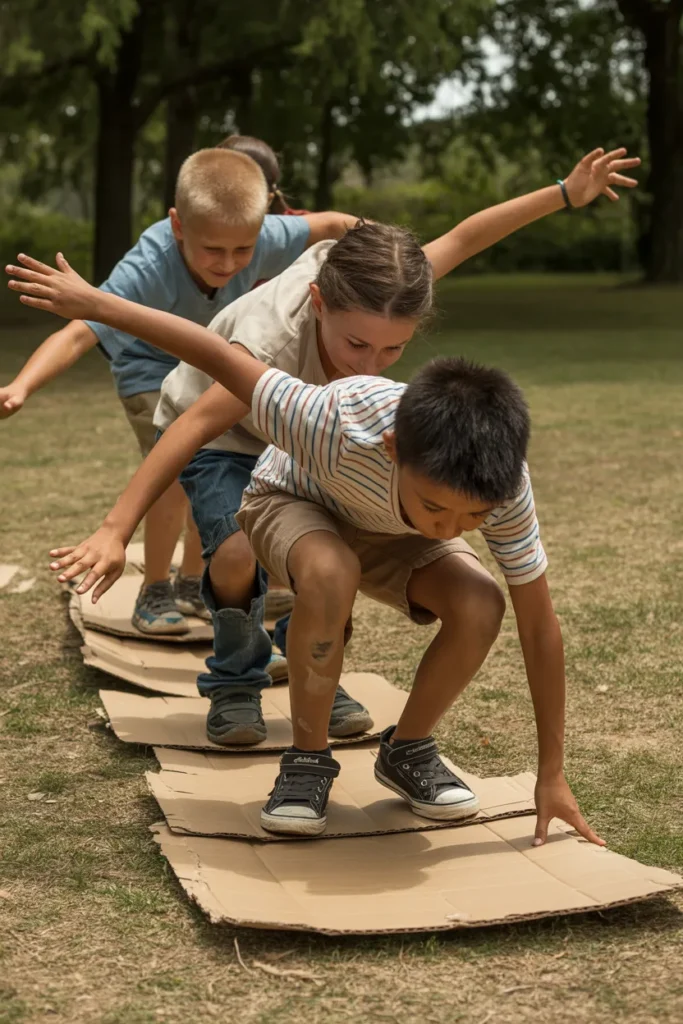
River Crossing is one of the best problem-solving activities for groups.
Teams must transport everyone across a designated area using limited resources.
The challenge teaches planning, cooperation, and leadership.
28. Race to the Middle
Children race toward a central area to collect objects for their team.
Every participant contributes to the final score, making teamwork important.
The activity combines speed, strategy, and cooperation.
29. Eye of the Tiger
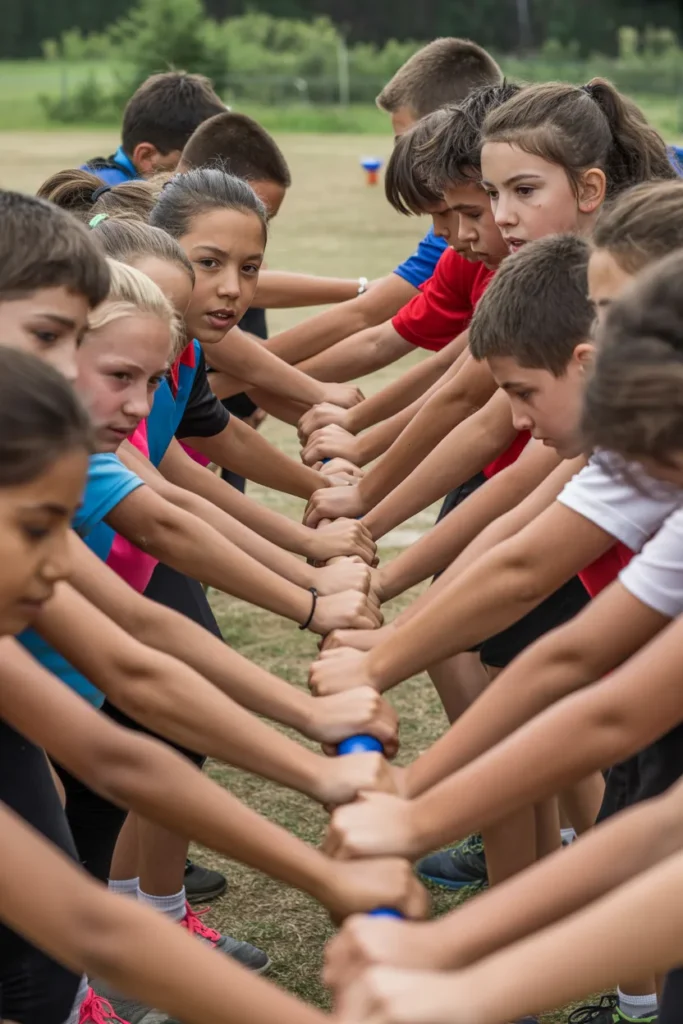
This energetic challenge encourages group coordination.
Teams complete physical tasks while staying organized and communicating effectively.
I’ve noticed children become highly engaged because every teammate plays an important role.
30. Human Caterpillar Challenge
Children form a moving caterpillar by holding onto one another.
The group must travel through a course without breaking formation.
Success depends on communication and teamwork.
31. 15 Seconds
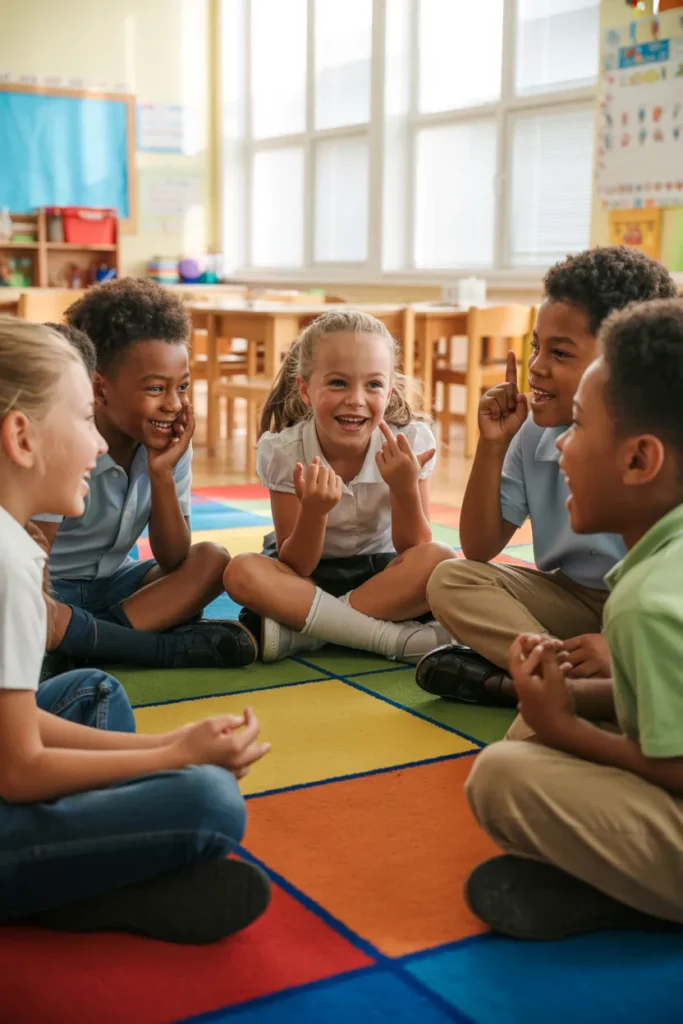
This quick-thinking game encourages confidence and communication.
Children have only 15 seconds to answer questions on a chosen topic.
The activity keeps everyone involved while improving speaking skills.
32. Race to the Galaxy
This imaginative game combines teamwork with movement.
Using hula hoops as spaceships, teams travel across the play area collecting designated items.
Children enjoy the creative theme while practicing cooperation.
33. Roller Coaster
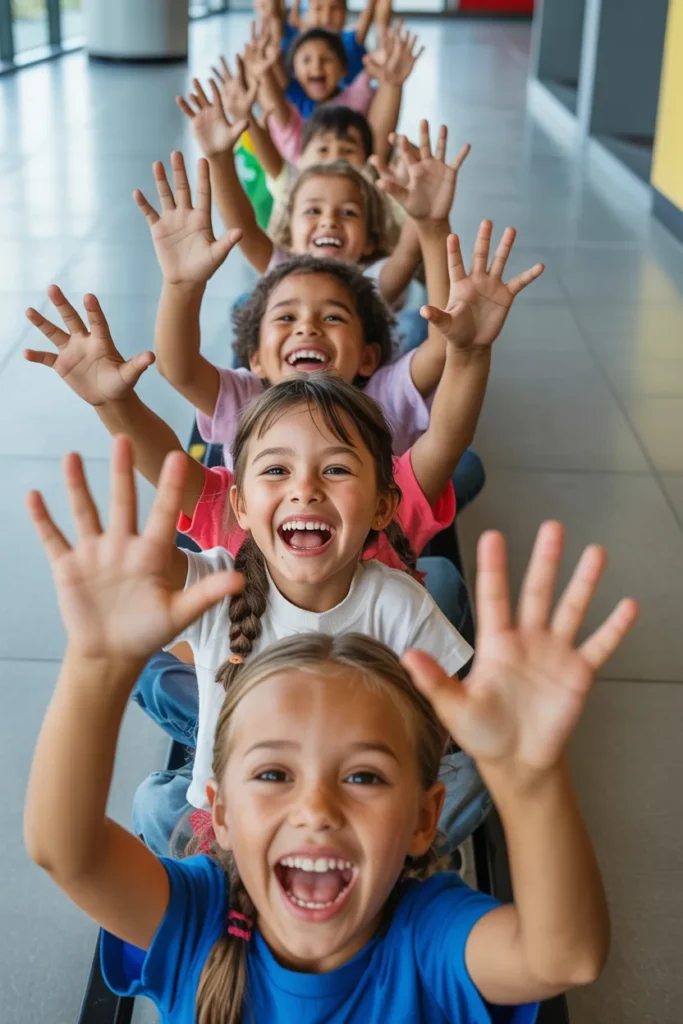
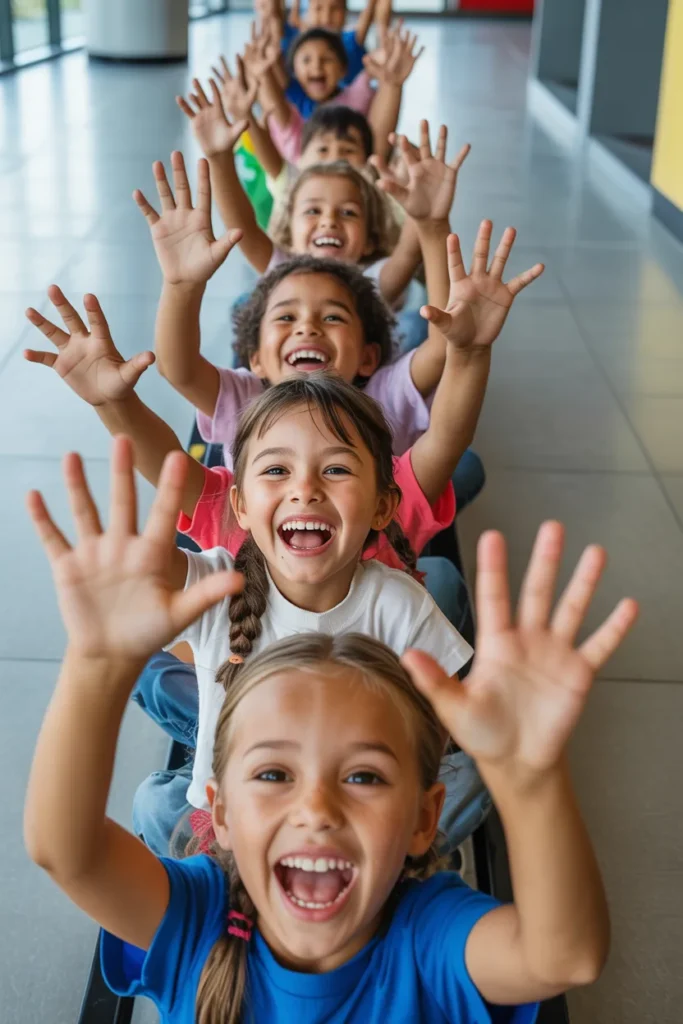
Roller Coaster is a simple listening activity.
Kids sit in a line and follow movement instructions given by a leader.
The game helps improve coordination, focus, and listening skills.
34. Tower Building
Building challenges are always popular among children.
Teams receive blocks and attempt to build the tallest tower possible within a time limit.
The activity develops planning, communication, and creativity.
35. Pool Noodle Fun
This challenge requires teams to balance a ball using pool noodles.
Children must work together while following various movement instructions.
The game improves teamwork, coordination, and patience.
36. Balance Game for Littles
This activity is ideal for younger children.
Pairs carry a ball balanced on a sheet of paper and race toward a target.
I’ve found it helps develop cooperation and fine motor skills.
37. Three-Legged Race
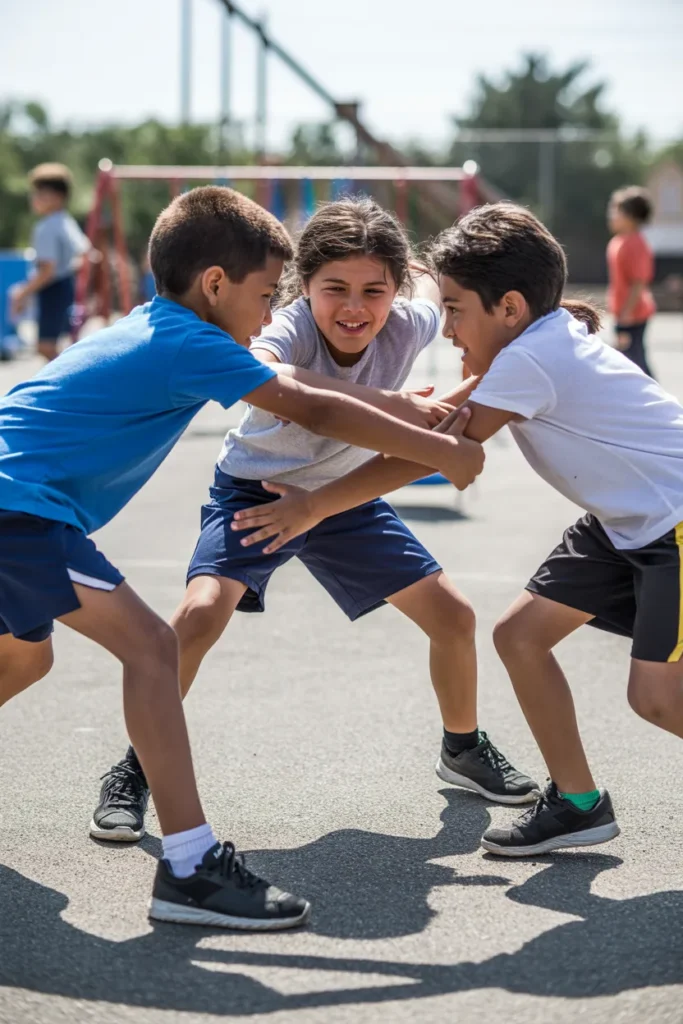
Few activities teach teamwork faster than a three-legged race.
Partners must coordinate every step to avoid falling and reach the finish line together.
The game encourages communication and cooperation.
38. Triangle Tag
This variation requires teamwork and quick reactions.
Children protect a teammate while avoiding a tagger.
The activity promotes communication and strategic thinking.
39. Human Caterpillar Challenge
The second caterpillar version focuses on speed and coordination.
Teams move together toward the finish line while staying connected.
Children quickly learn the importance of working as one unit.
40. Sneak A Peek
Sneak A Peek is one of my favorite problem-solving games.
One team member briefly views a hidden structure before describing it to teammates who must rebuild it.
The challenge develops communication and memory skills.
41. Cup Stacking Challenge
This game encourages teamwork in a unique way.
Children use strings attached to a rubber band to move cups without touching them directly.
The activity teaches patience, coordination, and collaboration.
Pro Tip: Increase difficulty by adding more cups or shortening the time limit.
42. Classification
Classification helps children discover similarities within a group.
Kids organize themselves based on hobbies, interests, favorite foods, or other positive traits.
The activity encourages conversation and relationship-building.
43. Marble Run Challenge
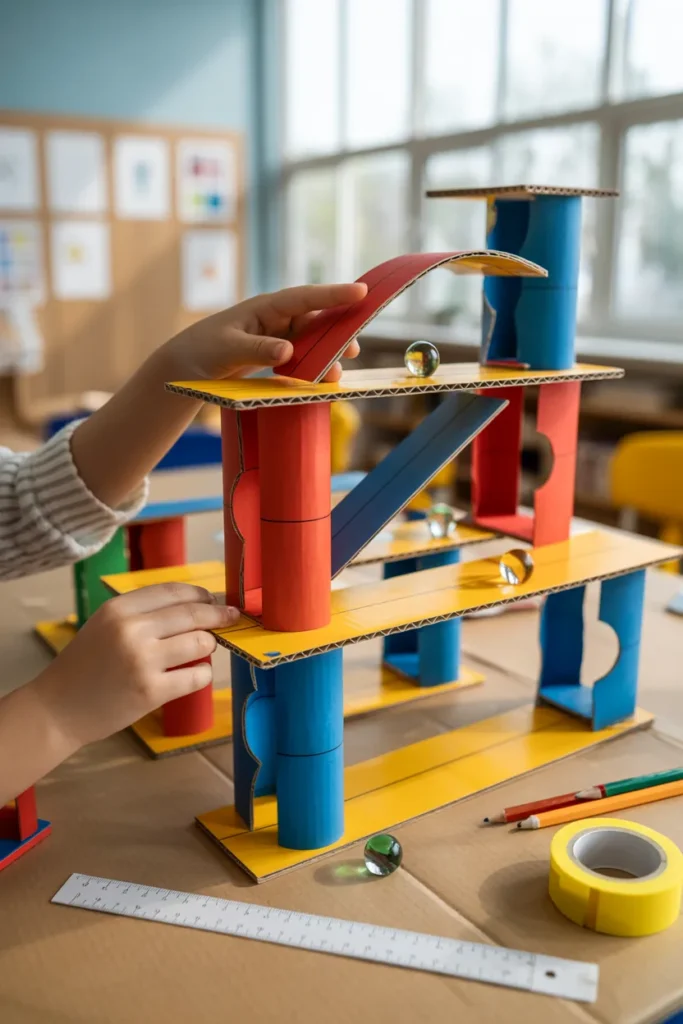
Marble Run Challenge combines engineering and teamwork.
Teams build tracks using available materials and test whether marbles can travel from start to finish successfully.
The challenge promotes creativity and problem-solving.
44. Go!
This non-verbal communication game teaches children to pay attention to body language.
Players rely only on eye contact and movement to complete tasks.
I’ve found this activity improves focus and teamwork.
45. Chuck the Chicken
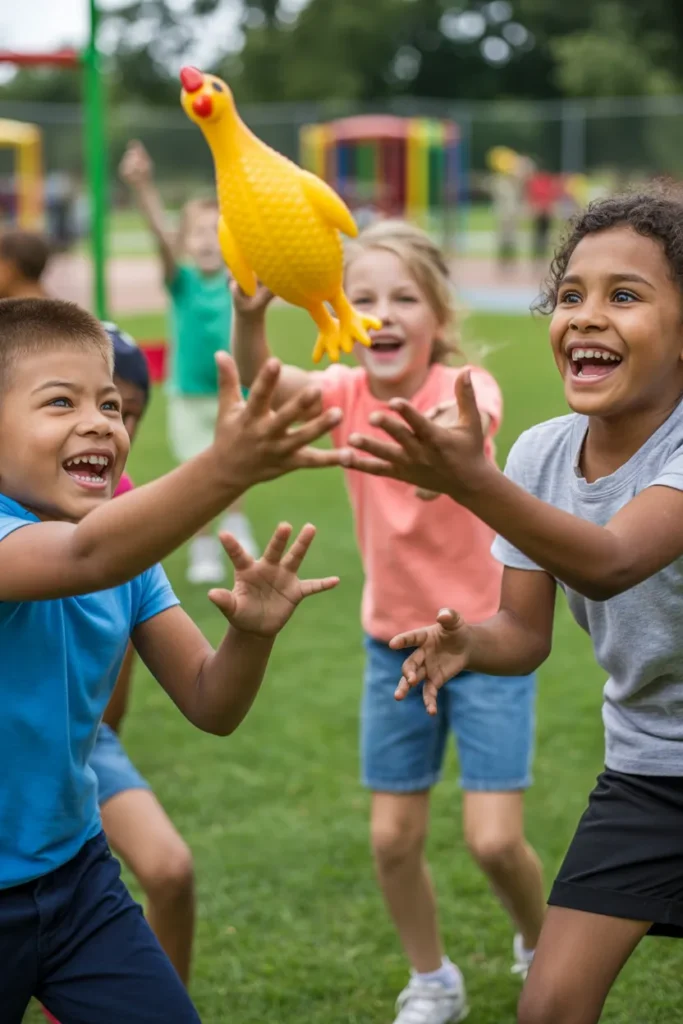
Chuck the Chicken is a high-energy game that kids always enjoy.
Teams take turns throwing a rubber chicken while the opposing team retrieves it.
The game combines physical activity, teamwork, and friendly competition.
Pro Tips for Running Team Building Games for Kids
Why Team Building Games Matter for Kids
Team-building activities do much more than entertain children. In my experience, they help kids develop communication skills, confidence, empathy, leadership, and resilience.
Children who regularly participate in cooperative activities often become better problem-solvers and stronger communicators. These skills benefit them in school, sports, friendships, and everyday life.
FAQ,s
What are the best Team Building Games for Kids?
Some of the most popular options include Picture Pieces, Scavenger Hunt, Trust Walk, Marshmallow-and-Toothpick Challenge, and Human Tic-Tac-Toe because they encourage teamwork while keeping kids engaged.
At what age can kids start team-building activities?
Many simple team-building games can be introduced as early as age 4 or 5. Activities should be adjusted based on children’s abilities and attention spans.
Can team-building games be used in classrooms?
Yes. Teachers often use team-building games to improve classroom cooperation, communication, and student engagement.
How long should team-building activities last?
Most activities work best when they last between 10 and 30 minutes. Younger children may benefit from shorter sessions.
Are team-building games good for shy kids?
Absolutely. Many cooperative games provide a safe environment where shy children can participate, build confidence, and develop friendships naturally.
Do team-building games improve social skills?
Yes. Regular participation helps children practice communication, listening, cooperation, empathy, leadership, and conflict resolution.
SEO Meta Description: Discover 45 fun Team Building Games for Kids that improve teamwork, communication, trust, and problem-solving while keeping children active and engaged.