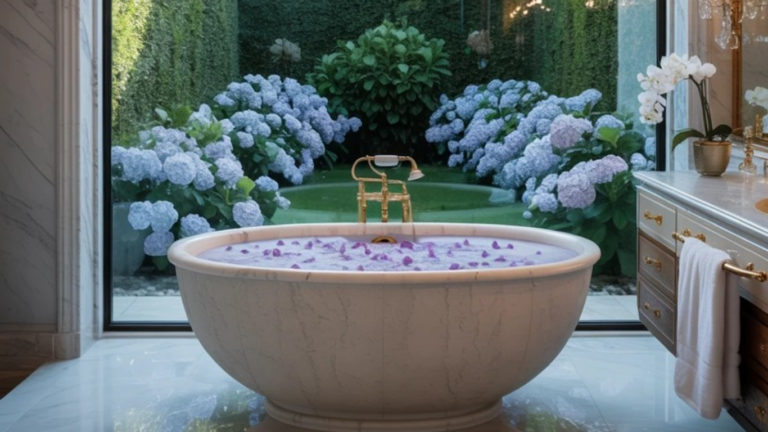

23 Bathroom Decor Trends in 2026 from earthy colors and curved vanities to smart technology
If I were updating a bathroom in 2026, I would focus on ideas that make the room feel comfortable, practical, and personal rather than simply following every new trend. The biggest bathroom decor trends this year include natural materials, warm colors, curved shapes, hidden storage, statement lighting, smart features, handmade finishes, and wellness-focused details.
I also like that many of these bathroom ideas can be used without doing a complete renovation. A new paint color, better lighting, a floating vanity, textured tile, or a few carefully chosen accessories can change the feel of the room while keeping the existing layout.
Key Takeaways
1 Biophilic Design Elements
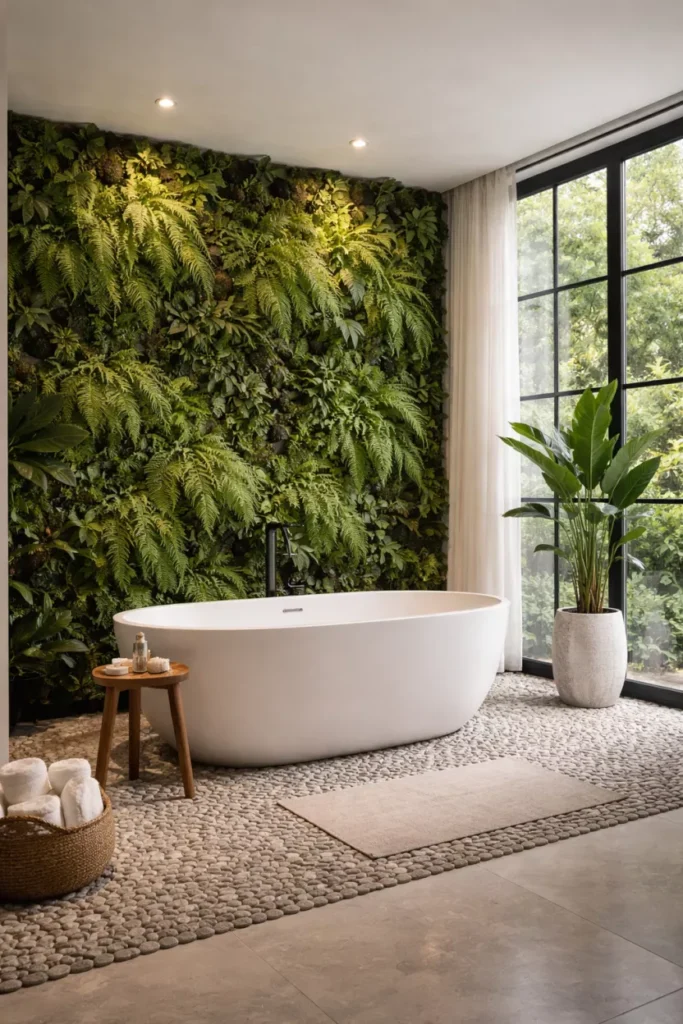
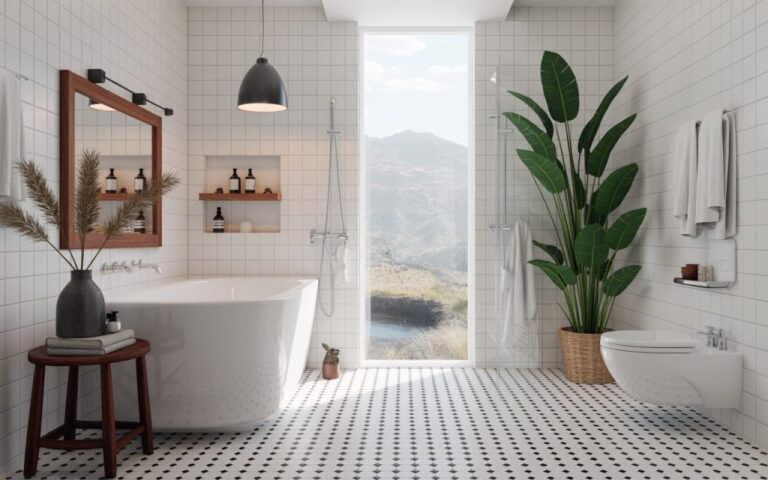
I like bringing natural details into the bathroom because they can make a hard, tile-heavy space feel softer. Indoor plants, natural stone, pebble flooring, wood tones, and larger windows can all create that connection with nature without requiring a major redesign.
For a smaller bathroom, I would keep it simple with a few moisture-tolerant plants, a wood-look vanity, or stone-inspired flooring. The goal is to add natural texture without making the room difficult to clean.
Pro Tip: I would choose plants that tolerate high humidity and low or indirect light if the bathroom does not have a sunny window.
2 Sustainable and Eco-Friendly Materials
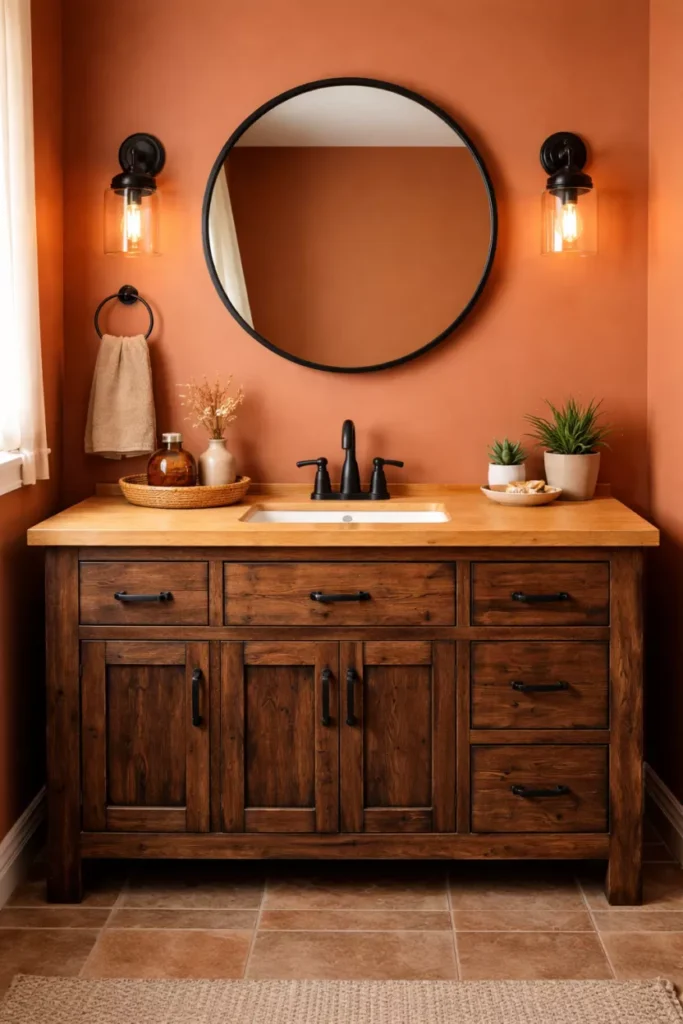
I am seeing more interest in bathroom materials that are durable, responsibly sourced, and less wasteful. Reclaimed wood, bamboo, recycled glass, low-VOC finishes, and responsibly certified wood can all support a more thoughtful bathroom design.
I would pay attention to the product’s actual use before buying it. A material may look eco-friendly, but bathroom moisture, cleaning products, and daily wear still matter when choosing finishes.
Fact: Low-VOC paints release fewer volatile organic compounds than conventional high-VOC formulas, which can be useful in an enclosed room where ventilation matters.
3 Smart Technology Integration
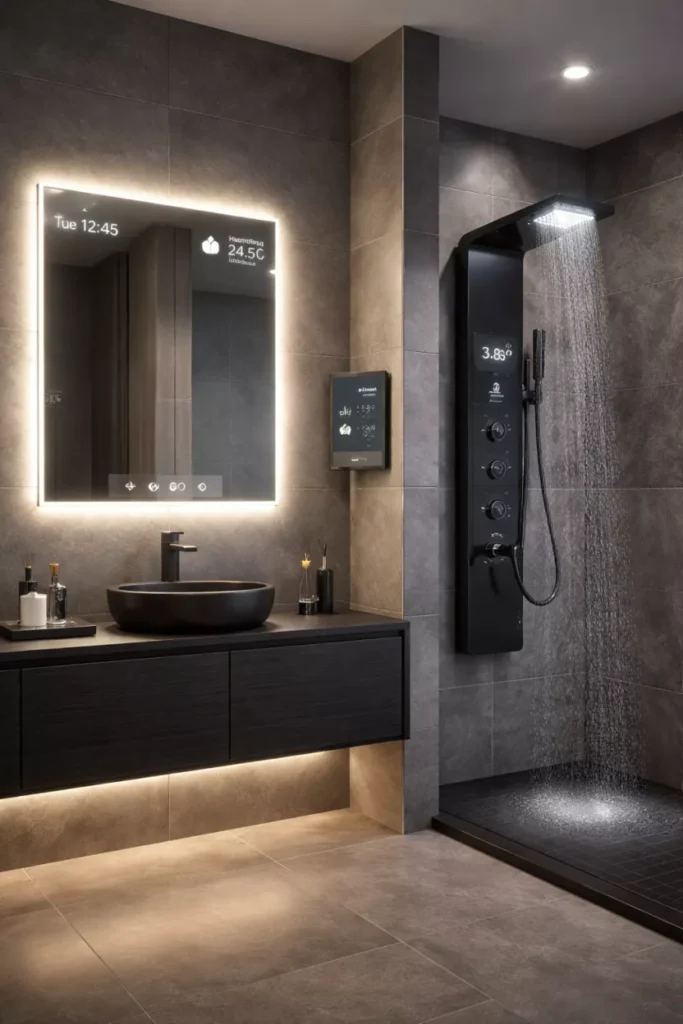
Smart bathroom technology is becoming more useful when it solves everyday problems instead of being added just because it is new. I like features such as heated settings, smart mirrors, automatic fans, lighting controls, and app-connected bathroom systems.
A smart mirror with integrated lighting can make morning routines easier, while humidity sensors can help automate ventilation. I would always check compatibility, electrical requirements, and the bathroom’s Wi-Fi signal before installing connected equipment.
Pro Tip: I would prioritize smart features that I will use every day rather than spending more on technology that adds little practical value.
4 Earthy and Natural Color Palettes
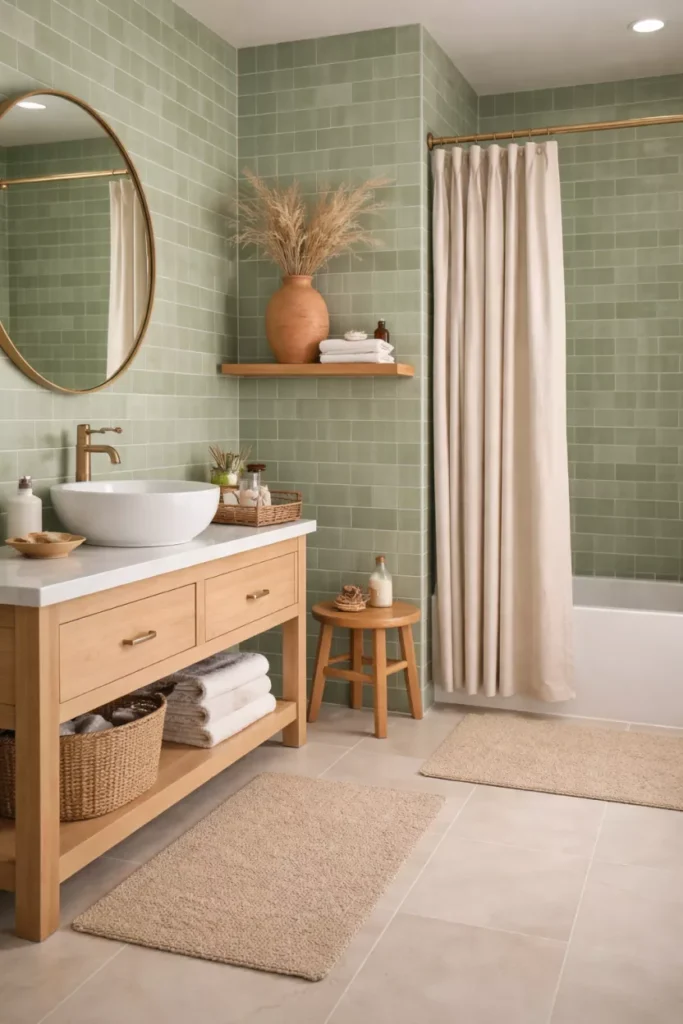
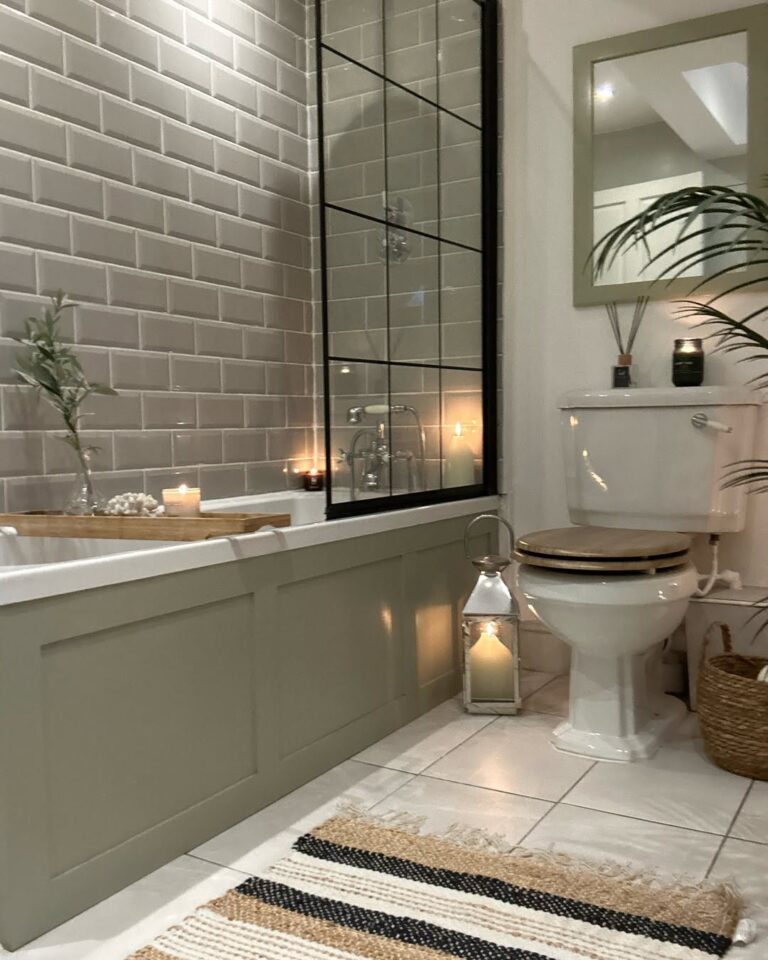
I would choose warm neutrals, sage green, soft beige, clay, terracotta, and cream when I want a bathroom that feels calm and easy to live with. These shades also work well with wood, stone, woven accessories, and brushed metal finishes.
Instead of painting the entire room, I can bring earthy color in through tile, towels, cabinetry, rugs, artwork, or small accessories. That makes it easier to change the look later without another full renovation.
Insight: Warm colors can make a bathroom feel less stark than an all-white scheme, especially when they are paired with warm lighting and natural textures.
5 Minimalist Aesthetics with a Twist
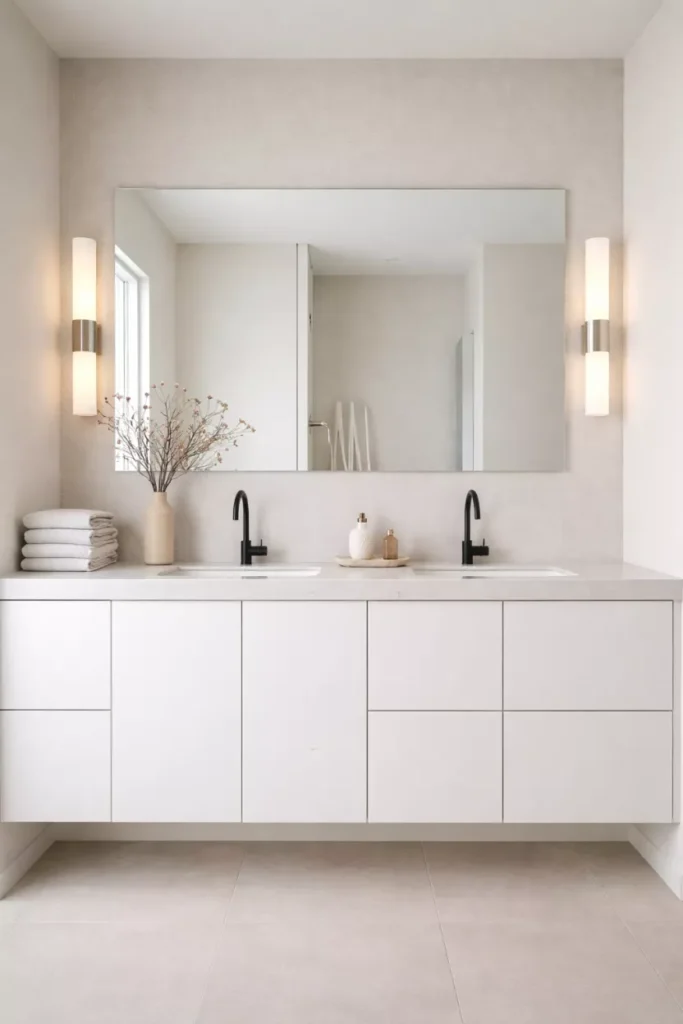
I still like a clean bathroom, but I do not think minimalism has to mean a completely plain room. In 2026, I would combine simple lines with tactile finishes such as matte wood, linen-like textures, stone surfaces, or subtly patterned tile.
Hidden storage is especially useful because keeping everyday products out of sight makes a bathroom look calmer. I would also add one or two personal details so the space does not feel too generic.
Pro Tip: If I want a minimalist bathroom, I would create enough closed storage before removing countertop space or decorative items.
6 Bold and Textured Wall Treatments
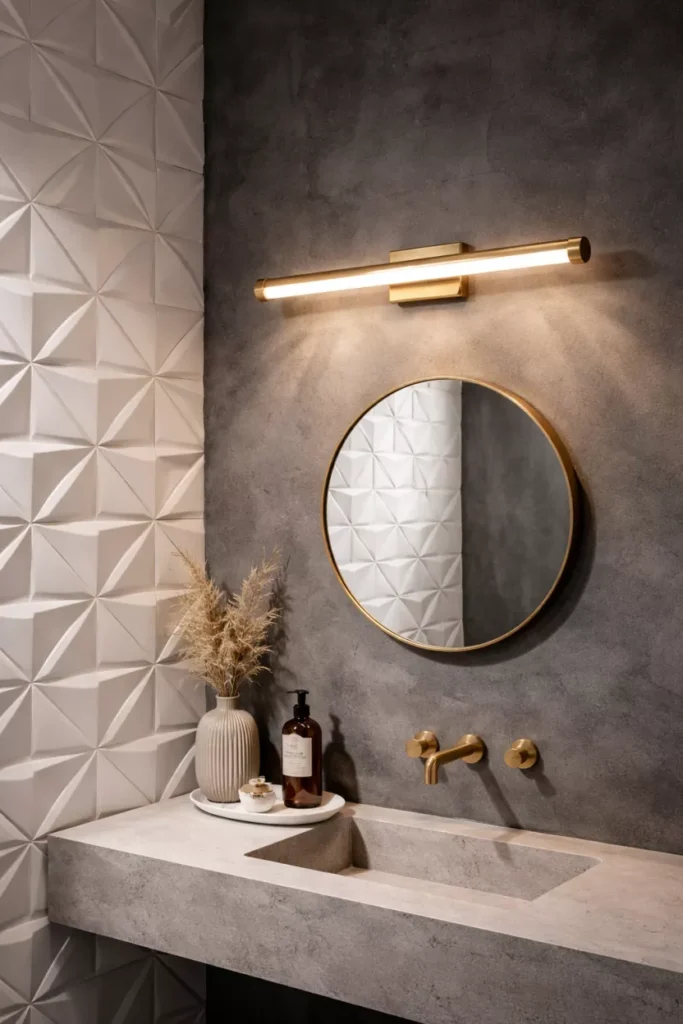
I think walls are one of the easiest places to give a bathroom more personality. Textured tile, limewash-style finishes, waterproof wall coverings, decorative panels, and a darker accent wall can all create visual interest.
I would be careful about using ordinary wallpaper or finishes that are not rated for humid spaces. Good ventilation is also important because moisture can damage unsuitable wall materials over time.
Fact: Bathroom wall products should be selected according to the manufacturer’s moisture and installation requirements rather than appearance alone.
7 Vintage and Retro Influences
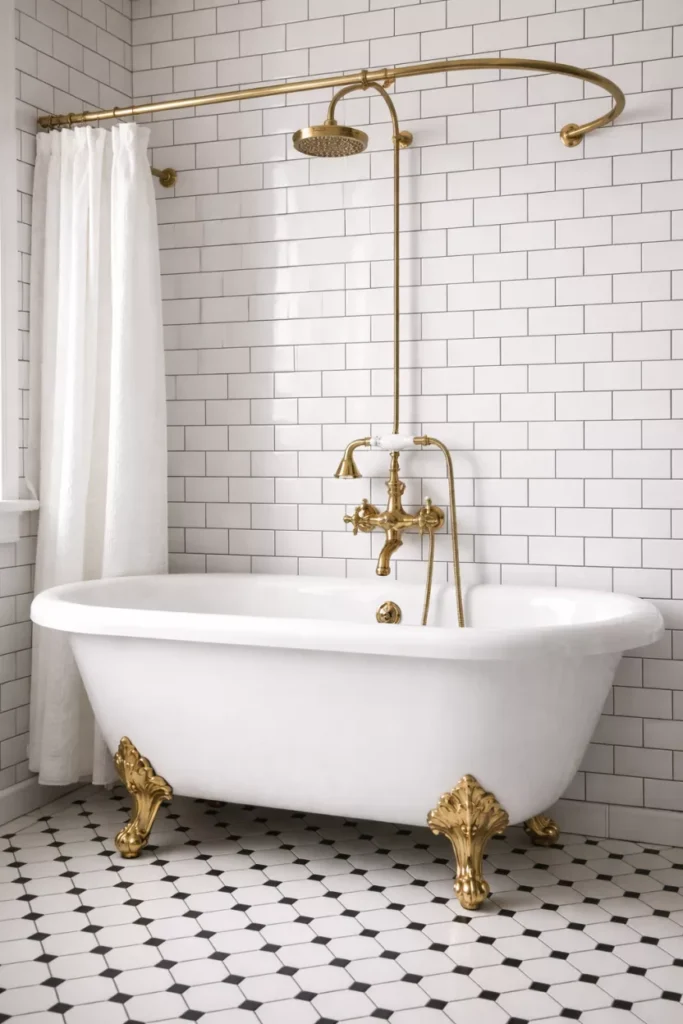
I like mixing a few vintage details with modern bathroom fixtures because the room feels more collected and less like a showroom. A clawfoot-style tub, classic subway tile, antique-looking mirror, or aged brass fixture can add character.
I would avoid making every item look old. One or two vintage-inspired pieces usually have more impact when the rest of the bathroom has clean, modern lines.
Insight: Mixing old and new finishes can help a bathroom feel personal while still giving me the practical features of a modern space.
Luxurious Marble and Stone Varieties
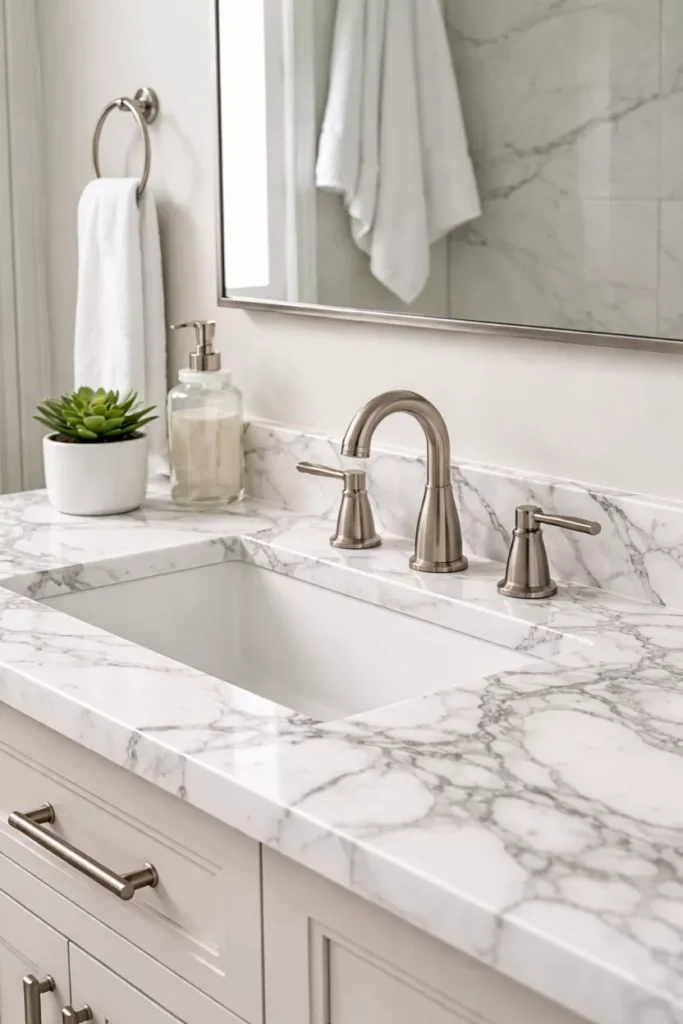
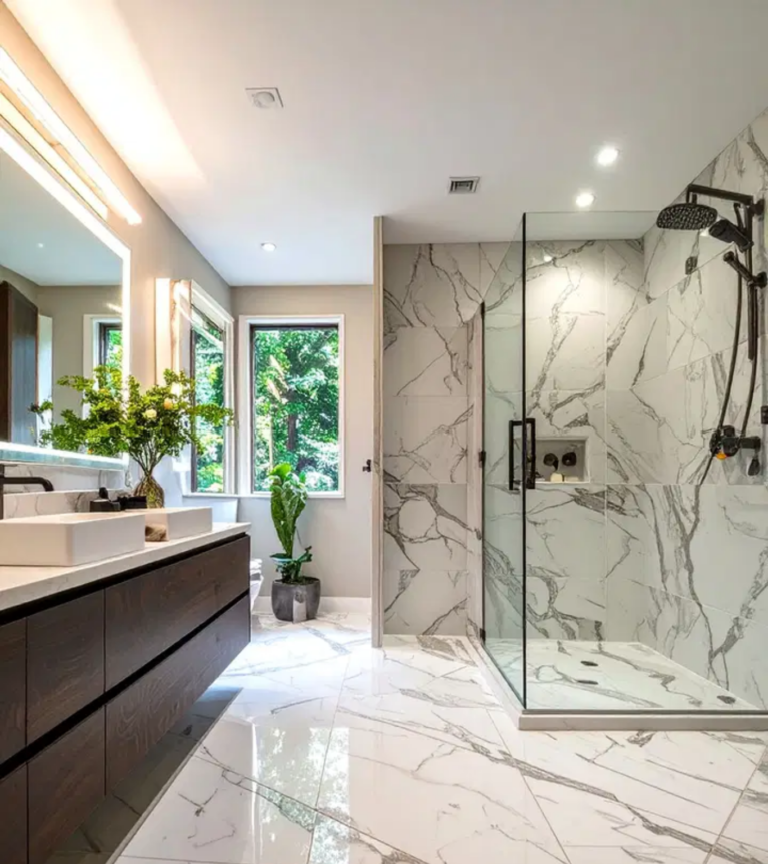
Marble and stone-inspired surfaces remain popular because their natural patterns can become the main visual feature of a bathroom. I particularly like dramatic veining on a vanity wall, shower surround, countertop, or floor when the rest of the room is kept simple.
For easier maintenance, I would compare natural stone with engineered or porcelain alternatives before choosing. Porcelain can create a convincing stone appearance while offering a practical option for many bathroom surfaces.
Pro Tip: I would check the sealing and maintenance requirements of natural stone before buying it, especially for areas exposed to water and cosmetics.
8 Metallic Accents and Finishes
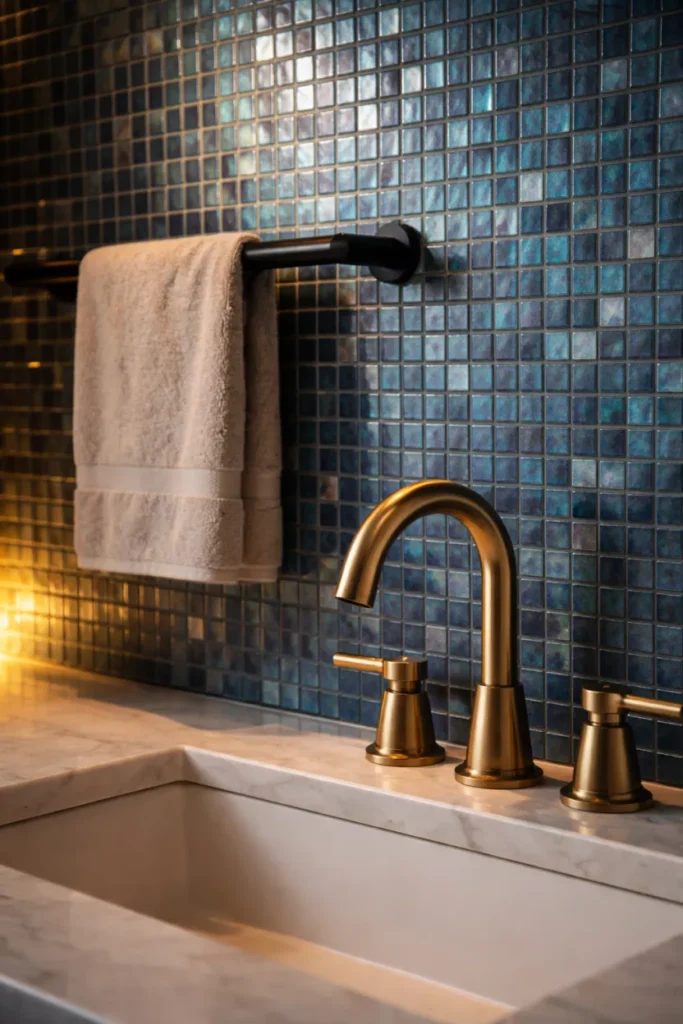
I no longer feel that every metal in a bathroom needs to match perfectly. Brushed brass, matte black, bronze, nickel, and other finishes can work together when I repeat them intentionally across the room.
I would usually select one dominant finish and one supporting finish rather than mixing several metals randomly. Cabinet hardware, faucets, mirrors, lighting, and towel holders are easy places to repeat the same metal.
Insight: Repeating a mixed-metal finish at least two or three times can make the combination look intentional rather than accidental.
9 Organic and Curved Forms
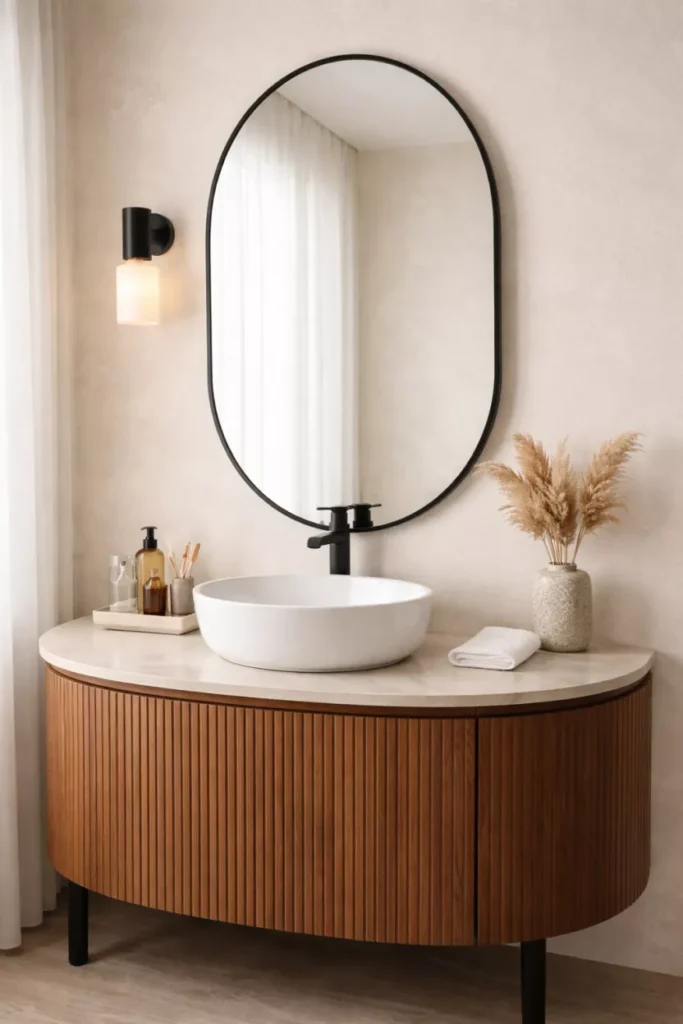
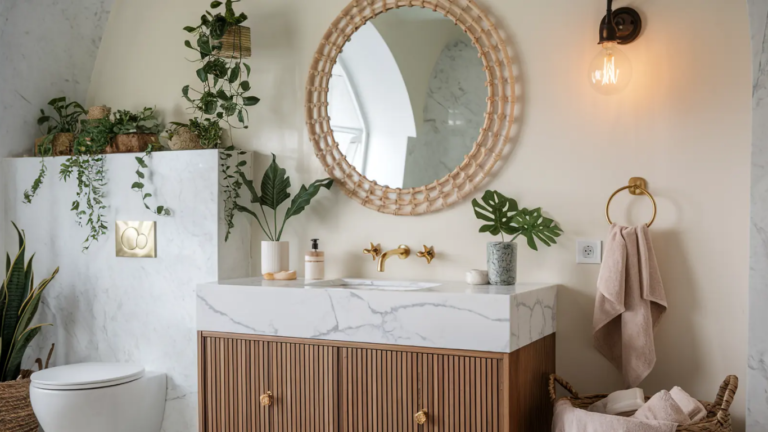
Curved bathroom furniture can soften the strong straight lines created by tile, cabinets, and rectangular mirrors. I like rounded vanities, arched mirrors, curved shower details, and softly shaped sinks for creating a more relaxed appearance.
These shapes can also work particularly well in bathrooms where I want to reduce a boxy feeling. I would still consider cleaning access and available floor space before choosing an unusual curved fixture.
Pro Tip: In a small bathroom, I would use one major curved feature, such as an arched mirror, instead of adding curves to every fixture.
10 Floating Fixtures and Vanities
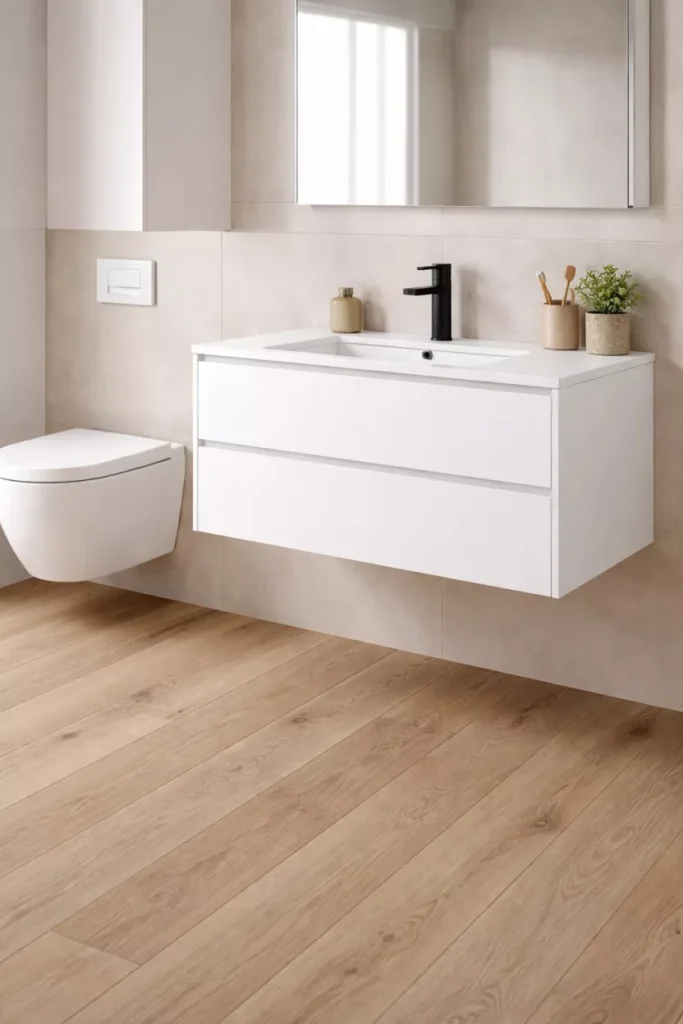
A floating vanity can make the floor beneath it visible, which helps a smaller bathroom feel more open. I also find wall-mounted furniture easier to clean around because there are fewer hard-to-reach areas touching the floor.
Wall-mounted toilets can create a similarly streamlined appearance, but installation depends on the wall structure and plumbing setup. I would have the supporting structure checked before choosing this type of fixture.
Fact: The usable floor area does not actually increase when a vanity is wall-mounted, but the visible floor can make the room appear more spacious.
11 Statement Lighting Solutions
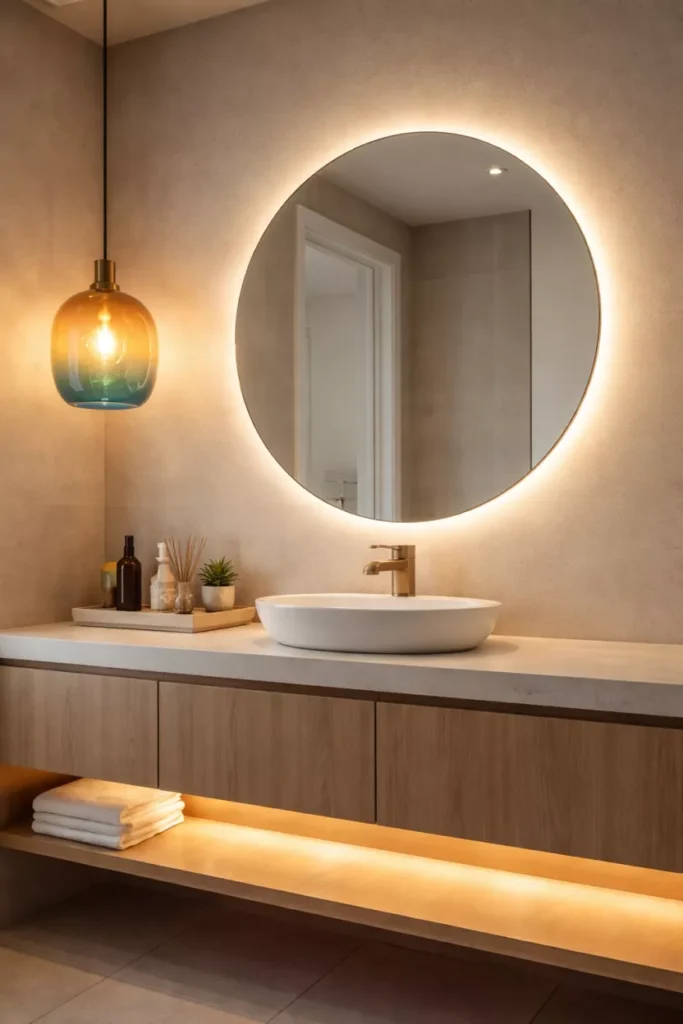
I think lighting can change a bathroom more than many decorative accessories. A backlit mirror, pendant, wall sconces, or under-vanity LED lighting can provide both function and atmosphere.
I would use layered lighting instead of relying on one ceiling fixture. Bright task lighting helps around the vanity, while softer lighting can make the room more comfortable when I want a calmer evening setting.
Pro Tip: I would add a dimmer where compatible and choose bathroom-rated fixtures that match the location and moisture exposure.
12 Living Green Walls
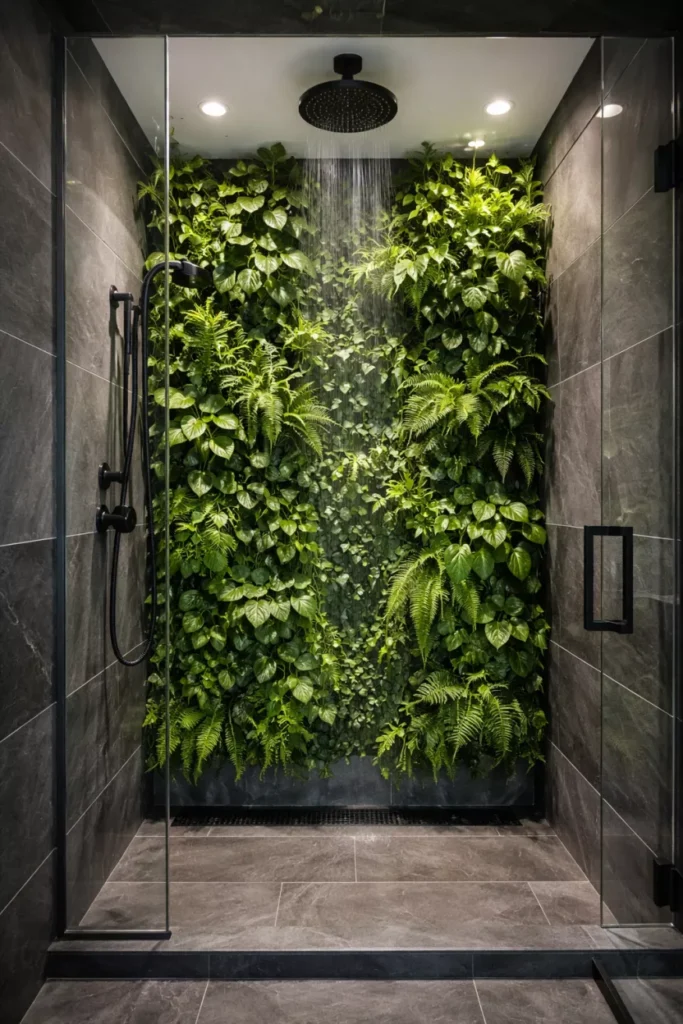
A living wall can turn a plain bathroom into a plant-focused feature area. I would consider compact wall planters, vertical planting systems, or a small collection of humidity-tolerant plants instead of covering an entire wall.
Living walls need more care than ordinary bathroom accessories, so I would think about watering, drainage, lighting, and maintenance before installing one. For many homes, a smaller green wall gives a similar visual effect with less work.
Insight: Pothos and some ferns can tolerate humid indoor conditions, but plant choice should still match the bathroom’s available light.
13 Custom Handmade Tiles
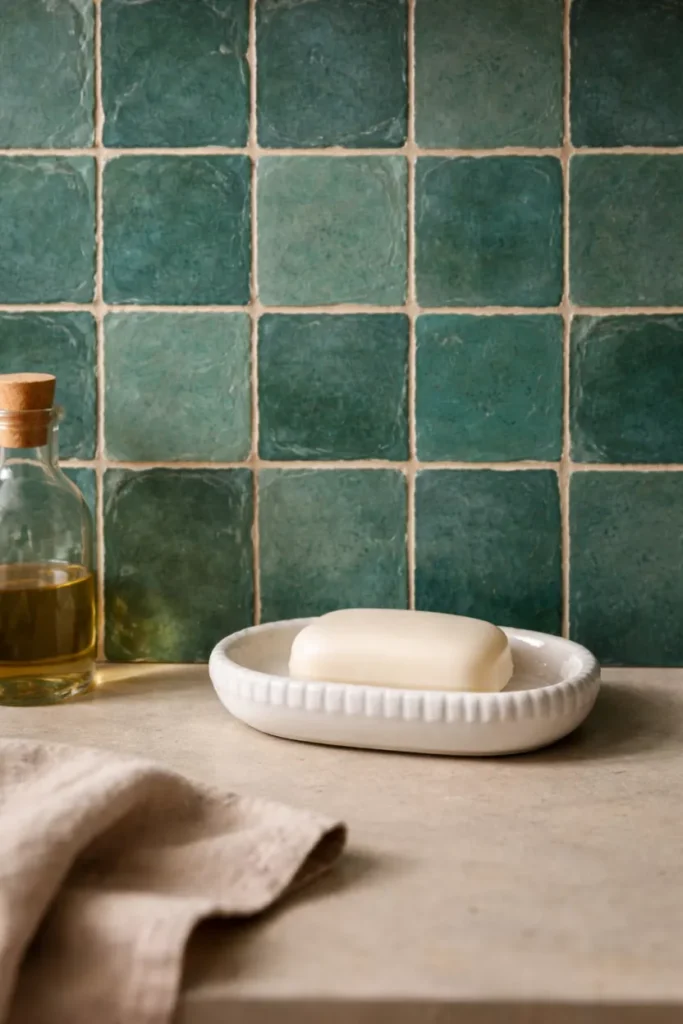
Handmade tiles appeal to me because slight variations in color, shape, and surface can make a wall feel less mass-produced. They work especially well as shower accents, vanity backsplashes, or small feature areas.
I would not cover every surface with a busy handmade pattern. Using them in one focused area lets the tile become a feature while keeping the rest of the bathroom easier on the eyes.
Pro Tip: Before ordering handmade tile, I would confirm the installation requirements, quantity needed, and expected variation because pieces may not look completely identical.
14 Aromatherapy and Wellness Features
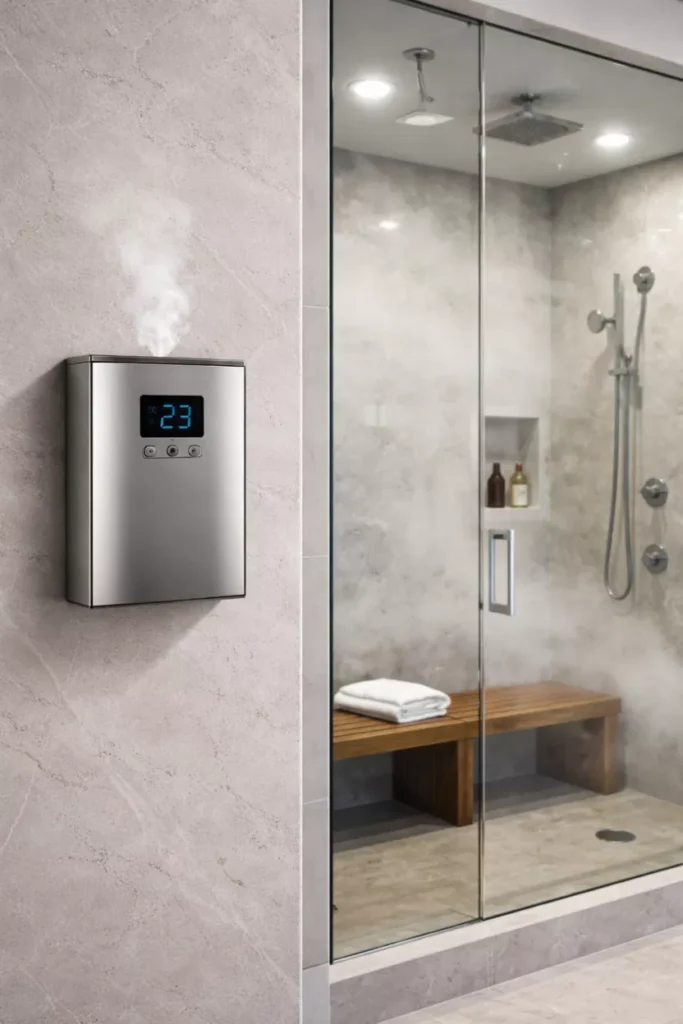
I like the idea of making the bathroom feel more relaxing through simple wellness details. A comfortable shower, soft lighting, pleasant scents, music, and a place to sit can make the daily routine feel less rushed.
For fragrance, I would use products according to their instructions and make sure the bathroom has proper ventilation. I would also keep electrical devices and audio equipment appropriate for wet or damp locations.
Fact: Good bathroom ventilation is important because excess moisture can contribute to condensation, surface damage, and mold growth.
15 Heated Floors and Towel Racks
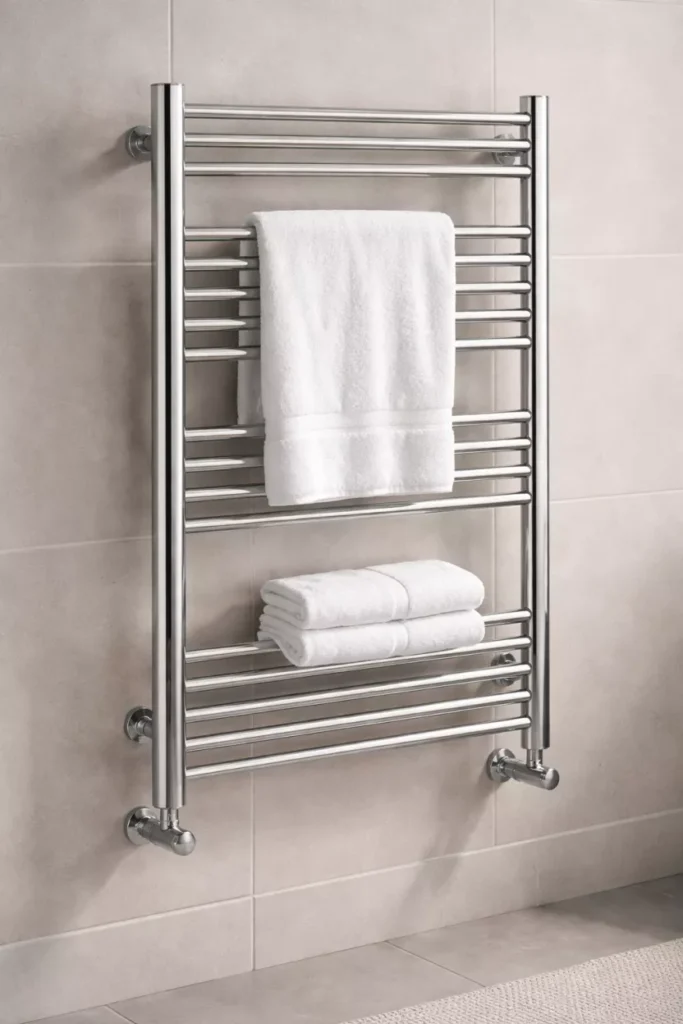
Cold bathroom floors are one reason I would consider radiant floor heating if I were already renovating. Heated towel racks can add another comfort feature, especially in colder climates or during winter months.
I would think about installation cost, electrical requirements, controls, and energy use before adding either feature. These upgrades make more sense when they fit naturally into a renovation rather than forcing a major project only for one feature.
Pro Tip: If heated flooring is too expensive for the project, I would first consider a smaller heated towel rack or a washable bathroom mat for an easier comfort upgrade.
16 Color-Drenched Interiors
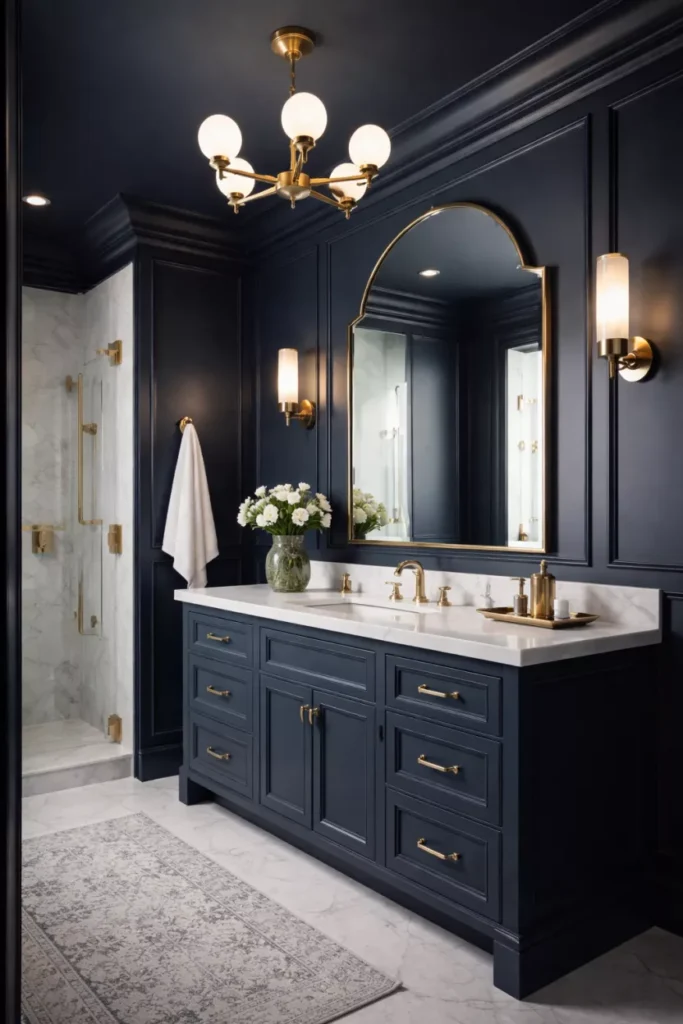
Color drenching means carrying one main color across several surfaces instead of limiting it to one wall. I like this approach with deep green, navy, warm beige, muted blue, or another color that works with the bathroom’s natural light.
I would balance a strong color with lighter towels, mirrors, flooring, or accessories if the room starts to feel too dark. In a small bathroom, using one shade across the walls and cabinetry can actually create a more continuous look.
Insight: Dark colors do not automatically make a small bathroom feel smaller; lighting, contrast, ceiling height, and surface reflectivity also affect how spacious it feels.
17 Sculptural Faucets and Hardware
I see faucets and cabinet hardware as small details that can change the overall character of a bathroom. A curved faucet, unusual handle, waterfall-style design, or distinctive towel ring can give a simple vanity more personality.
I would still put function first because beautiful hardware is not useful if it is awkward to operate or difficult to clean. Touchless options can also be practical in busy family bathrooms.
Pro Tip: I would check the faucet’s reach, mounting type, water flow, and compatibility with the existing sink before buying based only on its appearance.
18 Multi-Functional Furniture
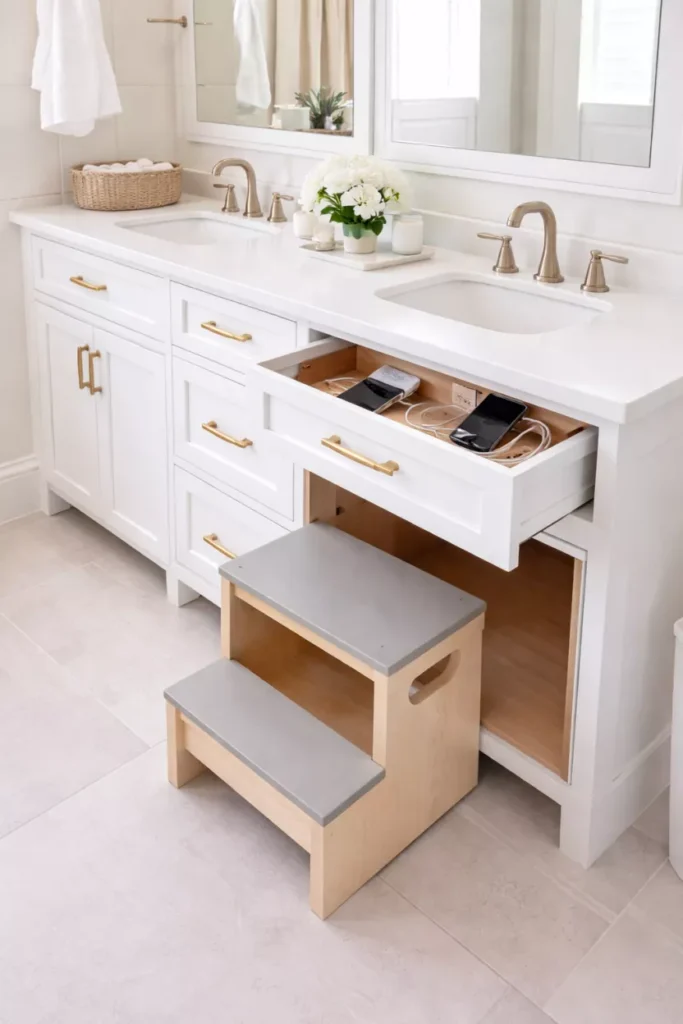
Small bathrooms need furniture that earns its space, and I like vanities, mirrors, benches, and cabinets that provide more than one function. A mirrored medicine cabinet can add storage while keeping the wall visually clean.
A vanity with organized drawers can also keep grooming items out of sight, while a storage bench can provide seating and hold towels or bathroom supplies. These choices make the room easier to manage every day.
Insight: In a small bathroom, vertical storage is often more useful than adding bulky furniture to the floor.
19 Recycled and Upcycled Decor
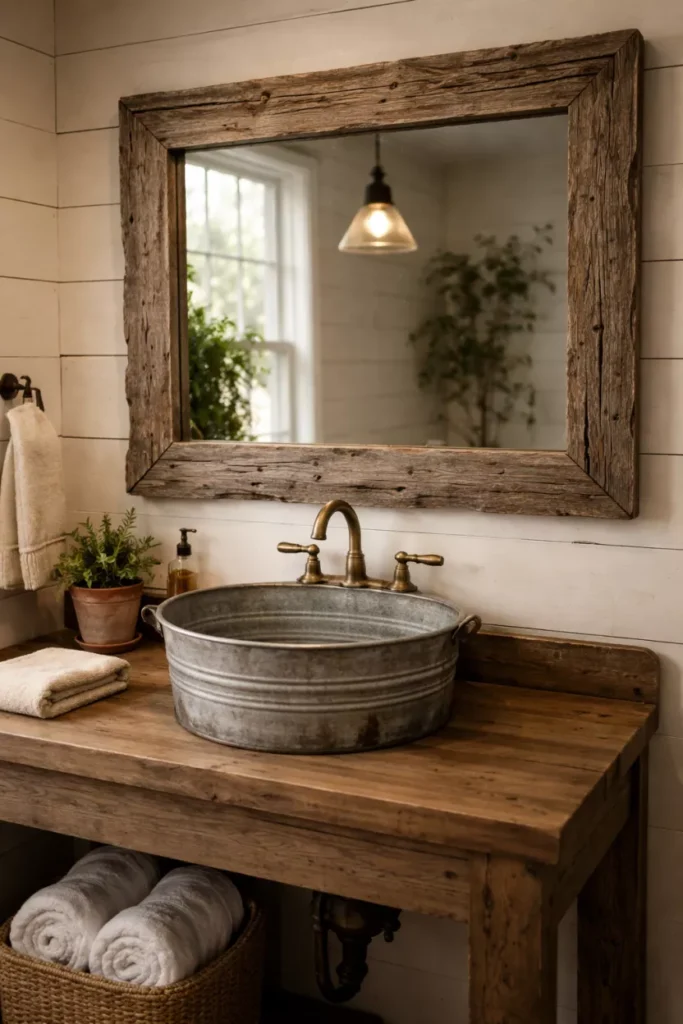
I enjoy using older pieces in new ways when the material can handle bathroom conditions. An old frame can become a mirror, while a suitable vintage cabinet can sometimes be adapted into a vanity with the right professional modifications.
I would be selective about what I bring into a damp room because some old materials can warp, rust, or develop moisture damage. Proper sealing and choosing the right location can make an upcycled piece more practical.
Pro Tip: I would keep upcycled wood away from constant water exposure unless it has been properly prepared and sealed for the environment.
20 Asymmetrical Layouts
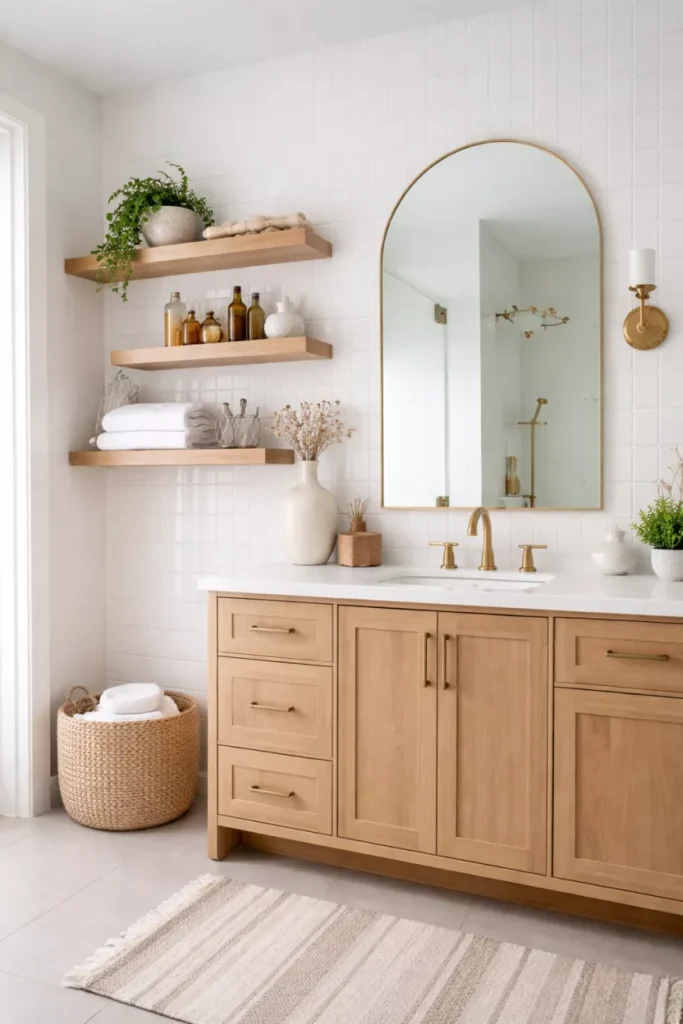
A bathroom does not have to have every fixture perfectly centered to look well planned. An offset mirror, staggered shelves, uneven artwork arrangement, or vanity placed to suit the available plumbing can create a more relaxed layout.
I would let function guide the asymmetry. If shifting one element gives me better storage, counter space, or walking clearance, the unusual arrangement can be both attractive and useful.
Insight: Asymmetry works best when there is still visual balance, such as repeating a finish, shape, color, or material on the opposite side.
21 Personalized Smart Displays
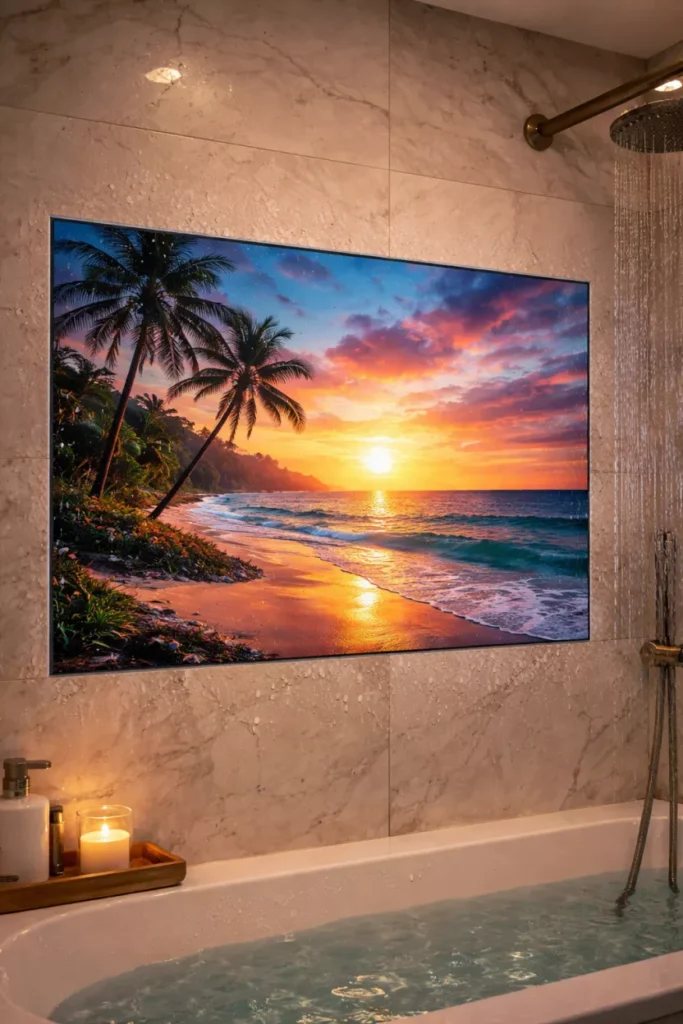
Personalized displays are adding another layer of technology to modern bathrooms. Depending on the device, I could use a screen for music controls, household information, photos, timers, or other connected features.
I would be careful with privacy and moisture when choosing this type of technology. Devices with microphones, cameras, or internet access should be placed and configured with privacy controls in mind.
Pro Tip: I would disable cameras or microphones that I do not need and choose equipment specifically designed or rated for the bathroom environment.
22 Sensory Lighting Systems
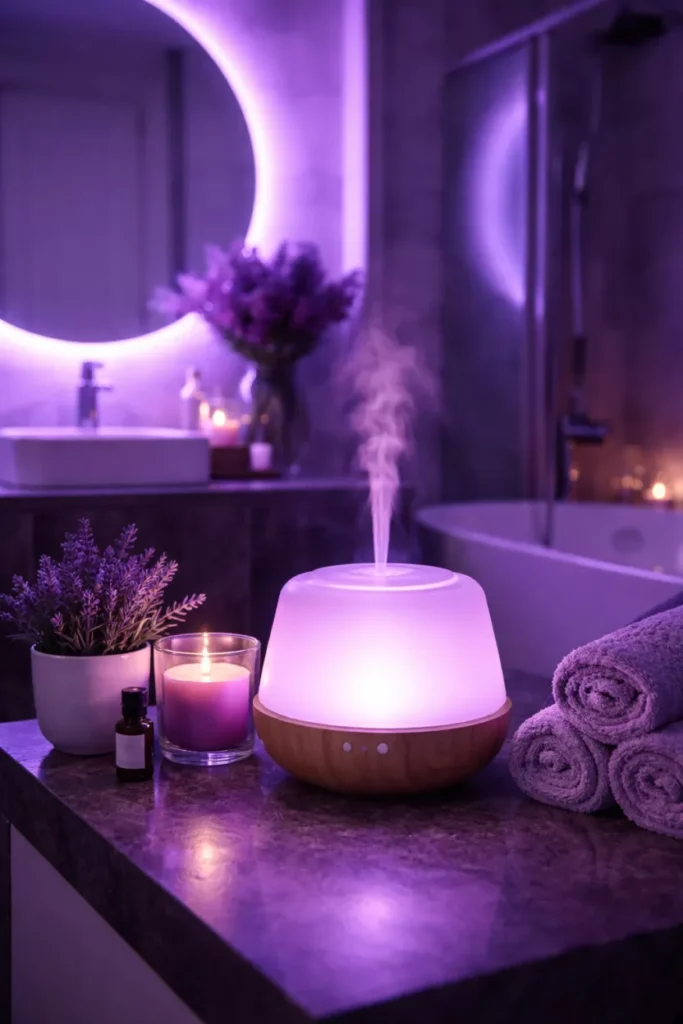
Lighting systems that change throughout the day can make a bathroom more flexible. I would use brighter, cooler light when getting ready in the morning and softer, warmer light when using the bathroom late at night.
I would not depend on colored lighting alone for important grooming tasks. Good general and task lighting should remain available, while the changing colors can be used as an extra layer.
Fact: Light color is commonly described by color temperature in Kelvin, with warmer light generally having a lower Kelvin value and cooler light a higher one.
Conclusion
For me, the best bathroom decor trends in 2026 are the ones that improve how the room looks while also making everyday routines easier. Natural materials, earthy colors, curved fixtures, smart technology, better storage, layered lighting, and comfortable wellness features can all work together without making the bathroom feel over-designed.
I would not try to use all 23 ideas at once. I would choose two or three that fit my bathroom’s size, budget, maintenance needs, and personal style, then build the rest of the room around those choices. That approach keeps the space current without making it dependent on a short-lived trend.
Many of the ideas I share are inspired by real-life experimentation. I often test décor concepts in my own living spaces and explore practical ways they can be applied in everyday homes. I also gather insights from working with homeowners who want to improve the comfort, beauty, and functionality of their spaces.
I share practical ideas for improving living rooms, bedrooms, and overall home aesthetics using simple design principles.
I explore creative ways to upgrade outdoor spaces including patio décor, small backyard styling, and relaxing outdoor setups.
I provide ideas for kitchen organization, décor accents, and functional layouts that make kitchens more beautiful and practical.
The concepts shared here are based on ideas I have personally experimented with or studied through real home décor improvements.