20 Front Yard Landscaping Ideas
Your front yard creates the first impression of your home, so I always believe it’s worth giving it some attention. Even a few thoughtful landscaping updates can make the entrance feel more welcoming, increase curb appeal, and add long-term value. In this guide, I’m sharing practical front yard landscaping ideas that work for different home styles and budgets.
If you’re planning to refresh your front yard, this guide covers everything from walkways and flower beds to ornamental trees, mulch, and seasonal color. I’ve included simple ideas that improve appearance while also making your landscape easier to maintain. Whether you’re updating one corner or redesigning the entire yard, these tips can help you create a space that looks polished throughout the year.
Key Takeaways
- Choose a walkway that matches your home’s style and improves accessibility.
- Layer plants with different heights for a professional landscape design.
- Use symmetry to create a balanced and welcoming entrance.
- Install clean edging to keep lawn and garden beds separated.
- Add one focal tree to bring structure and year-round interest.
- Select flowers that provide seasonal color without overwhelming the space.
1Paver Stone Walkway Design
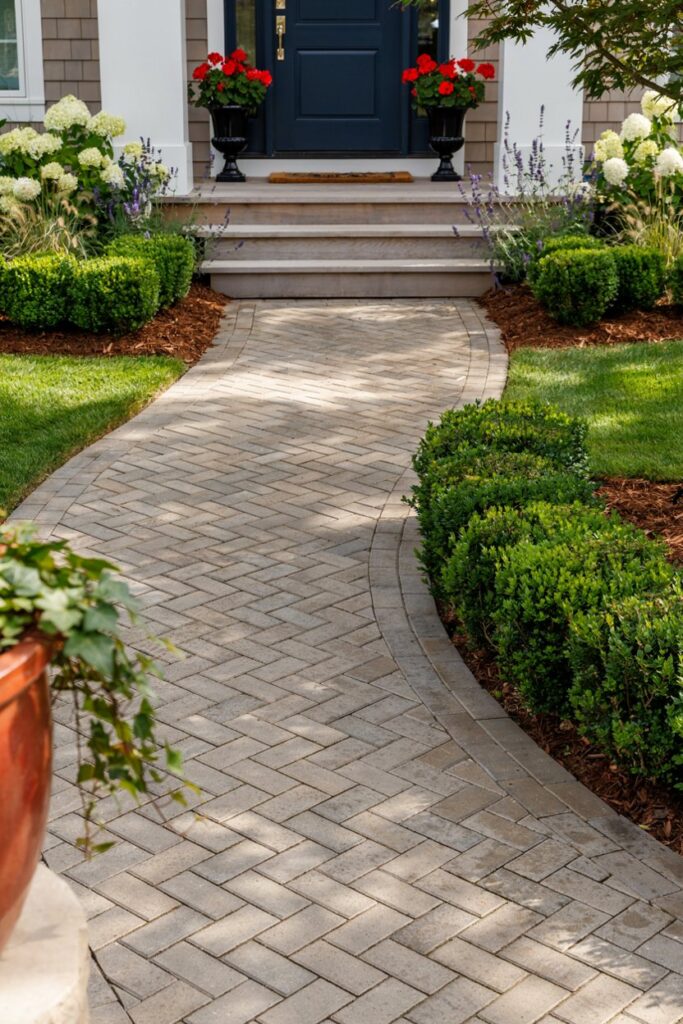
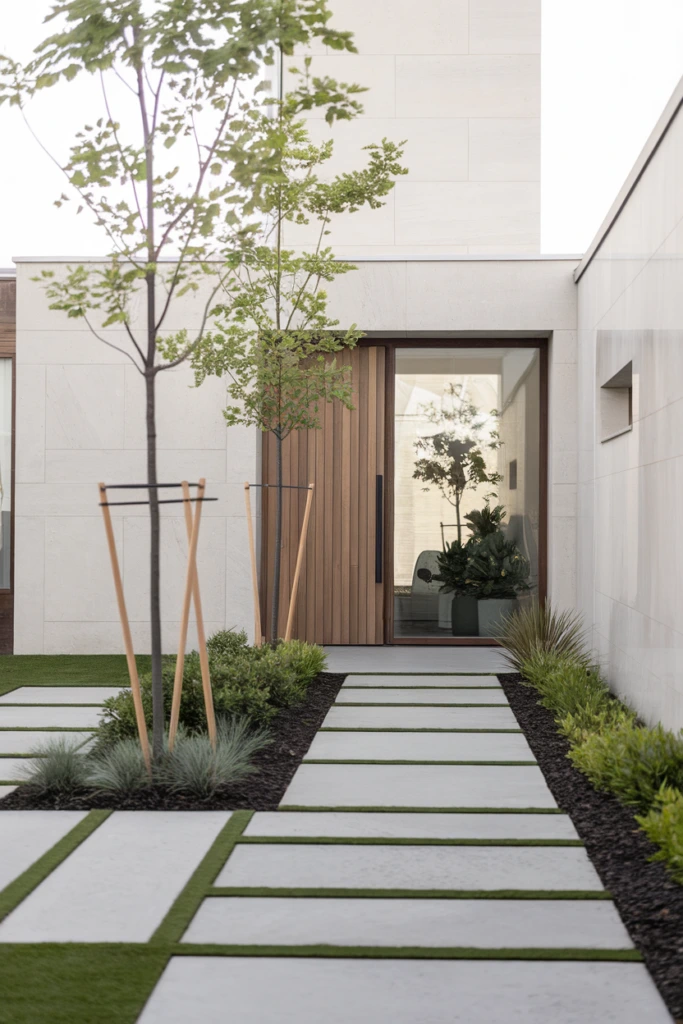
A well-designed walkway is one of the first upgrades I recommend because it immediately improves the look of a front yard. Replacing worn concrete or dirt paths with quality pavers creates a clean entrance that guides visitors naturally toward your front door while increasing curb appeal.
Pro Tip: Permeable pavers can reduce water runoff by up to 80% compared to traditional paved surfaces, making them a smart choice for areas with frequent rainfall.
I like choosing materials that match the home’s exterior, whether that’s natural flagstone, concrete pavers, or porcelain. Picking colors that complement your siding or brick helps the walkway blend naturally instead of standing out for the wrong reasons.
Insight: Neutral-colored pavers stay stylish for years and usually work better with future landscaping updates than bold colors.
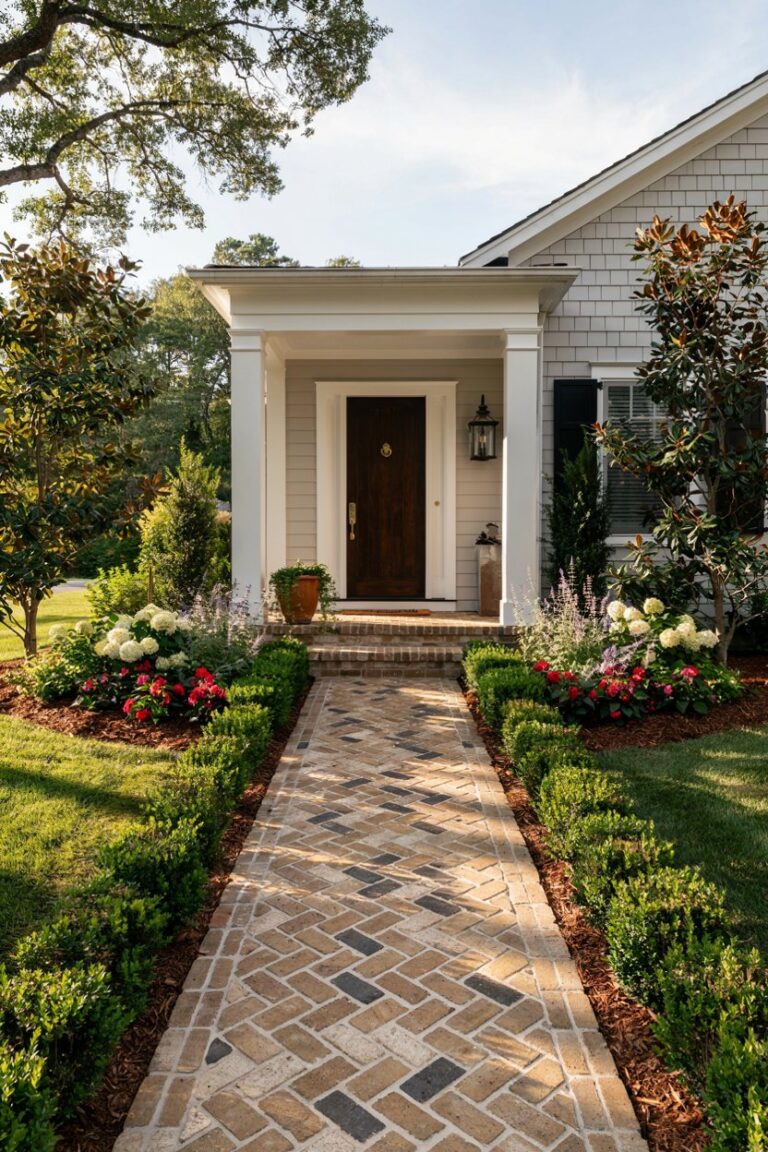
Whenever possible, I avoid perfectly straight paths. Adding a gentle curve and using patterns like herringbone or running bond gives the entrance more character and creates a softer, more inviting appearance.
Fact: Curved walkways naturally slow walking speed, encouraging visitors to notice your landscaping and making the entrance feel more welcoming.
2Formal Symmetrical Planting Layout
I often use symmetrical planting when I want a home to feel elegant and organized. Matching shrubs, planters, or flower beds on both sides of the front entrance creates balance and instantly draws attention to the doorway.
Insight: Symmetrical landscapes have remained popular in traditional architecture for centuries because they create a strong sense of order and visual harmony.
Before planting, I always identify the center point of the house, usually the front door or a large window. From there, I place matching evergreen shrubs, hedges, or ornamental plants evenly on each side to maintain balance.
Pro Tip: Evergreen plants keep the entrance looking attractive even during winter when flowering plants become dormant.
Keeping the color palette simple helps the landscape feel refined instead of busy. I usually combine one or two flower colors with neatly trimmed greenery to create a timeless design that stays attractive throughout the seasons.
Fact: Landscapes with fewer plant varieties are generally easier to maintain and require less pruning throughout the year.
3Layered Shrubs and Flower Beds
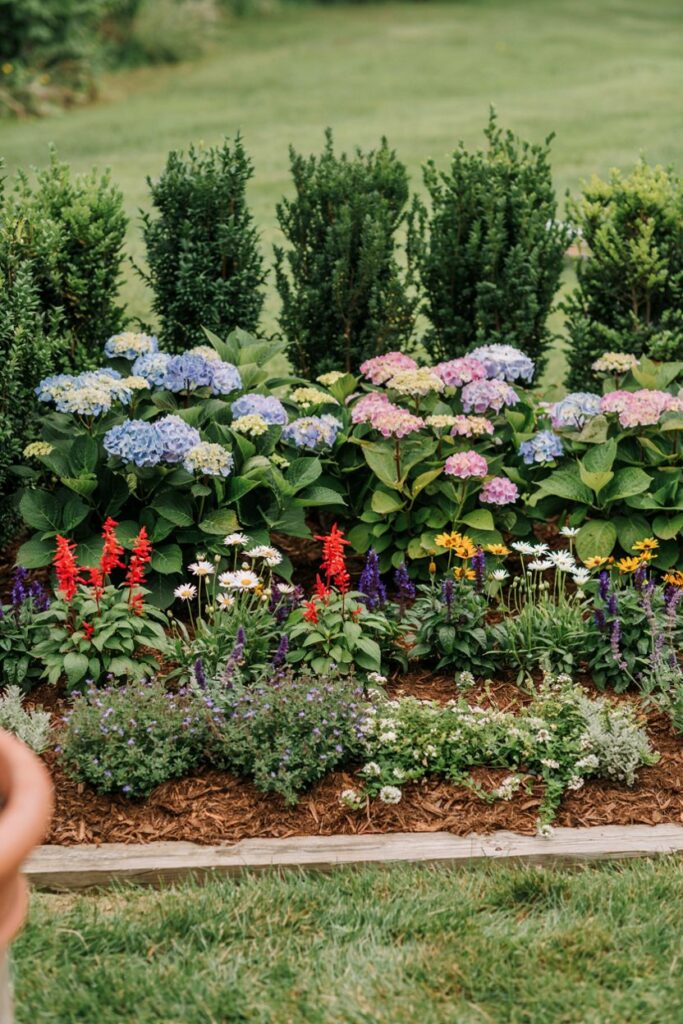
Layering plants is one of the easiest ways I create depth in a front yard. Instead of planting everything at the same height, I arrange taller shrubs near the house, medium plants in the center, and low-growing flowers or groundcovers along the edges.
Insight: Professional landscape designers often use three planting layers because they create natural depth and improve the overall appearance from the street.
I also pay attention to leaf texture when selecting plants. Mixing broad leaves with fine foliage keeps the garden visually interesting without making it feel overcrowded.
Pro Tip: Combining evergreen shrubs with flowering perennials provides year-round structure while adding seasonal color.
Finishing the front edge with low-growing plants creates a smooth transition into the lawn. This simple detail makes flower beds appear fuller and helps hide exposed mulch around the borders.
Fact: Well-layered landscapes can make smaller front yards appear larger by creating visual depth.
4Clean Edging with Metal Borders
Clean landscape edges make a bigger difference than many homeowners expect. I like installing metal edging because it keeps grass from spreading into flower beds while giving the entire yard a neat, finished appearance.
Insight: Steel edging often lasts for decades with minimal maintenance, making it a worthwhile long-term investment.
Unlike plastic edging, quality metal borders stay securely in place through changing seasons. They also bend easily around curves, allowing the garden beds to keep smooth, professional-looking lines.
Pro Tip: Installing edging flush with the soil allows lawn mowers to pass over it without damaging the border.
Once the edging is installed, maintaining flower beds becomes much easier because mulch stays contained and trimming around the edges takes far less time.
Fact: Clearly defined landscape borders improve curb appeal by creating contrast between lawns and planting beds.
5Small Ornamental Tree Focal Point
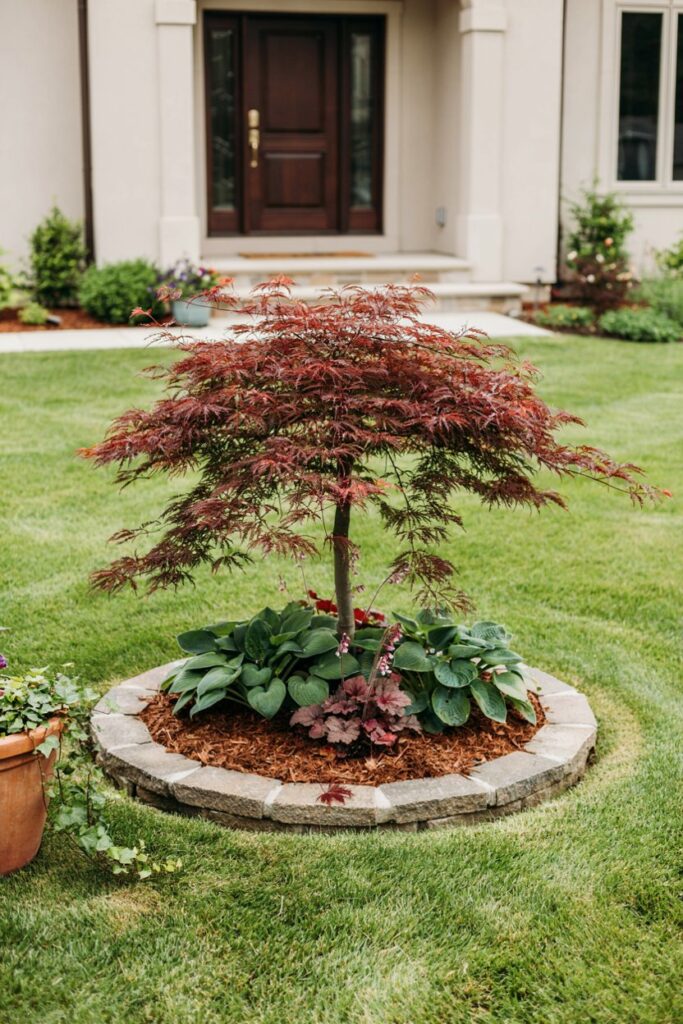
Adding one ornamental tree is one of my favorite ways to give a front yard a natural focal point. A carefully placed tree brings balance to the landscape without making the yard feel crowded.
Insight: Small ornamental trees provide year-round interest through flowers, colorful foliage, decorative bark, or attractive branching patterns.
I usually recommend compact varieties that fit the available space and won’t interfere with sidewalks or foundations as they mature. Choosing the right size from the beginning prevents expensive maintenance later.
Pro Tip: Plant your tree slightly off-center instead of directly in the middle of the lawn for a more natural and professionally designed look.
A mulch ring around the base protects the trunk while keeping moisture in the soil. I also enjoy adding shade-loving perennials around the tree to create a finished planting bed that blends beautifully into the rest of the landscape.
Fact: Healthy mature trees can increase residential property values while improving energy efficiency by providing natural shade.
6High-Impact Seasonal Flower Colors
I like planning my flower beds so they offer color throughout the year instead of looking great for only one season. Choosing blooms that flower at different times keeps the front yard fresh and welcoming from spring through fall.
Insight: Landscapes with year-round seasonal interest often leave a stronger first impression than gardens that peak for only a few weeks.
I usually combine bright spring flowers, colorful summer perennials, and rich autumn blooms to create continuous visual appeal. Grouping flowers in clusters instead of scattering them makes the colors look bolder and more intentional.
Pro Tip: Plant flowers in groups of three or five to create fuller displays that are easier to notice from the street.
When selecting colors, I consider my home’s exterior first. Coordinating flower shades with siding, brick, or trim creates a balanced landscape instead of one that feels overly busy.
Fact: Repeating the same flower colors throughout the yard creates visual unity and makes landscaping appear professionally designed.
7Dark Mulch for Visual Contrast
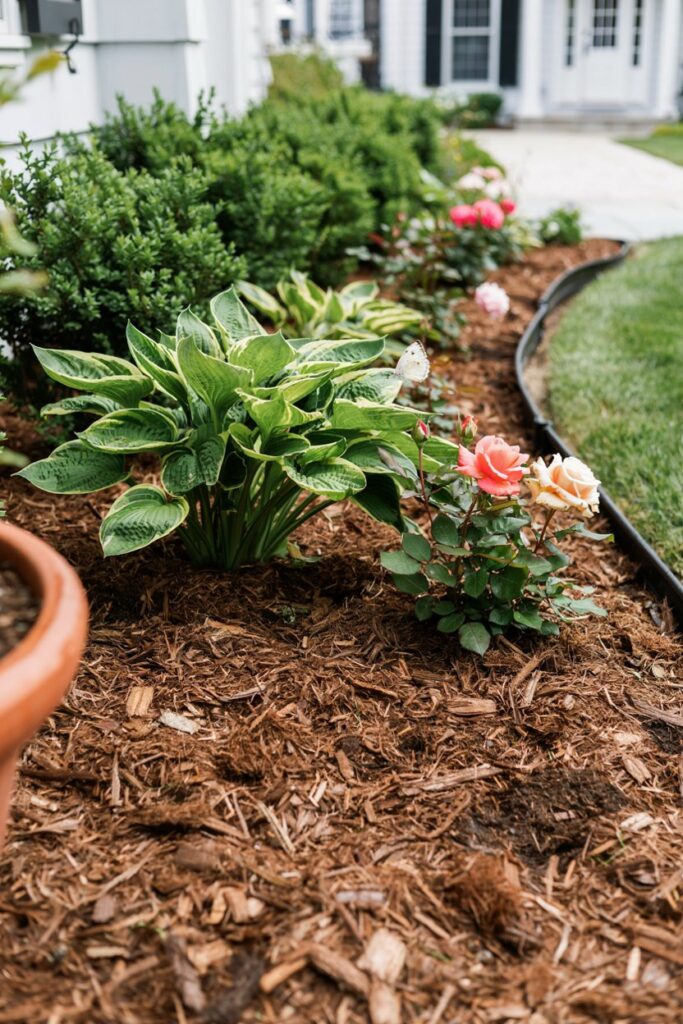
One of the simplest upgrades I recommend is replacing faded mulch with a rich dark brown or black option. Dark mulch highlights plants, keeps flower beds looking tidy, and creates beautiful contrast against green foliage.
Insight: Fresh mulch instantly refreshes planting beds without requiring major landscaping changes, making it one of the most budget-friendly improvements.
I prefer natural hardwood mulch because it breaks down gradually while improving soil quality. It also looks more natural over time than heavily dyed alternatives that can fade unevenly.
Pro Tip: Apply about 2 to 3 inches of mulch to help retain moisture while preventing most weeds from growing.
Dark mulch also helps flowers, shrubs, and ornamental grasses stand out more clearly, giving the entire landscape a cleaner and more polished appearance.
Fact: Mulch helps regulate soil temperature, keeping roots cooler during summer and warmer during colder months.
8Planting Local Native Species
Whenever possible, I include native plants because they naturally adapt to local weather and soil conditions. They usually require less watering, fewer fertilizers, and far less maintenance than many imported ornamental plants.
Insight: Native plants support local birds, butterflies, and pollinators, helping create a healthier backyard ecosystem.
I enjoy mixing native flowering plants with shrubs and ornamental grasses to create landscapes that look beautiful while staying practical. This combination adds texture, seasonal color, and dependable performance.
Pro Tip: Visit a local nursery for recommendations since native plant varieties differ by region and climate.
Besides reducing maintenance, native landscapes often stay healthier during droughts because they’re already adapted to local rainfall patterns.
Fact: According to conservation experts, native plants provide essential food and shelter for many beneficial pollinators.
9Low Water Xeriscape Rock Garden
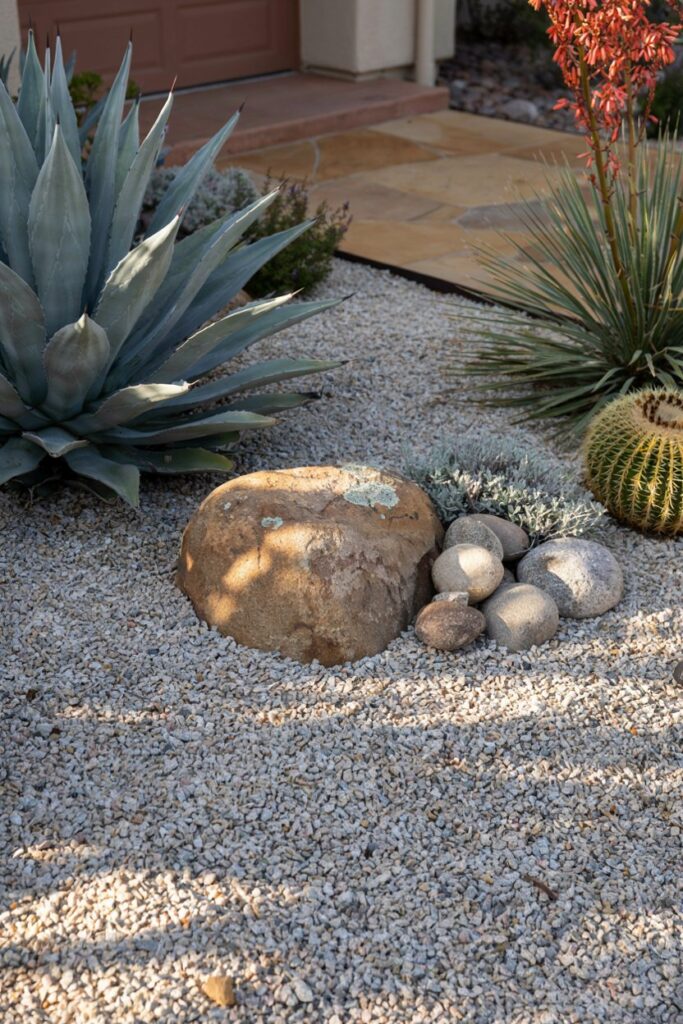
If saving water is a priority, I think a xeriscape garden is one of the smartest landscaping investments. Replacing large sections of lawn with decorative stone and drought-tolerant plants creates an attractive yard that needs much less care.
Insight: Xeriscaping can significantly reduce outdoor water use compared to traditional grass lawns, especially in dry climates.
I like combining decorative gravel, natural boulders, and hardy plants to add texture without creating extra maintenance. Mixing different rock sizes also helps the landscape feel more natural.
Pro Tip: Install a quality weed barrier before adding gravel to reduce future maintenance and keep weeds under control.
Choosing drought-resistant plants means spending less time watering while still enjoying a landscape that looks attractive throughout the year.
Fact: Many drought-tolerant plants develop deeper root systems, allowing them to survive extended dry periods more effectively.
10Tiered Retaining Wall Garden Beds
Sloped front yards don’t have to be difficult to landscape. I like using retaining walls to create level planting areas that are easier to maintain while adding visual interest to the property.
Insight: Retaining walls help reduce soil erosion while improving drainage on sloped landscapes.
I choose wall materials that match the home’s exterior, such as natural stone or concrete blocks. Adding cascading plants along the edges softens the hard surfaces and creates a more balanced appearance.
Pro Tip: Plant moisture-loving flowers on lower levels and drought-tolerant plants on higher tiers where soil drains more quickly.
Breaking a slope into multiple planting levels creates depth and allows each section to showcase different flowers, shrubs, or ornamental grasses without making the yard feel crowded.
Fact: Well-built retaining walls not only improve curb appeal but can also extend the usable space in sloped front yards.
11Groundcover Instead of Traditional Lawn
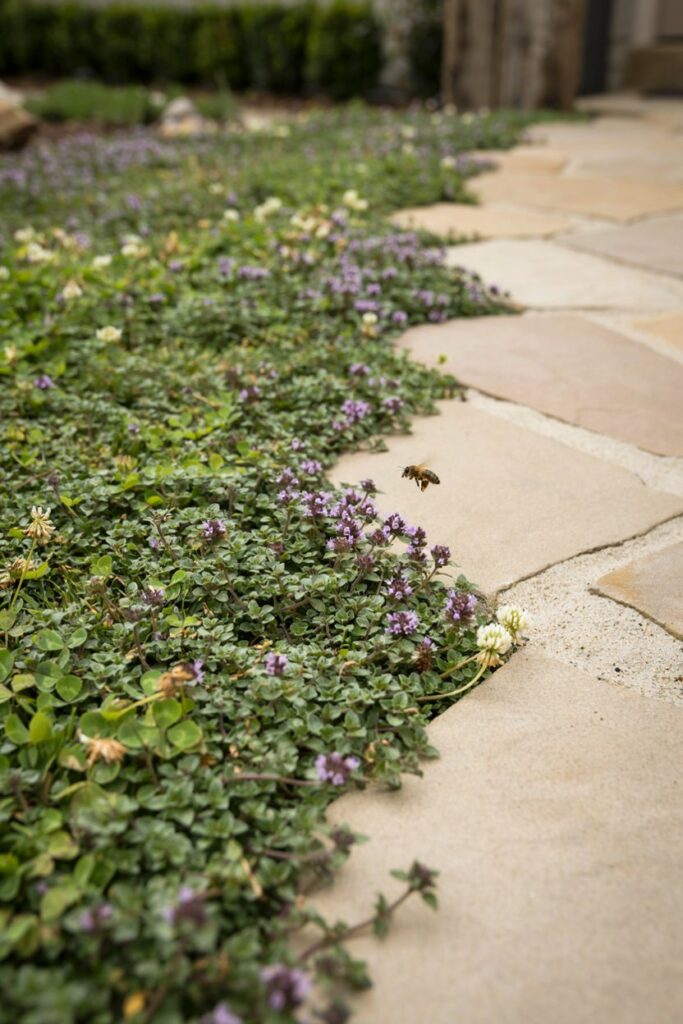
I like replacing difficult lawn areas with groundcover because it cuts down on mowing while keeping the yard full of greenery. Low-growing plants spread naturally, cover bare soil, and create a softer landscape that needs less upkeep.
Insight: Groundcovers help reduce weed growth by covering exposed soil and limiting the amount of sunlight weeds receive.
For sunny areas, I often choose creeping thyme or microclover, while shade-loving varieties work better beneath trees. Picking the right plant for each location keeps the landscape healthy without constant maintenance.
Pro Tip: Give new groundcover enough space to spread naturally instead of planting it too closely together.
Once established, groundcover creates a lush appearance that stays attractive through much of the growing season and reduces the amount of lawn you need to maintain.
Fact: Replacing even part of a traditional lawn can lower water use and reduce weekly yard maintenance.
12Modern Geometric Concrete Planters
Concrete planters are one of my favorite ways to give a front entrance a clean and modern appearance. Their simple shapes pair beautifully with colorful plants and add structure without making the space feel crowded.
Insight: Large planters naturally draw attention toward the front door, making the entrance feel more inviting.
I usually group planters of different heights together to create depth while keeping the finish consistent. Planting ornamental grasses, evergreen shrubs, or architectural succulents adds texture without overwhelming the design.
Pro Tip: Choose oversized containers whenever possible because they hold moisture longer and create greater visual impact.
Another advantage is their durability. Quality concrete planters stay stable in strong winds and continue looking attractive for many years with very little maintenance.
Fact: Larger containers allow stronger root development, helping plants stay healthier during hot weather.
13Large Decorative Boulders and Gravel
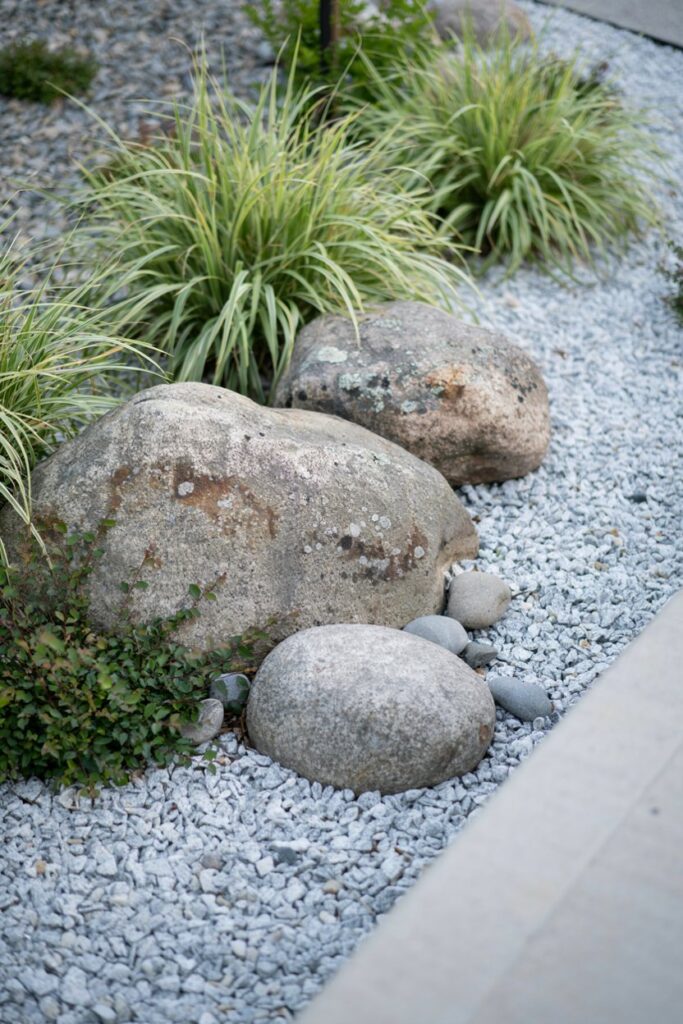
Natural stone adds character that plants alone cannot achieve. I often use decorative boulders and gravel to create focal points while reducing areas that require constant watering or trimming.
Insight: Using rocks of different sizes creates a landscape that looks more natural than placing stones of identical dimensions.
I partially bury larger boulders so they appear settled into the landscape rather than sitting on top of the soil. Mixing smooth river rock with rough stone also adds texture and visual contrast.
Pro Tip: Arrange boulders in groups of three or five for a balanced layout that feels more organic.
Matching stone colors with your home’s exterior helps tie the entire landscape together while creating a timeless design.
Fact: Stone landscaping requires very little maintenance and can last for decades without needing replacement.
14Functional Rain Garden Installation
A rain garden is a practical way I manage excess water while adding attractive plants to the front yard. It collects rainwater naturally and helps reduce runoff after heavy storms.
Insight: Rain gardens help filter pollutants from stormwater before they reach nearby waterways.
I recommend selecting moisture-loving native plants that can handle both wet and dry conditions. Preparing the soil correctly allows water to drain efficiently while keeping plant roots healthy.
Pro Tip: Position your rain garden where water naturally flows, but keep it several feet away from your home’s foundation.
Besides improving drainage, a well-designed rain garden becomes a colorful feature that supports birds, butterflies, and other beneficial wildlife.
Fact: Properly designed rain gardens can absorb thousands of gallons of rainwater each year, depending on their size and local rainfall.
15Trellis or Arbor Entryway Accent
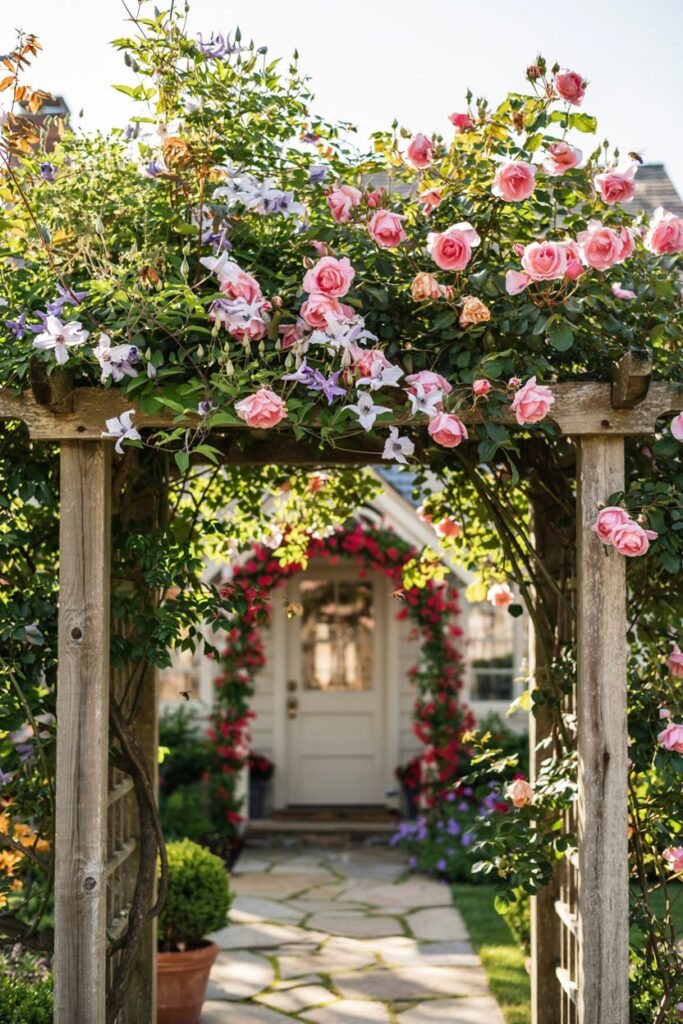
Adding a trellis or arbor is one of the easiest ways I create a more welcoming entrance. It adds height, frames the walkway, and makes the path to the front door feel more inviting.
Insight: Vertical garden features help smaller front yards appear larger by drawing the eye upward.
I enjoy pairing wooden or metal structures with climbing plants like clematis, jasmine, or climbing roses. As the plants mature, they soften the structure and add seasonal beauty.
Pro Tip: Install the trellis securely before planting climbing vines to avoid disturbing established roots later.
Whether your home has a modern or traditional style, a simple arbor creates a memorable entrance that adds charm without requiring a major landscaping project.
Fact: Vertical gardening makes better use of limited space while increasing visual interest throughout the landscape.
16Dramatic Front Door Container Gardens
I love using oversized containers around the front door because they instantly make the entrance feel more polished. A pair of matching planters creates balance while giving me the flexibility to update the display with each season.
Insight: Large containers naturally become focal points and make front entrances appear more welcoming.
I usually combine evergreen plants with colorful flowers and trailing greenery for a layered look. Keeping the planter colors simple allows the plants to stand out without making the entrance feel crowded.
Pro Tip: Use the “thriller, filler, and spiller” planting method to create containers that look full from every angle.
Choosing weather-resistant containers also means I can enjoy the same planters for years with only seasonal plant changes.
Fact: Large planters hold moisture longer than smaller pots, helping plants stay healthier during hot weather.
17Fragrant Herbs and Scented Plants
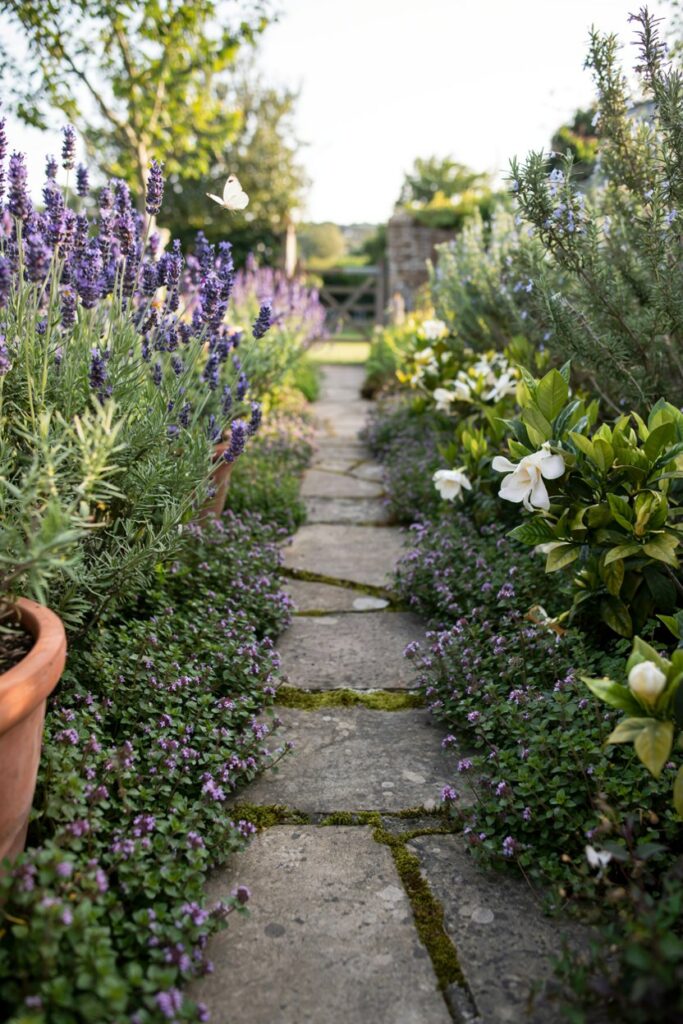
A beautiful landscape should smell just as inviting as it looks. I enjoy planting fragrant herbs and flowering shrubs near walkways so every visit begins with fresh natural scents.
Insight: Fragrant plants add another layer of enjoyment without taking up extra space in the landscape.
Lavender, rosemary, thyme, and gardenias are some of my favorite choices because they combine attractive foliage with pleasant fragrance. Placing them close to entry paths allows the scent to be noticed naturally.
Pro Tip: Plant scented varieties where they’ll receive enough sunlight to encourage stronger blooms and fragrance.
Besides adding curb appeal, many aromatic herbs also attract helpful pollinators that benefit the rest of the garden.
Fact: Bees and butterflies are naturally attracted to many flowering herbs, helping improve pollination throughout the landscape.
18Welcoming Front Yard Seating Nook
I believe a front yard should be enjoyed instead of simply admired from a distance. Even a small seating area creates a comfortable place to relax while making the home feel warm and inviting.
Insight: Functional outdoor spaces encourage homeowners to spend more time outside and enjoy their landscape.
A pair of chairs with a small table is often enough to create a cozy conversation area. Adding nearby shrubs or flowers provides privacy while keeping the space connected to the rest of the yard.
Pro Tip: Choose outdoor furniture made from weather-resistant materials to reduce maintenance throughout the year.
Simple additions like outdoor cushions or potted plants can make the seating area feel complete without increasing the budget significantly.
Fact: Outdoor living spaces continue to be one of the most desirable features for many homebuyers.
19Pathway and Accent Spot Lighting
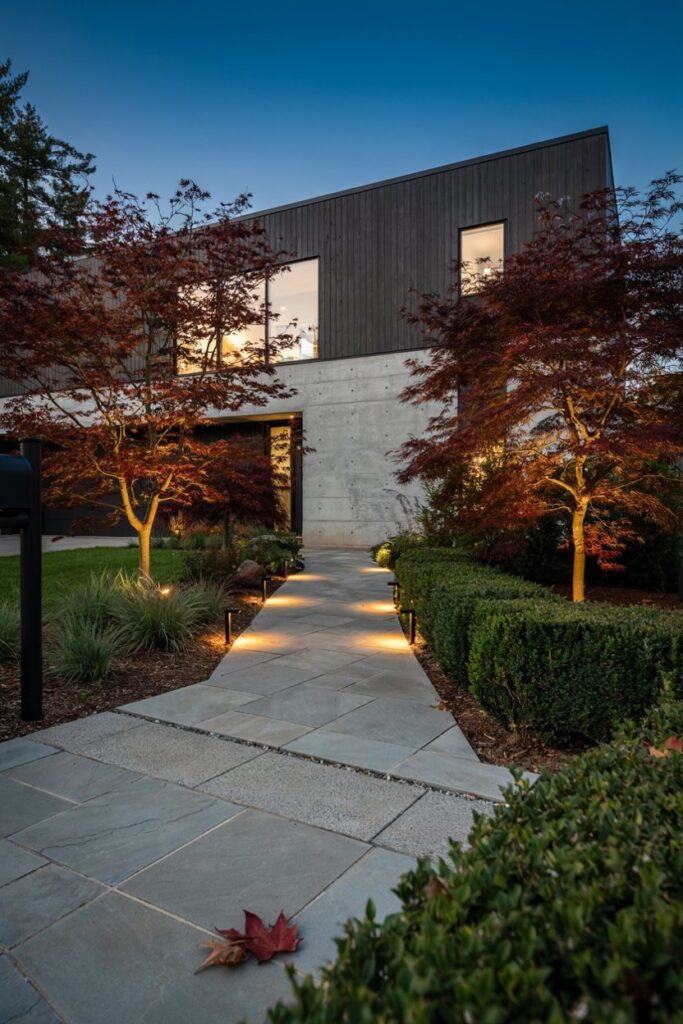
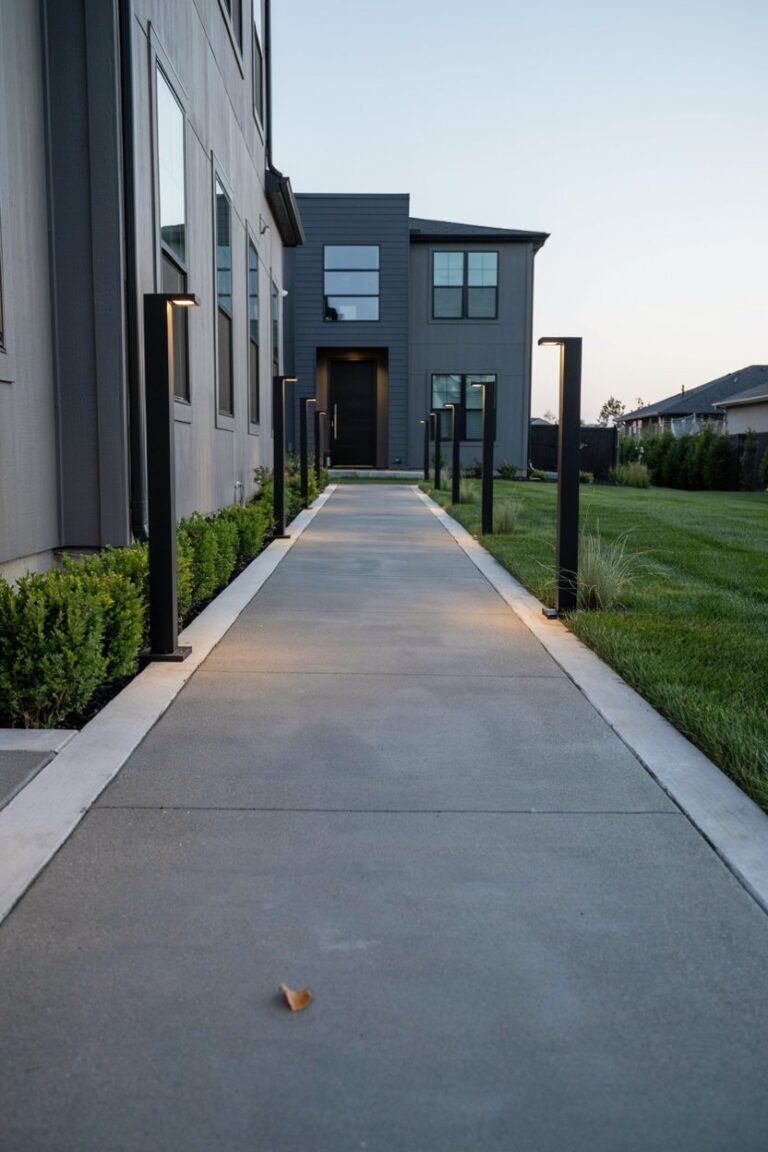
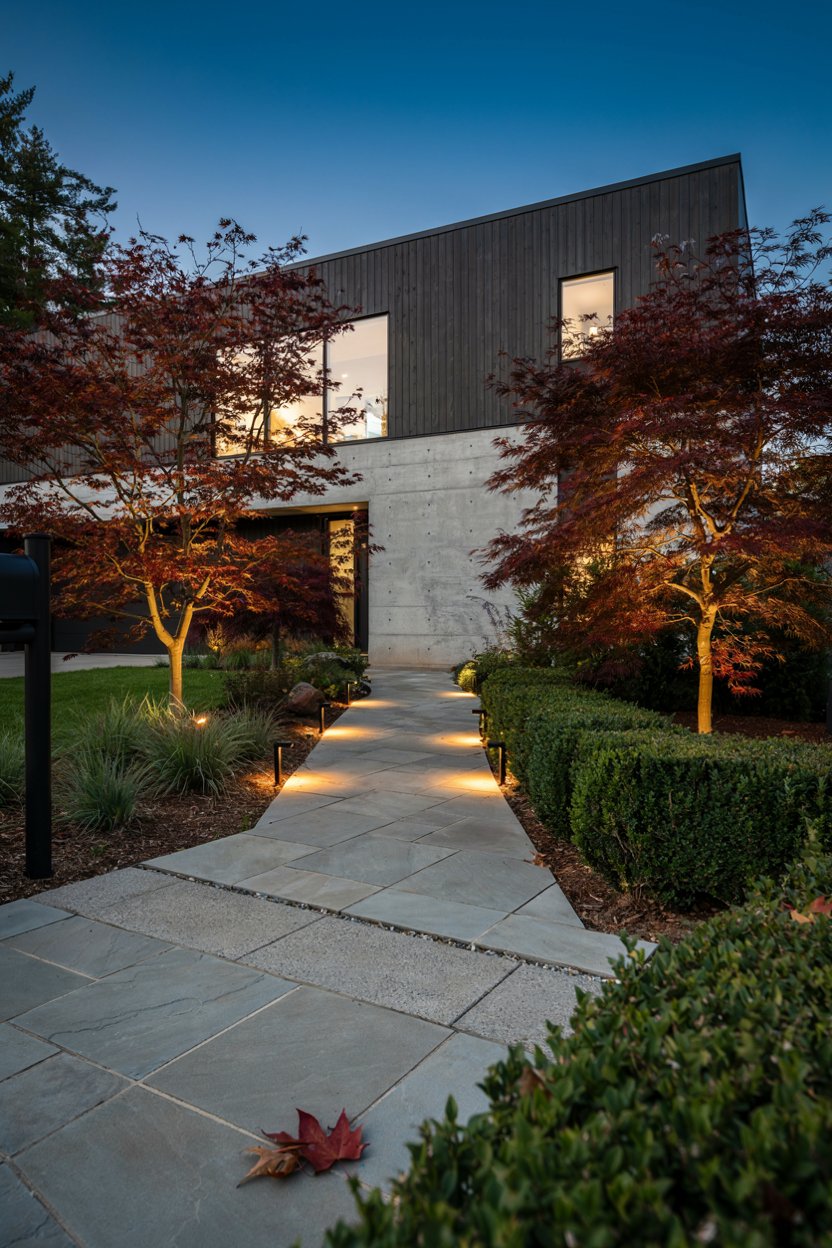
Good outdoor lighting completely changes the appearance of a front yard after sunset. I always include pathway lighting because it improves safety while highlighting important landscape features.
Insight: Layered landscape lighting creates depth and makes homes appear more welcoming during the evening.
Instead of placing lights in perfectly straight lines, I stagger them naturally along the walkway. I also use spotlights to highlight ornamental trees, stone walls, or architectural details around the entrance.
Pro Tip: Choose warm white LED lights around 2700K–3000K for a soft, welcoming glow.
Quality fixtures made from brass or copper last longer outdoors and develop an attractive finish that blends naturally into garden beds.
Fact: LED landscape lights use significantly less electricity than traditional outdoor bulbs while lasting much longer.
20Illuminated House Number Display
An illuminated house number is a small upgrade that makes a surprisingly big difference. It improves visibility for visitors while adding a clean, modern finishing touch to the front entrance.
Insight: Clearly visible house numbers help emergency responders, delivery drivers, and guests locate your home more quickly.
I prefer simple fonts with warm lighting because they’re easy to read from the street without looking overly bright. Solar-powered options also make installation much easier when electrical wiring isn’t available.
Pro Tip: Mount illuminated house numbers where they remain visible from both the sidewalk and the street.
Choosing durable weather-resistant materials ensures the display continues looking attractive through changing seasons with very little maintenance.
Fact: Proper exterior lighting improves both curb appeal and nighttime safety around the home’s entrance.
Conclusion
Refreshing a front yard doesn’t require a complete makeover to make a noticeable difference. I’ve found that combining practical improvements like walkways, layered planting, lighting, and seasonal color creates a landscape that stays attractive throughout the year. Start with one or two projects that fit your budget, then build on them over time to create a front yard that feels welcoming, easy to maintain, and adds lasting value to your home.
Many of the ideas I share are inspired by real-life experimentation. I often test décor concepts in my own living spaces and explore practical ways they can be applied in everyday homes. I also gather insights from working with homeowners who want to improve the comfort, beauty, and functionality of their spaces.
I share practical ideas for improving living rooms, bedrooms, and overall home aesthetics using simple design principles.
I explore creative ways to upgrade outdoor spaces including patio décor, small backyard styling, and relaxing outdoor setups.
I provide ideas for kitchen organization, décor accents, and functional layouts that make kitchens more beautiful and practical.
The concepts shared here are based on ideas I have personally experimented with or studied through real home décor improvements.