30 Rustic Old Farmhouse Kitchen Ideas for Vintage Style

I’ve always liked old farmhouse kitchens because they feel practical, warm, and lived-in rather than overly decorated. In this guide, I’m sharing 30 rustic old farmhouse kitchen ideas using natural wood, vintage appliances, antique pieces, farmhouse sinks, muted colors, brick, open shelving, and simple textiles. These ideas can work in both older homes and newer kitchens when the materials and details are chosen carefully.
The best part is that I don’t think you need to copy an entire historic kitchen to get this look. I can create the same feeling by combining a few aged materials, useful vintage pieces, warm lighting, and colors such as cream, sage, navy, brown, and soft white. The original inspiration includes these same broad design elements, from exposed beams and barn doors to butcher-block surfaces and antique dishware.
Key Takeaways
- Natural wood, aged finishes, brick, stone, and iron are strong choices for an old farmhouse kitchen.
- I can add vintage character with smaller details such as antique dishes, old-style lighting, open shelves, and hardware.
- A farmhouse sink, butcher-block island, wood flooring, or reclaimed beams can become a main focal point.
- Soft neutrals, sage green, navy, cream, and earthy shades help keep the kitchen warm without making it feel dated.
- I would keep modern appliances and storage where they make daily cooking easier while using vintage details for the visual character.
1. Natural Light Delight

I like using natural light as a major feature in an old farmhouse kitchen because it keeps heavy wood and rustic finishes from making the room feel dark. White walls, wood details, exposed beams, and large windows can work together to create a bright kitchen while still keeping that traditional character.
Pro Tip: If your kitchen has limited daylight, use warm white walls and reflective light-colored surfaces to make the available light travel farther around the room.
2. Sliding Barn Door

A sliding barn door can give a farmhouse kitchen an instant architectural feature without taking up the floor space required by a traditional swinging door. I’d pair reclaimed or stained wood with simple black or iron hardware and use the door for a pantry, laundry area, or utility room.
Fact: Sliding doors are especially useful in tighter layouts because the door panel moves along the wall instead of requiring a clear swing area.
3. Fireplace Nostalgia

I think an old-style fireplace can make a farmhouse kitchen feel connected to the history of the home. If a working fireplace is not practical, I can still create a similar focal point with a brick surround, reclaimed wood mantel, or carefully styled cooking area.
Insight: A fireplace or masonry feature works best when the surrounding finishes stay fairly simple so the architectural element remains the main focus.
4. The Artisan’s Retreat
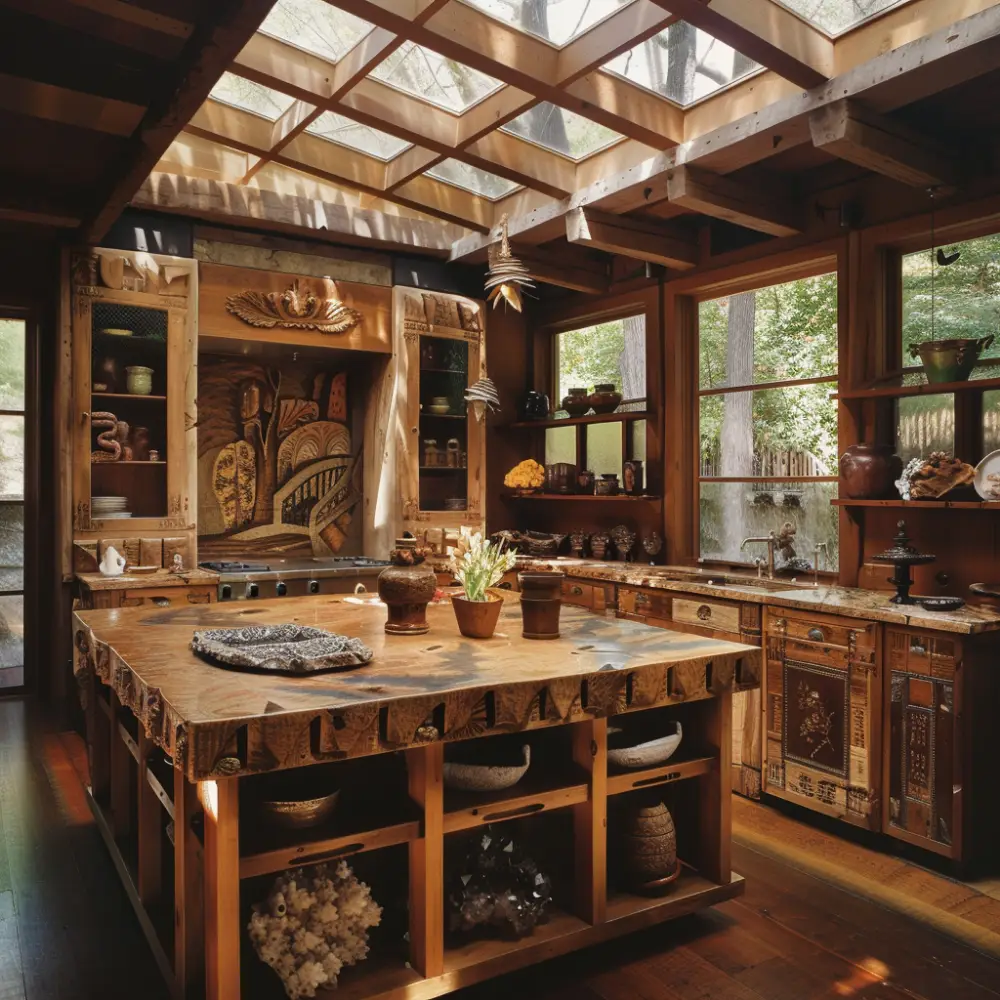
Handmade details give an old farmhouse kitchen a personal quality that mass-produced decoration often misses. I would use reclaimed wood cabinetry, handmade pottery, carved details, or a solid wood island to bring visible craftsmanship into the room.
Pro Tip: Choose one or two handmade materials rather than filling every surface with rustic details, which can make the kitchen feel crowded.
5. Deep Navy AGA Cooker

A deep navy range can become a strong focal point against cream, white, or natural wood cabinetry. I like this approach because the color feels traditional while still giving the kitchen enough contrast to avoid looking washed out.
Fact: Navy works well with warm metals such as brass and copper as well as natural wood, making it an easy accent color for farmhouse kitchens.
6. Antique Dishware and Heirloom Pieces
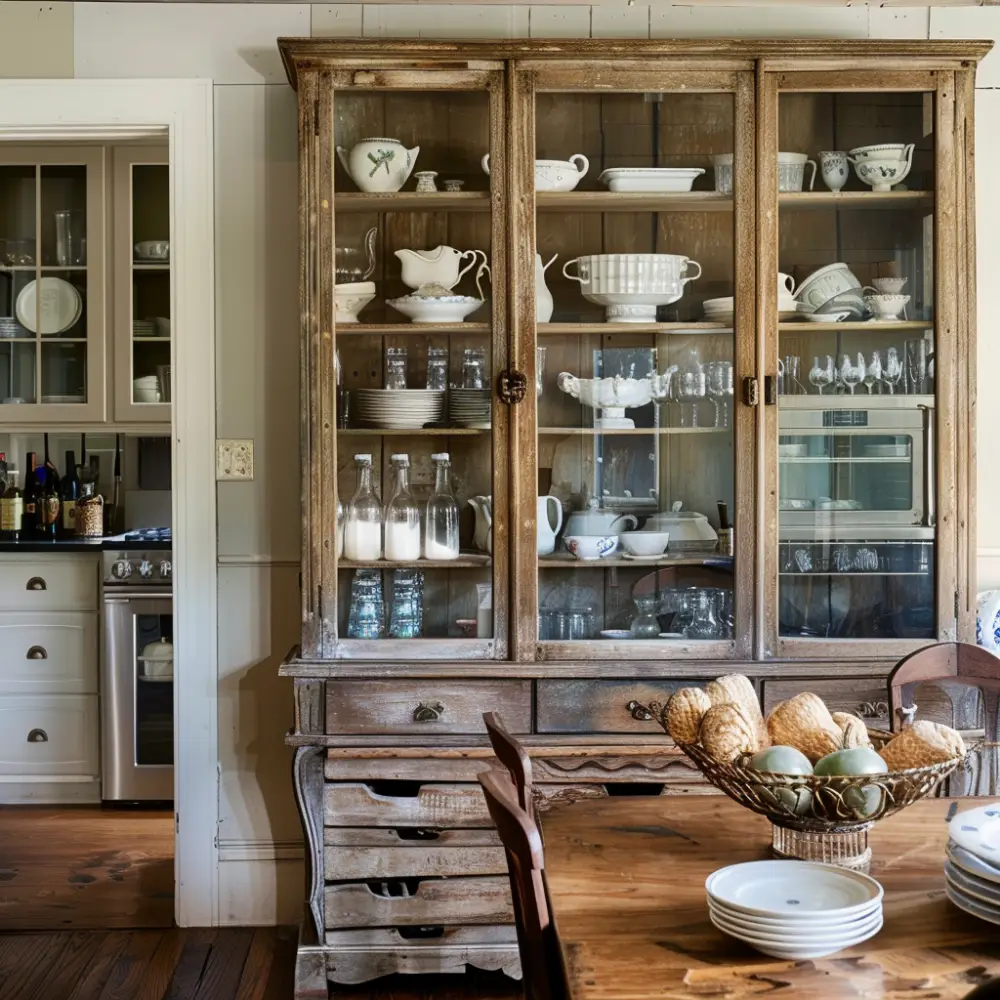
I would use antique plates, old serving bowls, glassware, and family pieces as decoration that still relates to the kitchen’s purpose. Glass-front cabinets and open shelving make these items visible while a freestanding hutch or armoire can add storage.
Pro Tip: Group similar dishes together by color or material so open shelving looks collected rather than cluttered.
7. The Preserver’s Pantry

A pantry styled around preserving and food storage can make an old farmhouse kitchen feel genuinely useful. I like the idea of wooden shelves, glass jars, a farmhouse sink, vintage kitchen tools, and a sturdy prep surface that keeps everyday supplies within easy reach.
Insight: Clear jars are useful for more than appearance because they let you quickly see how much of a dry ingredient remains.
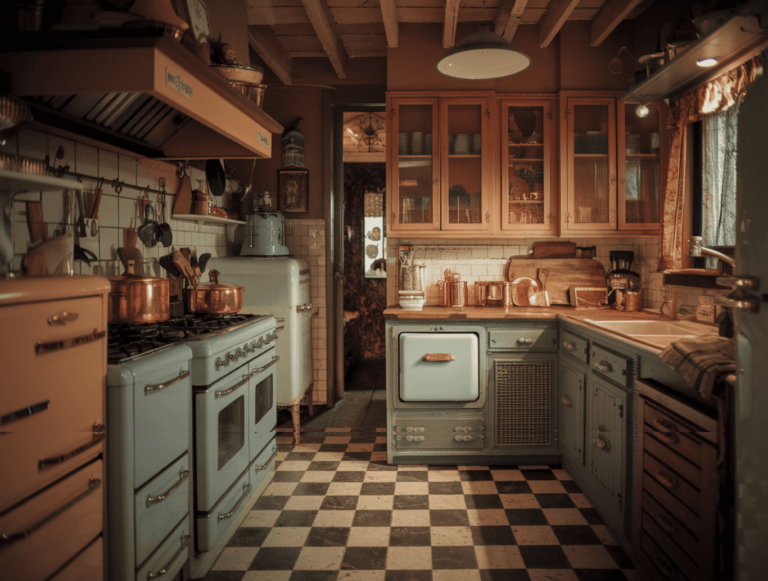
8. Vintage Wedgewood Stove

A restored vintage stove can give the kitchen a strong period feel while becoming a practical centerpiece. I’d balance the appliance with simple subway tile, wood furniture, a farmhouse table, and warm lighting instead of adding too many competing vintage pieces.
Pro Tip: Before buying an antique appliance, check its condition, fuel requirements, ventilation needs, and access to replacement parts.
9. Butcher Block Island

A butcher-block island brings warmth into a kitchen filled with painted cabinets, stone, or tile. I like using a large wood island as both a preparation area and a casual gathering spot, especially when paired with simple wooden chairs or stools.
Fact: Wood countertops require more routine care than many stone surfaces, so I would choose them where their warmth and workability are worth the maintenance.
10. Rustic Charm with Gourmet Flair

I like combining rustic materials with modern cooking equipment when I want the kitchen to look old without sacrificing convenience. Exposed brick, copper accents, iron lighting, leather seating, and a professional range can create that balance without making the room feel like a museum.
Insight: Mixing old-looking finishes with modern appliances is often more practical than trying to make every appliance look antique.
11. Quirky Pendant Lights

Lighting can change the entire mood of a farmhouse kitchen, and I like using pendant fixtures with metal, rope, glass, or aged finishes for extra character. The key is to make sure decorative lighting still provides enough illumination over islands and work surfaces.
Pro Tip: Place task lighting where you actually chop, cook, wash, and prepare food instead of relying only on decorative ceiling fixtures.
12. Tradition with Modern Functionality
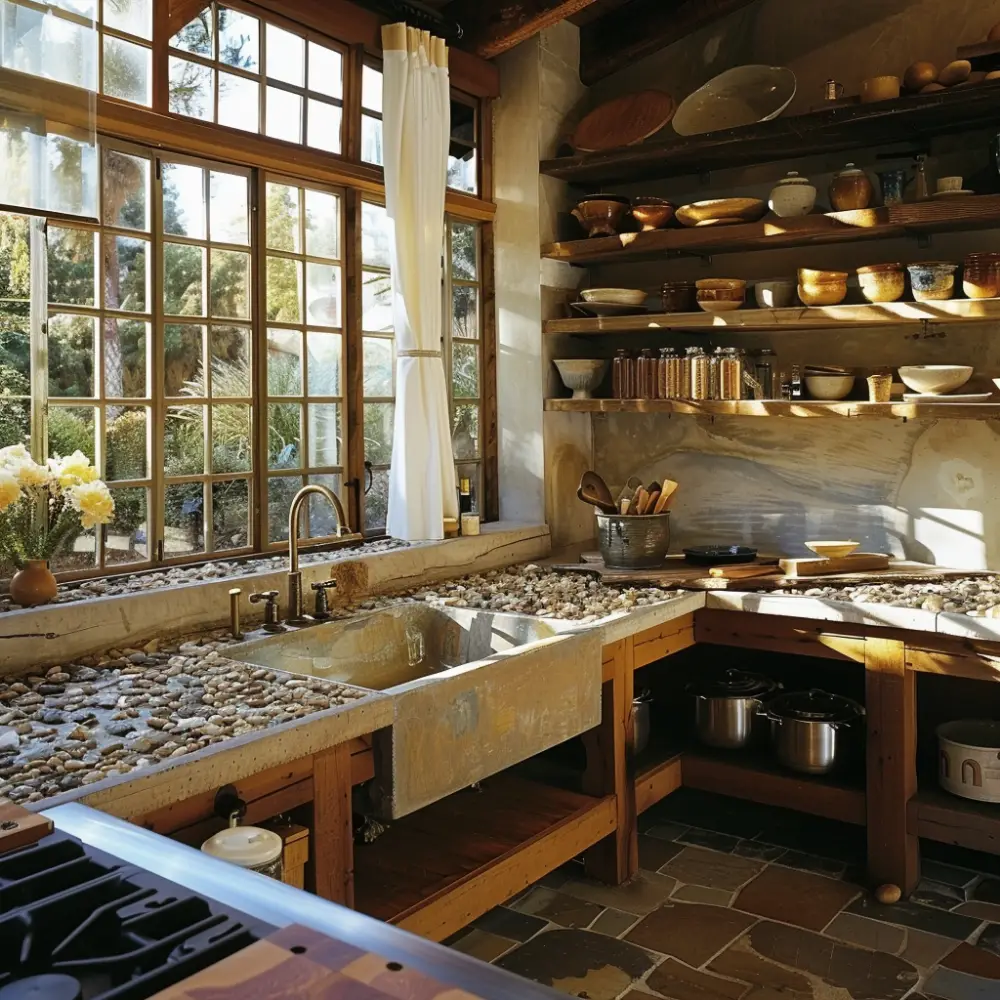
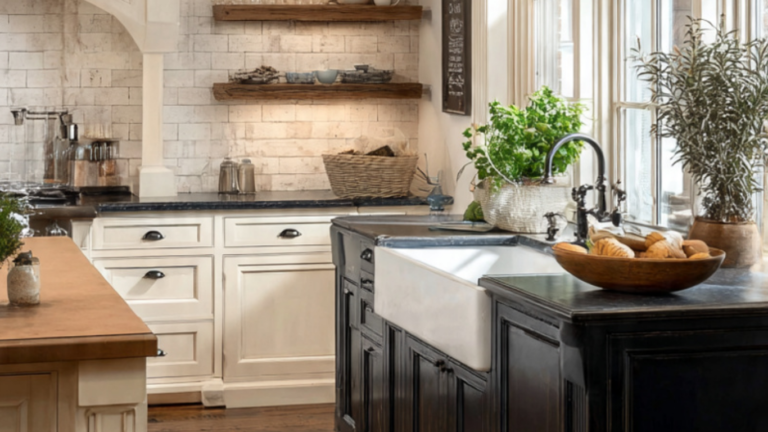
I prefer farmhouse kitchens that look traditional but function like a modern kitchen. An apron-front sink, open shelving, handmade pottery, linen curtains, and natural finishes can provide the vintage look while modern storage and appliances handle everyday tasks.
Fact: An apron-front sink is recognizable by its exposed front panel, which makes it a strong visual feature rather than a hidden fixture.
13. Tribute to The Past

I like letting one or two meaningful older pieces carry the history of the kitchen instead of filling the room with artificial distressing. A restored stove, antique clock, old table, or inherited cabinet can give the space a more believable connection to the past.
Insight: Authentic imperfections often look more natural than deliberately adding too many distressed finishes to new furniture.
14. Hand-Hewn Beams
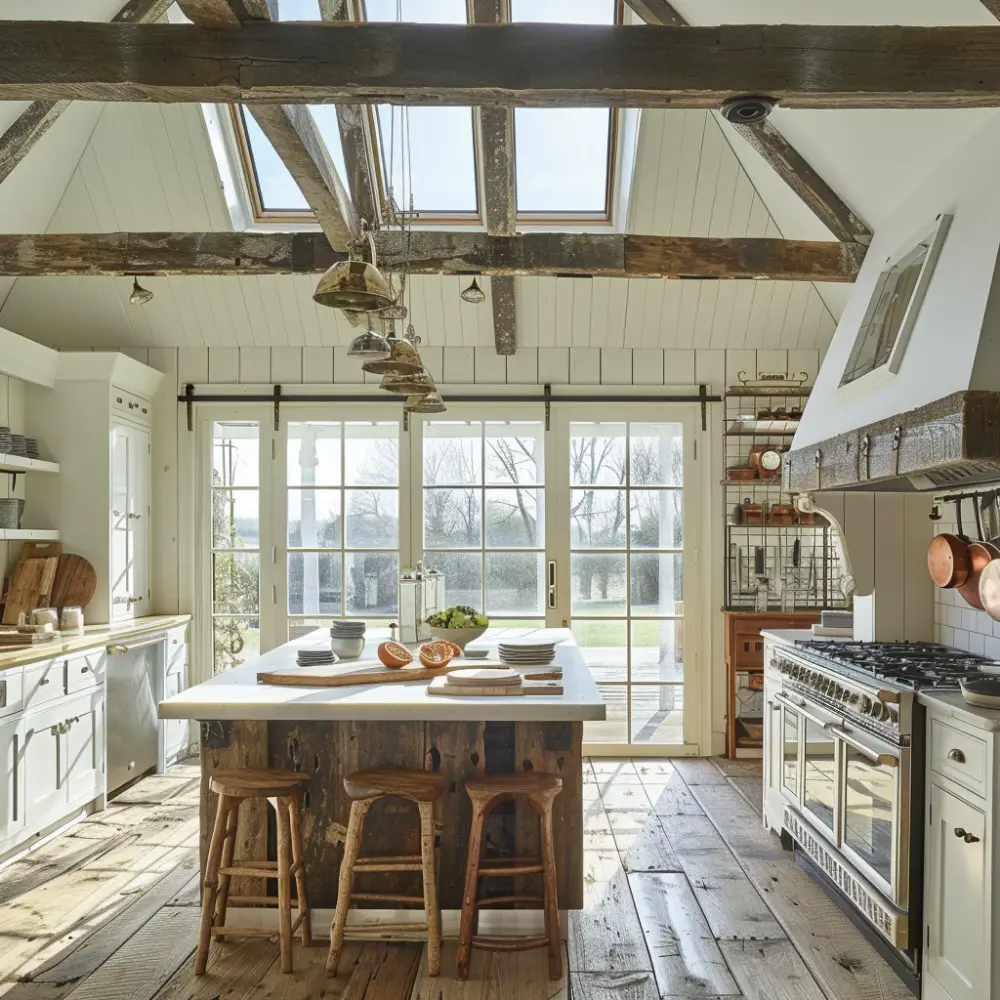
Exposed beams can give a farmhouse kitchen strong architectural character, especially when they are paired with high ceilings, white walls, wood flooring, and simple cabinetry. I would keep the rest of the room fairly calm so the beams do not compete with every other feature.
Pro Tip: If structural beams cannot be exposed safely, decorative faux beams can provide a similar visual effect without altering the home’s structure.
15. Classic Wood Flooring

Wood flooring is one of my favorite ways to add warmth to a farmhouse kitchen because it connects the room visually with the rest of the home. I like combining it with subway tile, an apron-front sink, vintage-style lighting, and cabinetry in cream, white, or natural wood.
Fact: Wood floors need proper sealing and maintenance in kitchens because water from sinks and appliances can cause problems if it sits on the surface.
16. Island Topped with Soapstone
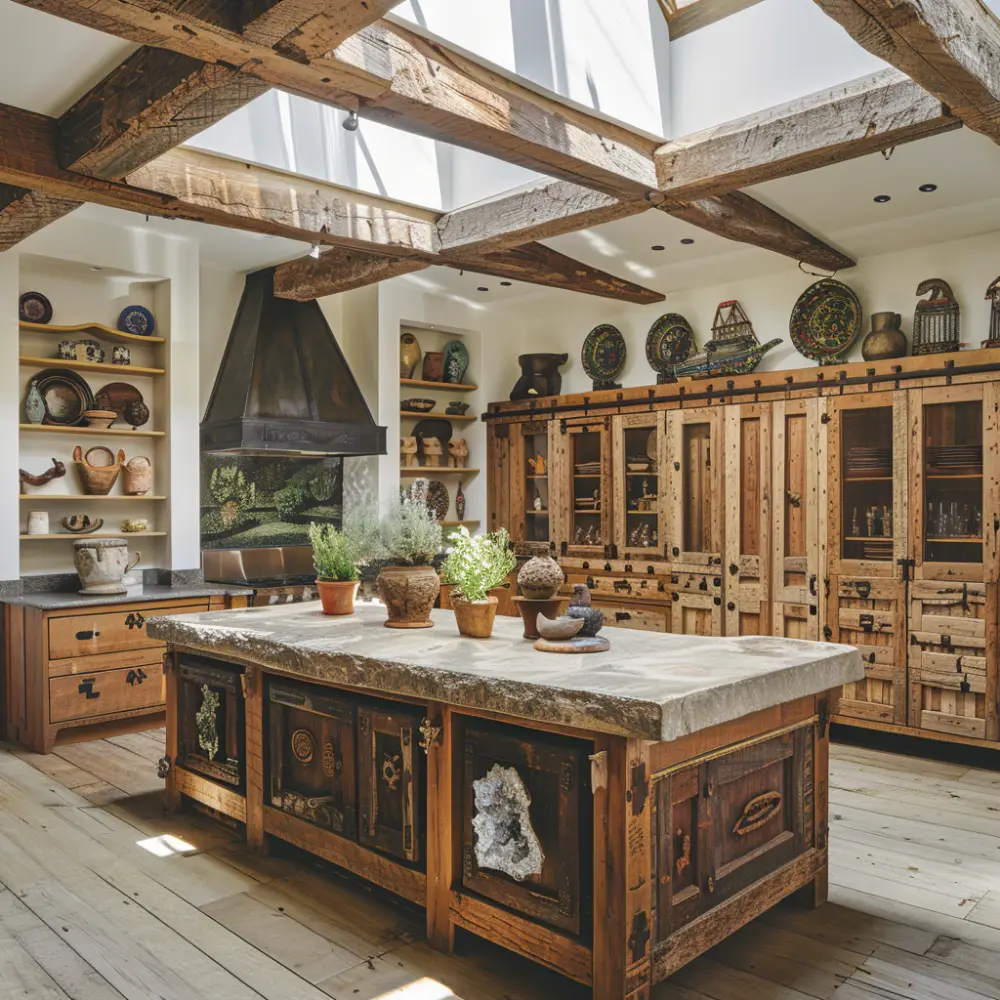
Soapstone can work beautifully with reclaimed wood cabinetry because its soft, natural appearance fits the older farmhouse style. I would use a soapstone-topped island as the main work surface and let pottery, wood shelves, or simple lighting complete the setting.
Pro Tip: Soapstone can develop a natural patina over time, so it suits homeowners who prefer materials that show use rather than stay perfectly uniform.
17. Eclectic Cabinetry

I like mixing cabinet styles when the goal is an older, collected farmhouse appearance. Glass-front uppers, reclaimed pine lowers, vintage knobs, a painted hutch, and visible dishware can make the kitchen feel like it has developed over many years.
Insight: Repeating one finish or color across mismatched cabinets helps different pieces feel connected instead of random.
18. Materials and Textiles Play a Key Role
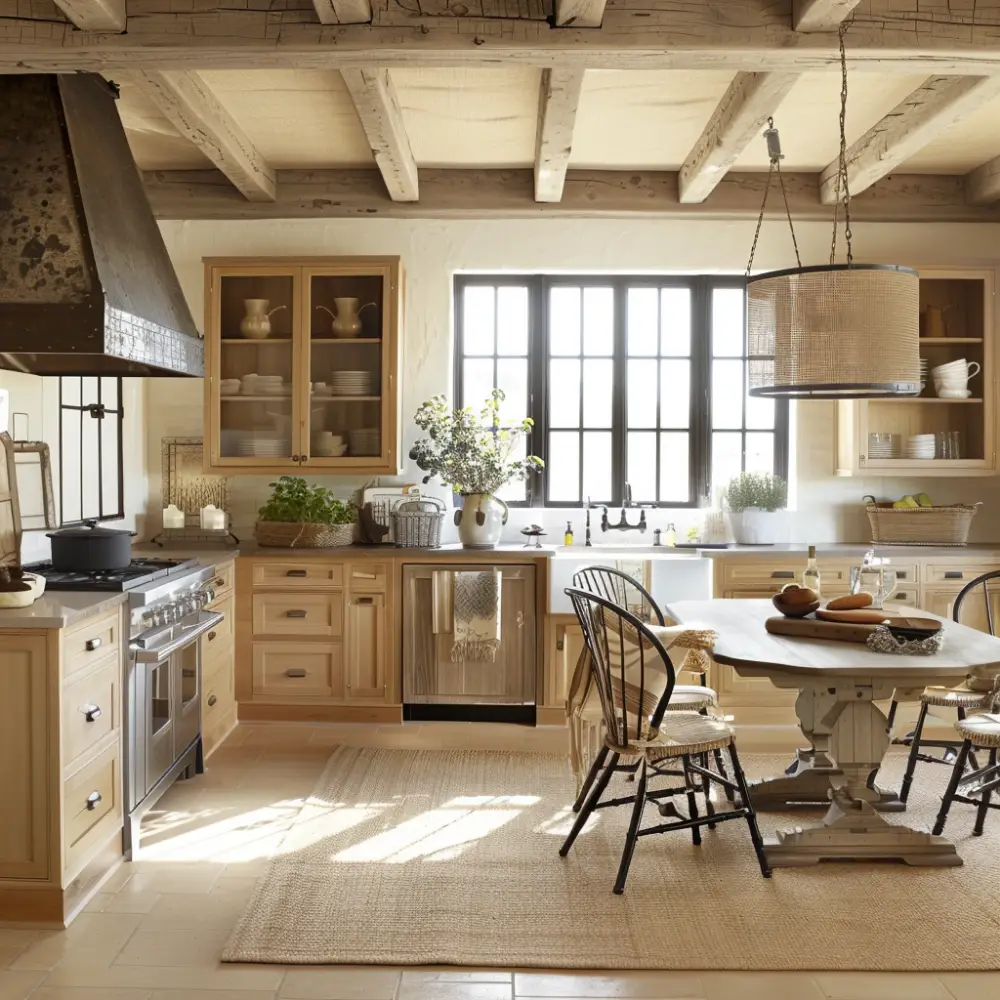
Materials can make a bigger difference than decoration when I’m creating a rustic farmhouse kitchen. Wood, iron, walnut, jute, burlap, cotton, and linen each add texture while keeping the room grounded in natural finishes.
Pro Tip: Use washable rugs and durable fabrics near sinks and cooking areas because farmhouse kitchens tend to be high-traffic spaces.
19. Butcher Block Countertop
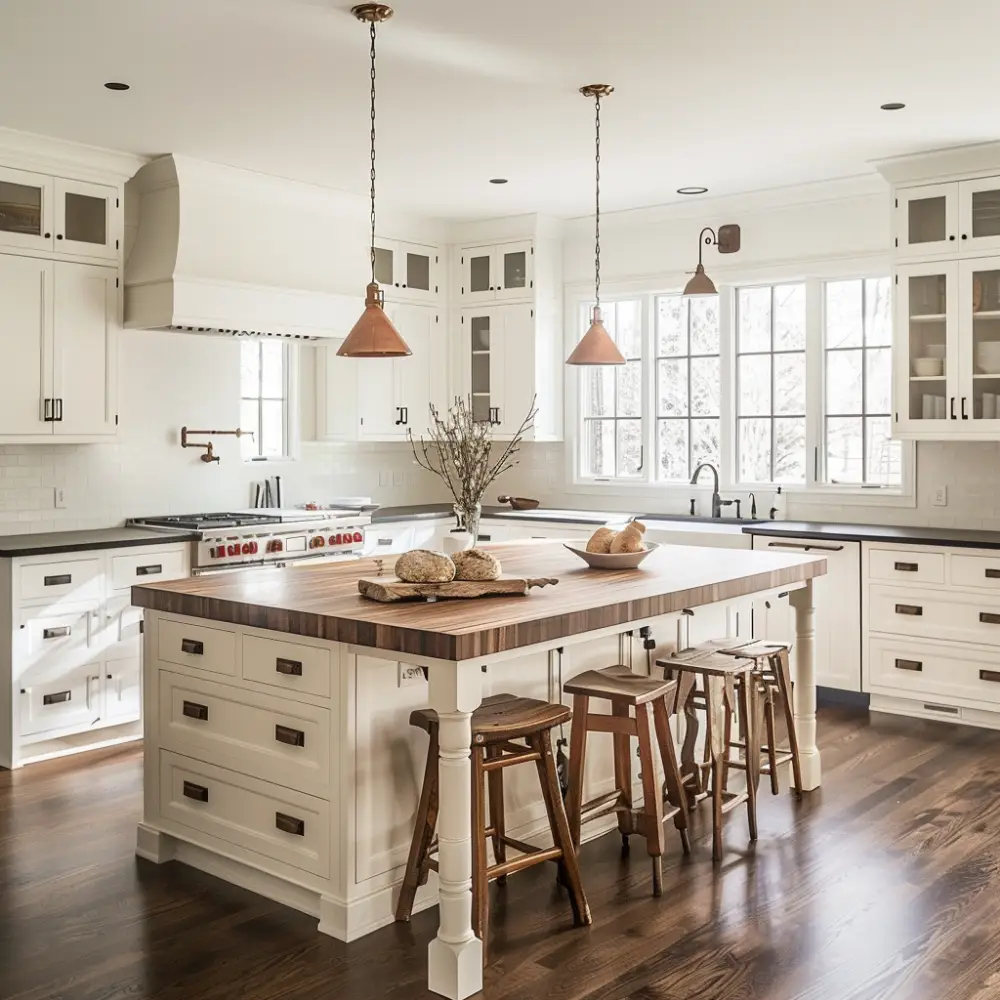
A butcher-block countertop can soften a kitchen filled with painted cabinets and hard surfaces. I like pairing a wood countertop with white or cream cabinetry and using a darker walnut tone when I want more contrast.
Fact: Butcher block can usually be sanded and refinished when properly maintained, which is one reason it works well in a kitchen where some wear is expected.
20. Brick Walls

Exposed or reclaimed brick adds texture and gives a farmhouse kitchen a strong connection to older building materials. I would combine brick with modern appliances, a wood island, and a simple countertop so the room feels comfortable rather than overly rustic.
Insight: If real exposed brick is not available, a carefully chosen brick veneer can create the visual texture while taking up less space.
21. Cozy Corner Dedicated to Weaving

I like the idea of giving a farmhouse kitchen a small area for crafts or other useful activities when the floor plan allows it. An old table, wooden chairs, woven textiles, baskets, or a vintage loom can make an unused corner feel connected to the home’s everyday life.
Pro Tip: Keep craft supplies contained in baskets, cabinets, or drawers so the corner remains useful without interfering with food preparation.
22. The Herbalist’s Sanctuary

A small herb display can bring both color and function into an old farmhouse kitchen. I would use simple shelves, labeled jars, fresh herbs, dried botanicals, and muted green or lavender accents rather than relying on excessive decorative pieces.
Fact: Fresh herbs generally need different storage conditions depending on the variety, so decorative displays should not replace proper food storage.
23. The Gardener’s Haven

I love the connection between a farmhouse kitchen and an outdoor herb or vegetable garden. French doors, terracotta pots, a wooden worktable, garden tools, and a farmhouse sink can make the transition between indoor cooking and outdoor growing feel natural.
Insight: Placing frequently used herbs close to the kitchen makes them easier to harvest while cooking and can reduce the need for a separate indoor herb display.
24. Color Palette Focus

I would start with a quiet base of cream, white, beige, soft gray, or earthy shades and then add sage, navy, or muted green for contrast. Natural wood is especially useful because it adds warmth without introducing another strong color.
Pro Tip: Keep your main finishes neutral and use stronger colors on an island, hutch, curtains, or small accessories so they can be changed later.
25. Green Kitchen Island

A sage or moss-green island can give an old farmhouse kitchen a gentle focal point without overpowering the room. I like combining green with creamy cabinets, terracotta accents, natural wood, beadboard, and soft linen window treatments.
Fact: Muted green works particularly well with warm wood because both colors have natural, earthy qualities.
26. Sense of Warmth and History

Wide-plank floors, an old wooden table, copper cookware, woven baskets, and an iron light fixture can make a kitchen feel established and personal. I would choose pieces that have a purpose rather than adding random antiques simply to make the room look old.
Insight: A few useful vintage pieces usually create more believable character than a large collection of decorative objects.
27. Rustic Charm

I like combining reclaimed wood with smoother materials such as soapstone to keep a rustic kitchen from feeling too rough. A farmhouse sink, whitewashed walls, wooden floors, iron hooks, baskets, and linen textiles can add the right amount of texture.
Pro Tip: When several rustic materials are already present, use one smoother surface such as stone or painted cabinetry to create visual balance.
28. Rustic Elegance Meets Modern Convenience
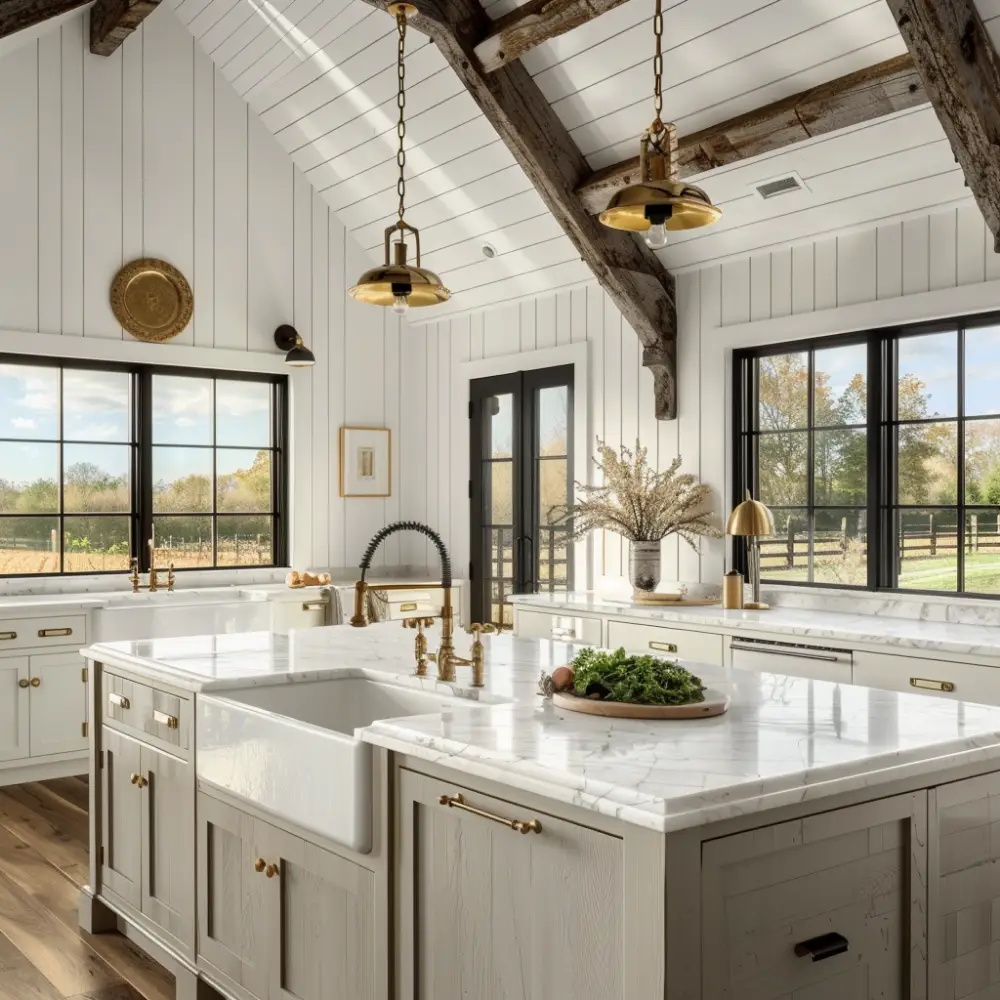
A vaulted ceiling, reclaimed beams, creamy walls, a farmhouse sink, wood island, and classic metal hardware can create a strong old-house foundation. I would then add modern appliances, efficient storage, and practical work zones so the kitchen remains comfortable for daily use.
Fact: A kitchen can look traditionally styled without using historically accurate appliances; layout, materials, proportions, and details often create most of the visual impression.
29. Love for The Outdoors

I like bringing garden elements indoors through herb pots, natural wood, woven baskets, vintage furniture, and large windows. A bay window or bright corner can become a useful place for growing herbs while adding greenery to the kitchen.
Pro Tip: Choose herbs based on the amount of sunlight your window receives rather than choosing plants only because they match the decor.
30. Cozy Kitchen Corner
A small seating corner can make an old farmhouse kitchen feel more welcoming without requiring a large dining area. I like using a built-in banquette or small wooden table with washable cushions, open shelving, jars, and mismatched vintage cups for a relaxed finish.
Insight: A built-in bench can make better use of a tight corner because it can provide seating without requiring the clearance needed around several individual chairs.
Conclusion
I think the strongest old farmhouse kitchens are the ones that feel useful first and decorated second. Natural wood, vintage furniture, farmhouse sinks, aged metals, handmade pieces, soft colors, and practical storage can create the look without making the room feel staged.
I also wouldn’t try to use all 30 ideas at once. I’d choose two or three major features, such as a wood island, farmhouse sink, vintage lighting, or green cabinetry, and then support them with smaller details. That approach keeps the kitchen comfortable, functional, and personal while still giving it the rustic old farmhouse character I want.
Many of the ideas I share are inspired by real-life experimentation. I often test décor concepts in my own living spaces and explore practical ways they can be applied in everyday homes. I also gather insights from working with homeowners who want to improve the comfort, beauty, and functionality of their spaces.
I share practical ideas for improving living rooms, bedrooms, and overall home aesthetics using simple design principles.
I explore creative ways to upgrade outdoor spaces including patio décor, small backyard styling, and relaxing outdoor setups.
I provide ideas for kitchen organization, décor accents, and functional layouts that make kitchens more beautiful and practical.
The concepts shared here are based on ideas I have personally experimented with or studied through real home décor improvements.