14 Kitchen Pantry Storage Ideas
Keeping a pantry organized makes cooking faster, reduces food waste, and helps me use every inch of available storage. In this guide, I’m sharing practical kitchen pantry storage ideas that make everyday items easier to find while creating a cleaner, more functional space. From pull-out shelves to labeled jars and produce storage, these ideas work for both small and large kitchens.
Key Takeaways
- Install pull-out shelves to reach everything easily.
- Store dry goods in matching airtight containers.
- Label jars to avoid mix-ups while cooking.
- Keep heavy items on lower shelves for safety.
- Use walls, drawers, and baskets to maximize storage.
- Create dedicated zones for baking, canned goods, and produce.
- Choose storage solutions that are easy to maintain.
Install Smooth Wooden Pull Out Shelves
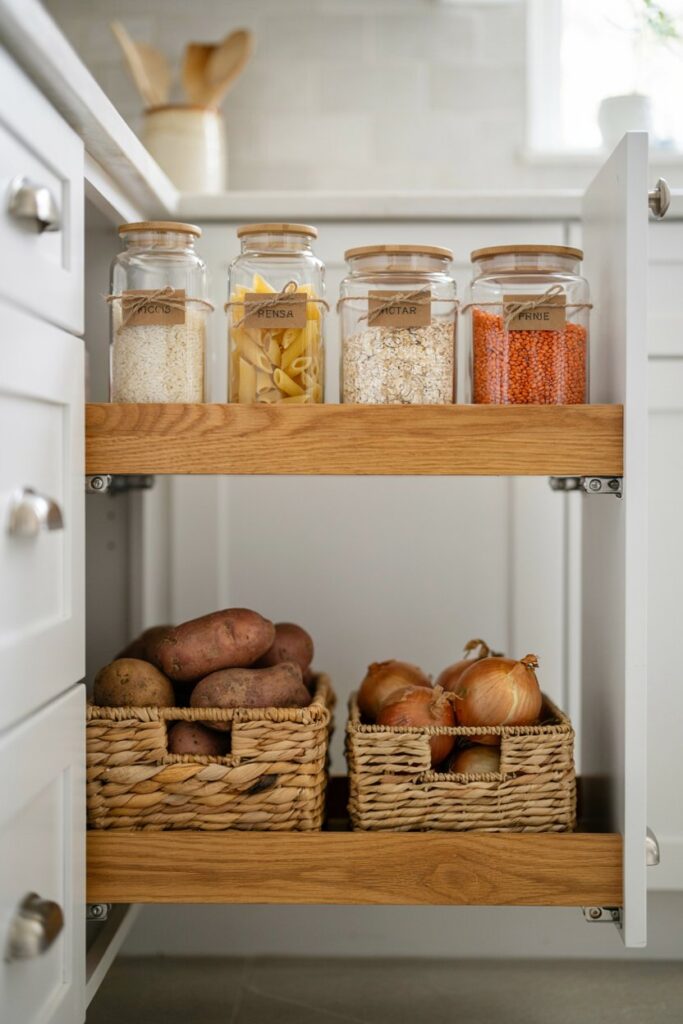
Deep pantry shelves often hide food behind other items, making it easy to forget what I already own. I prefer wooden pull-out shelves because they bring everything forward, making daily cooking much more convenient. Clear containers and baskets also keep ingredients organized.
Pro Tip: Pull-out shelves can increase usable pantry access by making nearly every stored item visible without unloading the shelf.
Hang Decorative Fabric Bags For Recyclables
Reusable grocery bags can quickly become clutter if they are tossed into random cabinets. I like hanging a fabric storage bag inside the pantry so everything stays in one place while remaining easy to grab before shopping.
Insight: Keeping reusable bags in a visible location makes it easier to remember them before heading to the grocery store.
Label Glass Jars For Baking Staples
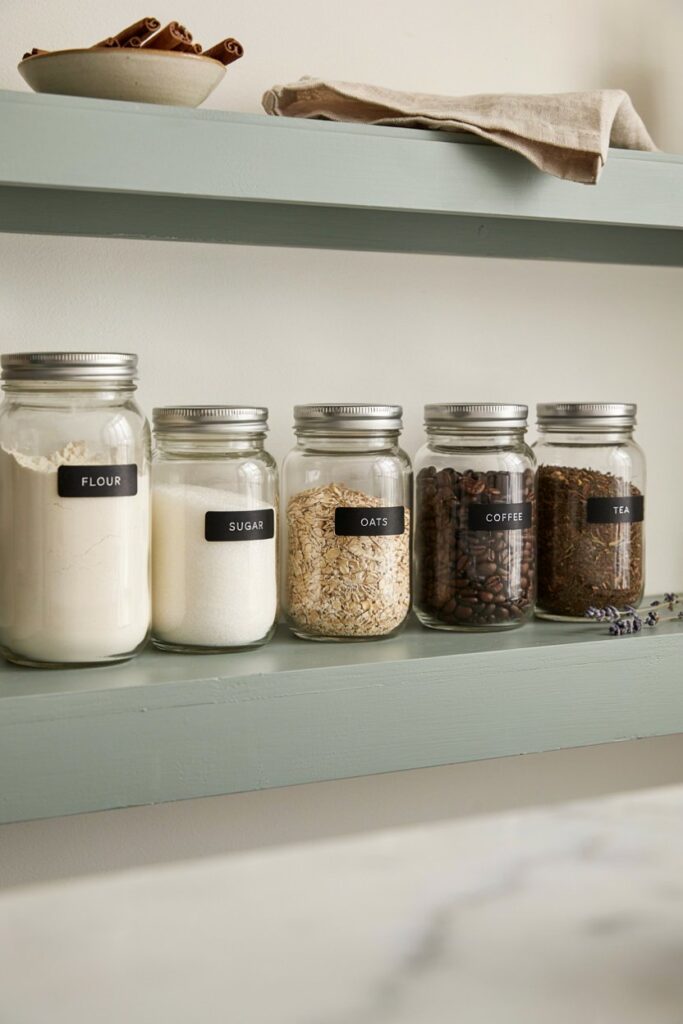
I always transfer flour, sugar, coffee, and other baking staples into matching glass jars with simple labels. This keeps ingredients fresh while making the pantry look neat and organized. Labels also prevent mistakes during baking.
Fact: Properly sealed glass containers help protect dry ingredients from moisture and pantry pests.
Optimize Deep Blue Supply Cabinets
If your pantry also stores cleaning products, creating separate zones makes everything safer and easier to find. I like dedicating one side to household supplies and the other to canned food or dry ingredients using narrow pull-out shelves.
Pro Tip: Always store cleaning products away from food items, especially if children can access the pantry.
Arrange Tiered Canned Goods Drawers
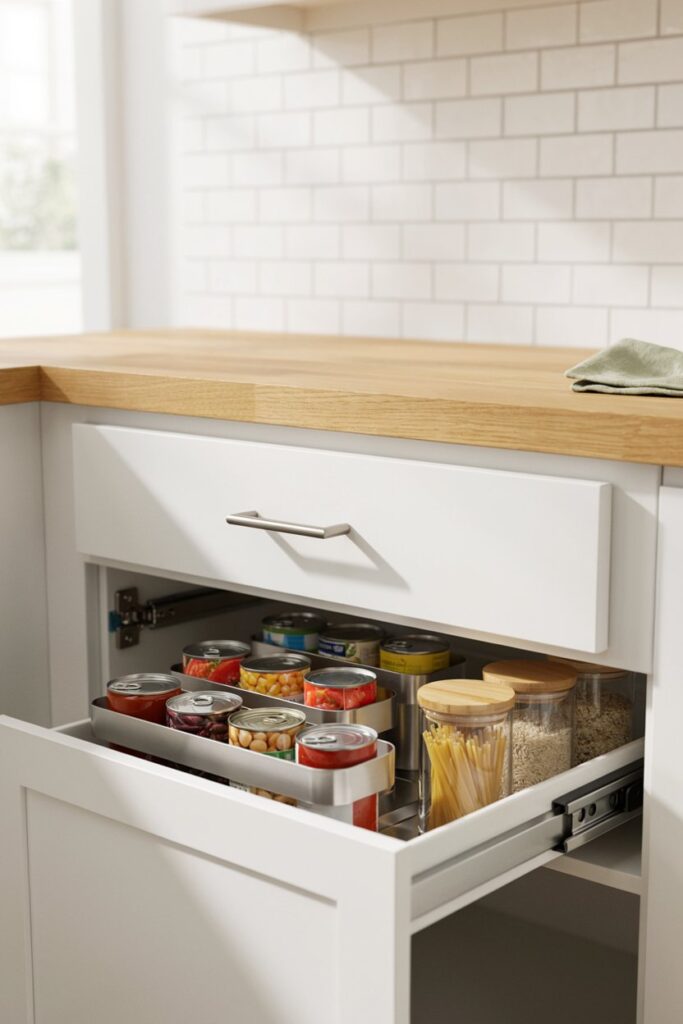
Tiered drawer organizers let me see every can without stacking them on top of each other. This simple upgrade prevents forgotten food from sitting in the back and helps me rotate older products first.
Insight: Following the “first in, first out” method helps reduce food waste and saves money over time.
Build A Full Wall Pantry Suite
A full wall pantry offers enough storage for groceries, appliances, snacks, and bulk purchases without crowding kitchen counters. I find this layout especially useful for busy families who shop in larger quantities.
Fact: Bulk buying often lowers the cost per unit, especially for non-perishable pantry items when stored correctly.
Use Airtight Containers For Baking Supplies
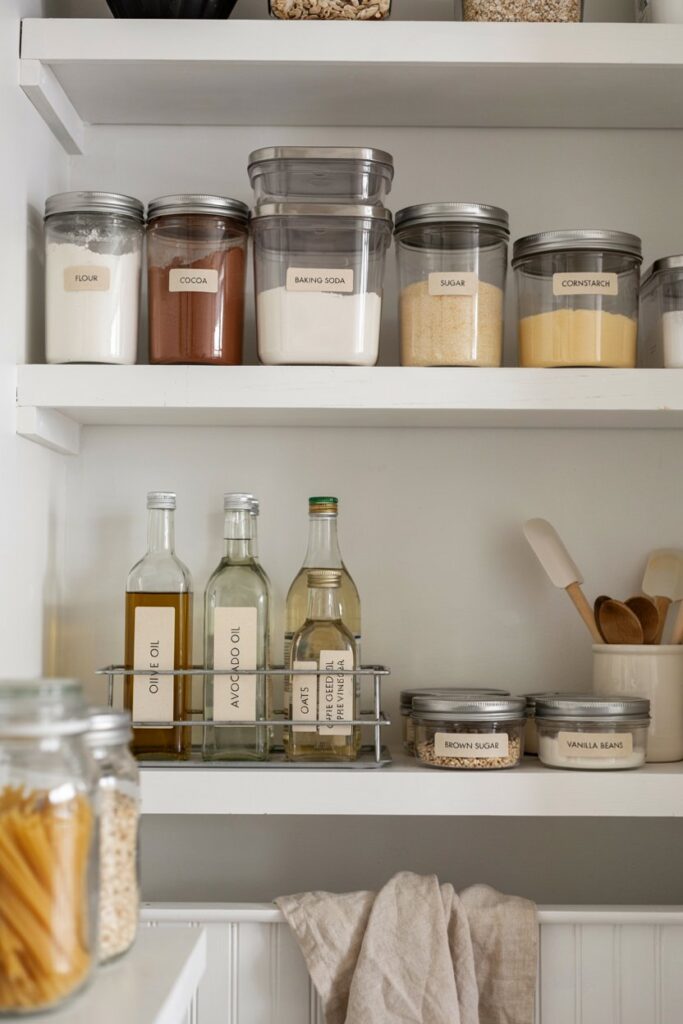
Messy paper bags make pantry shelves harder to clean and organize. I store baking ingredients in matching airtight containers because they stay fresher longer and create a uniform appearance that is easy to maintain.
Pro Tip: Square or rectangular containers usually use shelf space more efficiently than round ones.
Design A Dedicated Spirit Drawer
Heavy glass bottles are safer when stored in lower pull-out drawers instead of high shelves. I like organizing beverages in one dedicated section so everything stays secure and easy to reach when entertaining.
Insight: Lower storage reduces the risk of dropping heavy glass bottles while lifting them overhead.
Combine Pantry Shelving With A Cooktop
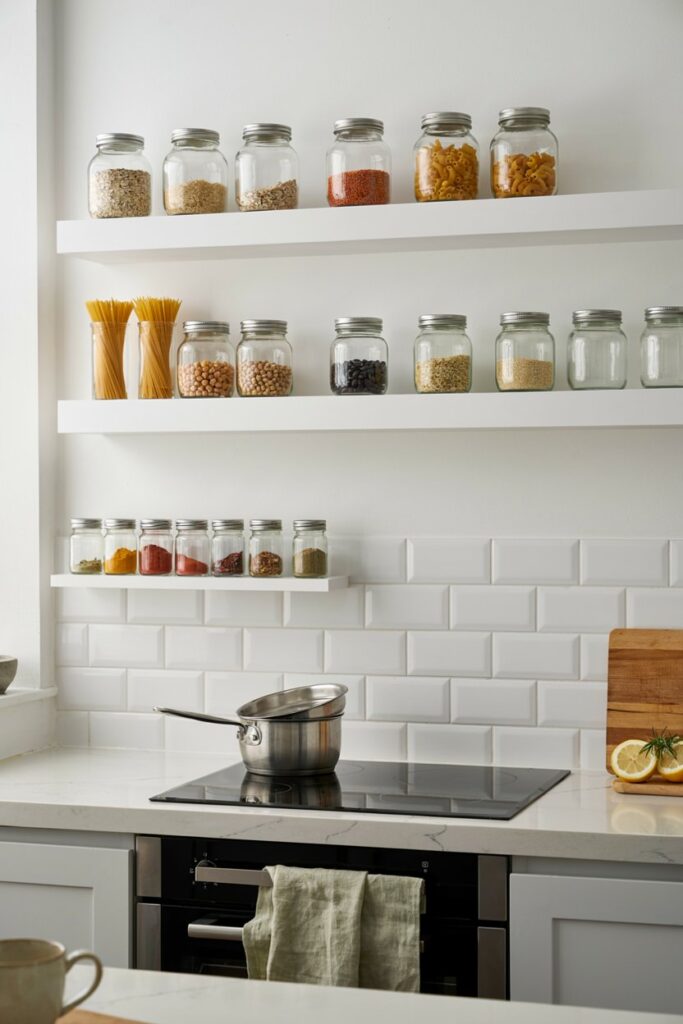
Keeping frequently used spices and grains close to the cooking area saves time during meal preparation. I only use airtight containers so steam and moisture do not affect the ingredients.
Pro Tip: Leave enough distance between the cooktop and pantry shelves to protect food from excessive heat.
Store Wine And Condiments Together
Grouping similar items makes pantry organization much more practical. I keep dry goods on upper shelves while storing heavier bottles and condiments near the bottom where they are easier and safer to lift.
Fact: Placing heavier items on lower shelves improves stability and reduces strain when lifting.
Display Spice Jars On The Counter
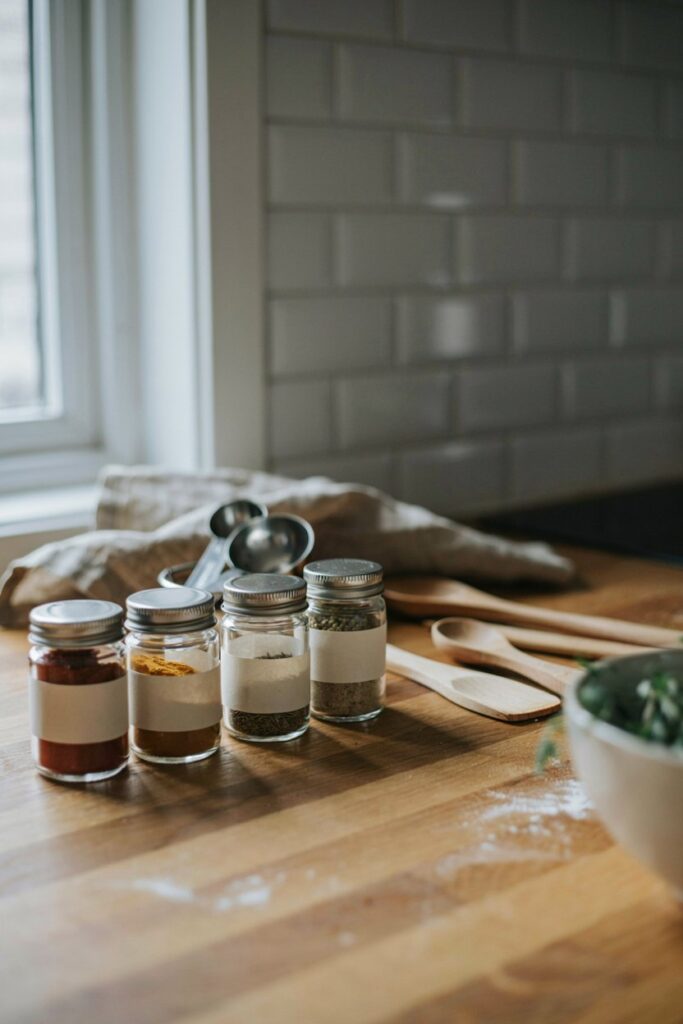
Some spices are worth keeping within easy reach, especially the ones I use almost every day. Matching labeled jars create a tidy countertop while making meal preparation quicker and more enjoyable.
Insight: Most home cooks regularly use fewer than twenty spices, so keeping favorites nearby improves efficiency.
Wall Mount Small Baskets For Utensils
When shelf space becomes limited, I start using empty wall space. Mounted rails with baskets and hooks hold utensils neatly while freeing pantry shelves for food storage.
Pro Tip: Vertical storage is one of the easiest ways to increase storage capacity without expanding your kitchen.
Store Bulk Flour In Labeled Jars
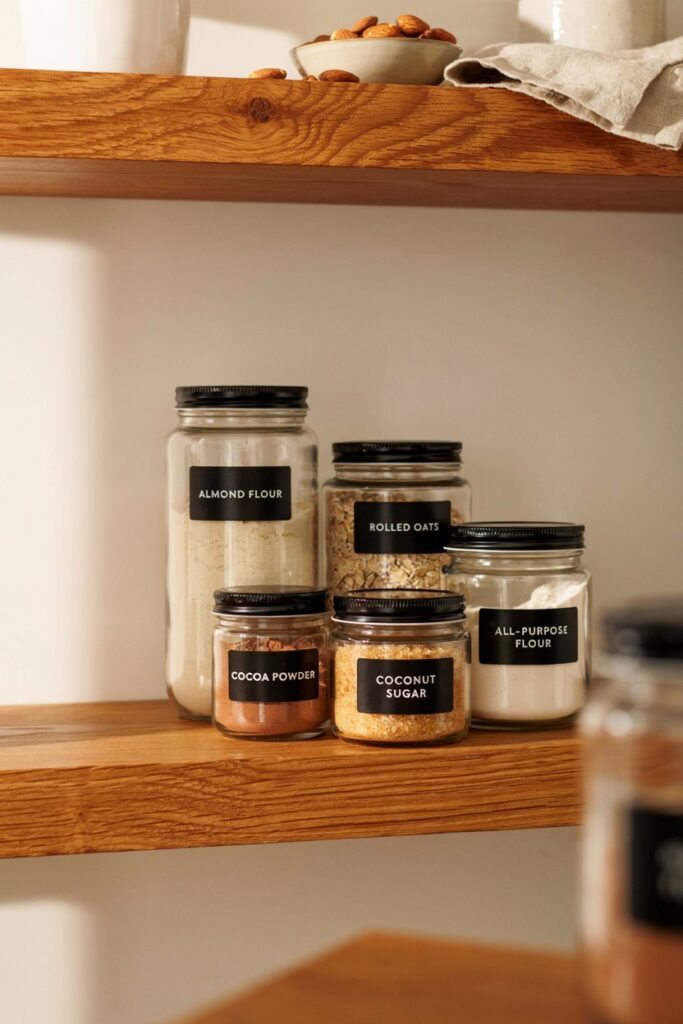
Buying baking ingredients in bulk saves money, but oversized bags create clutter. I transfer flour and specialty ingredients into large labeled jars that are easy to stack, store, and refill.
Fact: Airtight glass containers help extend the shelf life of many dry pantry staples by reducing moisture exposure.
Utilize Rustic Wooden Produce Crates
Potatoes, onions, and squash stay fresher when stored in cool spaces with proper airflow. Wooden crates at the bottom of the pantry keep produce organized while adding warmth and character to the room.
Pro Tip: Check stored produce every week and remove damaged vegetables to help the rest stay fresh longer.
Conclusion
A well-organized pantry makes cooking easier, grocery shopping more efficient, and food easier to manage. I have found that combining pull-out shelves, labeled containers, baskets, and dedicated storage zones creates a pantry that stays tidy with very little effort. Start with one improvement at a time, and your pantry will quickly become one of the most useful spaces in your kitchen.
Many of the ideas I share are inspired by real-life experimentation. I often test décor concepts in my own living spaces and explore practical ways they can be applied in everyday homes. I also gather insights from working with homeowners who want to improve the comfort, beauty, and functionality of their spaces.
I share practical ideas for improving living rooms, bedrooms, and overall home aesthetics using simple design principles.
I explore creative ways to upgrade outdoor spaces including patio décor, small backyard styling, and relaxing outdoor setups.
I provide ideas for kitchen organization, décor accents, and functional layouts that make kitchens more beautiful and practical.
The concepts shared here are based on ideas I have personally experimented with or studied through real home décor improvements.