21 Very Small Bedroom Ideas
A small bedroom does not have to feel cramped or uncomfortable. I have found that a few smart changes can make even the smallest room feel brighter, more open, and easier to live in. These very small bedroom ideas focus on practical solutions that improve both style and function without needing a complete makeover.
Above the Fold Summary
In this guide, I share simple ways to maximize every inch of a small bedroom. You will learn how to use light colors, smart storage, space-saving furniture, mirrors, shelves, and layout tricks to create a room that feels larger than it really is. Whether you are decorating a small apartment, guest room, or compact primary bedroom, these ideas can help you build a comfortable and organized space.
Key Takeaways
- Choose light colors to make the room feel brighter.
- Use wall space for extra storage.
- Pick furniture that saves floor space.
- Add mirrors to reflect natural light.
- Keep only the furniture you truly need.
- Make use of hidden storage whenever possible.
- Focus on a clean and clutter-free layout.
Keep Colors Light
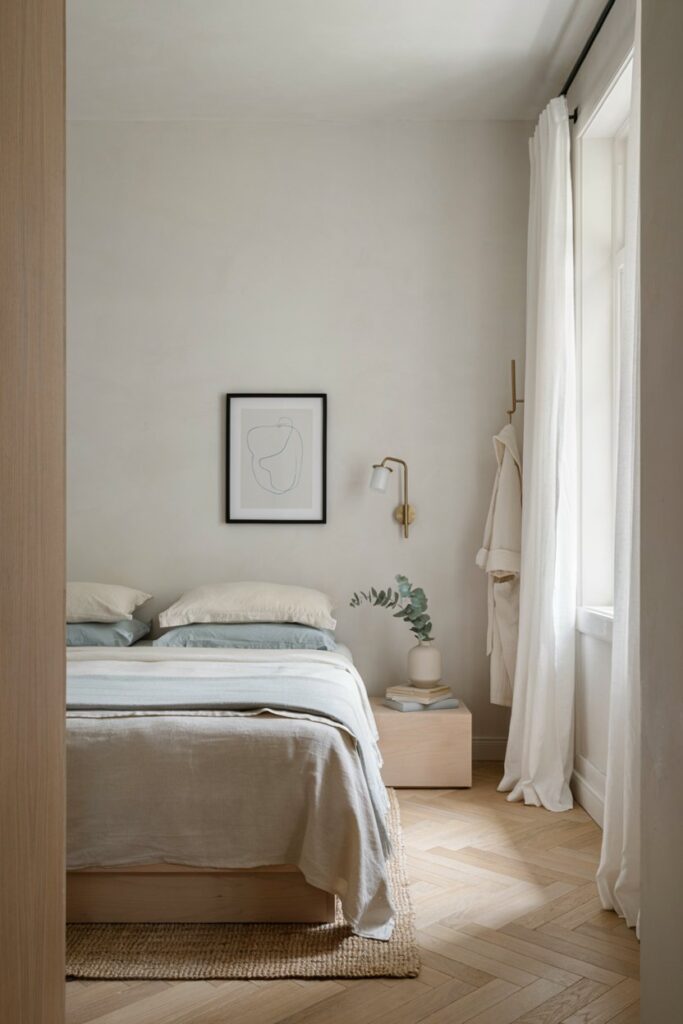
I always start with soft shades when decorating a small bedroom. White, cream, light gray, or pale blue reflect more light and help the room feel larger. Matching light bedding and curtains creates a calm look that never feels overwhelming.
Insight: Interior designers often use light color palettes because they reflect more natural light, helping compact rooms appear more spacious.
Use Vertical Space
I like using my walls instead of filling the floor with furniture. Tall shelving, floating cabinets, or wall hooks give me extra storage while leaving more walking space. It also helps the room look taller.
Pro Tip: Install shelves close to the ceiling to store seasonal items while keeping everyday surfaces clutter-free.
Choose Furniture With Legs
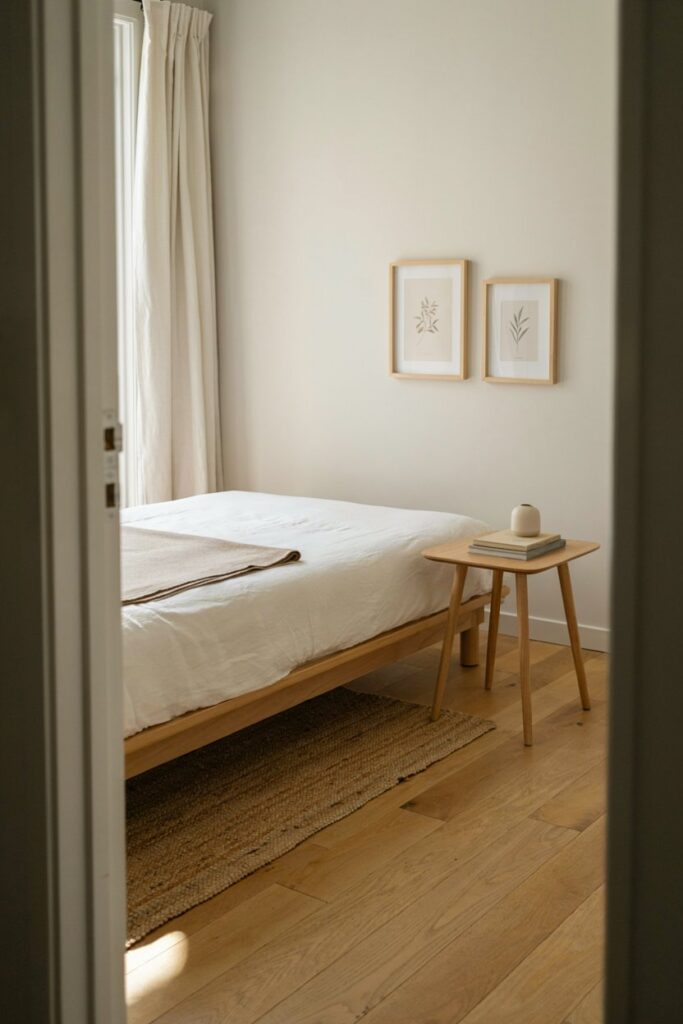
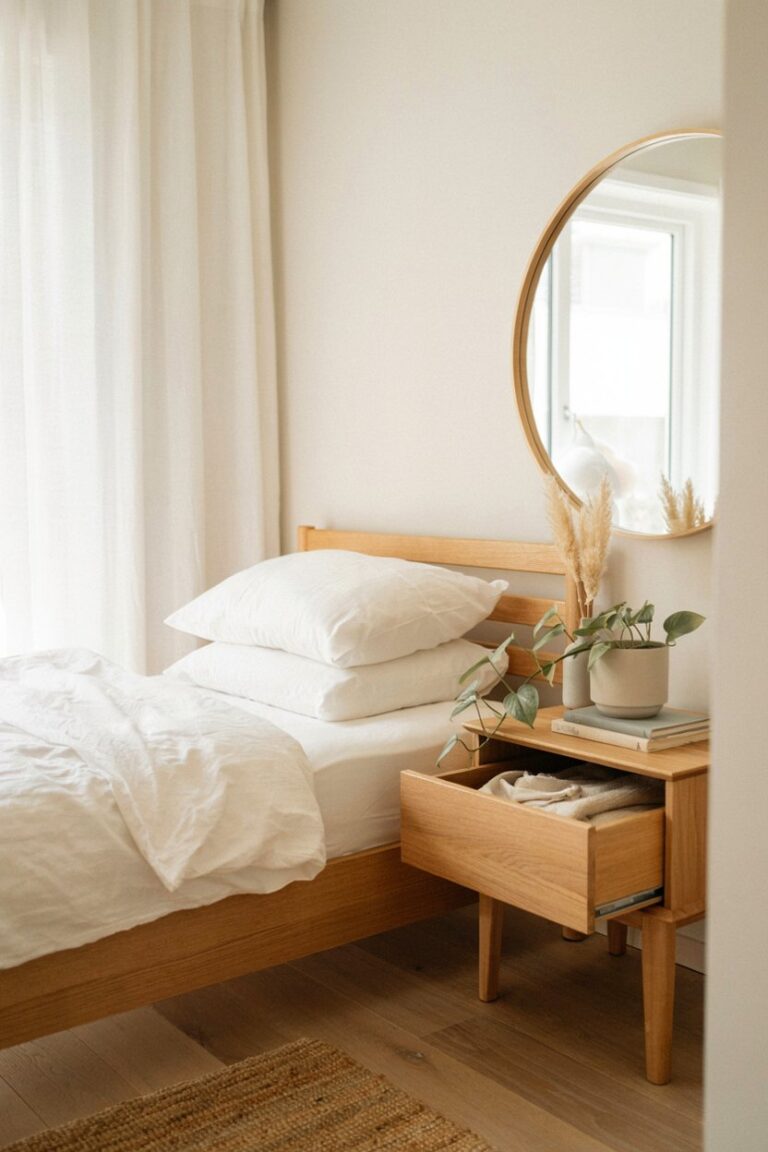
Furniture with visible legs gives my bedroom a lighter appearance. Since I can see more of the floor, the room feels less crowded. I usually avoid bulky furniture that sits flat on the ground.
Fact: Showing more floor area creates an open visual effect that can make a small room feel noticeably larger.
Install Wall Sconces
Instead of placing table lamps on my nightstands, I prefer wall sconces. They free up valuable surface space while giving me plenty of light for reading. Slim fixtures also make the room feel cleaner.
Pro Tip: Choose adjustable wall sconces so you can direct light exactly where you need it without adding extra lamps.
Get A Headboard With Storage
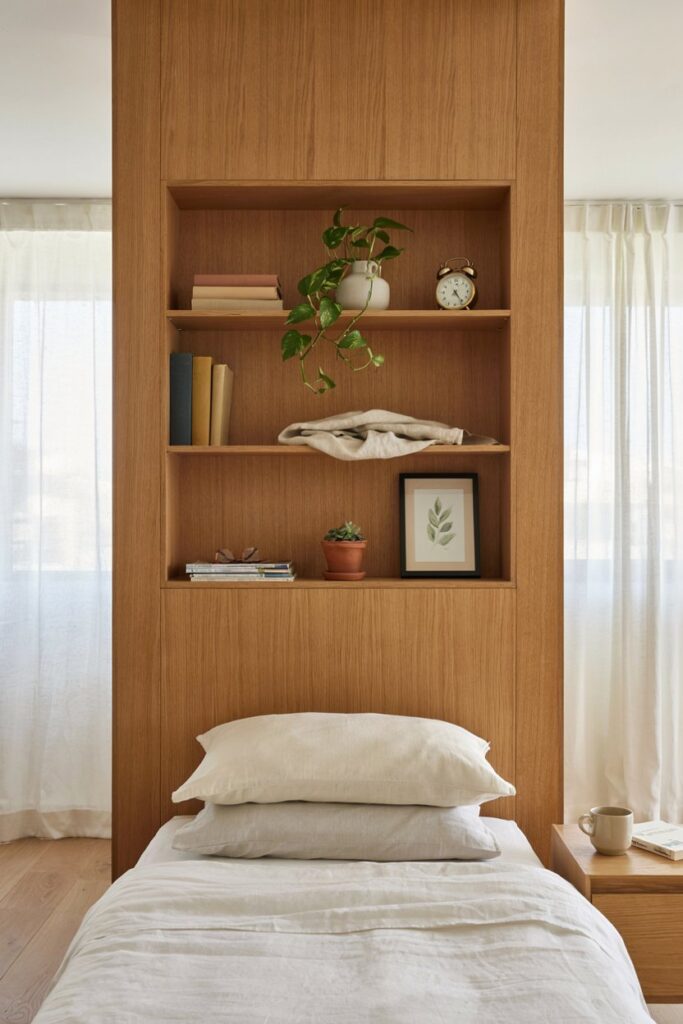
I like furniture that works harder, especially in a small bedroom. A storage headboard keeps books, my phone, and nighttime essentials within reach without needing another shelf or table.
Insight: Multi-purpose furniture helps reduce clutter while making every square foot more useful.
Use Mirrors Wisely
A large mirror is one of my favorite tricks for making a small bedroom feel bigger. I place it where it reflects sunlight during the day, which instantly brightens the entire room.
Fact: Mirrors do not increase space physically, but they create depth and reflect light, making rooms feel more open.
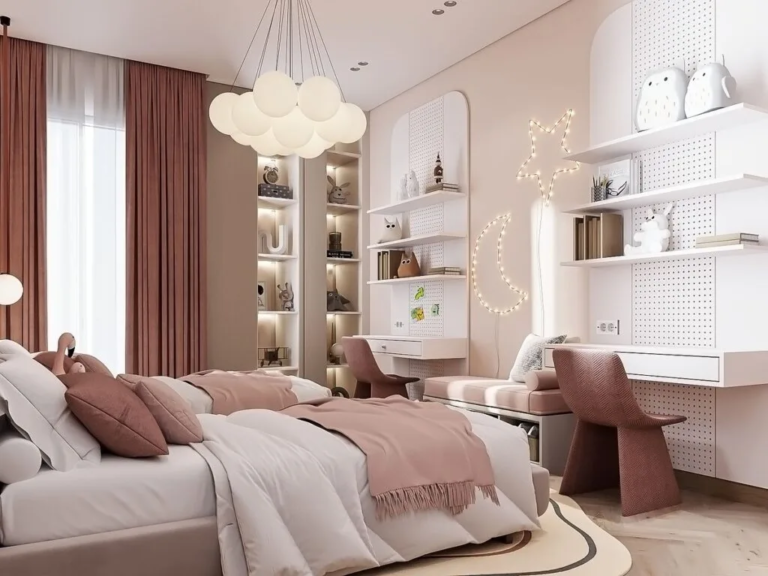
Opt For Floating Shelves
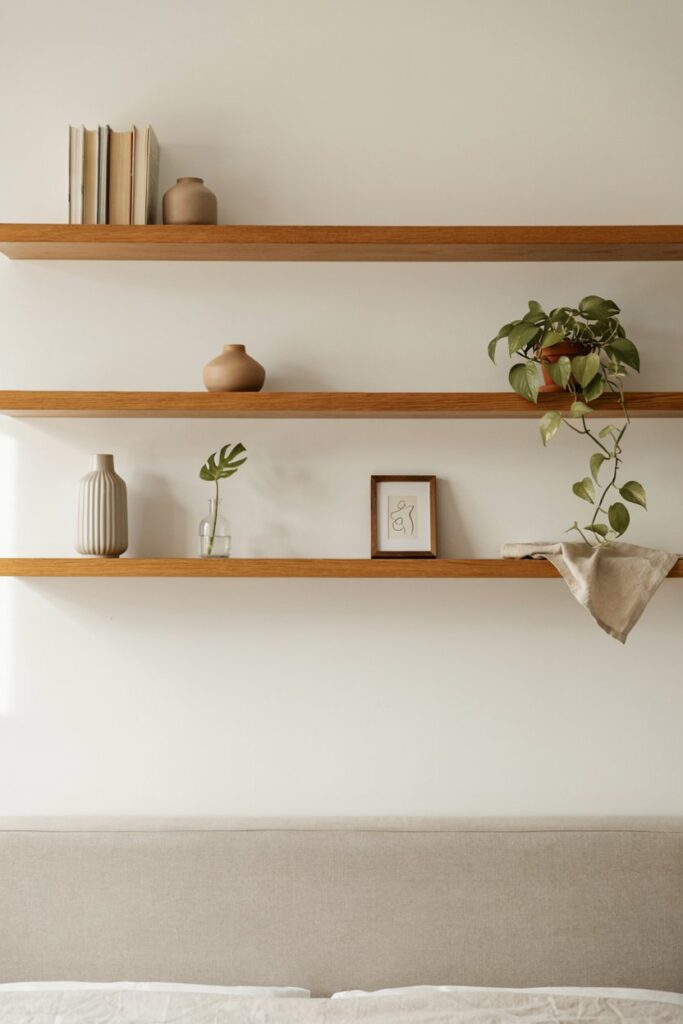
Floating shelves give me storage without making the walls feel heavy. I use them for books, small plants, framed photos, and decorative pieces while keeping the floor completely clear.
Pro Tip: Avoid overcrowding floating shelves. Leaving a little empty space keeps your bedroom looking neat and visually larger.
Choose A Loft Bed
A loft bed is one of the smartest choices I recommend when floor space is limited. By raising the bed, I can fit a desk, storage drawers, or even a cozy reading corner underneath without making the room feel crowded.
Insight: Loft beds can nearly double the usable space in compact bedrooms by combining sleeping and living areas.
Use Under-Bed Storage
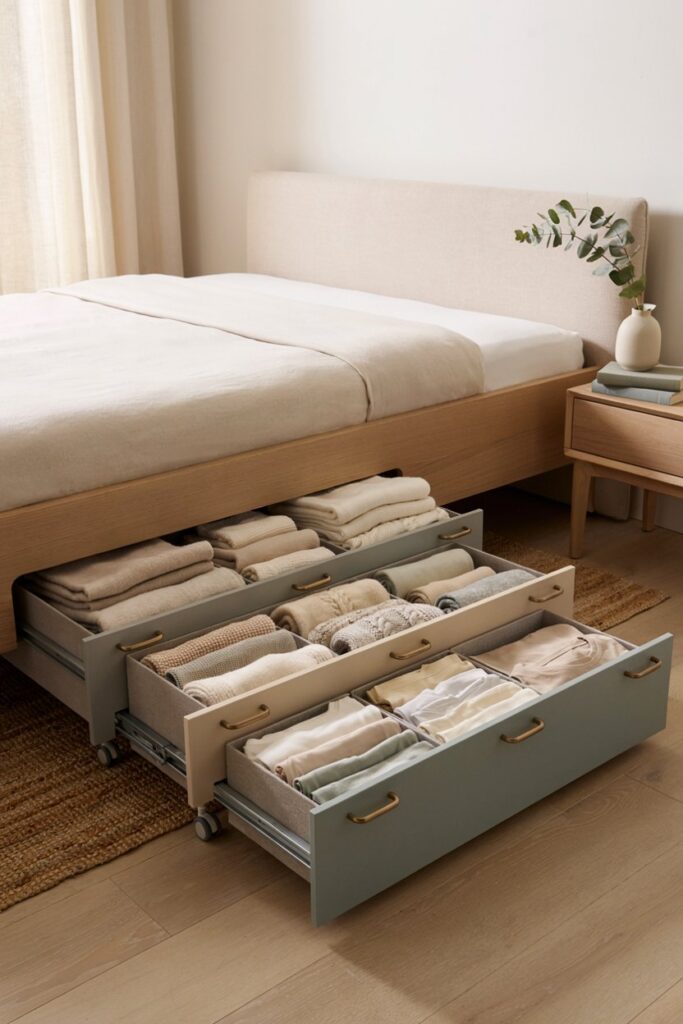
I never leave the space under my bed empty. Storage bins, rolling drawers, or vacuum storage bags help me organize clothes, extra blankets, and shoes while keeping everything out of sight.
Pro Tip: Use clear labeled containers so you can quickly find what you need without pulling out every storage box.
Mount Your TV
Mounting the TV on the wall gives me more room on my dresser and keeps the bedroom looking tidy. It also creates a cleaner setup with fewer furniture pieces taking up space.
Fact: Wall-mounted TVs free valuable surface space and help create a more streamlined bedroom layout.
Add Stripes
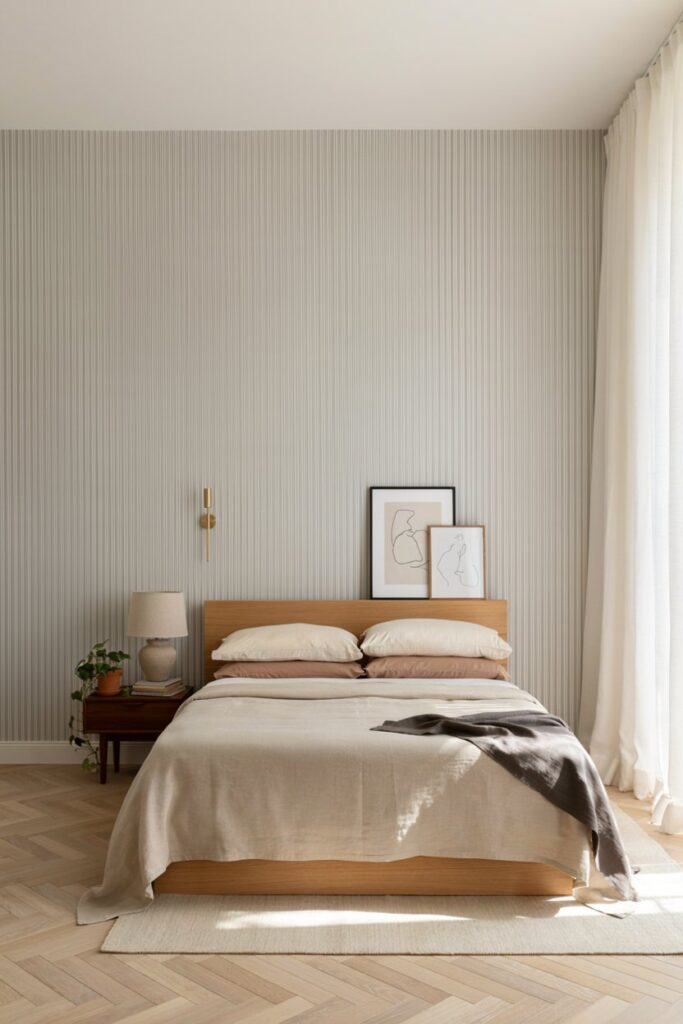
I sometimes use stripes to change how a room feels. Vertical stripes make the ceiling appear higher, while horizontal patterns can help a narrow bedroom look wider without changing the actual size.
Insight: Simple visual patterns can influence how the eye measures space, making a compact room feel more balanced.
Minimize Furniture
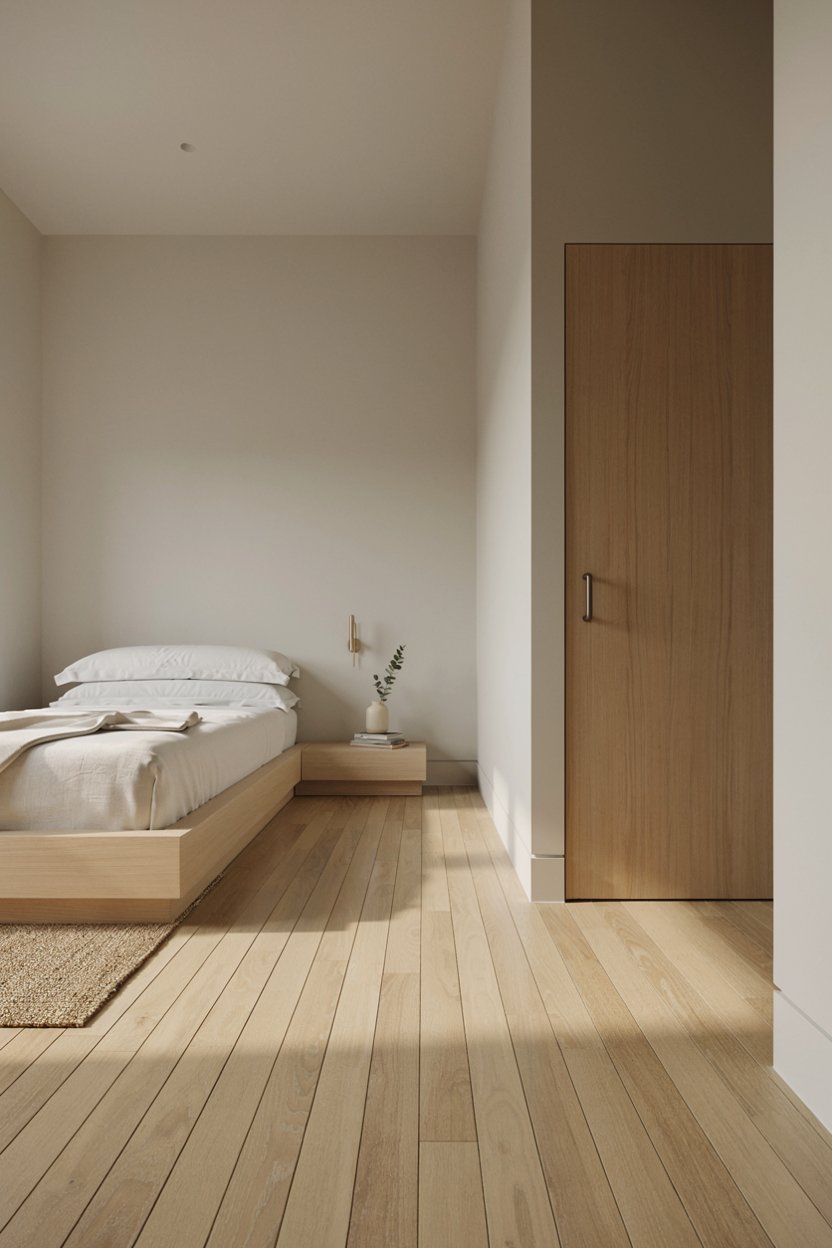
I only keep furniture that serves a purpose. Removing extra chairs, oversized tables, or unused pieces instantly gives my bedroom more breathing room and makes everyday movement easier.
Pro Tip: Before adding new furniture, remove one unnecessary item to prevent the room from becoming overcrowded.
Use A Murphy Bed
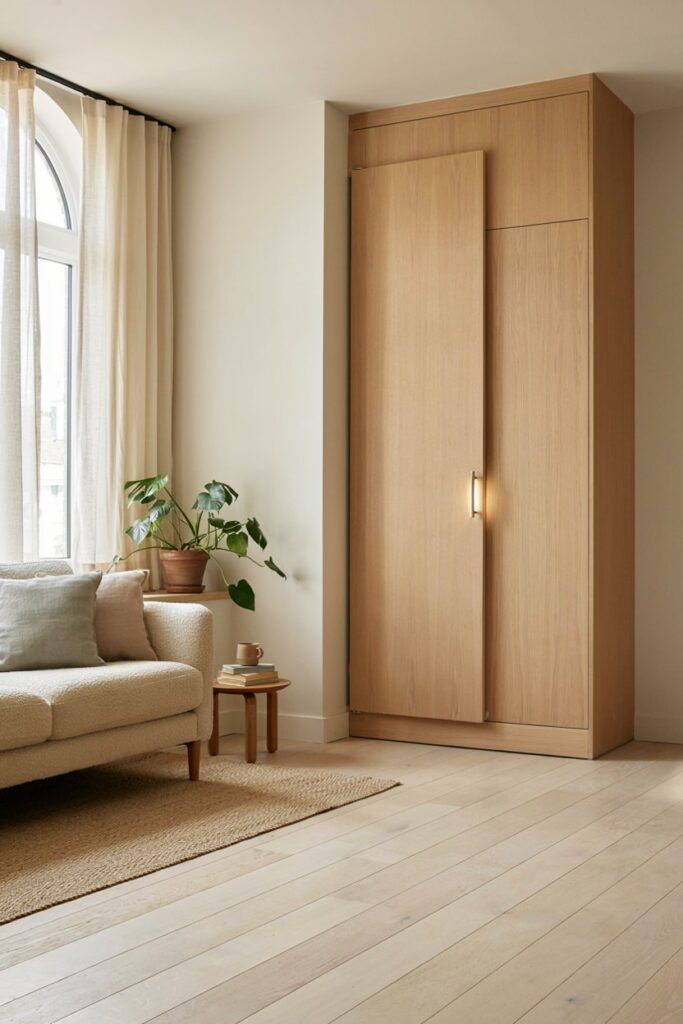
A Murphy bed is a great solution if I need one room to serve multiple purposes. During the day, the bed folds into the wall, leaving open space for work, exercise, or relaxing.
Fact: Murphy beds have become increasingly popular in small apartments because they maximize usable floor space.
Choose Multi-Functional Furniture
I always look for furniture that does more than one job. Storage ottomans, lift-up beds, benches with hidden compartments, and compact desks help me reduce clutter without sacrificing function.
Insight: Multi-functional furniture minimizes the need for extra storage pieces, helping small bedrooms stay open and organized.
Keep Window Treatments Simple
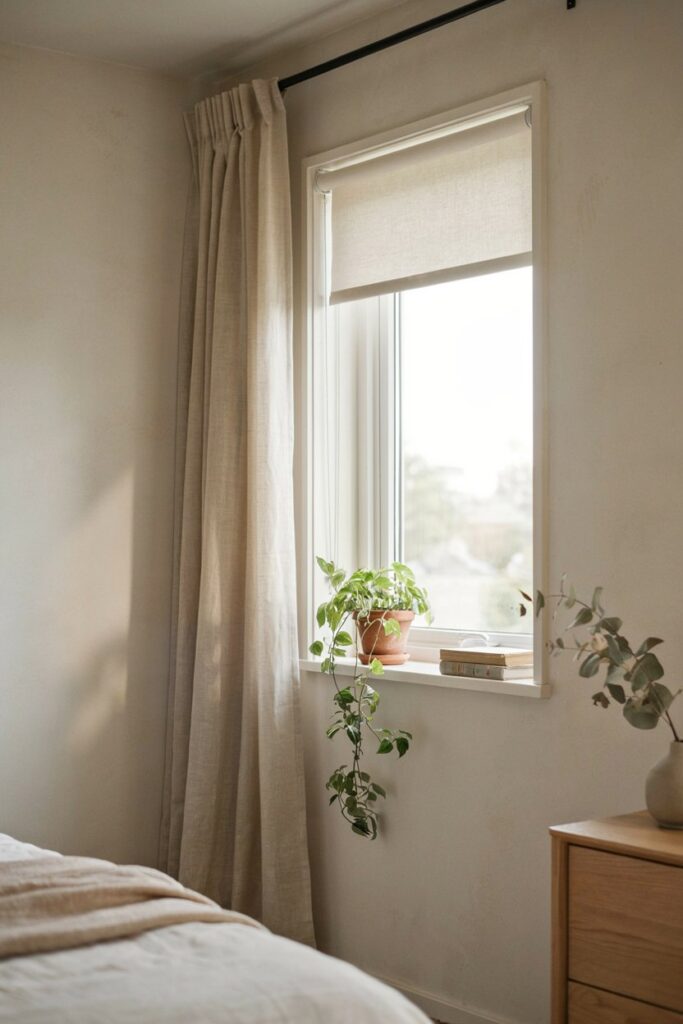
I prefer simple blinds, roller shades, or light curtains because they let in more daylight without making the room feel heavy. Natural light instantly gives my bedroom a brighter and more open appearance.
Pro Tip: Hang curtain rods a few inches above the window frame to make your ceiling appear taller.
Declutter Regularly
I make it a habit to clear unnecessary items before they pile up. Keeping my dresser, shelves, and floor organized helps my bedroom feel calmer and much more spacious every day.
Fact: Studies have found that organized spaces can help reduce stress and improve focus, especially in smaller rooms.
Use A Corner Shelf
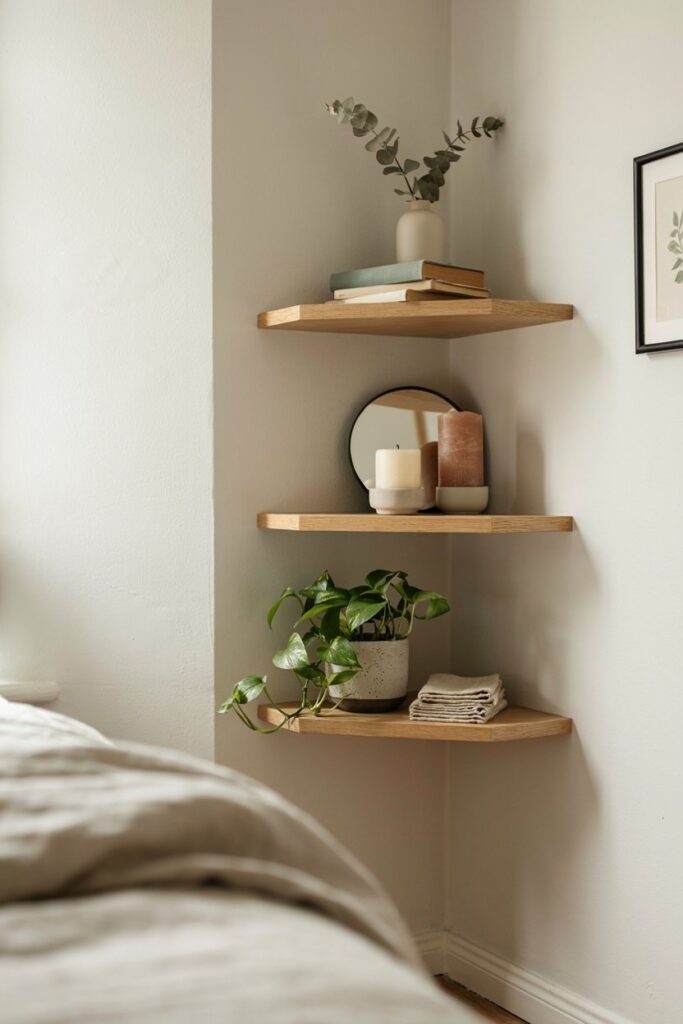
I never ignore empty corners because they offer useful storage without taking away valuable floor space. A slim corner shelf gives me room for books, plants, or decorative pieces while keeping the layout balanced.
Insight: Corner storage makes use of areas that often remain empty, increasing storage without making the room feel crowded.
Hang Art Strategically
Instead of filling the walls with many small frames, I choose one larger artwork that creates a clear focal point. This keeps the room feeling clean and prevents the walls from looking busy.
Pro Tip: Position artwork at eye level or slightly higher to naturally draw attention upward and create the feeling of extra height.
Paint The Ceiling
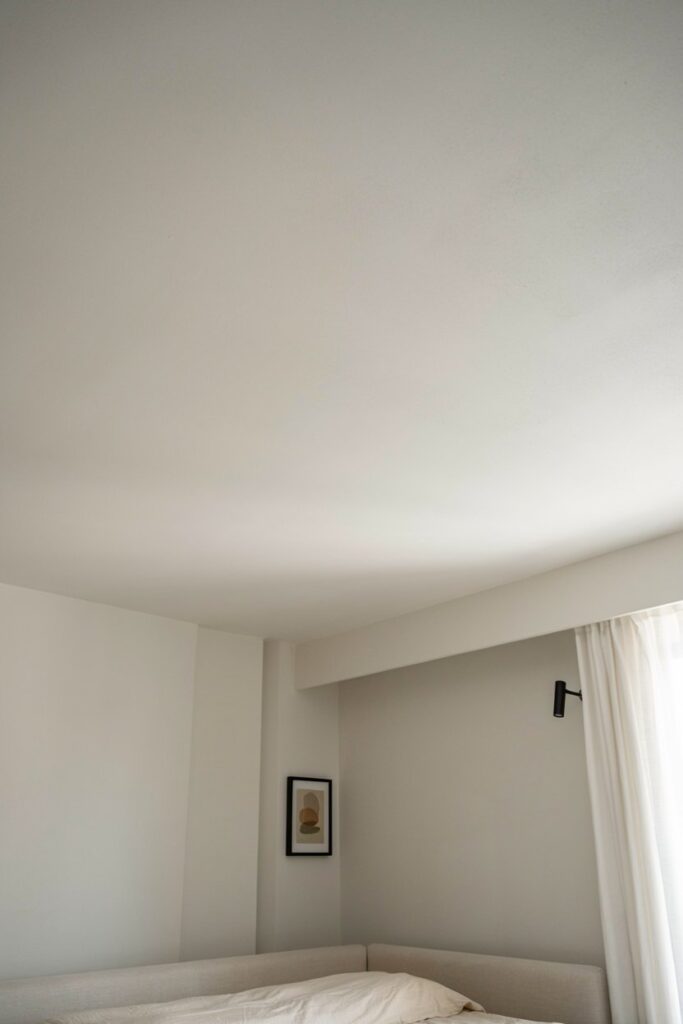
Painting the ceiling a shade lighter than the walls helps my bedroom feel more open. Even a soft white or pale blue adds depth and makes the room appear less enclosed.
Fact: Light-colored ceilings reflect more light than darker ones, helping compact rooms feel brighter.
Let In Natural Light
I always keep windows as open as possible during the day. Sunlight makes every color look brighter and helps even the smallest bedroom feel welcoming and comfortable.
Insight: Rooms with plenty of daylight often appear larger because natural light reduces dark corners and harsh shadows.
Install Pocket Doors
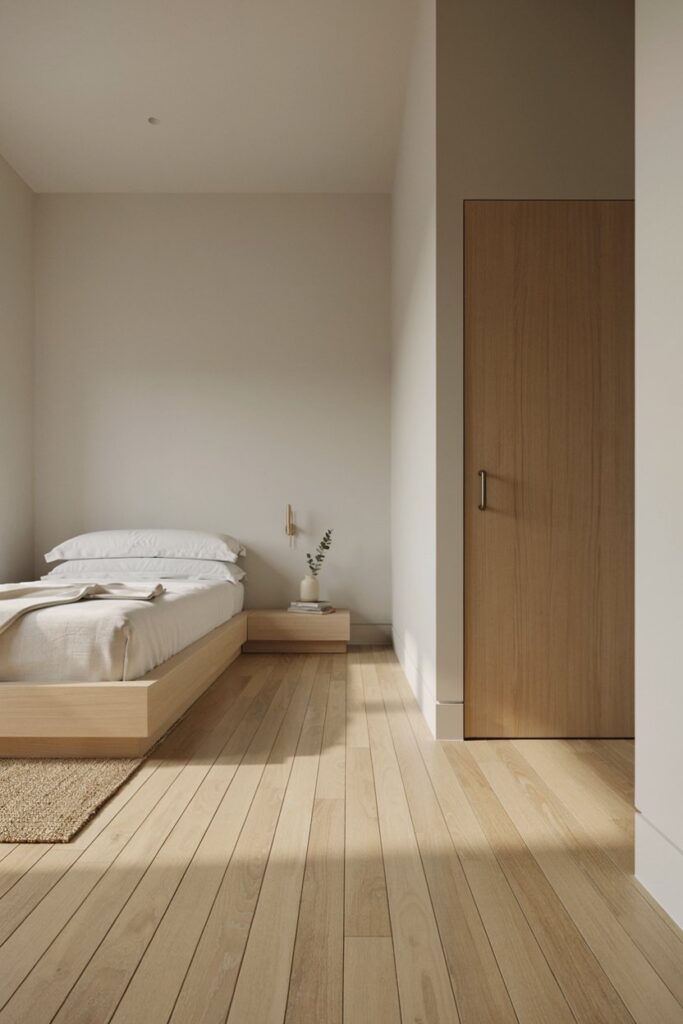
If I have the option, I choose a pocket door instead of a traditional swinging door. It saves valuable floor space and gives me more flexibility when arranging furniture near the entrance.
Pro Tip: Pocket doors work especially well in bedrooms under 120 square feet where every inch of floor space matters.
FAQs
How can I make a very small bedroom look bigger?
I recommend using light paint colors, adding mirrors, choosing furniture with legs, and keeping clutter to a minimum. These simple changes create the feeling of a larger room without major renovations.
What furniture works best in a very small bedroom?
I prefer furniture that serves multiple purposes, such as storage beds, lift-top benches, floating shelves, and compact nightstands. They save space while keeping the room functional.
Are mirrors good for small bedrooms?
Yes. I often use large mirrors because they reflect natural light and create visual depth, making a compact bedroom feel brighter and more spacious.
What colors are best for a small bedroom?
Soft white, cream, light gray, pale blue, and other light neutral shades work best. They reflect light and help the room feel open instead of enclosed.
How do I add storage to a tiny bedroom?
I use wall shelves, under-bed storage bins, storage headboards, corner shelving, and multi-functional furniture. These solutions add storage without taking up valuable floor space.
Conclusion
Creating a comfortable small bedroom is all about making smart choices instead of adding more furniture. I have found that light colors, practical storage, multi-purpose furniture, and a clutter-free layout can completely change how a room feels. Start with one or two of these very small bedroom ideas, and you will gradually create a space that feels larger, more organized, and enjoyable to spend time in.
Many of the ideas I share are inspired by real-life experimentation. I often test décor concepts in my own living spaces and explore practical ways they can be applied in everyday homes. I also gather insights from working with homeowners who want to improve the comfort, beauty, and functionality of their spaces.
I share practical ideas for improving living rooms, bedrooms, and overall home aesthetics using simple design principles.
I explore creative ways to upgrade outdoor spaces including patio décor, small backyard styling, and relaxing outdoor setups.
I provide ideas for kitchen organization, décor accents, and functional layouts that make kitchens more beautiful and practical.
The concepts shared here are based on ideas I have personally experimented with or studied through real home décor improvements.