Dice games have been entertaining families, friends, and party groups for generations. I personally enjoy them because they are affordable, easy to learn, and work well for almost any age group. Whether I am planning a family game night, a classroom activity, or a party, dice games are often my first choice because they require little setup and create instant excitement.
One thing I have noticed over the years is that the best dice games combine luck, strategy, and social interaction. Some games test quick thinking, while others encourage careful planning or friendly bluffing. According to industry reports, tabletop gaming continues to grow worldwide, with family-friendly games remaining one of the most popular categories. That makes dice-based games a great option for people looking to spend more quality time away from screens.
In this guide, I am sharing the best dice games that are fun, beginner-friendly, and suitable for different occasions.

Quick Summary
If you are looking for the best dice games, this list includes classic favorites like Yahtzee and Farkle, fast-paced options like Tenzi and Flash!, educational choices like Math Dice, and strategy-focused games such as Sagrada and Railroad Ink. Whether you are playing with kids, adults, or a mixed-age group, there is something here for everyone.
Key Takeaways
1. Yahtzee

When people ask me about the best dice games, Yahtzee is usually one of the first recommendations I make. The game challenges players to create scoring combinations using five dice over multiple rounds.
I like that every turn involves meaningful decisions. Choosing which dice to keep and which to reroll can completely change your score. The balance between luck and strategy keeps every game interesting, even after dozens of plays.
Pro Tip: Save high-value combinations for later rounds when possible instead of using them too early.
2. Bunco

Bunco is one of the most social dice games I have played. It works especially well for larger groups and party settings where conversation and laughter are just as important as winning.
Players roll dice to match the target number of each round and earn points. Since the rules are simple, new players can join without feeling overwhelmed.
Pro Tip: Bunco nights are more fun when teams rotate regularly so everyone gets a chance to play together.
3. Tenzi

Tenzi is perfect when I want a fast game that creates instant energy. Every player rolls ten dice at the same time and races to get all dice showing the same number.
The excitement builds quickly because everyone is playing simultaneously rather than waiting for turns. It is one of the easiest games on this list to teach.
Pro Tip: Keep several sets of dice available so multiple rounds can start immediately.
4. Qwixx
Qwixx combines dice rolling with smart decision-making. I enjoy it because every roll presents opportunities, even when it is not my turn.
Players mark numbers on their score sheets while trying to avoid penalties and maximize points. The game moves quickly and keeps everyone engaged throughout.
Pro Tip: Think ahead before crossing out numbers because skipped spaces cannot be used later.
5. Farkle
Farkle is a classic risk-versus-reward game that creates plenty of suspense. Every turn forces players to decide whether to bank points or keep rolling for a bigger score.
I have seen players lose huge point totals by getting greedy, which is part of what makes the game memorable and entertaining.
Pro Tip: Set a personal point threshold where you always stop rolling to avoid costly mistakes.
6. Left, Center, Right (LCR)

LCR is one of the easiest dice games for beginners. The rules take less than a minute to explain, making it ideal for family gatherings.
I like using it when players of different ages are involved because everyone has an equal chance of winning. The game relies heavily on luck, which keeps things fair and fun.
Pro Tip: Use small prizes or tokens to make the game even more exciting.
7. Pig
Pig proves that a simple concept can still be incredibly entertaining. Players roll a single die and decide whether to keep accumulating points or stop before rolling a one.
I often recommend Pig for kids because it helps develop decision-making skills while remaining easy to understand.
Pro Tip: Set mini-goals during the game instead of focusing only on reaching 100 points.
8. Knock Out
Knock Out is a simple elimination game that works well in classrooms, family gatherings, and travel situations.
I appreciate how it can also introduce younger players to basic math concepts such as addition and multiplication. The rules are straightforward, but the outcome can change quickly.
Pro Tip: Adjust the knockout number to increase or decrease the game’s difficulty.
9. Math Dice

Math Dice is one of my favorite educational games because it turns arithmetic practice into a challenge that feels fun rather than academic.
Players use mathematical operations to reach a target number created by dice rolls. It encourages creative thinking and problem-solving.
Pro Tip: Allow calculators for younger players who are still building confidence with numbers.
10. Dragonwood
Dragonwood combines dice rolling with card strategy, creating a more advanced experience than many traditional dice games.
I enjoy the fantasy theme because it adds extra excitement while players hunt mythical creatures and build powerful card combinations.
Pro Tip: Save strong card sets for high-value creatures whenever possible.
11. Flash!
Flash! is designed for players who enjoy speed and quick reactions. The objective is to complete various dice challenges before anyone else.
I find this game especially entertaining during parties because rounds move quickly and keep players fully engaged.
Pro Tip: Prepare score sheets before starting to keep gameplay moving smoothly.
12. Liar’s Dice
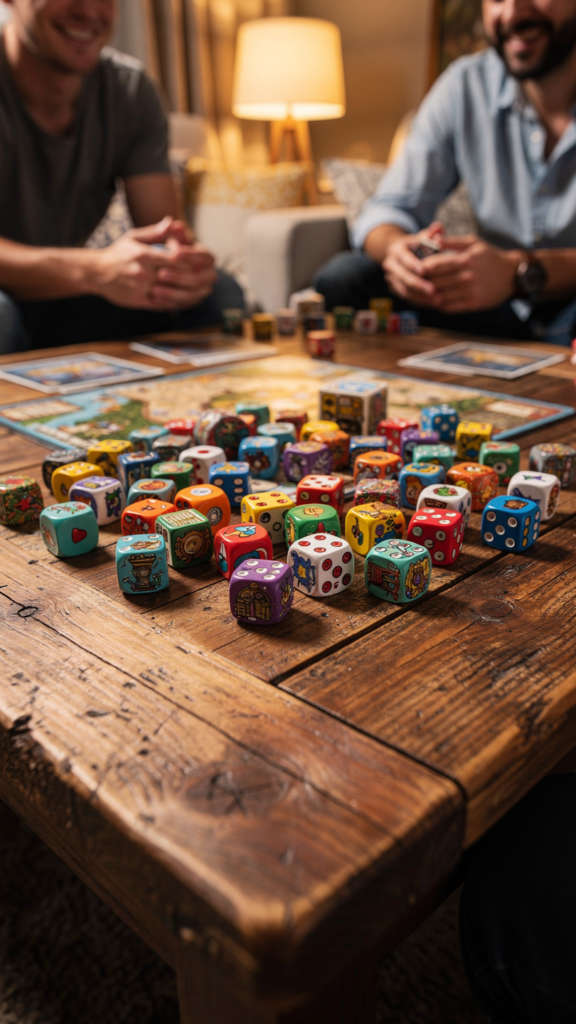
Liar’s Dice is one of the best dice games for players who enjoy bluffing and reading opponents.
Success depends on understanding probability and knowing when someone might be exaggerating their bid. Every round creates tension and excitement.
Pro Tip: Watch player behavior closely because hesitation often reveals useful information.
13. Roll For It!
Roll For It! combines luck and planning in a simple but satisfying format. Players roll dice to complete card objectives and earn points.
I like that the rules are beginner-friendly while still offering enough strategy to keep experienced players interested.
Pro Tip: Focus on cards that can be completed quickly instead of chasing difficult combinations.
14. Even Steven’s Odd
This educational dice game blends math practice with competition. Players solve challenges using numbers rolled on their dice.
I recommend it for families who want games that entertain while helping children strengthen basic math skills.
Pro Tip: Increase challenge difficulty as players improve to keep the game engaging.
15. Jinx
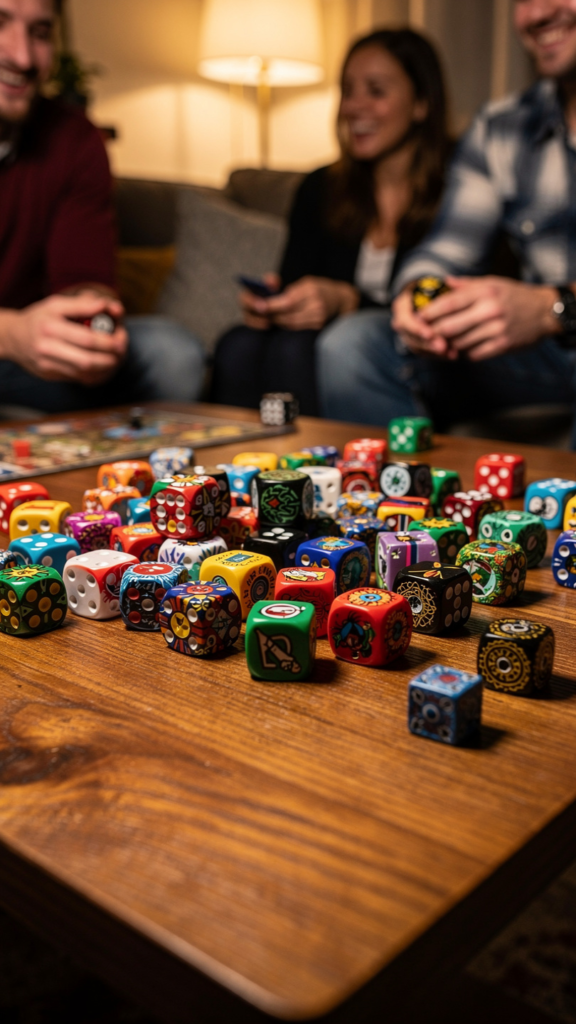
Jinx adds a strategic board element to traditional dice gameplay. Players place pieces based on dice rolls while trying to create winning patterns.
I enjoy the balance between planning ahead and adapting to unexpected rolls.
Pro Tip: Block opponents whenever possible rather than focusing only on your own setup.
16. Bluffaneer
Bluffaneer combines pirate-themed fun with deception and treasure collecting. The game rewards both confidence and careful observation.
I find that players who can bluff convincingly often perform surprisingly well, even when luck is not on their side.
Pro Tip: Do not bluff too frequently or opponents will start expecting it.
17. That’s Pretty Clever

This game rewards strategic thinking more than many traditional dice games. Every decision affects future scoring opportunities.
I appreciate the depth it offers while still remaining accessible to casual players.
Pro Tip: Plan several turns ahead instead of focusing only on immediate points.
18. Yamslam
Yamslam takes familiar dice combinations and adds collectible chips for scoring. The result is a game that feels familiar yet fresh.
I enjoy how quickly rounds move while still providing opportunities for big scoring moments.
Pro Tip: Track valuable chip opportunities early in the game.
19. Pizza Party

Pizza Party is an excellent choice for younger children. Matching toppings to complete pizza slices creates a simple but entertaining challenge.
I often recommend it for family gatherings because younger players can participate without needing advanced skills.
Pro Tip: Use themed snacks to make gameplay even more memorable.
20. Strike
Strike stands out because players physically roll dice into an arena. This creates a unique experience that feels different from most dice games.
I enjoy the combination of accuracy, timing, and luck involved in every turn.
Pro Tip: Practice controlled rolls instead of throwing dice too aggressively.
21. Sequence Dice
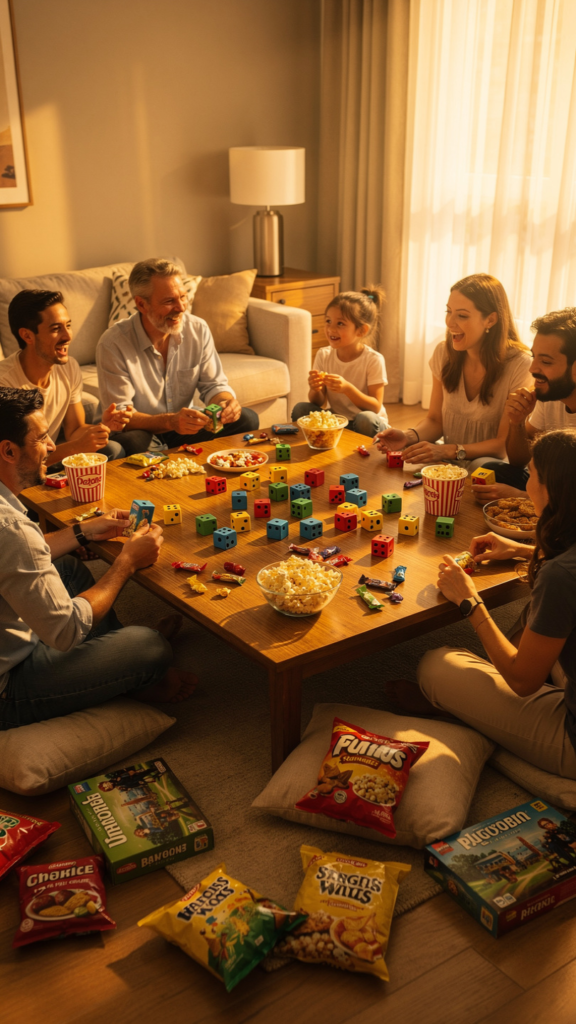
Sequence Dice combines classic sequence-building mechanics with dice rolling. Players work toward creating five connected chips on the board.
I like the strategic element because players must think carefully about placement choices.
Pro Tip: Protect potential winning sequences before focusing on expansion.
22. Bang! The Dice Game
Bang! The Dice Game adds hidden roles and player interaction to traditional dice mechanics.
Every player has a unique objective, which creates suspense throughout the game. I enjoy how alliances and rivalries naturally develop during play.
Pro Tip: Pay attention to player actions early because they often reveal hidden roles.
23. Railroad Ink
Railroad Ink challenges players to create efficient transportation networks using route dice.

I appreciate that every player works on their own board while still competing for the highest score. It encourages creativity and planning.
Pro Tip: Prioritize connecting exits because they often provide significant points.
24. Sagrada
Sagrada is one of the most visually appealing dice games I have played. Players use colorful dice to build stained-glass window designs while following placement restrictions.
The game rewards thoughtful planning and careful resource management.
Pro Tip: Focus on long-term objectives instead of immediate placement opportunities.
25. Shut the Box

Shut the Box has remained popular for generations because of its simple rules and satisfying gameplay.
Players roll dice and flip numbered tiles while trying to close the entire board. I enjoy its blend of luck, probability, and quick decision-making.
Pro Tip: Learn common dice totals to make better tile-selection decisions.
Why Dice Games Remain Popular
I believe dice games continue to thrive because they are accessible, affordable, and suitable for nearly every age group. Unlike many complex board games, most dice games can be learned in minutes.
They also encourage face-to-face interaction, which many families value today. Whether you prefer strategy, speed, math challenges, or pure luck, there is a dice game that fits your style.
Conclusion
The best dice games offer a mix of excitement, strategy, and social interaction. From classic favorites like Yahtzee and Farkle to modern hits like Sagrada and Railroad Ink, these games can turn an ordinary evening into a memorable experience.
I recommend trying several options from this list to discover which style your group enjoys most. With so many excellent choices available, you will never run out of fun ways to roll the dice.
FAQ,s
What are the best dice games for family game night?
Yahtzee, Tenzi, Farkle, LCR, and Shut the Box are among the best dice games for family game nights because they are easy to learn and suitable for different age groups.
Which dice games are best for kids?
Math Dice, Pizza Party, Pig, Knock Out, and Tenzi are excellent choices for children because they are simple, educational, and engaging.
Can dice games improve math skills?
Yes. Games such as Math Dice, Even Steven’s Odd, and Knock Out help players practice arithmetic, probability, and logical thinking.
What is the easiest dice game to learn?
LCR and Pig are generally considered two of the easiest dice games because they have very simple rules and require minimal setup.
Are dice games good for parties?
Absolutely. Bunco, Tenzi, Flash!, and Liar’s Dice are popular party games because they encourage interaction and keep large groups entertained.
Many of the ideas I share are inspired by real-life experimentation. I often test décor concepts in my own living spaces and explore practical ways they can be applied in everyday homes. I also gather insights from working with homeowners who want to improve the comfort, beauty, and functionality of their spaces.
I share practical ideas for improving living rooms, bedrooms, and overall home aesthetics using simple design principles.
I explore creative ways to upgrade outdoor spaces including patio décor, small backyard styling, and relaxing outdoor setups.
I provide ideas for kitchen organization, décor accents, and functional layouts that make kitchens more beautiful and practical.
The concepts shared here are based on ideas I have personally experimented with or studied through real home décor improvements.