
Moody Farmhouse Kitchen Ideas for a Timeless Cooking Space
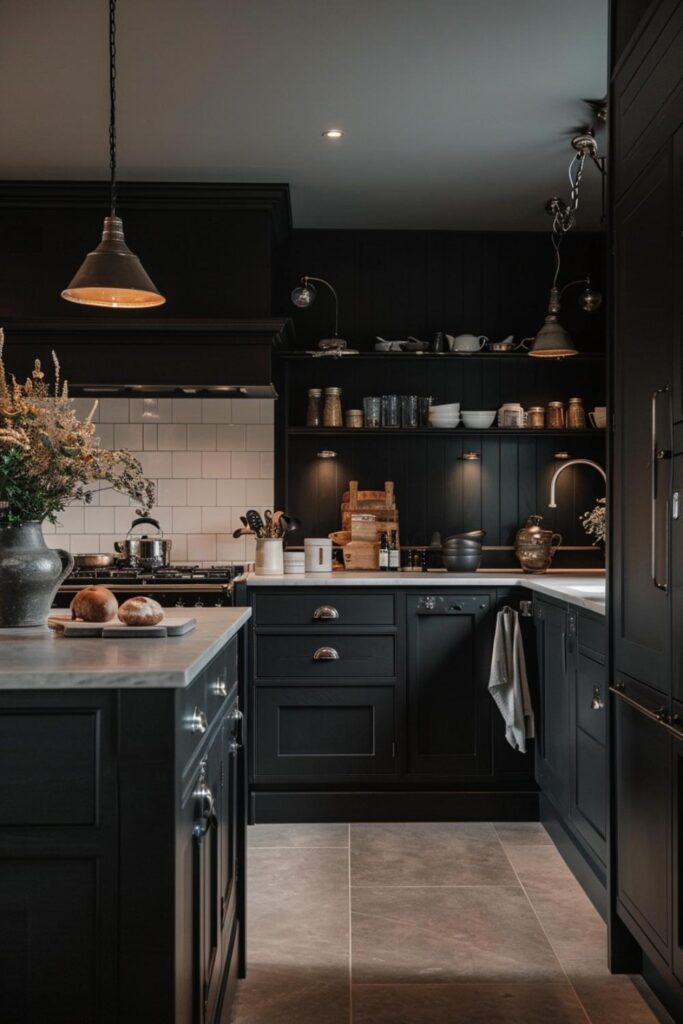
I’ve always liked farmhouse kitchens for their warm materials and practical feel, but adding darker colors gives the style a more grounded and dramatic look. In this guide, I’m sharing moody farmhouse kitchen ideas using deep cabinet colors, aged wood, warm lighting, natural stone, vintage accents, and modern features.
I would not make every surface dark at once. Instead, I like using one or two strong elements, such as charcoal cabinets or a dark wood island, and balancing them with lighter counters, warm metals, and good task lighting. That keeps the kitchen comfortable to work in rather than making it feel closed in.
Key Takeaways
- Deep navy, charcoal, forest green, brown, and black work well for a moody farmhouse kitchen.
- Warm layered lighting is important when using darker cabinets or walls.
- Reclaimed wood, aged metals, stone, and textured tile help create farmhouse character.
- Mixing modern appliances with vintage-inspired details keeps the room practical.
- Matte finishes usually suit this style better than highly glossy surfaces.
- You can create the look gradually without remodeling the entire kitchen.
Embracing the Moody Farmhouse Aesthetic
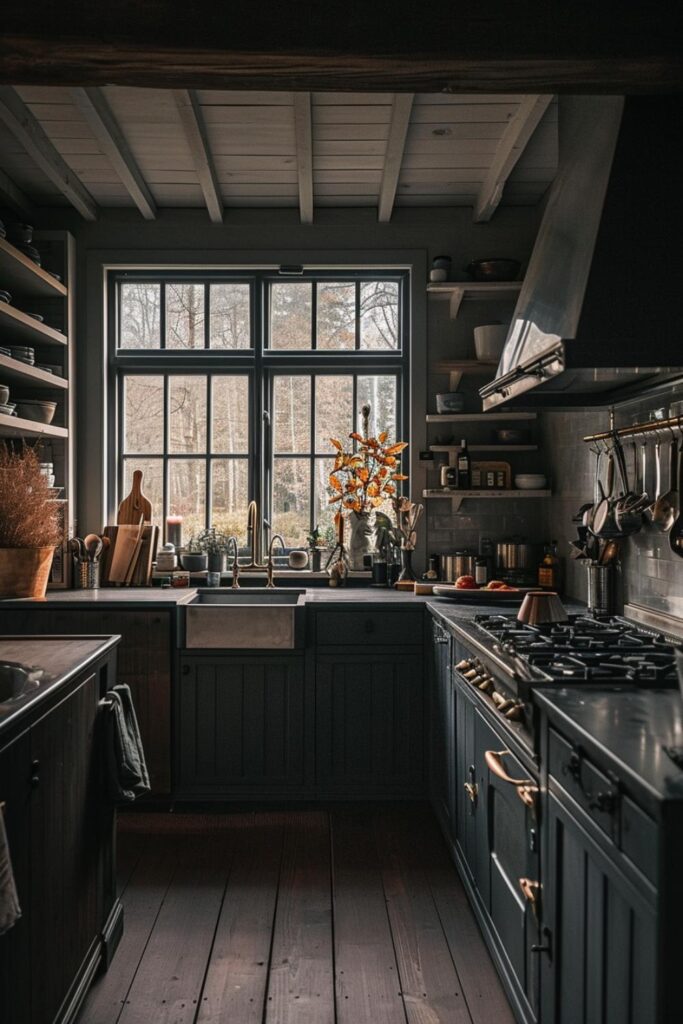
The moody farmhouse style works because it brings two different qualities together. I can use the darker colors and softer lighting for a cozy feeling while keeping the natural wood, simple shapes, and practical layout that make farmhouse kitchens so appealing.
I think the best results come from contrast rather than making everything dark. A deep green island can sit against lighter walls, while a dark backsplash can be balanced with wood shelves and warm countertop lighting.
Pro Tip: Before choosing paint or cabinets, check your kitchen at different times of day because natural light can make the same dark color look very different from morning to evening.
Color Palette and Lighting
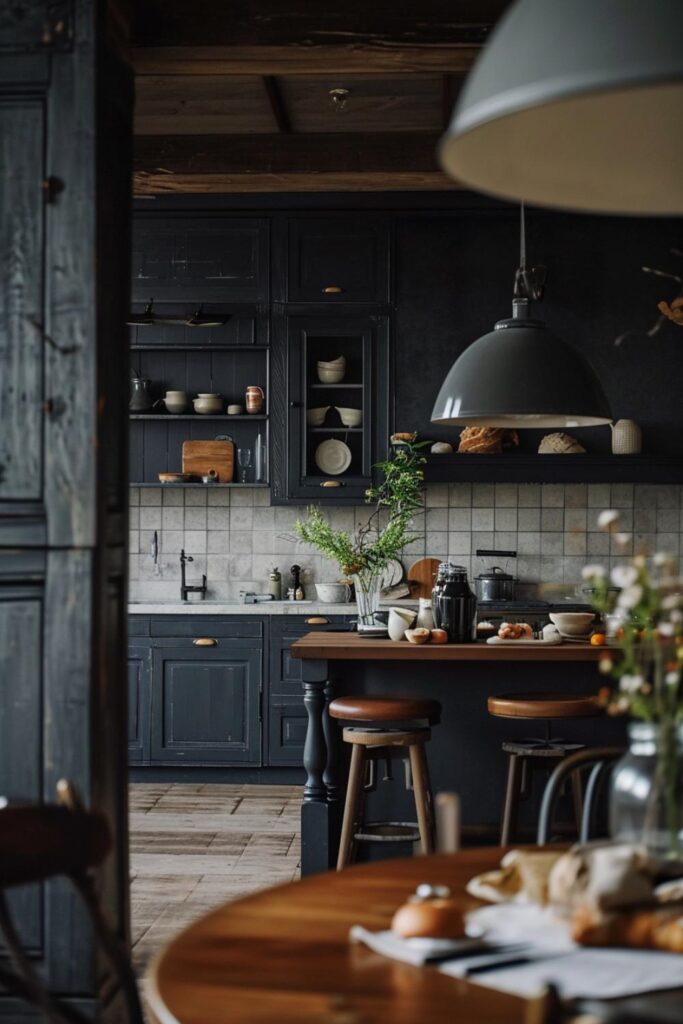
For the color palette, I would start with shades such as deep navy, charcoal, olive or forest green, warm brown, and soft black. These colors have enough depth to create the moody effect without forcing the room into a completely black color scheme.
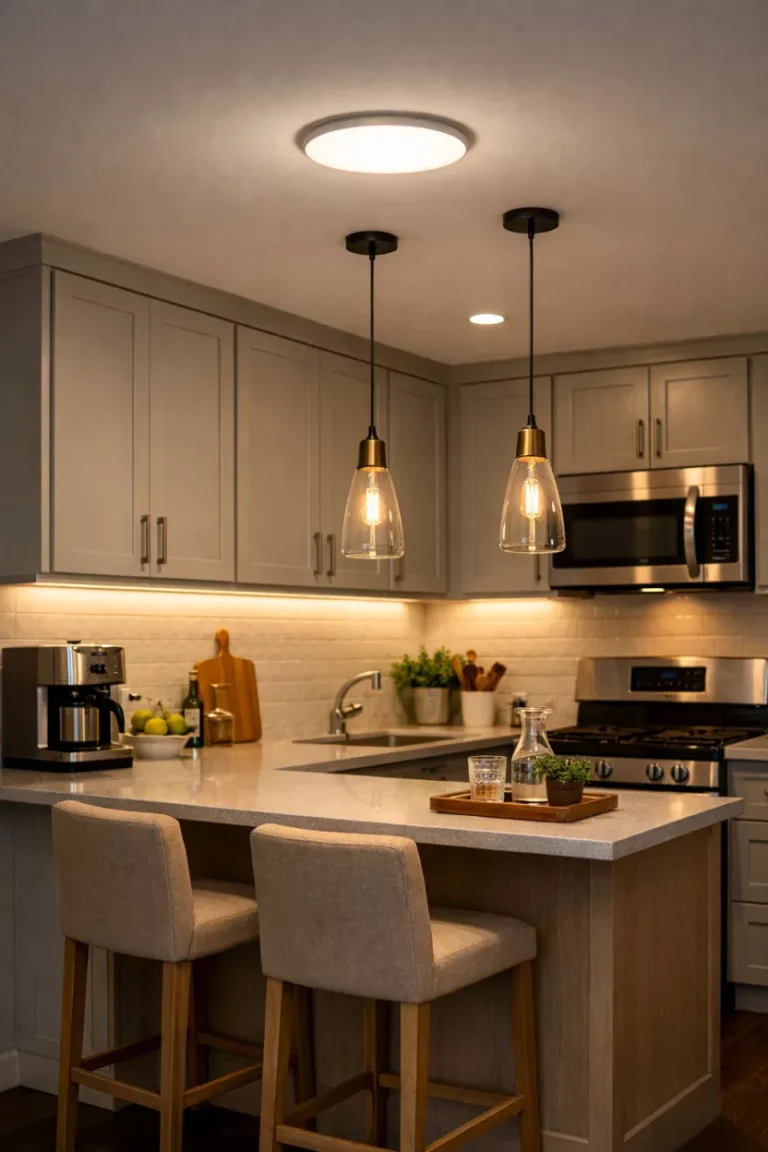
Warm lighting is just as important as the paint. I like combining ceiling fixtures with pendant lights, wall sconces, and under-cabinet lighting so the kitchen has several useful light sources instead of relying on one bright fixture.
Fact: Layered lighting is especially useful in kitchens because ambient light handles general visibility while task lighting helps illuminate work areas such as counters, sinks, and cooktops.
Some combinations I would consider are:
- Navy with warm white
- Charcoal with natural wood
- Forest green with brass
- Brown with soft black
- Dark gray with aged nickel
- Black with warm oak
The right combination depends heavily on how much natural light the kitchen receives. In a darker room, I prefer pairing deep colors with lighter counters, warm wood, or cream walls rather than covering every surface in a heavy shade.
Insight: A small sample board with your cabinet color, countertop material, flooring, hardware, and backsplash can help you judge the complete palette before making expensive decisions.
Architectural Elements
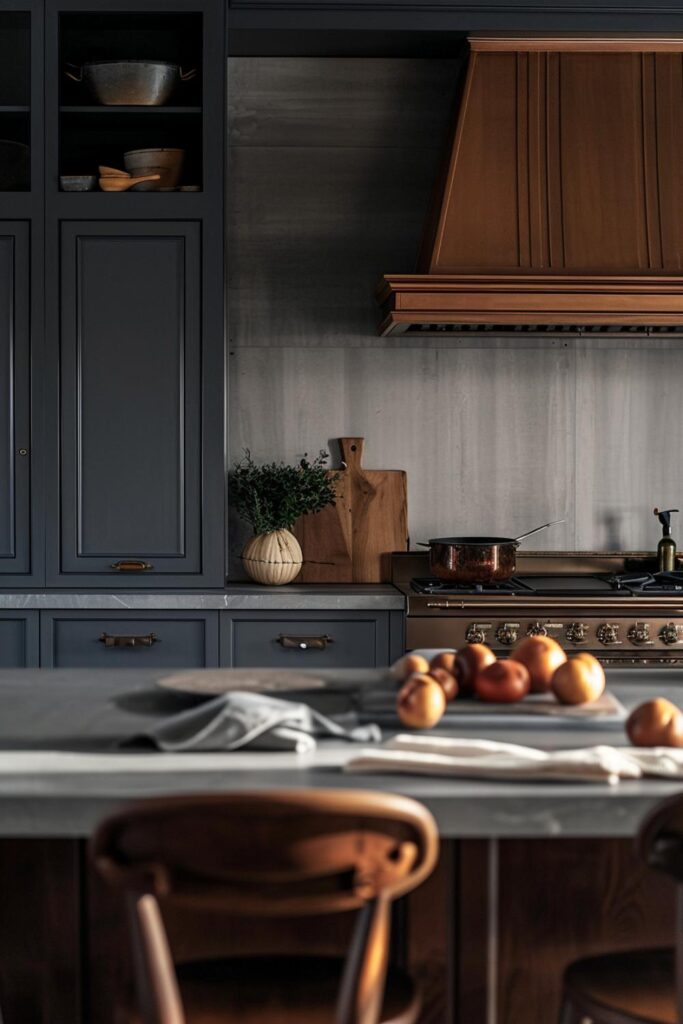
Architectural details can give a moody farmhouse kitchen more personality without relying on decorations alone. Exposed beams, wood-paneled sections, chunky trim, brick, and a substantial island can all add the visual weight associated with farmhouse interiors.
I especially like using wood where the kitchen needs warmth. A weathered wood island, reclaimed shelves, or a simple wood ceiling detail can break up a large run of dark cabinetry and make the room feel more balanced.
Pro Tip: If real exposed beams are not part of your home’s structure, use decorative beams carefully and make sure their scale matches the ceiling height so they do not make the kitchen feel crowded.
Barn-style doors can also work in the right space, particularly for a pantry, laundry area, or nearby storage room. Wood-paneled walls are another option when you want farmhouse character without adding lots of small decorative pieces.
Insight: Architectural features tend to have more staying power than short-term decor trends, so I would prioritize one strong structural detail over several competing accents.
Textures and Patterns
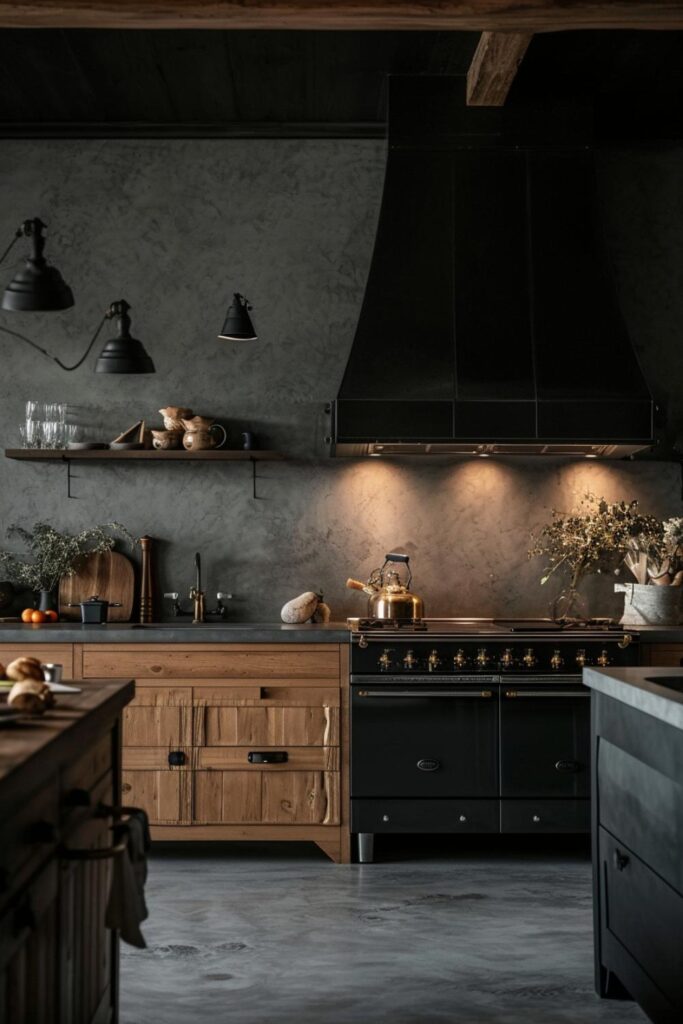
A moody kitchen can easily become too flat if every cabinet and surface has the same finish. I use texture to keep the darker palette interesting, especially through wood grain, stone, handmade-looking tile, woven fabrics, and aged metal.
Reclaimed or rough-finished wood gives the room a natural farmhouse quality, while brushed or aged metal can add a slightly worn appearance. A textured backsplash is another practical way to introduce detail without filling the walls with decoration.
Pro Tip: When using several textures, keep the main color palette limited so the kitchen still feels coordinated.
For backsplash and flooring, I would consider simple subway tile, handmade-look ceramic tile, herringbone layouts, natural stone, or patterned flooring. Even a small runner can add softness around an island or sink.
Fact: Herringbone is a layout pattern rather than a specific tile type, so it can be created with several materials and used to add visual movement without introducing another strong color.
Recommended textures include:
- Reclaimed wood
- Rough-sawn timber
- Natural stone
- Aged brass
- Hammered metal
- Handmade-look ceramic tile
- Woven rugs
- Brushed nickel
Designing Your Moody Farmhouse Kitchen
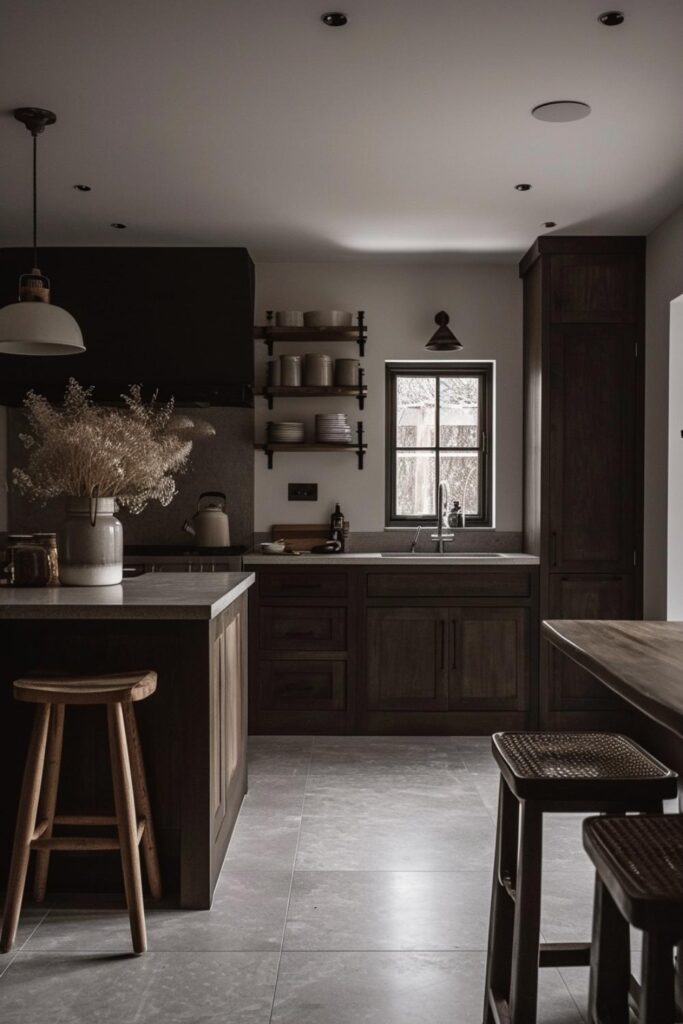
Creating a timeless moody farmhouse kitchen is mainly about controlling the balance between dark finishes, natural materials, useful lighting, and everyday function. I would make the layout and storage decisions first and then build the decorative style around them.
A beautiful kitchen still needs enough counter space, convenient storage, comfortable lighting, and durable materials. The farmhouse look should support those needs rather than getting in their way.
Pro Tip: If you are renovating, map out where you prepare food, cook, clean, and store frequently used items before choosing decorative features.
Cabinetry and Shelving
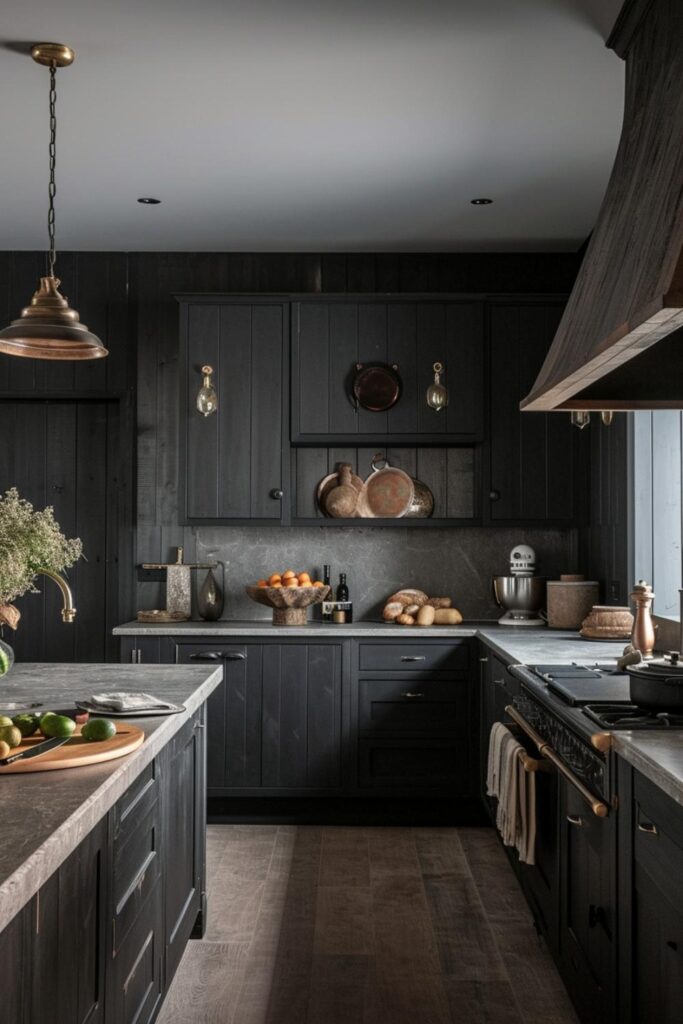
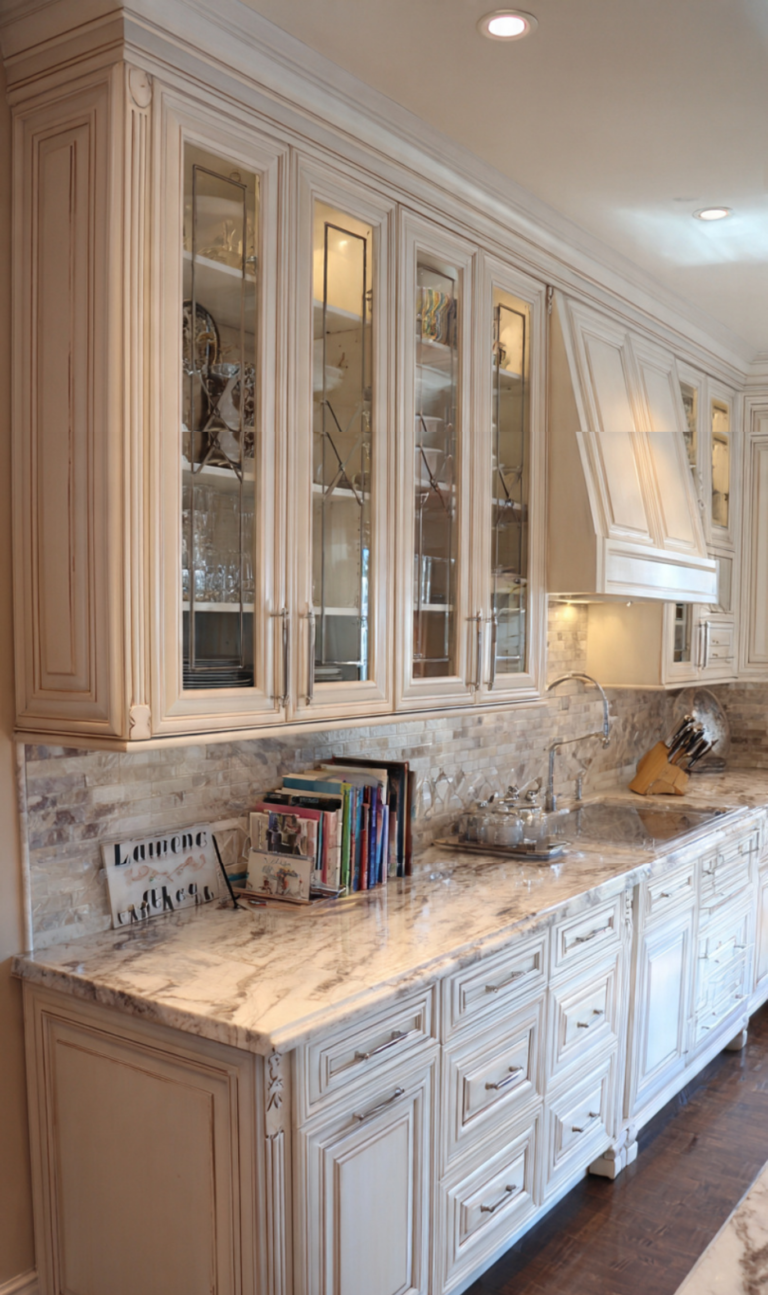
Cabinets usually have the biggest visual impact in a kitchen, so they are one of the easiest places to establish a moody farmhouse style. Deep navy, charcoal, muted green, and warm dark gray can all work well, especially with simple shaker-style doors.
I prefer matte or low-sheen finishes for this look because they keep attention on the cabinet shape and natural materials. If the cabinets are very dark, I would balance them with a lighter countertop or warm wood feature.
Insight: Dark cabinetry does not automatically make a kitchen feel smaller; the effect depends on the amount of natural light, cabinet coverage, ceiling height, and contrast around the room.
Open shelving can add another farmhouse touch while giving you a place to display everyday dishes, cutting boards, jars, or pottery. I would keep the shelves edited rather than filling every inch because too many visible items can make the kitchen look cluttered.
Pro Tip: Keep frequently used items on open shelves and store less attractive appliances and supplies behind cabinet doors to maintain a practical display.
Cabinetry color suggestions:
- Deep navy
- Charcoal gray
- Forest green
- Muted olive
- Warm brown
- Soft black
Shelving materials:
- Reclaimed wood
- Oak
- Walnut
- Dark-stained timber
- Black metal
Vintage and Modern Mix
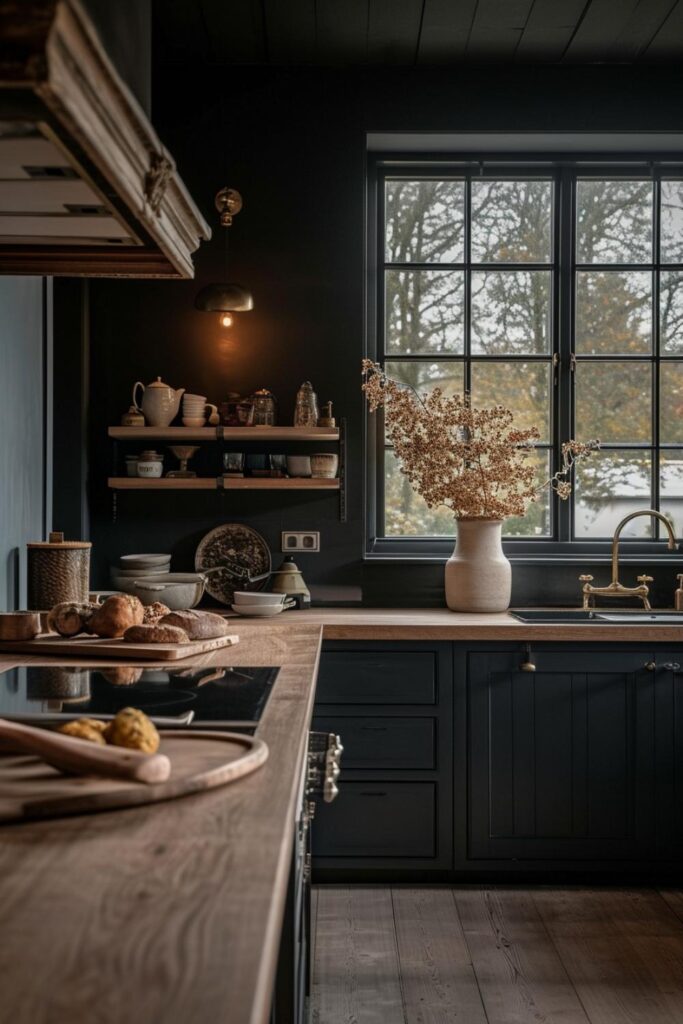
A moody farmhouse kitchen does not need to look like an old country kitchen. I like combining modern appliances and practical storage with vintage-inspired lighting, traditional cabinet profiles, aged hardware, and natural wood.
For example, stainless steel appliances can work with green cabinets and a wood island, while a modern range can sit beneath a simple plaster or tile backsplash. The contrast keeps the room useful for everyday cooking while preserving the farmhouse character.
Pro Tip: Choose one main vintage-inspired feature and repeat its finish or shape elsewhere instead of adding several unrelated antique details.
A sleek island can also work with traditional cabinetry if the materials connect visually. Brass or bronze hardware, wood stools, classic faucets, and simple pendant lights can bridge the old and new sides of the design.
Fact: Mixing old and new finishes can make a kitchen feel less like a matching showroom set and more like a room that has developed over time.
Blending styles:
- Modern appliances with traditional cabinets
- Contemporary ranges with farmhouse sinks
- Simple islands with vintage-inspired lighting
- Modern storage with reclaimed wood shelves
- Shaker cabinets with aged hardware
Accents and Decor
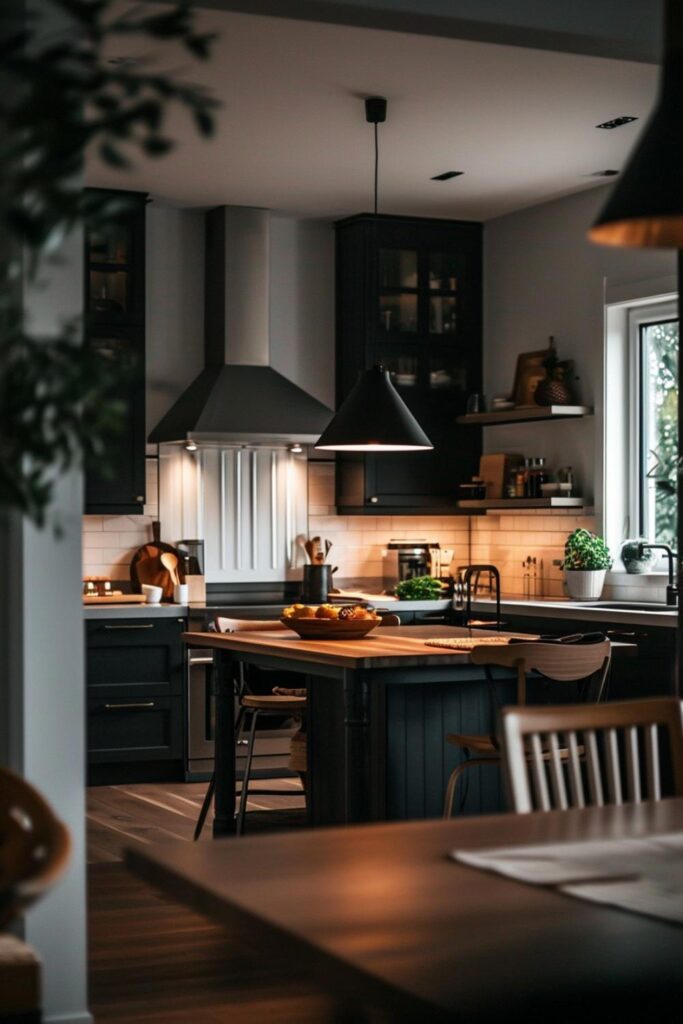
Small accents are where I would add personality without committing to another major renovation. Iron pulls, aged brass knobs, copper cookware, wooden cutting boards, ceramic pitchers, woven runners, and simple pottery can all reinforce the farmhouse theme.
I also like using practical objects as decoration. A stack of wooden boards, a few frequently used ceramic bowls, or copper pans can add character while remaining useful rather than becoming clutter that needs constant rearranging.
Pro Tip: Try grouping decor in odd numbers and leave some empty counter space so the kitchen still feels like a working room.
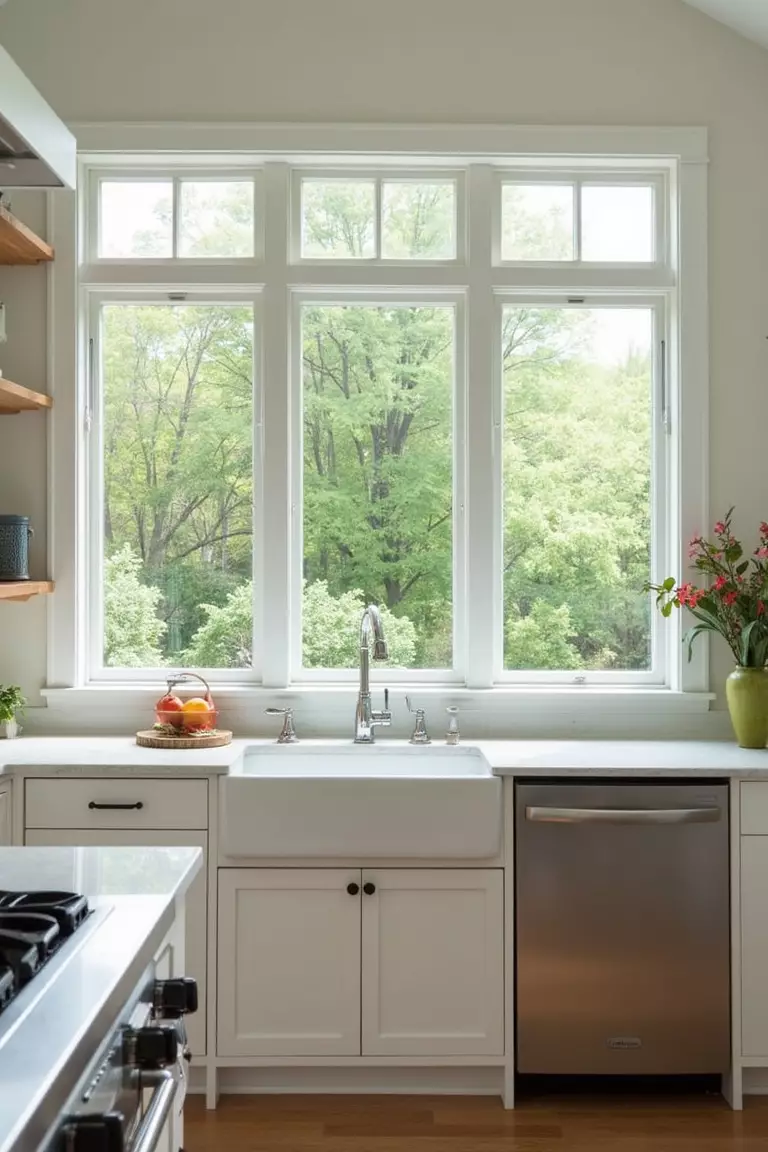
A farmhouse sink can become another strong focal point, especially when paired with dark cabinets and warm metal hardware. Wooden chairs with simple cushions can soften an island or dining area without adding too many colors.
Insight: Repeating one or two finishes throughout the room creates a stronger sense of cohesion than buying every accessory in the same farmhouse style.
Accent ideas:
- Iron cabinet hardware
- Aged brass fixtures
- Copper cookware
- Wooden cutting boards
- Ceramic pitchers
- Woven runners
- Vintage-style clocks
- Simple pottery
Decor suggestions:
- Cushions on wooden stools or chairs
- Farmhouse-style sink
- Ceramic containers
- Wood serving boards
- Potted herbs
- Vintage-inspired wall art
Frequently Asked Questions
What elements define a modern farmhouse kitchen design?
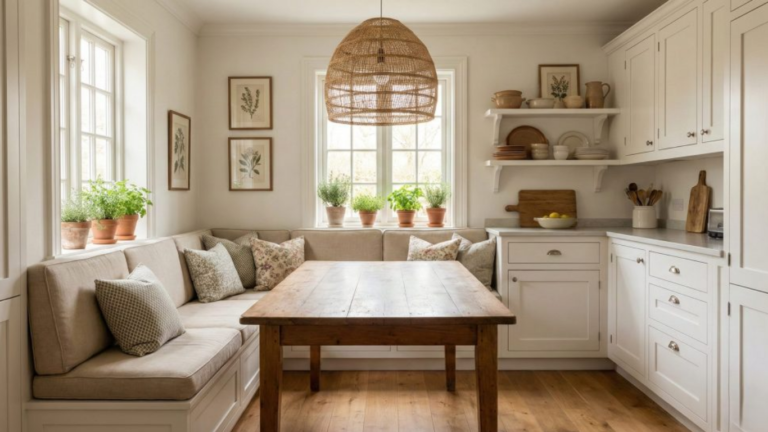
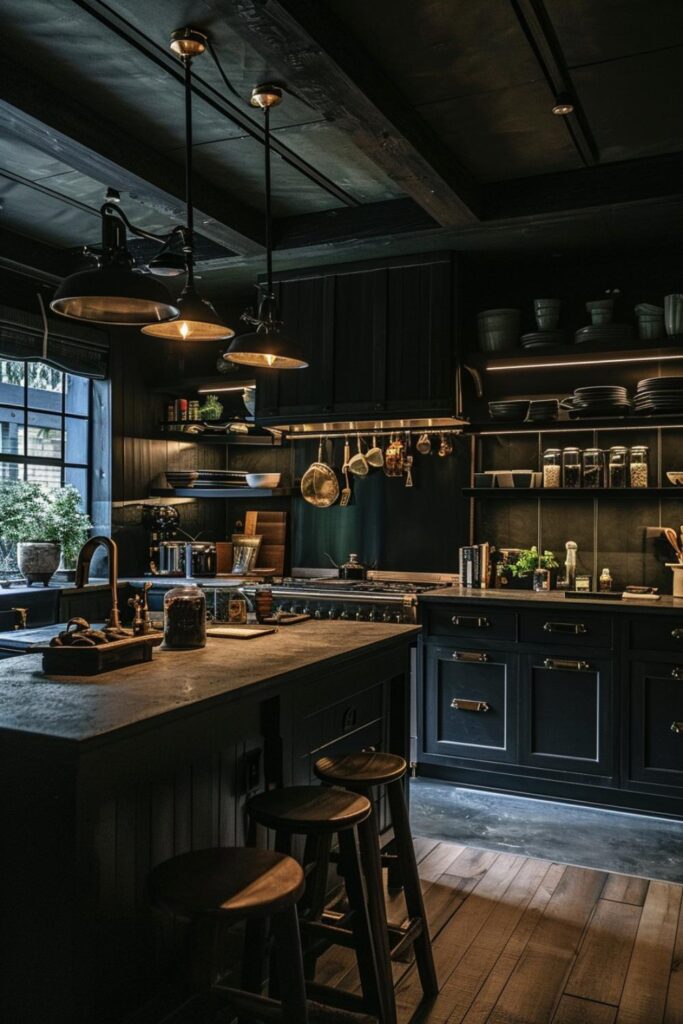
I would define a modern farmhouse kitchen as a mix of practical contemporary features and familiar farmhouse materials. Shaker cabinets, natural wood, simple hardware, a useful island, traditional sinks, open shelving, and modern appliances can all work together without making the room feel overly rustic.
The key is restraint. I would rather use a few recognizable farmhouse details with clean modern lines than fill the kitchen with themed decorations.
Fact: Shaker-style cabinetry is popular in farmhouse and transitional kitchens because its simple recessed-panel design works with both traditional and modern finishes.
What color palettes are typically used in farmhouse kitchen interiors?
Traditional farmhouse kitchens often use whites, creams, soft grays, muted blues, and gentle greens. A moody farmhouse version pushes those colors deeper with charcoal, navy, forest green, brown, and soft black.
I still like keeping at least one lighter element in the room, such as the backsplash, countertop, ceiling, or wall color. This creates contrast and helps the darker finishes feel intentional.
Pro Tip: If you are nervous about committing to dark cabinets, try a darker island first. It gives you the moody effect while leaving most of the cabinetry light.
How can lighting be used to enhance the moody atmosphere of a farmhouse kitchen?
I use warm lighting to make darker colors feel comfortable rather than harsh. Pendant lights over an island, sconces near open shelves, ceiling lighting for general visibility, and under-cabinet lights for counters can work together.
Dimmable fixtures are especially useful because the kitchen needs different lighting levels during food preparation, cleaning, entertaining, and quiet evenings.
Insight: Under-cabinet lighting is both decorative and functional because it reduces shadows on the countertop while adding a softer layer of light after dark.
What types of materials are commonly found in farmhouse kitchen decor for an authentic look?
Natural materials are the foundation of the farmhouse look. I would consider wood, stone, ceramic tile, brick, metal, linen, and woven materials, with the exact combination depending on the home’s existing architecture.
Reclaimed wood can add age and texture, while stone countertops and ceramic tile provide durability and visual contrast. Aged metals can then tie the hardware and lighting together.
Pro Tip: Use natural materials where they make sense for daily use, but do not choose a material only because it looks rustic. Kitchen surfaces need to handle heat, moisture, cleaning, and regular wear.
Many of the ideas I share are inspired by real-life experimentation. I often test décor concepts in my own living spaces and explore practical ways they can be applied in everyday homes. I also gather insights from working with homeowners who want to improve the comfort, beauty, and functionality of their spaces.
I share practical ideas for improving living rooms, bedrooms, and overall home aesthetics using simple design principles.
I explore creative ways to upgrade outdoor spaces including patio décor, small backyard styling, and relaxing outdoor setups.
I provide ideas for kitchen organization, décor accents, and functional layouts that make kitchens more beautiful and practical.
The concepts shared here are based on ideas I have personally experimented with or studied through real home décor improvements.